Tag Archives: author

UGAZ Capitulates On ‘The Bloodbath’ – It’s Time To Get Long
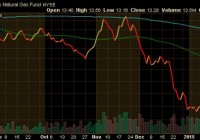
Summary UGAZ, as expected, capitulated into “The Bloodbath” that was inventory on another miss. UGAZ held $2.50 strong and I believe is a nice round number that energy desks will build positions around. BUY UGAZ or DCA into a lower cost basis if you’re already long – “The Turn” has happened. With the EIA Natural Gas Inventory report coming in at -115 BCF against expectations of -121 BCF and the subsequent drop in natural gas pricing, which is most popularly played using The United States Natural Gas ETF, LP (NYSEARCA: UNG ), I believe post- Blood Bath the bottom for natural gas is in. I’ll explain further. (click to enlarge) After outlining the longer term natural gas bull thesis (click “Blood Bath” above) I believe “The Turn” for natural gas pricing has happened. Now, what does that mean? I can’t possibly outline my positions in real time to readers outside of guiding that I own VelocityShares 3x Long Natural Gas ETN (NYSEARCA: UGAZ ) at $2.90 and will add to my position tomorrow in the early AM to average down my cost basis. Over the next 9 months I’ll be offloading and adding to my net natural gas exposure, inclusive of selling and buying UGAZ and inclusive of selling and buying hedges via UNG options, in an effort to maximize the longer term bullish trend. I’ve ridden trends using this strategy the last two years with great success both on the long and short side. (click to enlarge) So, I’ll outline my thoughts on immediate term, mid-term, and longer term trends with following recommendations – this will become a regular section of these weekly updates, make sure to # FOLLOW me and subscribe to real time alerts for the UGAZ ticker: Immediate Term (next 7 days): bullish, BUY. This is going to be against consensus as weather is expected to be in the mid-70’s for HOD’s for the middle part of the country with LOD’s coming in at just over 50 degrees. Normally, this would be bearish and it just might be during the next 7 days leading into inventory. IF UGAZ is hit – BUY (see Long Term bullet) as we are at what should be generational lows. I’m going against consensus in estimating that UGAZ is higher than its most recent close of $2.48 but 1) I just can’t imagine cooling demand not upticking in the middle part of the country (namely Texas) as this will be the first time in a long time that folks have felt anything resembling heat, I’m betting folks overreact in that it will “feel” hotter than it is and that cooling demand comes on strong and 2) I can’t imagine big energy desks not beginning to build longer term positions right here, that should provide some volume on any drops to pricing. Mid Term (next 30 days): Mixed to flat as of right now, BUY in the immediate term and wait on further buys. Guys, I had watch the inventory report post greater than 90 BCF reports 8 consecutive weeks in the middle of summer (including builds of 91BCF, 87BCF, 94BCF, 105BCF, 112BCF, 97BCF, 90BCF, 92BCF), the middle of what was supposed to be the bull thesis, before the market gave me some credit and ran natural gas pricing down. I was looking VERY foolish for about two months as the price of natural gas was denying all fundamentals. Eventually, everything has to be priced efficiently and thank goodness I had conviction in my short position. That said, I’m never willing to say that my thesis will play out exactly on time or exactly in lock step with developments. Wait on further buys in the mid-term once you get some position on the board at these lows. Long Term (longer than 30 days): bullish, BUY on dips as far as $2.00. I have no question natural gas is higher than its current close in 30 days. If you plan on buying for the long term and not trading around you should build positions on dips down to $2.00. No questions natural gas is at the lows. We’ll see over the next few weeks how many institutional holders have to be wrong (by selling or shorting natural gas) but just like always eventually they’ll come around. If you’re in this name for a once a month buy/sell the decision to buy is easy. Just do it. I understand I can post one update article per regular long article so if a major weather change develops or something else comes along that would change my immediate term opinion I’ll post an update article. Check back daily to make sure no updates have been posted. Remember, mid-term and longer-term reco’s aren’t effected by week to week developments. Also remember, the current bull thesis is as follows: Falling rig counts hurt overall production – that’s good for the supply side of the equation as production is slowed overall. Less oil E&P to come on lower CAPEX across the board for oil and natural gas E&Ps – that’s also good for the supply side of the equation (Source: Bloomberg.com). I’m betting on the fact that spring will start early and summer will be, well, it’ll be hot – that’s good for the demand side of the equation – for clarity these projections are based on longer term weather models from Weather.com which may be unreliable. I believe at poor hedging or at lower than ideal aggregate hedging that natural gas E&P names won’t “pump baby pump” as hard into what has been excellent hedging in size the last few years – that’s also good for the supply side. Examples of companies I’ve reviewed that have 1) less than ideal pricing hedging or 2) less than ideal aggregate hedging coverage are Chesapeake Energy Corporation (NYSE: CHK ), Antero Resources Corporation (NYSE: AR ), Ultra Petroleum Corp. (NYSE: UPL ), Halcon Resources Corporation (NYSE: HK ), SandRidge Energy, Inc. (NYSE: SD ), Quicksilver Resources Inc. (NYSE: KWK ), etc. This list could have been 50 names deep. Finally, please read the disclosure section of this article as playing leveraged commodity ETN’s is dangerous and requires a constant monitoring of positions. Good luck everybody, I’ll see you next week in The Lounge. Disclosure The risks of investing in a 3X leveraged commodity trading vehicle like UGAZ/DGAZ are much greater than those of other vehicles. These risks include (Source: Velocitysharesetns.com/ugaz): ETNs are only suitable for knowledgeable investors seeking daily exposure (including inverse or leveraged exposure) to the underlying index. ETNs are intended for short-term trading, therefore investors with a horizon longer than one day trading should carefully consider whether the ETNs are appropriate for their investment portfolio. Because the inverse leveraged ETNs and leveraged long ETNs are linked to the daily performance of the applicable underlying Index and include either inverse and/or leveraged exposure, changes in the market price of the underlying futures will have a greater likelihood of causing such ETNs to be worth zero than if such ETNs were not linked to the inverse or leveraged return of the applicable underlying Index. The ETNs do not guarantee any return of principal at maturity and do not pay any interest during their term. At higher levels of volatility, and since the ETNs are not principal protected, there is a significant chance of a complete loss of ETN value even if the performance of the index is flat. The closing indicative value on each valuation date is determined in part by reference to the daily percentage change in the level of the underlying index. As a result, to the extent the closing indicative value of the ETNs is greater than or less than the initial indicative value, subsequent changes in the level of the index may have a bigger or smaller impact on the closing indicative value of the ETNs than if the closing indicative value remained constant at the initial indicative value. For example, assuming an initial indicative value of $100, if the closing indicative value of the ETNs increases above $100, a subsequent 1% daily change in the level of the index will result in more than a $1 decrease in the closing indicative value of the ETNs. Likewise, if the closing indicative value of the ETNs is less than $100, a 1% increase in the level of the index will result in less than a $1 increase in the closing indicative value of the ETNs. If the level of the underlying index decreases or does not increase sufficiently (or if it increases or does not decrease sufficiently in the case of the inverse ETNs), to offset the effect of the Daily Investor Fee over the term of the ETNs, the investor will receive less than the principal amount of his investment upon early redemption, acceleration or maturity of the Notes. This particular ETN also runs the risk of being decayed by contango which is defined by Investopedia as: A situation where the future price of a commodity is above the expected future spot price. Contango refers to a situation where the future spot price is below the current price, and people are willing to pay more for a commodity at some point in the future than the actual expected price of the commodity. This may be due to people’s desire to pay a premium to have the commodity in the future rather than paying the costs of storage and carry costs of buying the commodity today. Finally, there are general risks that should also be considered such as liquidity risk (Source: Investopedia.com): The risk stemming from the lack of marketability of an investment that cannot be bought or sold quickly enough to prevent or minimize a loss. Liquidity risk is typically reflected in unusually wide bid-ask spreads or large price movements (especially to the downside – which are magnified in leveraged ETNs) . The rule of thumb is that the smaller the size of the security or its issuer, the larger the liquidity risk. Disclosure: The author is long UGAZ. (More…) The author wrote this article themselves, and it expresses their own opinions. The author is not receiving compensation for it (other than from Seeking Alpha). The author has no business relationship with any company whose stock is mentioned in this article. Additional disclosure: The author is long UGAZ at equal sizes at $2.90 and $2.48. The author has a cost basis of $2.69
Sell The State, Buy The People

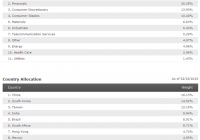
Summary State-owned companies dominate many emerging-market ETFs. State-owned companies generate lower return on assets than privately-managed firms. Avoiding the slower-growing state firms by going with small caps, or a fund such as XSOE. Investors can slice and dice the investment world into all manner of categories. One of the most common is to separate its investments into domestic and international, developed and emerging markets, then into regions or individual countries. A different way to slice the market is to break it down into state-owned and private companies. This is not a critical distinction for investors in the developed world, where deep capital markets offer exposure to many private firms, but many emerging markets are still developing their capital markets. A passive investment approach in emerging markets results in a state-owned heavy portfolio, but there are ways to avoid this exposure. State Interference Doesn’t Pay At least since Ludwig Von Mises published Economic Calculation in the Socialist Commonwealth , the case against socialist economic planning has been there for those who choose to look. Without information, an enterprise cannot make good decisions, and one of the first casualties of central planning is the informational content in prices. Prices exist in centrally-planned economies, but they do not reflect the supply and demand in the economy. The unfolding disaster in Venezuela, a country that suffered toilet paper shortages and is now occupying supermarkets with the army in its never-ending war against the laws of economics, is only the latest example of this basic truth. Clearly, one does not want to invest in a basket case such as Venezuela. At the other end, one cannot avoid some intervention in the economy, as nearly every nation on Earth has a central bank working to manipulate interest rates. In between are the mixed economies such as in China, where the transition to market capitalism is still incomplete. These countries have varying degrees of market forces, but one common trait in many is that state-owned enterprises (SOEs) compete alongside private firms. In many of those countries, the state-owned giants dominate the stock market and make up the bulk of market capitalization. The extreme case is China, where most of the listed companies on the mainland stock exchange are SOEs. In Brazil, semi-private Petrobras (NYSE: PBR ) has accounted for 20 percent of stock market capitalization alone. As oil prices have tumbled and PBR sees corruption charges swirl around the firm , investors in funds such as iShares MSCI Brazil (NYSEARCA: EWZ ) have paid the price. Investors who passively plunk money into market capitalization index funds are often unknowingly choosing to invest with the state and even where the firms are increasingly competitive, they still often lag behind fully-privatized competitors. Recent figures show that Chinese SOEs earn about 5 percent on assets , versus roughly 9 percent for private firms. SOEs in China achieve this low return despite access to cheap credit and regulatory favoritism, in part because the largest shareowner, the state, cares about many things besides profit. Additionally, the government officials in charge of these firms have their own private agendas, and those often stray into the realm of corruption. Some recent examples are the lackluster performance of Russian energy firms even when oil prices were high, Chinese banks that have run up a mountain of bad debt due to politically-motivated lending, and as mentioned above, Brazil’s largest company is racked with scandal. Aside from the aforementioned issues, there’s the issue of sector exposure. Many state-owned companies are banks, energy producers, utilities and telecom firms. While these companies can experience rapid growth in a rapidly-growing economy, they aren’t growing as fast as technology start-ups and new consumer companies catering to an emerging and increasingly wealthy middle class. Investment Options There are some ways around this, the easiest of which is to go with small caps, though that involves taking on more volatility. Broad small-cap ETFs, such as WisdomTree Emerging Markets SmallCap Dividend (NYSEARCA: DGS ), reduce exposure to SOEs. Guggenheim China Small Cap (NYSEARCA: HAO ) and Market Vectors Brazil Small Cap (NYSEARCA: BRF ) both offer a different mix of sector exposure along with avoiding the giant SOEs that populate many emerging-market ETFs. Some sector ETFs, such as KraneShares CSI China Internet (NASDAQ: KWEB ) achieve the same result. WisdomTree Emerging Markets ex-State-Owned Enterprises (NYSEARCA: XSOE ) WisdomTree launched XOSE in December to help investors maintain emerging market exposure while avoiding state-owned companies. The case for the fund is straightforward: the growth of emerging markets is the story of a rising middle class. The sectors most poised to benefit are those that serve these customers: consumer staples, consumer discretionary and healthcare firms. Technology is also an emerging sector in many of these countries that is growing far faster than the overall economy. To really profit from the growth of emerging markets, investors want to be positioned in the sectors pulling GDP forward, not the moribund state-owned enterprises that lag behind or at best, are indirect plays on the commodity cycle. From WisdomTree’s website : (click to enlarge) Technology is the largest sector exposure at nearly 23 percent of assets. Healthcare is underweight, consumer discretionary and consumer staples are the third and fourth largest sectors. Financials are a large portion of assets at about 20 percent, but that is less than many emerging market funds. One reason why the fund isn’t better positioned with respect to sectors is because the fund’s main goal is the removal of SOEs, not a shift in sector exposure. From WisdomTree, the index criteria (emphasis mine): ” State owned enterprises are defined as government ownership of more than 20% of outstanding shares of companies. The index employs a modified float-adjusted market capitalization weighting process to target the weights of countries in the universe prior to the removal of state owned enterprises while also limiting sector deviations to 3% of the starting universe. ” For investors who want to remove SOE exposure while still getting similar sector and country exposure as the run-of-the-mill emerging-market fund, XSOE is a great choice. Assuming the state-owned companies aren’t reformed and unlock hidden value from their assets, over time XSOE should beat the market capitalization weighted competition such as iShares MSCI Emerging Markets (NYSEARCA: EEM ). The case for owning XSOE over other funds is stronger today because the sectors dominated by SOEs are at the center of the slowdown in emerging markets, from China’s debt-laded banks to Brazil and Russia’s energy-heavy stock markets. The fund might lag for long periods when plain vanilla emerging market funds benefit from the sector exposure that SOEs bring, but over the long run, XSOE is likely to come out ahead thanks to holding shares in more efficient firms. Disclosure: The author has no positions in any stocks mentioned, and no plans to initiate any positions within the next 72 hours. (More…) The author wrote this article themselves, and it expresses their own opinions. The author is not receiving compensation for it (other than from Seeking Alpha). The author has no business relationship with any company whose stock is mentioned in this article.

Should You Buy Social Media ETF On Solid LinkedIn, Twitter Earnings?

The social media space, once a sharp pain for investors, is likely seeing a reversal. High beta issues and a massive sell-off the year before had made the space decently valued. Then, impressive corporate earnings from many of the companies started brightening the space and the related ETF last quarter. This quarter too seems to have sustained the wining trend. On February 5, Twitter (NYSE: TWTR ) and LinkedIn (NYSE: LNKD ), two extremely well known social media stocks, reported earnings after the bell and both excelled on both lines. Stocks of the Internet giants soared after hours. Their fourth quarter performances are detailed below (read: 3 Internet ETFs Leading the Tech World Higher ): Twitter’s Q4 in Detail Initially, Twitter stock was hit by disappointing user growth despite improved top and bottom lines. But the stock shot up as the company threw light on the one-time reason behind sluggish user growth. Per Twitter, Apple’s (NASDAQ: AAPL ) iOS 8 software upgrade encountered an “unforeseen bug,” causing a loss of 4 million active users. Otherwise, Twitter would have been able to report 292 million users instead of 288 in the quarter, though the reported figure was up 20% y/y. Non-GAAP earnings were 12 cents per share (per the company ), easily beating the year-ago earnings of 2 cents per share. Revenues of $479 million in the quarter were up 97% year over year and ahead of the Zacks Consensus Estimate of $451 million. Shares were up 9.1% after hours. LinkedIn’s Q4 in Detail LinkedIn’s fourth quarter revenues increased 44% year over year to $643.4 million, surpassing the Zacks Consensus Estimate of $618 million bolstered by its hiring business. The online job services media site posted non-GAAP earnings of 61 cents per share (reported by the company ), up from 39 cents in the year-ago quarter. Shares were up 7.7% in the aftermarket session. If this was not enough, Facebook (NASDAQ: FB ) also came up with top and bottom line beats for Q4 in late January. Its adjusted earnings per share came in at 54 cents, ahead of the Zacks Consensus Estimate of 33 cents and up 69% from the year-ago earnings of 32 cents. Revenues climbed 49% year over year to $3.85 billion and surpassed our estimate of $3.79 billion (read: ETFs in Focus on Facebook Earnings Beat & Rising Cost ). Market Impact The reaction of such stellar results also drove Global X Social Media Index ETF (NASDAQ: SOCL ) – a pure play on social media space – higher. The fund, which was up 1.1% on February 5, added about 0.2% after hours, reflecting LNKD and TWTR’s performances. Investors can easily use the recent ascent in the above-mentioned stocks as a buying opportunity of SOCL. Through SOCL, investors can simultaneously be in touch with the most sought after social media companies. SOCL in Focus SOCL focuses on companies across the world engaged in some aspect of the social media industry. The fund tracks the Solactive Social Media Index and invests $102.5 million of assets in about 30 holdings. The in-focus LinkedIn takes the second spot in the fund accounting for about 11.85% in the portfolio while Facebook takes the third spot with 9.96% weight and Twitter occupies the tenth spot with 3.96% exposure (read: 3 IBM Proof Tech ETFs for 2015 ). SOCL has company-specific concentration risk putting more than 60% of investments in its top 10 holdings. The product charges 65 bps in annual fees. SOCL has added about 3% year to date (as of February 5, 2015). Though volatility is imminent in this high-tech space thanks to valuation and global growth concerns, there are plenty of sound companies in the space, suggesting that an ETF approach might now be a better way to play the segment. After all, Twitter and LinkedIn hold a solid industry rank (in the top 38%) at the time of writing as per the Zacks Industry Rank, suggesting upside potential for the stock in the coming days.