Tag Archives: author

Sector ETFs: Current Market-Maker Expectations For Coming Prices
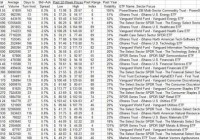
Summary Over two dozen Exchange Traded Funds [ETFs] hold investments focused on broad related industry groups considered to be sectors. Ones intended to track or mimic economic indexes. They provide an easy means of emphasis in a portfolio’s attempt to attain capital growth in excess of that offered by ETFs that track the entire equity market. They present a means of portfolio diversification more concentrated, more precise than groupings by company capital sizes or by artificial, arbitrary accounting “style” definitions of growth or value. Behavioral Analysis of Market-Maker [MM] hedging actions to protect against risks taken in facilitating volume trades for big-$ fund clients reveals coming ETF price expectations. Those forecasts’ qualities are verified by the histories of subsequent market price actions of prior forecasts having similar upside-to-downside expectation proportions. The ETFs being compared here Figure 1 lists the symbols, names, and marketability considerations of the ETFs of interest: Figure 1 (click to enlarge) What may be the customary investor reactions? Some investors are likely to make different preference choices than others in their portfolio emphasis, depending on their time horizons. Long-term speculators (buy&holders) may view the Past Year Volatility and Past Range Index columns as signals of great opportunity in the Energy sector. Whether they would shift capital from Healthcare (high Past Year Volatility and now high Past Year Range Index) into Energy’s low Past Range Index prices is an interesting question. Those who never want to sell anything are likely to hang on to the healthcare gains and hope for recovery in their present badly wounded Energy holdings. The Past Range Index is simply a comparison of that part of the past year’s full price range that is between the current price and the year’s low. A small Past Range Index means the stock is near its year’s low, a large one means the Price Now is near its high. What the investor does with that information may be a “half-full or half-empty” decision: Is a low Past RI a confirmation of continuing trouble, or a big opportunity? Is a big Past RI encouragement for continuation of rewards, or a warning of the potential for loss? Of course, what is needed for an intelligent decision is not a measure of what has already happened, but a measure of what may be coming. Not a past Range Index, but a forecast Range Index. The activist investor’s opportunity/dilemma Making intelligent shifts in a portfolio’s capital assigned to various sectors requires better guidance than can usually be obtained by looking back in time for expectations of what is to come in the future. “Past performance is no guarantee of future results” is the investment lawyer’s security blanket for his employer. True it may be, but that offers little constructive guidance as to what to do about the verity. So, many information venders (and investment managers) take the easy way out. They have observed that if no alternative is readily available, investors will tend to accept the past as the best they have to work from. It’s human nature. And the past information is widely available, cheap and easy to access, and freed from legal liability, so “let ’em play with it.” But it is far from being productive in leading to above average rates of return on equity investments in the future. So, because everyone has it, past checks on its effectiveness as a forecasting means regularly justifies that legal security blanket quoted above. Other human reactions can lead to far more productive thinking, and demonstrate rewarding investment results. One is the natural aversion of humans to being hurt. In the investment game, a universally avoided hurt is loss of capital. Only the brave (speculators) take on the risk of exposure to that kind of hurt. And even then only when they can do it repeatedly under odds that let them exact prices for the service that virtually guarantee them, over a reasonable time, of totally avoiding that possibility of hurt. It’s the Las Vegas casino approach. Or the Investment Bank’s proprietary trading desk approach. Where to find such players on the investing scene? They exist in the Investment Banks, at the Market-Making function. There where big-money investment fund clients repeatedly ask for their help in forcing the gargantuan-sized trades their portfolio sizes require, through the much smaller ordinary transaction windows that serve individual investors adequately most of the time. To get those big trade orders filled usually requires the IB to put some of its firm capital at risk temporarily on the “other side of the trade” from the client. Not as an adversary, but as a transaction facilitator. Back to the hurt-avoidance reaction. The MM protects itself by finding some organization willing to let itself take on the potential price risk the MM wants to avoid. This is a bread-and-butter part of the business that IB prop trading desks thrive on. Their vigorish is ultimately paid by the MM’s client-originator of the trade. Its cost is part of the market liquidity requirement to make desired capital allocation shifts in billion-dollar portfolios. What payments it takes to get the deals done, and the way the hedging deals are structured, tells quite precisely what the participants believe at the time could happen to future prices for the subject securities involved. Contained there are forward-looking forecasts, both of risks and of rewards. Are their forecasts sufficiently accurate to give investing guidance? Here in the discussion it is legitimate to go back to using history, because we have prior examples of forecasts, made in real time of days, weeks, months, and years ago. What happened to prices of the forecast subjects subsequently is a legitimate verification of those implied expectations, not just a projection of past trends. We can look at upside price expectations and see to what extent actual price achievements made them credible. We can compare downside price concerns with worst-case price drawdowns to see what concerns were justified, or perhaps needed to be enlarged. In addition, we can find out what proportion of the forecasts produced winning propositions and infer the odds for success of similar forecasts at present. We can find out what holding periods were required to accomplish targets or to limit risks. Because the forecasting process has been continued daily without change since Y2K, those results may be reasonable reassurances of recurrences. (isn’t alliteration useful?) As long as investors seek to avoid getting hurt, rather than turning masochistic, it ought to be a useful guide. (An aside: Our daily ranking of top-20 stocks and ETFs YTD in 2015 is proving that it is, with 2500+ basis point alphas on over 2,000 closed positions.) All these things are common to any equity investment, making them appropriate dimensions of comparability between all equity investments. That makes unnecessary our rediscovery of the minutia needed by parties to the hedging deal to reach their conclusions. They have done the heavy research lifting for us. What do their forecasts indicate now? Figure 2 is a map of Reward~Risk comparisons between the ETFs in Figure 1. Forecast upside price prospects are on the horizontal green scale at bottom, and actual worst-case price drawdown experiences are measured by the red vertical scale. We use the average worst experiences of prior similar forecasts because they are typically more extreme than the forecast downsides. Figure 2 (used with permission) Looking like the germ that caught penicillin, the SPDR S&P Metals and Mining ETF (NYSEARCA: XME ) at [12], the metals & mining ETF, reflects the volatility of its precious metals holdings more than interests in its base metals. The Vanguard Financials ETF (NYSEARCA: VFH ) at [10] offers the most attractive risk-reward tradeoff, while the Vanguard Information Technology ETF (NYSEARCA: VGT ) at [17] or the Vanguard Utilities ETF (NYSEARCA: VPU ) at [18] has the most price drawdown exposure for the upside payoff being offered. This map contrasts the risk and reward dimensions often most critical to investment selection decisions. But there are other qualitative considerations that enter into good choices of emphasis in portfolio management. They are detailed in Figure 3, along with their parallels of the 2400+ stocks and ETFs in our survey population, the 20 most attractive of that group today, and the MM forecasts for the SPDR S&P 500 Trust ETF (NYSEARCA: SPY ) as a proxy for the most widely-regarded market index. Figure 3 (click to enlarge) These sector ETFs have been ranked by attractiveness on a wealth-building basis. The ranking measure is in column (15) at right. It odds-weights the prospective upside price rewards of (5) with the Win Odds of (8), and the risk exposures of (6) with the complement of (8). Emphasis of frequency of opportunity indicated in the count of prior forecasts (12) having the balance between upside and downside of (7) and conditioned by credibility comparisons of (5) with (9) all enter into the measure. We include all of the factors because different investment objectives and investor preferences may call for alternative importance weightings. Conclusion What may be evident in the blue summary rows at the bottom of the Figure 3 list is that sector investing by across the board use of these 32 ETFs might produce an ultra-conservative portfolio, given current-day prices and MM expectations. The blue-row average payoffs of 2.6% in (9), resulting from prior Forecast Range Indexes (7) like today’s, have been only half of the 5.3% hoped for in (5). That suggests this may not be a wonderfully opportune market environment for fresh broad-brush capital commitments. The next blue row down shows the averages of a ranked selection of the 20 best choices (for wealth-building) equity investments from our large (2475) population of currently available MM price range forecasts. They offer expected +10% gain opportunities that have been more than realized previously. Their win rate of profitable recovery from worst price drawdowns (6) has been of 7 out of every 8 commitments. Average holding periods of 37 calendar days, less than two months, produce annual gain rates of +101%, 6 times the +17% prospect of the average sector ETF in the row above. Differences of this type are not unusual and make passive investing strategies uncompetitive for investors with capital-building objectives constrained by time. Sector ETFs likely to be most favored by wealth-builders today lean to health-care, consumer, financials, and technology orientations. None are outstanding in comparison with the average of the larger population’s best 20, except in the odds of profitable recovery from bad price experiences. But the cost of that advantage in rate of return give-up is quite high. Disclosure: I/we have no positions in any stocks mentioned, and no plans to initiate any positions within the next 72 hours. (More…) I wrote this article myself, and it expresses my own opinions. I am not receiving compensation for it (other than from Seeking Alpha). I have no business relationship with any company whose stock is mentioned in this article.

5 Huge Advantages You Have Over Professional Investors

Summary 5 ways you are better than the Wall Street pros. Why you should ignore what the pros are doing. How to take advantage of your advantages. “Don’t bother. The professionals are better than you and they know something you don’t.” Really? There’s some truth to that, but there’s plenty of lies mixed in that short statement too. And it’s easy to dismiss yourself or come up with excuses for why you can’t do it. Here are five to get things started. 5 Common Excuses That Investors Believe The market definitely knows more than me. I’m not smart enough to invest on my own and build wealth. I always miss out on the best opportunities. I can’t beat the computer trading that the market uses. I don’t know where or how to start. Sure there’s some validity to each excuse above. But investing is unique because anyone can be a good investor. The Uniqueness of the Stock Market Outside of the stock market, it’s a good idea to find a professional to solve a problem instead of trying to do it yourself or asking the average Joe next door. Need a kidney transplant? Find a surgeon. Not Ms. Traci, your old biology teacher. But the investment industry is one of the very few where you don’t need any qualification, practice, skill or even knowledge to be involved in the markets. The entry criteria is zero, which is why so many people lose money, throw their hands in the air and forever condemn the stock market as a rigged gambling machine. But choose your direction wisely from the get-go (value investing for you and me), build a good framework based on good guidance, quality investment books and investing resources, and it’s easy to do well. Ignore all the talking heads using jargon or the people who talk about much money they are raking in. All they want to do is make you feel dumb and gloat about how smart they are. But what if you continue to disbelieve, or you know people who continue to doubt that investing successfully on your own is possible? You don’t need to be a rocket scientist. Investing is not a game where the guy with the 160 IQ beats the guy with 130 IQ. – Warren Buffett If you have more than 120 or 130 I.Q. points, you can afford to give the rest away. You don’t need extraordinary intelligence to succeed as an investor. – Warren Buffett Here are 5 advantages small investors hold over professionals that you must take advantage of. 1. As a Small Investor You Are Able to Choose Your Expertise When you are investing as an individual, you are free to choose whatever specialty you like. You can choose whatever stock to invest in. Large. Small. Biotech. Miners. Safety. Whatever. You can even choose to focus and become an expert in a few industries that excite you or take a broader approach. On the other hand, professionals are paid to focus on certain fields or investing strategies. If you get sick of an industry, just move onto your next interest. Professionals don’t have this luxury of choosing their strengths. As a small investor, you are agile and can go to different market caps, sectors, and even buy some odd lots for a quick turnover. 2. You Can Go Against the Grain Professional investors follow the herd. It’s better to be incorrect with the herd and maintain job security instead of sticking your neck out and getting fired if the investment doesn’t work out. You don’t have a boss obsessed with profits breathing down your neck with another younger guy waiting in line to take your job. You’re free to take a contrarian approach like the good ol’ net net strategy or concentrating on Buffett type stocks. The pros will start investing in an “uncertain” stock, sector or country once it starts to rebound – when the best time to invest has already passed. 3. You Are Not Judged Monthly, Quarterly or Yearly Not being obsessed with beating the market is one of the biggest advantages you have. Because the pros have clients and upper management demanding results, the only thing they can do is chase hot stocks, hot trends and buy and sell quickly so as not to “look” left out. Ignoring short term results and focusing on the big picture will put you in a position to succeed. The once bad Golden State Warriors didn’t win the NBA championship by flipping players every time something didn’t work out. They had a long term team building strategy that paid off in the end. Being able to sacrifice short term results to compound long term wealth is a huge advantage. 4. You Can Afford to Be Patient Can’t find a company to invest in? That’s ok because you can hold cash and wait for the right opportunity. Nobody is going to say anything because you hold 30% of your portfolio in cash. You also put yourself in the best position to succeed by buying depressed securities and playing the waiting game. Professionals on the other hand are risk-averse as they can’t afford to lose their client’s money. This leads to following the herd and mediocre returns. 5. It’s Cheaper You don’t need a room full of computers, computerized trading system software or instant access to information. You don’t have to pay people for insider “tips”. With all the high frequency trading going on, the long term value investing approach saves you money on commissions, taxes and other fees. Take Advantage of Your Advantages There’s no reason to play the same game as the professionals. In Malcolm Gladwell’s book David and Goliath , it covers how the “disadvantaged” overcome the expected winners. An important observation was that if David (the small investor) tries to take on Goliath (Wall Street professionals) within the same set of rules, the winner is always Goliath. However, by not playing by the same system and expectations, David is able to defeat Goliath. In other words, as a small investor, do what the big boys can’t to beat them at their own game. In 2008, Buffett bet that a low cost index fund will outperform a fund of hedge funds. Over a ten-year period commencing on January 1, 2008, and ending on December 31, 2017, the S&P 500 will outperform a portfolio of funds of hedge funds, when performance is measured on a basis net of fees, costs and expenses. The result at the start of 2015? The S&P500 up 63.5% and the hedge fund up around 19.6%. The takeaway? It’s only in the stock market where the average Joe can have such a strong advantage over the professionals. Make the most out of your advantages. Disclosure: I/we have no positions in any stocks mentioned, and no plans to initiate any positions within the next 72 hours. (More…) I wrote this article myself, and it expresses my own opinions. I am not receiving compensation for it. I have no business relationship with any company whose stock is mentioned in this article.

REM Compared To Equal Weighted mREIT Portfolios

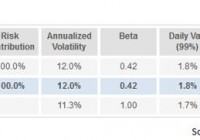
Summary REM holds up better than I would have expected. Market capitalization weighting is easy, but may be less than ideal for reducing risk. REM is compared over a two-year period and a one-year period against hypothetical mREIT portfolios built at equal weights. When I was taking a look at the iShares Mortgage Real Estate Capped ETF (NYSEARCA: REM ), one of my thoughts was that the portfolio would be more attractive with a different weighting scheme. My views on that have changed some since Annaly Capital Management (NYSE: NLY ) reported an excellent second quarter and its new strategy sounds much better . However, I still wondered from a risk-adjusted viewpoint how different an ETF might look if it held the same holdings, but applied an equal weight methodology rather than using market cap weights. The Benefits of Market Capitalization Weighting The biggest advantage to using market capitalization is that it is remarkably easy. The fund establishes the volume of assets and the total market cap of each company. They spend on the shares accordingly, and if they were not trying to grow assets in the ETF (to generate more fees), they would simply leave that same structure in place. The only modifications to be made would be to adjust for the new shares issued and old shares repurchased. In general, this is a very simple kind of ETF to run. The Problem When using market cap weighting, if a company becomes relatively overvalued, it is also likely to have a higher weight in the portfolio. Unless the overvalued status is coinciding with repurchasing shares to shrink the market cap, the weighting will grow. That is unfortunate. It also means a portfolio may have substantially less diversification if some holdings grow large enough to dominate a large chunk of the portfolio. Equal Weighting My theory was that even though smaller companies will on average be more volatile (as demonstrated in the charts I will provide), the benefit of better diversification could cancel out those effects. Equal weighting is rarely going to be the ideal method, but it provides a simple alternative to market capitalization. Findings I originally built a spreadsheet to run an analysis of correlations and simulate different portfolios, but I find the tools at InvestSpy.com were faster than running it through my spreadsheets. Therefore, I simulated the portfolios using its website. REM has a total of 39 holdings, but I ran my first comparison using only 20 mREITs. The names included several of the largest from the REM portfolio and some that I cover that are not given material weights in the portfolio. The analysis was based on comparing the last 2 years of returns. REM 2 Years (click to enlarge) The primary factor that I’m looking at here is that the annualized volatility of the portfolio is 12% and the beta is .42. I’m focused on testing for risk rather than testing for historical returns since using historical returns would create an enormous bias into the test, as I could simply avoid selecting mREITs that have cratered when designing my comparable 20 mREIT portfolio. Equal Weighted 20 The next table is going to be dramatically larger because it is showing the numbers for each individual mREIT. (click to enlarge) This portfolio made of 20 mREITs with equal weights shows a lower annualized volatility at 11.2%; however, it also shows a beta that is slightly higher at .43. I would say that given the sample size (only 2 years), the beta comparison is within the margin of error. Some other factors jump out when we look at this as well. The stock that generated the highest risk contribution was CYS Investments (NYSE: CYS ). It was not the highest volatility, it was not the highest beta, and yet it contributed the most to the portfolio. It also had one of the best return percentages. On the other hand, Blackstone Mortgage Trust (NYSE: BXMT ) delivered in every way. The risk contribution was low and the annualized volatility was the lowest within the group. Despite that, it had a total return of 31.2%, which should remind readers that not all risk and return tradeoffs are created equally. Both the highest-risk contributor and the lowest-risk contributor were near the top of the chart in their total return over the last 2 years. One-Year Comparisons The following chart has REM’s performance over the last year: (click to enlarge) For comparison, this time I wanted to replicate a larger portfolio, so I am only excluding one security from the portfolio. That security has a very short history and thus is not viable for the statistics. It should be noted that I have cropped the following image to make it substantially shorter since the site struggles with displaying longer charts. (click to enlarge) In this second comparison, there are about 37 mREITs all under equal weighting, but the annualized volatility for the portfolio is within a margin of error. In the context of a year, .1% is not reliable. Interesting Notes When I shifted to using 37 mREITs for the one-year measure, I was expecting it to result in a larger reduction in volatility, but it did not. It would seem the volatility of those smaller mREITs was enough to outweigh the benefits of more diversification. Investing in ETFs is generally relying on diversification within moderately efficient markets to be worth the costs. For the mREIT investor that has the best information, I don’t think the diversification is adding any advantages. However, for the mREIT investor who just wants to set it and forget it, the REM portfolio has done remarkably well. Comparison of Holdings The following chart shows the top 10 holdings of REM: (click to enlarge) As you can see Annaly Capital Management and American Capital Agency Corp. (NASDAQ: AGNC ) dominate the portfolio and combine to be over 26% of the portfolio value. Conclusion The way REM designs the portfolio is not perfect in my opinion; however, it is still done well enough to offer investors some fairly substantial reduction in risk. The expense ratio is high for my tastes at .48%, but at least investors are receiving a fairly substantial reduction in volatility, and when compared to other weighting methods, such as going equal weight, REM has done fairly well. If you are curious about the risk factors for REM, you’ll want to see my last piece on the ETF . Next time I cover REM I’m going to establish comparisons to the portfolio I would create if I were aiming to produce an ETF full of mREITs. Scroll up to the top of the article and hit the follow button so you don’t miss it. Disclosure: I/we have no positions in any stocks mentioned, and no plans to initiate any positions within the next 72 hours. (More…) I wrote this article myself, and it expresses my own opinions. I am not receiving compensation for it (other than from Seeking Alpha). I have no business relationship with any company whose stock is mentioned in this article. Additional disclosure: Information in this article represents the opinion of the analyst. All statements are represented as opinions, rather than facts, and should not be construed as advice to buy or sell a security. Ratings of “outperform” and “underperform” reflect the analyst’s estimation of a divergence between the market value for a security and the price that would be appropriate given the potential for risks and returns relative to other securities. The analyst does not know your particular objectives for returns or constraints upon investing. All investors are encouraged to do their own research before making any investment decision. Information is regularly obtained from Yahoo Finance, Google Finance, and SEC Database. If Yahoo, Google, or the SEC database contained faulty or old information it could be incorporated into my analysis.