Tag Archives: alternative

A Look At The Breakdown In Alternative Income ETFs
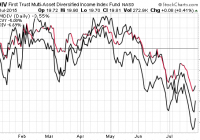
Summary Income investors are often obsessed with the search for yield despite the typical conservative nature of their demographic. Once considered taboo, asset classes such as junk bonds, MLPs, mortgage REITs, and other high yield investments are now common place in many of the portfolios. Now we are starting to see slow signs of decay in junk bond prices as spreads widen and risk appetites in credit securities pull back. Income investors are often obsessed with the search for yield despite the typical conservative nature of their demographic. The half decade of zero returns in safe assets such as CDs and savings accounts has created a reach for yield that has stretched the boundaries of sound portfolio discipline. Once considered taboo, asset classes such as junk bonds, MLPs, mortgage REITs, and other high yield investments are now common place in many of the portfolios that I review. The seemingly one-sided demand has helped generate relatively solid returns and uncommonly low volatility over the last several years as well. Now we are starting to see slow signs of decay in junk bond prices as spreads widen and risk appetites in credit securities pull back. This same pattern has been exacerbated in alternative income funds with overweight positions in non-traditional income fields with juicy yields. As an example, the First Trust Multi-Asset Diversified Income Index ETF (NASDAQ: MDIV ) carries 80% of its portfolio in preferred stocks, junk bonds, real estate, and MLPs. The remaining 20% is in traditional dividend paying stocks. This ETF has a current 30-day SEC yield of 6.36%, which any income investor would tell you is phenomenal when 10-Year Treasury bonds are paying just 2.25%. Yet like most things in life, there is no free lunch in the income world. A reach for yield carries with it higher concomitant risk of capital loss through credit contraction, deleveraging, interest rate cycles, and other exogenous factors. Before today’s bounce, fund’s like MDIV were trading near their lows of the year despite the relatively sideways price action of traditional broad-based equity benchmarks. This decoupling of high yield and alternative assets from the major stock market indices should be viewed through a cautionary lens. I’m not trying to pick on MDIV by any means. A look at other similar funds in this class include the Guggenheim Multi-Asset Income ETF (NYSEARCA: CVY ) and the Global X Super Dividend U.S. ETF (NYSEARCA: DIV ). These ETFs contain many of the same fundamental holdings and are showing similar trends of sliding prices. A look inside specific sector funds such as the ALPS Alerian MLP ETF (NYSEARCA: AMLP ) and the iShares Mortgage Real Estate Capped ETF (NYSEARCA: REM ) confirms the weakness as well. So how does a retiree or income investor maintain their purchasing power while still maintaining a solid grasp on dividends? The first step is evaluating your exposure to these riskier income assets by determining how much of your portfolio they represent. If its less than 10%, then you are likely not as concerned about the recent volatility. Yet, if they represent 25% of your portfolio or more, you may want to consider taking action to create a more balanced asset allocation. Those with an overweight position in high yield investments that find themselves uncomfortable during this drawdown may want to consider cutting back their exposure. This could include temporarily adding back to cash or moving to more traditional assets such as dividend paying stocks or higher quality bonds. The trade off of course is that you may not receive the same monthly or quarterly income that you are accustomed to. Nevertheless, the ability to sleep well at night knowing that your capital is not susceptible to wild swings may assuage that temporary concern. Picking which asset class to move the funds to will likely depend on the makeup of the other positions in your portfolio. You may end up pairing multiple asset classes together to smooth out volatility and further diversify portfolio. Remember that it’s ok to step away from strict income investments in order to focus on capital preservation or total return. If you do move to cash, make sure that it is a temporary transition that is not going to leave you with a significant chunk of money on the sidelines for an extended period of time. One of the biggest mistakes I see investors make is having too much cash on hand for years and years without a sound game plan to put it back to work. Putting Thoughts Into Action I recently took at step away from high yield investments for my Strategic Income clients and added to a high quality mix of stocks in the iShares MSCI USA Minimum Volatility ETF (NYSEARCA: USMV ). This transition expanded the modest equity sleeve of my portfolio into an index that is continuing to maintain a steady uptrend. While the move actually lowered the overall yield of the portfolio, it positioned us for a bounce higher in the broader stock market and reduced the credit volatility that was acting as a drag on returns over the last two months. Despite this move, I haven’t completely abandoned the alternative income theme altogether. My income portfolio is still holding the iShares U.S. Preferred Stock ETF (NYSEARCA: PFF ), which has maintained a steady price trend despite the volatility in interest rates. Moving forward, I will be closely evaluating how these investments comingle together and making additional adjustments as necessary. Changes of this nature are not always easy when an investment is falling in price. You never know if you are picking the right spot or going to get whipsawed in the wrong direction. That is why I strive to change the portfolio incrementally in order to avoid falling into the trap of over commitment to a single outcome. Disclosure: I am/we are long USMV, PFF. (More…) I wrote this article myself, and it expresses my own opinions. I am not receiving compensation for it. I have no business relationship with any company whose stock is mentioned in this article. Additional disclosure: David Fabian, FMD Capital Management, and/or clients may hold positions in the ETFs and mutual funds mentioned above. The commentary does not constitute individualized investment advice. The opinions offered herein are not personalized recommendations to buy, sell, or hold securities.
NRG Energy Increases Its Solar Ambitions

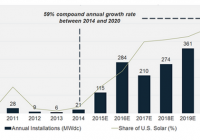
Summary NRG Energy is jumping into community solar, making it one of the first companies to enter into this promising market. NRG Energy holds many unique advantages in the community solar segment, making it highly competitive against even the likes of SolarCity. The company’s growing distributed solar operations comes with many risks, most notable in the form of long-term unknowns. The community solar concept is rapidly gaining steam, with some leading solar companies jumping into this space over the past few months. Given that community solar covers the renters’ market, which consists of 108 million individuals in the U.S. alone, its sudden emergence is not so surprising. Financing in the solar industry has finally reached a stage where community solar is not only feasible, but attractive for solar companies. While there are many more complexities involved in this solar market compared to the residential or utility-scale solar markets, it should still see explosive growth in the near term. NRG Energy (NYSE: NRG ) has been the latest company to enter into the community solar market, which is not surprising given its ambitions in distributed solar. The company recently launched a 1 MW project (connected to 200 homes), which will serve as a pilot to more community solar projects in the future. With 100 MW of shared community solar projects already in its pipeline, NRG Energy clearly has big community solar ambitions. This marks the first time that NRG Energy has been able to penetrate a major solar market so early on, which should add more upside to the company’s already undervalued stock. First Mover’s Advantage The community solar market has just recently opened up, which means that NRG Energy has a huge opportunity to cement itself early on as a dominant presence. Given the immense size of the U.S. renters’ market alone, the company should be able to experience some serious growth in this arena. While the current community solar market is nearly nonexistent, this market is expected to grow at ~60% per annum until 2020. This would mean that the community solar segment should grow approximately twice as fast as the general industry during this time period. While dominating the community solar segment will certainly not be easy for NRG Energy, the company has all the tools to do so. With the operational capabilities and expertise of its NRG Home and NRG Renew business segments, the company could even compete with the likes of SolarCity (NASDAQ: SCTY ) on this front. In fact, NRG Energy’s 100 MW community solar pipeline is equivalent to that of SolarCity’s . Given that SolarCity was the first company to make a truly impactful entrance into community solar, this shows how ambitious and forward-looking NRG Energy is. GTM Research predicts that community solar will be a half-GW market (annual) by 2020. (click to enlarge) Source: GTM Research Unique Advantages NRG Energy has some major advantages over its competitors on the community solar, and more generally, distributed solar front. First, the company already has a huge customer base off of which to leverage for its distributed/community solar business. The company also has stronger relationships with electricity companies compared to its solar pure play peers, which should allow it to expand its community solar segment more rapidly. Given that cooperation with utilities will likely prove key to dominating the community solar segment, NRG Energy definitely has an edge on this front. With NRG Energy’s enormous distributed solar ambitions, it is easy to forget that the company is one of the largest fossil fuel power companies in the world. In fact, the company has a whopping ~47 GW of operational assets, which would also give the company a financing edge over its pure play solar competitors. As such, NRG Energy will almost certainly be one of the front-runners in the highly promising community solar segment. While NRG Energy’s pure play solar competitors may be more well versed in the solar arena, NRG Energy’s own unique advantages more than make up for this. Obstacles The community solar segment is still basically unexplored, which means that first movers like NRG Energy are taking on more risk. Despite the sudden surge of competitors in this arena, the community solar business model is still new. As NRG Energy is planning to make the community solar segment a sizable portion of its business down the road, the company will likely funnel a lot of its resources into this arena. Given the unknowns associated with community solar, entering into this segment is relatively risky. More generally, there are also many long-term questions about the solar leasing model used by NRG Energy. How the long-term plays out for solar leases is incredibly important for the company as it is making a huge transition to renewables, and is planning to make distributed solar one of its focal points. Regardless of such unknowns, the potential rewards of involving itself in this solar segment far outweigh the risks. NRG Energy’s transition from a fossil fuel-centric power company to one more focused around renewables should prove to be extremely smart on balance. Conclusion NRG Energy has faced a yearlong downturn, which can largely be attributed to the instability experienced by the fossil fuels industry during this time. Although many investors still view NRG Energy as part of the fossil fuels sector, the majority of the company’s long-term prospects lie in its growing renewables sector, namely solar. Given the sheer potential of its distributed solar business alone, NRG Energy is undervalued at a market valuation of $7.2B . NRG Energy is slated to be one of SolarCity’s largest competitors, which speaks to the potential that NRG Energy’s solar segment holds. The company’s entrance into community solar just reinforces its place within the future energy landscape. Disclosure: I am/we are long SCTY. (More…) I wrote this article myself, and it expresses my own opinions. I am not receiving compensation for it (other than from Seeking Alpha). I have no business relationship with any company whose stock is mentioned in this article.

The Emerald Economy

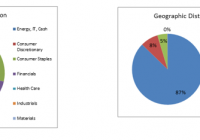
Ireland has the top growth rate in the EU. Ireland has an extraordinarily friendly business environment. EIRL one of the few ways to invest the Irish economy. The approval of the referendums in Northern Ireland and the Republic of Ireland on May 22, 1998 was the culmination of a long and arduous peace process, putting an end to the troubles which had plagued the region for countless decades. Once free of strife, Ireland began to restructure and develop a modern economy. Ireland has been an EU member since 1973 and Eurozone member since 1999. Ireland focused on building a ‘knowledge economy’, attracting foreign investment in technology, services and trade earning it the name ‘Celtic Tiger’. Unfortunately, and not unlike most advanced economies, Ireland suffered a severe banking crisis after the collapse of inflated property and credit markets in 2008. It became necessary for Ireland to apply for over $70 billion in IMF and ECB bailout loans. After years of austerity and restructuring, Ireland became the first Eurozone nation to exit the EU-IMF rescue program in 2013. The Emerald Island’s economy has since recovered to become the fastest growing economies in the EU, measuring a 4.8% pace in 2014 after a mere 0.2% in 2013. To put this in perspective the EU as a whole managed 0.8% GDP growth in 2014. It seems then that there exists a unique opportunity here, for an investor seeking to diversify a portfolio by careful selection of regional economies. Of over 70 ETFs filtered from using the Global/International Equities/Europe filter of the Seeking Alpha ETF Hub , only one specifically focuses on Ireland: the iShares MSCI Ireland Capped ETF (NYSEARCA: EIRL ) . According to the prospectus , its objective is to track the investment results of a broad based index, the MSCI 25/50 Ireland Capped Index, composed of mid, small and large cap Irish equities. The fund is passively managed. The MSCI 25/50 index capping methodology requires that no more than 25% of the fund’s assets are invested in a single issuer and that the sum of the weights of all issuers representing more than 5% of the fund should not exceed 50% of total assets. The fund itself is not large with 25 companies plus a cash position. The largest sector holdings are in Materials and Consumer Staples followed by Industrials and Financials and lastly Health Care and Consumer Discretionary. The combined Energy, IT and cash positions account for only 0.2816% of holdings. The fund is biased towards growth with over 65% of the portfolio invested in cyclic or cyclically sensitive sectors. (click to enlarge) (Data from iShares) Of fund’s ten heaviest weighted sectors, Materials account for about 36%; Industrials for 17%; Financials for 14% and Consumer Discretionary for 6%. This is somewhat offset defensively having Consumer Staples account for 21% and Health Care for 6%. Hence the fund has a strong cyclically sensitive bias among its heaviest weighted components, as well. (Data from iShares) Ireland’s consecutive yearly trade surplus demonstrates the importance of trade to the Emerald economy. Hence, the investor should take note of the major exports as well as major export partners. Ireland is global leader as a supplier of pharmaceuticals. In fact, over 50% of Ireland’s exports are pharmaceuticals, compounds, medical supplies or medical instruments. Ireland’s top trading partners are EU members, with the exception of Switzerland, Japan and the United States. (click to enlarge) In 2013, Forbes ranked Ireland number one in its list of best countries to establish business in out of 145 nations. Ireland’s main global attraction is its 12.5% corporate tax rate, pulling in major US high tech firm such as Google (NASDAQ: GOOG ), Amazon (NASDAQ: AMZN ), eBay (NASDAQ: EBAY ), LinkedIn (NYSE: LNKD ) and Facebook (NASDAQ: FB ). The list is just as impressive for the Pharmaceutical and Bio Tech giants such as Abbot Labs (NYSE: ABT ), Pfizer (NYSE: PFE ), Boston Scientific (NYSE: BSX ), Glaxo-Smith-Kline (NYSE: GSK ) and Allergan (NYSE: AGN ). (click to enlarge) (Data from iShares) The point of the matter is, Ireland’s success in transitioning from a strife torn agricultural economy into a globally leading knowledge economy was the result of sacrifice, compromise and a healthy dose of extremely innovative thinking. The investor should note that Ireland is a small economy, but nimble, thus maintains the ability to adjust, adapt and grow rapidly, as it has already proven with a 4.8% growth rate while global super-economies struggle with quantitative easing, high taxes and ‘new-normal’ growth rates. Hence, it is not unreasonable to conclude that as the US, and EU economies continue to recover over the next several years, it will bode well for the Irish economy. As mentioned, the fund has 25 holdings with net assets totaling $110,957,731 and trades on the NYSE under the symbol EIRL. The fund was launched in May of 2010. Some key facts are summarized in the table of the top ten holdings below: Key Facts: Number of Holdings Outstanding Shares Net Assets 20 Day Average Volume P/E Beta 12 Month Trailing Yield Premium/Discount Expense Ratio 25 2.8 million $110, 957,731 12,463 21.92 1.22 1.59% 1.12% 0.47% Top Ten Holding Summary: Company Sector Dividend Payout Ratio Beta EPS (Est.) P/E (NYSE: TTM ) Price/Cash Flow Market Cap (NYSE: MILL ) CRH ( OTCPK:CRHCF ) Materials 2.32% 79.04 1.46 0.79 34.17 17.63 $24,315 Kerry Group ( OTCPK:KRYAY ) Consumer Staples 0.65% 4.96 0.57 2.73 25.57 20.05 $13,486 Bank of Ireland (NYSE: IRE ) Financial 0.00% 0.00 2.97 0.02 18.56 15.79 $13,251 KingSpan Group ( OTC:KGSPY ) Materials 0.73% 26.03 0.90 0.61 36.52 25.97 $4,347 Glanbia ( OTCPK:GLAPY ) Consumer Staples 0.57% 22.21 0.64 0.49 38.86 28.10 $6,241 Icon (NASDAQ: ICLR ) Health Care 0.00 0.00 0.84 3.07 22.22 16.53 $4,539 Paddy Power ( OTCPK:PDYPD ) Consumer Discretionary 2.06% 51.41 0.35 2.97 27.58 18.72 $3,972 SMURFIT KAPPA GRP ( OTCPK:SMFKY ) Materials 1.98% 37.51 2.01 1.06 26.33 10.53 $7201 RYANAIR (NASDAQ: RYAAY ) Industrials 0.00% 0.00 0.96 3.38 21.74 13.73 $18,496 Grafton Group ( OTCPK:GROUY ) Industrials 1.17% 31.23 1.63 0.34 21.61 15.24 $1886 Averages 0.948% 25.239 0.579 1.233 27.316 18.229 $9773.4 (Data from Reuters) To be sure, there is a risk involved when investing in a smaller country focused ETF which is closely tied in with superpower economies. However, Ireland seems to have been extraordinarily successful at attracting fixed capital investment particularly of global corporate giants. (click to enlarge) (Data from iShares) Lastly, this is a lightly traded ETF, averaging fewer than 12,500 shares per trading session over 20 days. Below is a price chart with dividends. Hence, the iShares MSCI Ireland Capped ETF offers investors one of the few, if not the only way to invest in Ireland’s surprisingly fast growing economy, through a mostly unnoticed ETF. Disclosure: I/we have no positions in any stocks mentioned, and no plans to initiate any positions within the next 72 hours. (More…) I wrote this article myself, and it expresses my own opinions. I am not receiving compensation for it (other than from Seeking Alpha). I have no business relationship with any company whose stock is mentioned in this article. Additional disclosure: CFDs, spreadbetting and FX can result in losses exceeding your initial deposit. They are not suitable for everyone, so please ensure you understand the risks. Seek independent financial advice if necessary. Nothing in this article should be considered a personal recommendation. It does not account for your personal circumstances or appetite for risk.