Tag Archives: undefined

Fund Watch: BMO, JPMorgan, Active Alts, Deer Park And Hanlon

By DailyAlts Staff In this edition of Fund Watch, new filings from: BMO (NYSE: BMO ) Global Long/Short Equity Fund Active Alts Long/Short U.S. Equity Fund JPMorgan (NYSE: JPM ) Diversified Return Hedged International Equity ETF Deer Park Total Return Credit Fund Hanlon Tactical Dividend Momentum Fund Hanlon Managed Income Fund BMO Global Long/Short Equity Fund On June 12, BMO Funds, Inc. filed paperwork with the Securities and Exchange Commission (SEC) announcing its plan to launch the BMO Global Long/Short Equity Fund . The fund, which will be available in investor- and institutional-class shares, as well as a pair of R classes intended for eligible retirement plans, will pursue an investment objective of capital appreciation through taking long and short positions in equity securities based in the U.S. and abroad, with at least 40% of its assets invested in non-U.S. companies. The fund’s investments will be selected using a combination of bottom-up and top-down analysis, with long investments in fundamentally strong firms with good balance sheets; and short positions in fundamentally weak firms. Jay Kaufman, Ernesto Ramos and David Rosenblatt will be the fund’s portfolio managers. Active Alts Long/Short U.S. Equity Fund For investors more interested in domestic long/short exposure, ETF Issuer Solutions (ETFis) plans to launch the Active Alts Long/Short Equity Fund (Pending: LGSH ) (an exchange traded fund, or ETF), according to a June 8 filing with the SEC. The fund’s objective will be long-term capital appreciation with an emphasis on income, and it will pursue these ends by means of a bottom-up security-selection approach. Sub-advisor Active Alts will attempt to identify large- and mid-cap companies with good management and improving fundamentals for the fund’s long positions, and the opposite for its short positions. The fund’s investment strategy involves keeping both gross and net exposure below 100% under normal circumstances. A few fund details are as follows: Management fee of 1.55% Expense ratio of 1.85% Exchange listing: NASDAQ The fund will be managed by Brad Lamensdorf, founder of Active Alts. The firm has also filed, via ETFis, for the the Short Squeeze Fund . JPMorgan Diversified Return Hedged International Equity ETF On May 29, JP Morgan filed a Form N-1A with the SEC announcing its plan to launch the JPMorgan Diversified Return Hedged International Equity ETF later this year. The ETF is designed to track the FTSE Developed ex-North America Diversified Factor 100% Hedged to USD Index, which was developed to represent international stock performance with foreign-currency risk hedged out. The ETF’s holdings will be selected using a rules-based, proprietary factor methodology, with an emphasis on relative valuation, price momentum, low volatility, and specific market capitalization. Holdings may include large- and mid-cap stocks from developed countries, and equity positions are rebalanced quarterly. Deer Park Total Return Credit Fund Northern Lights Trust Fund filed paperwork with the SEC on June 8, announcing the intended launch of the Deer Park Total Return Credit Fund, a nontraditional bond mutual fund. Sub-advisor Deer Park Road Management – led by portfolio managers CEO Michael Craig-Scheckman and CIO Scott Burg – will pursue capital appreciation and current income by investing primarily in asset-backed securities ( ABS ) backed by real estate. This includes mortgage-backed securities (MBS) of residential and commercial varieties, and may include subprime investments. Deer Park will attempt to derive portfolio returns through fundamental analysis and security selection, seeking to identify and capitalize on attractive investment opportunities in the MBS and ABS markets. Hanlon Tactical Dividend Momentum Fund Two Roads Shared Trust plans to launch the Hanlon Tactical Dividend Momentum Fund by August 12, according to paperwork filed with the SEC on May 29. The fund is expected to go live within 75 days of the filing date. The Hanlon Tactical Dividend Momentum Fund seeks capital appreciation and current income, and it will pursue these ends by following a rules-based strategy that includes sector tactical overlay and ranking selection elements. The fund will track a custom index composed of stocks from each of the nine economic sectors in the U.S. economy, and it will use tactical algorithms to determine what sectors, and dividend-paying stocks within those sectors, are the most attractive stocks to buy. Hanlon Managed Income Fund As part of that same filing as above, Two Roads Trust also announced the pending launch of the Hanlon Managed Income Fund, which will attempt to provide current income, capital appreciation, and positive risk-adjusted returns by investing primarily in ETFs, including “long-inversed” products that mimic short-selling. The fund will use technical analysis and trend-following to tactically manage its holdings, attempting to avoid large drawdowns, and when the market signals a pending correction, the fund is designed to “go defensive.”

Despite Legal Troubles, PG&E In Best-Case Business Environment Long Term

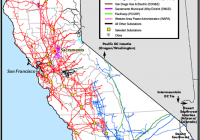
Summary PG&E is coming off a rough patch with some legal troubles. The interest rate environment is favorable, and PG&E is heavily leveraged. PG&E’s cost of production has declined due to the low cost of energy. Experts have mixed opinions on the stock, but are more bullish long-term. The low interest rate environment coupled with low energy prices is a best case environment for Pacific Gas & Electric (NYSE: PCG ). The utility can use low interest rates to roll over their existing debt and use low energy prices to hedge costs of production at a historically low rates. Not all is rosy, the utility must navigate a complex and tangled legal environment, and placate concerns regarding energy grid security. Even through all these complications, PCG must continue to look forward and embrace innovation if it hopes to achieve its 2020 mandate that 33% of all power is from renewable sources. If PG&E can navigate the risks and take advantage of this favorable business environment, the company should continue to lead the U.S. utility sector. Market Overview PG&E Corporation is a public utility holding company, which means it is subject to regulatory oversight and must provide the regulatory body access to their records and books. The regulatory environment is tangled and complex, different sections of PCG’s business are regulated by one or more of these regulatory bodies: The CAISO , FERC , NRC , CPUC , and CEC . From FERC, which regulates the interstate transmissions of electricity and natural gas, to CEC, which handles energy policy and planning for the state of California. Regulation is central to a utility company like PG&E, even product pricing is done through a ratemaking process with regulators. Ratemaking is when a public utility company, like PCG or FERC, exchange information about the cost of energy production, operating expenses, and regulatory policy goals. Then the two agree on a price rate for energy which will cover all of these costs and provide a ‘fair’ rate of return. The market for energy is not competitive and is centralized is because of the large capital investment required for energy infrastructure and for real-time regulatory oversight. The government would have a difficult time regulating thousands of small electricity companies and it is possible policy demands for infrastructure would not be met. See here for more about how the California energy system works. Business Overview PG&E was founded in 1905 and continues to lead the United States as the largest utility company. The utility currently employees 22,581 people and operates mostly in northern California. The utility is diversified across many energy sectors, with nuclear generation facilities, combined cycle gas turbine electricity generators, wind power installations, natural gas pipeline and even energy storage. PG&E is a legal monopoly because of the strategic advantages of scale in the public utilities sector. Because PG&E is defined as a public utility company, many of its business choices are monitored closely or mandated by the federal and state governments. When making business changes, PG&E must move very deliberately in order to move in step with policy makers. Recently PG&E has been mandated to provide 33% of all energy from renewable sources by 2020. As you can see below, the Utility still has to acquire more renewable resources to achieve the mandate. Further the regulatory bodies have placed a growing target for energy storage. (click to enlarge) PG&E is heavily leveraged in the credit markets, because energy infrastructure is capital intensive and the payoff over long time horizons. Due to the Utility’s stability for more than a century, PG&E has been able to demand favorable terms for credit. Further, PG&E’s main products, consumer natural gas and electricity, are tied to the prices of oil and natural gas. These two energy markets are near historic lows and PG&E should be able to hedge their energy costs for the next few years at favorable prices today. (click to enlarge) Growth Plan (From the Company’s 10-K ) Managing Legal risks: The Utility has many legal risks which are outlined in the Risk section below, it is vital that the Utility effectively manage these legal disputes or future growth could be inhibited. Renewable Power Initiatives: California law requires the Utility to gradually increase the amount of renewable energy to at least 33% of their annual retail sales by 2020. Natural Gas Pipeline: During 2014 the Utility completed its system wide replacement of 847 miles of iron pipelines with plastic pipe. Energy Storage: California law has established initial energy storage targets for the Utility. The Utility currently has 80.5 MW of energy storage which meets the target. The target is expected to increase over the next few years. Additional Transmission: The Utility plans to complete a new transmission line connecting the Gates and Gregg substations. The new line is expected to reduce the number and duration of power outages, improve voltage in the area and increase economic activity in the area. Additional Distribution: In October 2014, the Utility began operations at the first of three new electric distribution control centers. These centers will utilize Smart Grid technologies for added stability to the grid. Risks (From the Company’s 10-K ) Enforcement matters, investigations, regulatory proceedings: The environment for legal risk for PCG is sizable, with a federal criminal prosecution of the Utility. Additionally the rates and tariffs which PCG can charge customers is set by the government through a legal process. Liquidity and Capital Requirements: Since PCG has been around more than a century their credit rating stable, however, the inability to continue to attract favorable lending rates would greatly reduce the profit of PCG. Operations and Information Technology: There are broad array security and cybersecurity risks which come with operating a large utility company. The majority of these risks deal with containment of large accidents, adverse weather preparation and sensitive data protection. Environmental Factors: Both the macro economic environment as well as the physical environment have large impacts on the performance of PCG. Extremely hot summers cause more demand which strains the electricity grid, while extremely cold winters strain the natural gas network. PCG must continue to upgrade the infrastructure of the Utility in order to mitigate these environmental risks. Competition From New Technology: The Utility is subject to increased competition due to the increasing viability of distributed generation and energy storage technologies. The levels of self-generation of electricity by customers (mainly solar) and the use of customer net energy metering, which allows self-generating customers to receive bill credits at the full retail rate, are increasing. Expert Opinion (click to enlarge) Analyst opinion has moved from negative three years ago, to positive in the last year. The mean price target for PCG is $57 per share, which currently gives PCG stock an upside of approximately 10%. Analysts have moved down their EPS estimates over the last 90 days, which is a bearish sign for the stock’s near-term value. However, PCG has a tendency to surprise investors with its EPS announcements. In conclusion, analysts are uncertain about the near-term prospects of PCG, but they are bullish regarding the long-term value of the company. Current Events PG&E recognized by CIO magazine as a CIO 100 Award Winner Gas pipeline explosion near Fresno, CA, which led to a payout of $1.6 billion . A recent blackout in Berkeley, CA. Conclusion PG&E is a utility that is going through a near-term rough patch, but is well positioned to take advantage of long-term trends in the energy industry. Since PG&E requires credit to invest in energy infrastructure, the current low interest rates environment is useful for refinancing current loans and starting new projects at attractive credit rates. Further PG&E benefits from a low cost energy environment which allows them to hedge their costs of production at attractive rates. While PG&E is well positioned, the future growth of PG&E is dependent upon the Utility’s ability to mitigate risks. There are significant risks to growth which PG&E must overcome and manage if they wish to continue to lead the Utility sector. PG&E is exposed to a few major legal cases which could negatively impact the company. Further, the company must integrate renewable energy resources into the grid while maintaining stability. Analysts are aware of these risks and are divided regarding the future price of PG&E. In conclusion, PG&E the largest utility in the U.S. and is well positioned to take advantage of two major market trends if it can manage the risks. The utility should continue to lead the sector and is a buy if an investor is looking for dividend capture and stable growth in the U.S. utility space. Disclosure: The author has no positions in any stocks mentioned, and no plans to initiate any positions within the next 72 hours. (More…) The author wrote this article themselves, and it expresses their own opinions. The author is not receiving compensation for it (other than from Seeking Alpha). The author has no business relationship with any company whose stock is mentioned in this article.

Northland Power – A Renewable Energy Giant In The Making

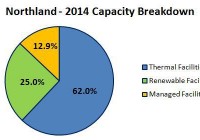
Summary Northland is an independent power producer with a total capacity of 1,356 MW. The company has two giant offshore wind farm projects under construction. These projects should turn the company into one of the world’s biggest renewable energy producers. Currently, Northland shares are undervalued. Northland Power (OTCPK: NPIFF ) is a Canada based independent power producer. As of March 31, 2015, the company owns or has a net economic interest in power producing facilities with a total capacity of approximately 1,356 MW. Northland’s facilities produce electricity from natural gas and renewable resources. Apart from that, the company is developing a few renewable energy projects, which, in a few years, should transform Northland into one of the biggest green companies in the world. In this article I am trying to provide a short description of these projects; in the final section I will try to assess the value of the company’s shares. Capacity As of the end of 2014, the company’s facilities had a total capacity of 1,356 MW, of which the biggest share belonged to thermal facilities (62% of total capacity). The chart below shows the capacity breakdown: source: Simple Digressions and the company’s reports In a few years this situation is going to change. The company has four renewable energy projects under construction (discussed below), which should commence their operations in the next three years. Therefore at the end of 2017, when these projects are finished, the overall company’s capacity should stand at 2,428 MW with renewable energy facilities generating as much as 58.1% of the electricity (chart below). source: Simple Digressions and the company’s reports Northland is turning from thermal generation to renewable energy Looking at the company’s electricity sales it is easily spotted that Northland perceives renewable energy as its main growth driver. Since 2009 the electricity sales generated by thermal facilities have been rising at the rate of 24.7% a year. But in the same time span the electricity sales generated by renewable energy facilities have been rising at much higher rate of 65.8% a year. This trend is going to strengthen in the next three years because all projects under construction are renewable energy ones (wind and solar). Let me discuss these projects in detail. Gemini Gemini is an offshore wind development project located 85 km off the North East coast of the Netherlands. The project will consist of 150 Siemens wind turbine generators, each with a capacity of 4 MW (600 MW in total). Gemini is one the biggest offshore wind projects in the world – the total capital expenditures are expected to be €2.8 billion. Despite these large expenditures, Gemini is an example of a successful non-recourse project financing where expenditures of €2.2 billion will be financed by debt (senior debt of €2.0 billion and subordinated debt of €0.2 billion). The Northland stake in Gemini accounts for 60% – it means that the company’s portion of the equity and junior debt is estimated to be €288 million. The project was awarded up to €4.4 billion of public funding to supplement market revenues from electricity sales. This 15-year award is called SDE Grant and has been issued by the government of the Netherlands. Simply put, the SDE Grant is a contract-for-differences, which supplements market electricity prices traded on the Amsterdam Power Exchange. In order for Gemini to earn the market based component of revenue, a power off-take balancing agreement has been signed with Delta Energy BV, a subsidiary of a Dutch utility company. Currently the financing is closed and Gemini entered its construction phase. The project is expected to be finished in 2017. Northland estimates that Gemini will be producing 2,600 giga-watt hours per year. The company also estimates that the annual EBITDA generated by the project should stand at C$560 – 570 million. Nordsee One Nordsee One, similarly to Gemini, is another offshore wind development project. It is located 40 km north of Juist Island in the North Sea. The project will consist of 54 Senvion wind turbines generators, each with capacity of 6.15 MW (332.1 MW in total). The Nordsee One capital costs are estimated to be €1.2 billion – similarly to Gemini, these expenditures will be financed by non-recourse debt and equity. According to the company’s announcement on the financing close: “Approximately 70% of the project’s required costs will be provided from an EUR840 million non-recourse secured construction and term loan and related loan facilities from ten international commercial lenders. Reflecting the strength of Nordsee One, the financing was oversubscribed. The lending group includes ABN AMRO, Bank of Montreal, Commerzbank, Export Development Canada, Helaba, KfW IPEX, National Bank of Canada, Natixis, Rabobank and The Bank of Tokyo-Mitsubishi” The Northland’s stake in the project accounts for 85%, which means that the company’s portion of equity is estimated to be €288 million. As in the case of Gemini, Nordsee One qualifies for a revenue subsidy. This time it will be a subsidy from the German government granted for 9.6 years (called EEG). It is once again a contract-for-differences, which guarantees a fixed electricity sale price over the subsidy duration. Northland estimates the Nordsee One average annual energy production at 1,200 giga-watt hours; the annual EBITDA generated by the project should stand at C$300 – 310 million. The project is expected to be finished in 2017. Grand Bend Wind Project It is a jointly held (with a 50% stake belonging to the Aamjiwnaang and Bkejwanong First Nations) wind project with a capacity of 100 MW located in Grand Bent, Ontario, Canada. Northland is a developer, construction manager, co-owner and operations manager. The project has a 20-year power purchase agreement with Ontario Power Authority. Project financing is completed and all construction contracts have been signed. The company expects the project to commence operations in spring 2016. The project budget is estimated at C$384 million. Ground-mounted Solar Projects The project consists of 4 individual ground-mounted solar projects with a total capacity of 40 MW. This is a third phase of a partly finished operation, which should be completed in 2015. Northland estimates the project costs to stand at C$329 million, which is around C$83 million higher than previously estimated (this increase is due to legal claims against the former project contractor). The annual EBITDA generated by the project should stand at C$ 22 million. Financial results Since its 2011 conversion from an income trust to a corporation, Northland has been steadily improving its financial results. The company has been increasing its revenue and operating income. On the other hand, due to a very ambitious investment plan realized by Northland, the company’s bottom line looks worse. Finance costs and unrealized losses on derivative contracts are the main contributing factors. For example, in 2014 Northland reported finance costs (interest on debt, borrowings and bank fees) of C$119.9 million. Additionally, Northland reported a loss of C$296.6 million on foreign exchange hedges (these losses were non-cash issues). Therefore, in 2014 the company showed a net loss of C$177.7 million. Now, let me discuss an issue, which is one of the most important metrics in evaluation of any dividend-paying energy company, namely its free cash flow. The chart below evidences free cash flows and dividends paid by the company: (click to enlarge) source: Simple Digressions and the company’s reports As the chart shows, since 2010 Northland has been increasing its dividends. Unfortunately, in the period 2010 – 2012 these increases were not backed by higher free cash flows – the company was over paying its dividends, which was evidenced by the so-called payout ratio, which was higher than 100% (if a payout ratio is higher than 100% a company is paying higher dividend than its free cash flow allows – in the long term such a situation is unsustainable). But since 2013 the company’s dividends have been backed by its free cash flow, with payout ratios of 70 % and 76% in 2014 and 2013 respectively. In the coming years the company expects that its payout ratio will rise over 100% once again. Till 2017 Northland will be involved in construction of two large wind projects (Gemini and Nordsee One). This process demands a lot of money therefore the company, which is determined to sustain its dividends, will have to increase its payout ratio above 100% once again (free cash flow, due to higher investment, will decrease). When both projects are in operation (in 2017) the payout ratio should go well below 100% (due to the increased free cash flow from Gemini and Nordsee One) – please, look at the slide below: (click to enlarge) source: the company’s presentation (page 84) Valuation To estimate value of Northland shares I am using the ratio of EV / EBITDA (enterprise value / earnings before interest, taxes, depreciation and amortization). Because it is quite difficult to find current and reliable EV / EBITDA ratios reported in the renewable energy sector, I am calculating the Northland value using two available ratios: multiple of 9.2 assumed by the Ernst&Young report for base-load independent power producers in the Americas multiple of 14.32 assumed by Aswath Damodaran for Green and Renewable Energy sector In my opinion, the multiple published by professor Damodaran seems to be more appropriate for Northland because this company is currently in a transitory period, which should bring it from a base-load energy producer to a renewable energy company. Another assumption – my calculations are divided into two blocks: Value calculated for current operations Value calculated for two the most important wind projects: Gemini and Nordsee One. Total value is calculated through adding up value of current operations and value of Gemini and Nordsee One. The tables below show the way I have calculated value of Northland: source: Simple Digressions and the company’s reports As the last table shows, I estimate that one share of Northland is worth between $19.9 and $44.6 . Currently the Northland’s shares are trading around C$16 per share, which means undervaluation. Editor’s Note: This article discusses one or more securities that do not trade on a major U.S. exchange. Please be aware of the risks associated with these stocks.