Tag Archives: undefined

Raining On The All Seasons Portfolio
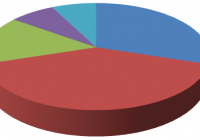
Investors are hungry for success stories, especially tales that include high returns with low risk. And the investment industry is always happy to stoke that appetite. One of the most popular stories today is the so-called All Seasons portfolio, whose virtues are trumpeted in the massive bestseller Money: Master the Game , by motivational speaker Tony Robbins. The book has been out since last November, and I thought the hype would blow over quickly, but I’m still getting inquiries about it, so I thought I’d take a closer look. The All Seasons portfolio was created by Ray Dalio of Bridgewater Associates , one of the largest hedge fund managers in the world. It’s based on Dalio’s similarly named All Weather fund , which reportedly has more than $80 billion USD in assets. The portfolio has the following asset mix: 30% Stocks 40% Long-term bonds 15% Intermediate bonds 7.5% Gold 7.5% Commodities In a backtest covering the 30 years from 1984 through 2013, the All Seasons portfolio had an annualized return of 9.7% (net of fees) and only four years with a loss. Its worst year was a modest -4% in 2008. With a risk-return profile like that, it’s no wonder so many investors have been attracted to the All Seasons portfolio. In fact, a service run by Robbins’ own advisor has been swamped with requests from investors who want a piece of this seemingly miraculous strategy. So, is the All Seasons portfolio really a recipe for stellar returns with minimal risk? Or is it just another example of investors chasing hypothetical past performance? The reasons for the seasons The All Seasons portfolio is based on the idea that asset prices move in response to four forces: rising economic growth, declining economic growth, inflation and deflation. In each of these economic “seasons,” some asset classes thrive and others suffer. For example, when growth is strong and inflation is low, stocks are likely to perform well, whereas commodities and gold benefit from rising growth and rising inflation. Bonds do well when economic growth and inflation are both falling. By including all of these asset classes in your portfolio, you’ll do well under all conditions. It’s like travelling with sunscreen, an umbrella, a swimsuit and a parka. There’s nothing wrong with this general idea: most investors understand that a portfolio should include asset classes with low (or even negative) correlation . Nor is it an original thesis: it’s very similar to what Harry Browne wrote in the early 1980s. Browne’s Permanent Portfolio was also based on the principle that you should hold asset classes that would thrive during four economic scenarios: stocks for prosperity, cash for recessions, gold for inflation protection, and long-term bonds for deflation. (If you’re interested in learning more, read Part 1 and Part 2 of my 2011 interview with Craig Rowland, co-author of The Permanent Portfolio .) Was the performance really remarkable? But while the premise of the All Seasons portfolio is reasonable, there’s nothing astonishing about its performance during the last 30 years. Moreover, anyone expecting it to deliver 9.7% with low risk in the future is likely to be disappointed. The returns were unremarkable. A 9.7% annualized return doesn’t mean much unless you compare it to the alternatives. The truth is that all diversified portfolios performed well during the last three decades. Despite the carnage of the dot-com bust at the turn of the millennium and the financial crisis of 2008-09, most of those 30 years were extremely kind to stocks. Late 1987 to the spring of 2000 saw the longest bull market in history, and the one we’re enjoying now ranks third all-time. From 1984 through 2013, the S&P 500 returned a whopping 11.1%. And what about bonds, which make up 55% of the All Seasons portfolio? In the US, long-term government bonds returned 9.4% during the period. In Canada, they did even better: the FTSE TMX Canada Long-Term Bond Index returned 10.3% over those 30 years. Once you consider the context, a 9.7% annualized return since 1984 isn’t remarkable at all. Anyone who stayed invested in a diversified portfolio would have seen similar results. The risk was not “extremely low.” OK, maybe the returns of the All Seasons portfolio were in line with a traditional balanced portfolio, but risk was much lower, right? In an article for Yahoo Finance , Robbins reports that the standard deviation of the portfolio during the 30-year period was 7.63%, which he declares is “extremely low risk and low volatility.” I’m not sure investors would agree with that assessment. If a portfolio has an average expected return of 9.7% and a standard deviation of 7.6%, that means in 19 years out of 20, its annual return can be expected to range between -6% and 25%. That’s not “extremely low volatility”: it’s about the same as that of a traditional balanced portfolio. In our white paper Great Expectations , my colleague Raymond Kerzhéro and I found that a portfolio of 40% bonds and 60% global stocks had a standard deviation of about 7.8% over a similar period (1988 to 2013). What about the fact that the All Seasons had only four negative years, all with only modest losses? Robbins and Dalio frequently compare the All Seasons portfolio to the S&P 500, which certainly saw much larger and more frequent drawdowns. But this is a totally inappropriate benchmark, as the All Seasons portfolio includes just 30% stocks. Dalio’s portfolio holds 55% bonds, which are far less volatile than stocks. More important, bonds only lose value when interest rates rise, and from 1984 to 2013, the yield on 30-year Treasuries fell from over 11% to about 3.5%. Any bond-heavy portfolio would have seen rare and modest drawdowns during that period. There were many disappointing periods. The long-term returns of almost any diversified portfolio look impressive, but unfortunately you can’t buy 30 years of performance in advance: you have to earn those returns by doggedly sticking to your plan even when it disappoints. And let’s be clear: the All Seasons portfolio would have tried your patience many times. While the portfolio never suffered huge losses, it would have significantly lagged a traditional balanced portfolio during the many periods when stocks delivered double-digit returns. That’s why this strategy – and the Permanent Portfolio, for that matter – had few followers during the 1980s and 1990s. A portfolio with just 30% stocks would have been met with derision during that long, giddy bull market. Gold would have been even harder to hold. Sure, it glittered during the most recent financial crisis, but during the 21 years from 1984 through 2004, the real return on gold in Canadian dollars was -2.3% annually. Would you have had the guts to hold it through two money-losing decades? Don’t make the mistake of thinking it’s easy to stick with a strategy when it underperforms during strong bull markets, as the All Seasons portfolio is almost certain to do. Bridgewater’s own All Weather fund returned -3.9% in 2013 , one of the best years for stocks in recent history (the MSCI World Index was up almost 34% in Canadian dollars). My guess is that Dalio’s clients took little comfort in the fact that strategy performed well in historical backtesting. Couldn’t stand the weather My goal here is not to beat up on the All Seasons portfolio specifically: on the contrary, I wanted to show that in many ways it’s not fundamentally different from other balanced portfolios. My concern is that the All Seasons portfolio is presented as a magic formula that will dramatically outperform a traditional stock-and-bond portfolio with far less risk. The very name implies that it will perform well during all market conditions. But that wasn’t true over the last 30-plus years, and it’s even less likely to be the case during a period of low interest rates. (No one knows where rates are headed, but it’s absurd to expect 9% or 10% returns on bonds when yields are 1% to 3%.) A well-diversified, low-cost portfolio executed with discipline offers your best chance of enjoying market returns with moderate volatility. But there’s no secret recipe, no optimal asset allocation, and no reward without risk. Be skeptical of anyone who suggests otherwise.
IWM’s 2015 2nd-Quarter Performance And Seasonality

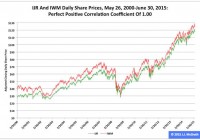
Summary The iShares Russell 2000 ETF behaved better than the iShares Core S&P Small-Cap ETF did in the first half of the year. The former fund also performed better than the latter fund did in the second quarter. However, the converse was the case in June. The iShares Russell 2000 ETF (NYSEARCA: IWM ) and the iShares Core S&P Small-Cap ETF (NYSEARCA: IJR ) both recorded positive returns in the first half, Q2 and June based on their respective adjusted closing daily share prices, which is saying something in the current equity-market environment. IWM led IJR by 66 basis points in the first half as it ascended to $124.84 from $119.26, a climb of $5.58, or 4.68 percent. And IWM outdistanced IJR by 21 basis points in Q2 as it expanded to $124.84 from $124.37, a gain of 47 cents, or 0.38 percent. But the two ETFs switched roles in June, with IWM lagging IJR by -29 basis points as it grew to $124.84 from $123.89, an increase of 95 cents, or 0.77 percent. Comparisons of changes by percentages in IWM, IJR, the SPDR S&P MidCap 400 ETF (NYSEARCA: MDY ), the SPDR S&P 500 ETF (NYSEARCA: SPY ) and PowerShares QQQ (NASDAQ: QQQ ) during the first half, over Q2 and in June can be found in charts published in “SPY’s 2015 2nd-Quarter Performance And Seasonality.” Figure 1: History Of IJR And IWM Daily Share Prices (click to enlarge) Source: This J.J.’s Risky Business chart is based on analyses of adjusted closing daily share prices at Yahoo Finance . Since IWM and IJR were launched May 26, 2000, there has been a perfect positive correlation coefficient between the adjusted closing daily share prices of the two ETFs, which is one reason I believe each is an excellent proxy for the small-capitalization segment of the U.S. equity market (Figure 1). Accordingly, I analyze data associated with both funds in the context of my Risky Business Daily Market Seismometer , as mentioned in “Assessing IWM With The Aid Of The U.S. Economic Index.” Of course, the ETFs are not identical but similar, as evidenced by their behaviors between their shared launch date and June 30, when IJR handily outpaced IWM by 102.54 percentage points. In this period, the fund based on the S&P 600 index rose 333.86 percent and the fund based on the Russell 2000 index rose 231.32 percent. As result, I think the ETFs’ differences are relatively trivial in terms of analysis and absolutely nontrivial in terms of their employment in an investing or trading portfolio. Overvaluation appears to be one characteristic currently shared by both funds’ underlying indexes. I note the Russell 2000’s price-to-earnings ratio on a trailing 12-month basis was calculated as 78.00 July 2, according to Birinyi Associates data published by The Wall Street Journal , and I point out the S&P 600’s valuation was discussed in “IJR’s 2015 2nd-Quarter Performance And Seasonality” here at Seeking Alpha. Figure 2: IWM Monthly Change, 2015 Vs. 2001-2014 Mean (click to enlarge) Source: This J.J.’s Risky Business chart is based on analyses of adjusted closing monthly share prices at Yahoo Finance . IWM behaved a little worse in the first half of this year than it did during the comparable periods in its initial 14 full years of existence based on the monthly means calculated by employing data associated with that historical time frame (Figure 2). The same data set shows the average year’s weakest quarter was the third, with an absolutely large negative return, and its strongest quarter was the fourth, with an absolutely large positive return. Figure 3: IWM Monthly Change, 2015 Vs. 2001-2014 Median (click to enlarge) Source: This J.J.’s Risky Business chart is based on analyses of adjusted closing monthly share prices at Yahoo Finance. IWM performed a lot worse in the first half of this year than it did during the comparable periods in its initial 14 full years of existence based on the monthly means calculated by using data associated with that historical time frame (Figure 3). The same data set shows the average year’s weakest quarter was the third, with an absolutely large negative return, and its strongest quarter was the fourth, with an absolutely large positive return. Disclaimer: The opinions expressed herein by the author do not constitute an investment recommendation, and they are unsuitable for employment in the making of investment decisions. The opinions expressed herein address only certain aspects of potential investment in any securities and cannot substitute for comprehensive investment analysis. The opinions expressed herein are based on an incomplete set of information, illustrative in nature, and limited in scope. In addition, the opinions expressed herein reflect the author’s best judgment as of the date of publication, and they are subject to change without notice. Disclosure: I/we have no positions in any stocks mentioned, and no plans to initiate any positions within the next 72 hours. (More…) I wrote this article myself, and it expresses my own opinions. I am not receiving compensation for it (other than from Seeking Alpha). I have no business relationship with any company whose stock is mentioned in this article.

The ProShares USD Covered Bond ETF: Covering All The Bases

One of the few ways for a retail investor to participate in the covered bond market. The fund features U.S. Dollar denominated AAA rate covered bonds. The fund is actively managed, with total annual expenses of 0.35%. Anyone who knows the game of baseball will tell you that in order to play effective defense, the team must know how to keep the bases covered at all times. It’s not as simple as it sounds. It depends on the baserunners, on what bases and then what to do on the next pitch. Covering all the bases carries over to investing and choosing a fund while keeping that well-worn baseball axiom in mind. According to European Covered Bond Council : …Covered bonds are debt instruments secured by a cover pool of mortgage loans (property as collateral) or public-sector debt to which investors have a preferential claim in the event of default… In other words a covered bond is a bond whose cash flow originates from other bonds or loans called a ‘cover pool’. This might remind some investors of the infamous ‘collateralized’ or ‘securitized’ mortgage backed securities, but covered bonds are not that. First, a covered bond is not an ‘off-balance-sheet’ asset. It is an obligation kept on the balance sheet of the issuer; it is a ‘bond’ in every way. The issuer bears full accountability for the bond and the payments. In other words, the bondholder has full recourse to the issuing credit institution, if need be. Second, the bondholder also has a claim to the covered pool, senior to unsecured creditors. Third, it is the responsibility of the issuer to maintain sufficient assets in the cover pool to satisfy the claims of bondholder during the life of the bond. Lastly, to be able to issue a covered bond, the issuing institution must be an accredited, regulated institution. What it amounts to is that all the bases are covered. At this point, it’s necessary to mention a little known general fact about bonds: a bond may be issued in a currency other than the issuer’s sovereign currency. So, for example, an accredited, regulated European institution may issue U.S. Dollar denominated bonds , even if the native currency is the Euro. There are various reasons for this. For example, a U.S. Dollar denominated bond might be intended for a particular segment of the U.S. market; a pension fund for instance. Also, advanced economy nations may issue foreign denominated bonds as part of a trade agreement. This is particularly true of emerging market nations trying to attract foreign, fixed capital investment. Most importantly, a foreign denominated bond is a hedge against originating currency volatility. One other critically important characteristic of this fund is that does not choose yield over risk. ProShares USD Covered Bonds ETF, ” focuses exclusively on the highest rated U.S. Dollar denominated bonds ” and ” is the only corporate bond fund in the United States with substantially all of its assets rated AAA. ” Thus the fund has an added measure of safety in a financial world rife with unsound fixed income investments. The fund first traded in May of 2012 and has been consistent on returns with a steady Net Asset Value as well as a steady flow of monthly distributions. (click to enlarge) The average dividend return for 2012 was $0.085491 per month for the 7 months of the fund’s inception year. In 2013 the average dividend was $0.0821472 per month; in 2014 it was $0.0847515 per month and for 2015 $0.0930747, to 7/1/15. Hence the dividend has been consistent since inception. The average NAV since inception is $101.42368 and the June 19 NAV close $101.53, hence about 0.108% above its average and 1.53% above its inception value. The dividends paid since inception total $3.159669 on the $100.25 per ETF share, or 3.1517895%, if purchased on the inception date. This is in comparison with the 3 year U.S. Treasury note’s 0.41% and the 30 year U.S. Treasury bond’s 2.80% secondary market yields on the fund’s inception date of 5/21/2012. Hence this fund with its AAA, rating had a better yield, to date, than a 30 Year U.S. Treasury bond if purchased on the same date. (click to enlarge) Dividend Distributions chart: data from ProShares The ETF market shares have returned -1.546% since inception, as of the June 29, 2015 close. This means that, currently, the market shares are trading well below the NAV, meaning the shares are selling at a 2.67% discount to the NAV. This is a rare event. The share price has traded at a discount on only 40 of the 785 days since inception or 3.82% of the time. It has traded at a premium on 96.13% or 745 days over the life of the fund. It’s possible that the ETF shares are selling at a discount to the NAV on expectations that the U.S. Fed is expected to tighten. If this is the case, the investor must consider the U.S. Feds plan to raise by small increments. The Maturity Distribution Chart demonstrates that the largest portion of the covered pool, 55%, is held in 2 to 4 year bonds, and 34% in 0 to 2 year bonds. Since the fund is actively managed , the higher likelihood it will anticipate and adjust quicker than a rules based passively managed fund. It is interesting to note the fund’s performance during the global bond selloff from about the middle of April until the beginning of June. The NAV closed at a high of $102.10 on April 15, paid a dividend of $0.087976 on May 11, $0.101797 on June 9 and closed at a low of $101.04 on June 10, averaging 101.57, or about $0.15 above its average since inception. The average dividend paid was $0.09489, $0.01274 above its average since inception. The ETF share price closed at a high of $102.15 on April 22 and closed at a low of $99.39 on June 8 a decline 2.70%, or $2.76 from the April high. Most recently, the ETF shares closed at $98.70 on July 1, while its calculated NAV as of July 1, was $101.41. It’s important to note then, the market shares are trading well below the NAV, a discount of -2.67%. This is a rare event. The share price has traded at a discount on only 30 of the 740 trading days since inception or 4.05% of the time. It has traded at a premium on 95.95% or 700 trading days over the life of the fund. There are currently 25 covered bonds in the fund, and a cash position of $48285.95. The weighted average yield to maturity is 1.48%. The trailing twelve month yield is 1.06% and the annualized yield based on the last distribution is 1.18%. The fund’s net assets as of June 19 are $6.563 million. It’s worth noting that the tracking index is comprised of 44 issues, has a weighted average maturity of 3 years, a weighted average yield to maturity of 1.52%. This indicates that this actively managed fund is more efficient than the unmanaged index. Almost all of the covered bonds are “144A” bonds. Investopedia defines SEC Rule 144A a modification of: … a two-year holding period requirement on privately placed securities to permit qualified institutional buyers to trade these positions among themselves … In other words, the rule creates a more liquid market for these securities. The fund’s largest holding is Australia’s Westpac Banking Corp (NYSE: WBK ) 144A 1.850% due 11-26-18. According to Westpac, its covered bond rating by Fitch is AAA and by Moody’s, Aaa. Just as a side note, a Seeking Alpha contributor Donald van Deventer recently updated his analysis of Westpac Banking Corporation noting that: … Westpac Banking Corporation has continued to be a prominent bond issuer in international markets… The bank ranks in the safest 10% of the world-wide banking peer group for default probability maturities of 5 years or more, but the banking sector is a risky one … The second largest market value holding is The Royal Bank of Canada’s (NYSE: RY ) 144A 2% due 10/1/18. Moody’s rating of the bank’s covered bond program is Aaa and Fitch ranks it at AAA. SpareBank ( OTC:SRMGF ) is a Norwegian Bank which, coincidentally, specializes in covered bond issuances. The cover pool consists of high quality single family residential mortgages. It must be emphasized that these are not securitized or collateralized off-balance-sheet debt instruments, but actual bonds for which the issuer bears full responsibility. Further, in the aftermath of the global credit bubble, the financial and legal consequences suffered by the rating agencies served to strengthen the quality of analysis and that of ratings. SpareBank 1 Boligkreditt mortgage-cover-pool, covered bonds, are rated Aaa by Moody’s and AAA by Fitch. Stadshypotek AB , is a Swedish mortgage lender and subsidiary of Svenska Handelsbanken ( OTCPK:SVNLY ), whose covered bond program receives an Aaa rating from Moody’s. Since it is a subsidiary, it should be noted that S&P rates the issuer Stadshypotek AA-; Fitch AA-, and lastly Handelsbanken receives ratings of AA- from S&P, Aa3 from Moody’s and AA- from Fitch. ING Groep (NYSE: ING ) of Netherlands, has a global reach but is mainly a European based bank. Their 144a 2.625% coupon, due 12/5/2022 receives Aaa from Moody’s, AAA from S&P and AAA from Fitch. ING’s ‘hard-bullet’ covered bonds are backed by Dutch Prime Residential Mortgages, the Dutch legal standard for mortgage cover pools. Covered Bond ETFs are a rarity in the ETF universe. iShares offers an investment grade , Euro denominated, Covered Bond ETF (ICOV.LN). The returns on the holdings are better, but the description refers to ‘ investment grade ‘ investments, meaning BBB or higher. Lastly, U.S. based Pimco in cooperation London based Source also markets a covered bond ETF (COVR:XTER) however it trades on the German DAX and in Euros. To some up, the ProShares USD Covered Bonds ETF (NYSEARCA: COBO ) offers investors a way to participate in an asset class not accessible to individual retail investors. Further, the fund has a strong bias towards highly rated covered bonds with the best possible yields. Further, the high rating bias extends to the ‘cover pool’ of securities. The fund’s performance during the recent global bond market correction demonstrated its stability. The ETF shares did lose value but the Net Asset Value of the fund remained well within its long term deviation, thus creating a discount arbitrage for the shares vs the NAV. According to the prospectus , the fund is actively managed by ProShares Advisors and the total fees, expenses waivers and reimbursements result in total operating expenses of 0.35%. If it’s expected that low rates of return are to be the new normal, this may be a good opportunity to earn surprisingly good returns and very high degree of safety. Disclosure: I/we have no positions in any stocks mentioned, and no plans to initiate any positions within the next 72 hours. (More…) I wrote this article myself, and it expresses my own opinions. I am not receiving compensation for it (other than from Seeking Alpha). I have no business relationship with any company whose stock is mentioned in this article.