Tag Archives: undefined

Frontrunning Yield Shares High Income ETF YYY And ETRACS Monthly Pay 2xLeveraged Closed-End Fund ETN CEFL: Could You Have Profited?
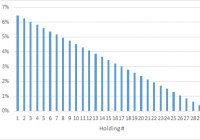
Summary ISE High Income Index, the index for YYY and CEFL, is rebalanced annually on the last trading day of each year. CEFs that were to be added saw heavy buying pressure before the rebalancing date, while those to be removed saw heavy selling pressure. Could an investor have profited by frontrunning YYY? I invite the astute readership of Seeking Alpha to join the case. Introduction In a previous article , we looked at how end-of-year selling in Eaton Vance Tax-Managed Global Buy-Write Opportunities Fund (NYSE: ETW ) pushed the discount of this closed-end fund [CEF] to levels not seen in the past 18 months. The article suggested buying ETW to lock in a high 10.6% yield, as well as to grasp the potential opportunity for capital appreciation if the -10.3% discount narrows back to its historical averages. We also saw that in the last four trading days of 2014, over 956K shares of ETW changed hands, greatly exceeding its average daily volume of 400K. The final day’s volume of 1.6M was the highest in all of 2014. In the comment stream of that article, some posters suggested that end-of-year tax issues may have caused the high-volume selling, while others suggested that institutional selling may have been the culprit. In this article, we explore the possibility that clever traders may have been frontrunning the annual rebalancing event of the ISE High Income Index [YLDA]. YLDA is the index tracked by Yield Shares High Income (NYSEARCA: YYY ), a CEF “fund-of-funds”, and ETRACS Monthly Pay 2xLeveraged Closed-End Fund ETN (NYSEARCA: CEFL ), the 2X leveraged version of YYY. Did the “smart money” profit by frontrunning the index rebalancing event? ISE High Income Index Methodology The steps to construct the ISE High Income Index are shown below (source: ISE ). 1. Restrict selection universe to closed-end funds with market cap > $500M and six month daily average volume > $1M. 2. Rank each fund by the following three criteria: i. Fund yield (descending) ii. Fund share price Premium / Discount to Net Asset Value (ascending) iii. Fund Average Daily Value (ADV) of shares traded (descending) 3. Calculate an overall rank for each fund by taking the weighted average of the three ranks with the following weightings: yield@50%, premium/discount@25%, average daily value@25%. 4. Select the 30 funds with the highest overall rank. 5. Adjust each component’s weighting to a multiple of the weighting of the smallest component using an equation that results in the following distribution: 6. If a component weight is greater than 4.25% then that weight is adjusted to be no more than 4.25%. 7. Perform further re-weighting of the constituents by using calculations related to average daily value (too complicated to reproduce here) to arrive at the following distribution (YYY constituents data obtained from YieldShares website on 1/2/2015; the composition represents the freshly rebalanced index): Basically, this index ranks CEFs by a composite score of yield, discount, and liquidity, with yield being the most important factor. The fund holdings are then weighted by their rank as well by a further liquidity measure. The index is rebalanced annually. According to YYY’s prospectus (emphasis mine): Index constituents are reviewed for eligibility and the Index is reconstituted and rebalanced on an annual basis. The review is conducted in December of each year and constituent changes are made after the close of the last trading day in December and effective at the opening of the next trading day . Most importantly, ISE gave notice on 12/24/2014 on the proposed changes it planned to make on the index one week later. How many YYY, CEFL or other CEF investors noticed that memo? I know I didn’t! Changes in YYY The first table shows the constituents of YYY on 12/31/2014 (source: Google cache of YieldShares website). Excluding cash, there were 28 holdings. Name Ticker Shares Market Value % YYY Market Value % of YYY Net Assets BLACKROCK RESOURCE&COMMOD BCX 457,298 $4,440,363.58 5.55% 5.52% EATON VANCE TAX-MGD DV EQ ETY 338,576 $3,781,893.92 4.73% 4.70% EATON VANCE TM BUY-WRT OP ETV 262,972 $3,697,386.32 4.62% 4.60% ALPINE TOTAL DYNAMIC DIVD AOD 432,317 $3,670,371.33 4.59% 4.57% EATON VANCE TM GL DIV EQ EXG 368,974 $3,501,563.26 4.38% 4.36% EATON VANCE RISK-MGD DIV ETJ 327,699 $3,493,271.34 4.37% 4.35% GABELLI EQUITY TRUST GAB 537,828 $3,479,747.16 4.35% 4.33% PIMCO HIGH INCOME FUND PHK 308,487 $3,470,478.75 4.34% 4.32% VOYA GLBL EQTY DIVD FUND IGD 416,842 $3,468,125.44 4.34% 4.31% NUVEEN GLOBAL HIGH INCOME JGH 199,476 $3,440,961.00 4.30% 4.28% EATON VANCE TM GLB BUY-WR ETW 304,469 $3,355,248.38 4.19% 4.17% MFS INTERMED INCOME TRUST MIN 700,908 $3,350,340.24 4.19% 4.17% ALLIANZGI NFJ DIV INT&PRM NFJ 205,033 $3,280,528.00 4.10% 4.08% BLACKROCK GLOBAL OPPORTUN BOE 245,574 $3,224,386.62 4.03% 4.01% BLACKROCK INTL GROWTH&INC BGY 451,944 $3,046,102.56 3.81% 3.79% BLACKROCK MULTI-SECTR INC BIT 178,736 $2,997,402.72 3.75% 3.73% PIMCO CORP & INCOME OPP PTY 185,985 $2,957,161.50 3.70% 3.68% GAMCO GLBL GOLD NAT RES GGN 409,741 $2,868,187.00 3.59% 3.57% BLACKROCK CREDIT ALLOC IN BTZ 215,699 $2,786,831.08 3.48% 3.47% FLAHERTY & CRUMRINE PFD FFC 138,794 $2,644,025.70 3.31% 3.29% WESTERN ASSET EMG MKT DBT ESD 156,073 $2,459,710.48 3.08% 3.06% COHEN & STEERS LTD DURAT LDP 102,413 $2,320,678.58 2.90% 2.89% EATON VANCE LIMITED DURAT EVV 138,478 $1,955,309.36 2.44% 2.43% BLACKROCK ENHANCED CAP&IN CII 126,348 $1,765,081.56 2.21% 2.20% ABERDEEN ASIA-PAC INCOME FAX 234,414 $1,300,997.70 1.63% 1.62% BLACKROCK ENHANCED EQ DIV BDJ 147,788 $1,200,038.56 1.50% 1.49% PIMCO INCOME STRATEGY PFN 98,785 $969,080.85 1.21% 1.21% WELLS FARGO ADV MULTISECT ERC 56,798 $774,156.74 0.97% 0.96% CASH 303,655 $303,654.55 0.38% 0.38% Total $80,003,084.28 100.00% 99.52% The second table shows the constituents of YYY one day later, on 1/2/2015 (source: YieldShares ). Excluding cash and negative holdings (see below), there were 31 holdings. Name Ticker Shares Market Value % YYY Market Value % of YYY Net Assets DOUBLELINE INCOME SOLUTIO DSL 176,655 $3,522,500.70 4.46% 4.59% MFS CHARTER INCOME TRUST MCR 387,732 $3,520,606.56 4.46% 4.59% PRUDENTIAL GL SH DUR HI Y GHY 221,101 $3,513,294.89 4.45% 4.58% PIMCO DYNAMIC CREDIT INCO PCI 169,312 $3,496,292.80 4.43% 4.56% FIRST TRUST INTERMEDIATE FPF 156,318 $3,492,144.12 4.42% 4.55% BLACKROCK CORPORATE HIGH HYT 308,047 $3,487,092.04 4.42% 4.55% MORGAN STANLEY EMERGING M EDD 335,183 $3,482,551.37 4.41% 4.54% EATON VANCE LIMITED DURAT EVV 243,912 $3,434,280.96 4.35% 4.48% GAMCO GLBL GOLD NAT RES GGN 491,906 $3,418,746.70 4.33% 4.46% CLOUGH GLBL OPPORTUNITIES GLO 266,654 $3,402,505.04 4.31% 4.44% EATON VANCE TM GL DIV EQ EXG 346,605 $3,303,145.65 4.18% 4.31% ALPINE TOTAL DYNAMIC DIVD AOD 381,618 $3,289,547.16 4.17% 4.29% VOYA GLBL EQTY DIVD FUND IGD 394,980 $3,290,183.40 4.17% 4.29% ALPINE GLOBAL PREMIER PRO AWP 461,150 $3,287,999.50 4.16% 4.29% WESTERN ASSET EMG MKT DBT ESD 206,718 $3,257,875.68 4.13% 4.25% EATON VANCE TAX-MGD DV EQ ETY 268,080 $3,007,857.60 3.81% 3.92% ABERDEEN ASIA-PAC INCOME FAX 517,670 $2,873,068.50 3.64% 3.74% BLACKROCK INTL GROWTH&INC BGY 426,276 $2,864,574.72 3.63% 3.73% PRUDENTIAL SHORT DURATION ISD 165,461 $2,703,632.74 3.42% 3.52% CALAMOS GLOBAL DYNAMIC IN CHW 279,141 $2,501,103.36 3.17% 3.26% MFS MULTIMARKET INC TRUST MMT 359,981 $2,336,276.69 2.96% 3.05% BLACKSTONE/GSO STRATEGIC BGB 133,423 $2,164,121.06 2.74% 2.82% ALLIANZGI CONVERTIBLE & I NCV 216,654 $2,025,714.90 2.57% 2.64% WESTERN ASSET HIGH INC FD HIX 220,376 $1,826,917.04 2.31% 2.38% BLACKROCK MULTI-SECTR INC BIT 89,249 $1,501,168.18 1.90% 1.96% BLACKROCK ENHANCED EQ DIV BDJ 141,872 $1,152,000.64 1.46% 1.50% ALLIANZGI CONV & INCOME I NCZ 127,464 $1,119,133.92 1.42% 1.46% WELLS FARGO ADVANTAGE INC EAD 125,552 $1,111,135.20 1.41% 1.45% NUVEEN PFD INC OPP FD JPC 98,355 $927,487.65 1.17% 1.21% INVESCO DYNAMIC CREDIT OP VTA 64,502 $764,993.72 0.97% 1.00% WELLS FARGO ADV MULTISECT ERC 38,175 $524,906.25 0.67% 0.68% CASH 377,203 $377,202.63 0.48% 0.49% PIMCO INCOME STRATEGY PFN -3,993 -$40,089.72 -0.05% -0.05% BLACKROCK ENHANCED CAP&IN CII -5,082 -$72,113.58 -0.09% -0.09% COHEN & STEERS LTD DURAT LDP -4,158 -$95,717.16 -0.12% -0.13% FLAHERTY & CRUMRINE PFD FFC -5,682 -$111,764.94 -0.14% -0.15% BLACKROCK CREDIT ALLOC IN BTZ -8,790 -$114,621.60 -0.15% -0.15% PIMCO CORP & INCOME OPP PTY -7,470 -$122,059.80 -0.16% -0.16% BLACKROCK GLOBAL OPPORTUN BOE -9,939 -$130,896.63 -0.17% -0.17% ALLIANZGI NFJ DIV INT&PRM NFJ -8,328 -$134,413.92 -0.17% -0.18% EATON VANCE TM GLB BUY-WR ETW -12,261 -$136,955.37 -0.17% -0.18% NUVEEN GLOBAL HIGH INCOME JGH -7,938 -$138,200.58 -0.18% -0.18% MFS INTERMED INCOME TRUST MIN -28,623 -$139,680.24 -0.18% -0.18% GABELLI EQUITY TRUST GAB -21,747 -$141,138.03 -0.18% -0.18% EATON VANCE RISK-MGD DIV ETJ -13,164 -$142,697.76 -0.18% -0.19% PIMCO HIGH INCOME FUND PHK -12,408 -$142,940.16 -0.18% -0.19% EATON VANCE TM BUY-WRT OP ETV -10,500 -$149,520.00 -0.19% -0.20% BLACKROCK RESOURCE&COMMOD BCX -18,411 -$180,611.91 -0.23% -0.24% Total $78,986,639.97 100.00% 102 .95% Notice also that the holdings of YYY on 1/2/2015 include several funds with small but negative numbers of shares. My guess is that the negative holdings are just a residual effect of the rebalancing mechanism that just took place. I then manually calculated the change in percentage of net assets of the individual constituents of YYY between 12/31/2014 and 1/2/2015. The following table shows the results ranked in decreasing order of change in percentage. In other words, CEFs newly added to the index appear at the top while CEFs removed from the index appear at the bottom. % on 12/31/2014 % on 1/2/2015 Difference DSL 0.00% 4.59% 4.59% MCR 0.00% 4.59% 4.59% GHY 0.00% 4.58% 4.58% PCI 0.00% 4.56% 4.56% FPF 0.00% 4.55% 4.55% HYT 0.00% 4.55% 4.55% EDD 0.00% 4.54% 4.54% GLO 0.00% 4.44% 4.44% AWP 0.00% 4.29% 4.29% ISD 0.00% 3.52% 3.52% CHW 0.00% 3.26% 3.26% MMT 0.00% 3.05% 3.05% BGB 0.00% 2.82% 2.82% NCV 0.00% 2.64% 2.64% HIX 0.00% 2.38% 2.38% FAX 1.62% 3.74% 2.13% EVV 2.43% 4.48% 2.04% EAD 0.00% 1.45% 1.45% JPC 0.00% 1.21% 1.21% ESD 3.06% 4.25% 1.19% VTA 0.00% 1.00% 1.00% GGN 3.57% 4.46% 0.89% BDJ 1.49% 1.50% 0.01% IGD 4.31% 4.29% -0.03% EXG 4.36% 4.31% -0.05% BGY 3.79% 3.73% -0.06% ERC 0.96% 0.68% -0.28% AOD 4.57% 4.29% -0.28% ETY 4.70% 3.92% -0.78% PFN 1.21% -0.05% -1.26% BIT 3.73% 1.96% -1.77% CII 2.20% -0.09% -2.29% LDP 2.89% -0.13% -3.01% FFC 3.29% -0.15% -3.44% BTZ 3.47% -0.15% -3.62% PTY 3.68% -0.16% -3.84% BOE 4.01% -0.17% -4.18% NFJ 4.08% -0.18% -4.26% MIN 4.17% -0.18% -4.35% ETW 4.17% -0.18% -4.35% JGH 4.28% -0.18% -4.46% PHK 4.32% -0.19% -4.50% GAB 4.33% -0.18% -4.51% ETJ 4.35% -0.19% -4.53% ETV 4.60% -0.20% -4.79% BCX 5.52% -0.24% -5.76% Those changes in percentages are also shown graphically: Unusual volume before rebalancing Let’s have a look at the volume of the CEFs a few days before the rebalancing date to see if we can observe any unusual activity. We first shortlist the 10 CEFs that had the highest increase in allocation upon YYY rebalancing. Those 10 CEFs had increases ranging from 3.52% for ISD to 4.59% for DSL. The following graph shows the daily volume of those 10 CEFs for the 3 months leading up to 12/31/2014, which is the day before rebalancing took place. DSL Volume data by YCharts Note the unusual spike in volume on the final few trading days of the year. We next select the 8 CEFs that had allocation changes of less than 1% upon YYY rebalancing. Those 8 funds had % changes ranging from -0.78% in ETY to +0.89% for GGN. The following graph shows the daily volume of those 8 CEFs for the 3 months leading up to 12/31/2014. GGN Volume data by YCharts We can observe no signs of unusual trading volume for those 8 CEFs. We finally select the 10 CEFs that had the largest decreases in allocation upon YYY rebalancing. Those 10 CEFs had decreases ranging from -4.18% for BOE to -5.76% for BCX. The following graph shows the daily volume of those 10 CEFs for the 3 months leading up to 12/31/2014. BOE Volume data by YCharts Again, notice the unusual volume increase in the last few trading days of 2014. In summary, funds that recorded the largest increases or decreases in allocation upon rebalancing saw unusually high volume several days before the actual rebalancing were to take place. On the other hand, funds that did not change much upon YYY rebalancing did not exhibit unusual spikes in volume. Price changes before rebalancing We now turn to the price changes of the constituents on the final few trading days of the year and on the following day (i.e. the rebalancing date). The following charts show the 5-day price changes (up to 1/2/2015) of the 10 CEFs with the largest increases in allocation upon YYY rebalancing (data from Seeking Alpha ). (click to enlarge) If you look closely at the charts, you may see a spike in the price of the funds at “2” (see GLO and ISD for the most obvious examples). Interestingly, according to Yahoo Finance this spike actually takes place at the close of 12/31/2014, even though the prospectus for YYY states that the rebalancing is conducted after the close of the last trading day in December. We can also see that the prices of those funds generally rose over the final few trading days of the year. All 10 of the CEFs ended up higher over the last 5 days. The graph below shows the price of those 10 CEFs from 12/26/2014 to 1/2/2015. If you had bought those funds on the first day, you would have made an average of 2.96% in one week. DSL Price data by YCharts How about the funds that saw the largest decrease in allocation upon YYY rebalancing? The following charts show the 5-day price changes (up to 1/2/2015) of the 10 CEFs with the largest decreases in allocation upon YYY rebalancing (data from Seeking Alpha ). (click to enlarge) Again, if you look closely, see if you can spot the downward spike in price at an x-axis value of “2”. Again, Yahoo Finance reports that the price spike takes place at the close of 12/31/2014, while YYY’s prospectus states that the rebalancing takes place after close of the last trading day of the year. We can also see that the prices of those funds generally declined over the final few trading days of the year. All 10 of the CEFs ended up lower over the last five days. The graph below shows the price of those 10 CEFs from 12/26/2014 to 1/2/2015. If you had bought those funds on the first day, you would have lost an average of -3.38% in one week. BOE Price data by YCharts How about those 8 CEFs with less than 1% change in allocation upon YYY rebalancing? First, the individual charts (data from Seeking Alpha ): (click to enlarge) We see more of a mixed bag here. Of those 8 CEFs, 2 ended up higher and 6 ended up lower over the last five days. The graph below shows the price of those 8 CEFs from 12/26/2014 to 1/2/2015. If you had bought those funds on the first day, you would have lost an average of -0.94% in one week. GGN Price data by YCharts To summarize, if on 12/26/2014 you had bought the 10 CEFs that underwent the largest increases in allocation upon YYY rebalancing five days later, all 10 would have gone up and you would have made 2.96% in a week. On the other hand, if on 12/26/2014 you had bought the 10 CEFs that underwent the largest decreases in allocation upon YYY rebalancing five days later, all 10 would have gone down and you would have lost -3.38% in a week. Both the 2.96% gain and -3.38% loss were statistically significant. Meanwhile, if on 12/26/2014 you bought 8 CEFs whose allocations would change by less than 1% upon YYY rebalancing five days later, 2 ended up higher and 6 ended up lower, with an average loss of -0.94% in a week. Due to the wide variation in the returns of the 8 CEFs, the -0.94% loss was not statistically significant. Discussion The evidence presented in this article suggests that clever traders got the memo on which CEFs would be added or removed from YYY, as indicated by the unusual increase in trading volumes of those funds over the last few trading days of the year. In comparison, CEFs that did not undergo major changes in allocation did not exhibit unusual trading activity. Furthermore, the data showed that the CEFs that underwent an increase in allocation upon rebalancing saw a rise in price over the last few trading days of the year, indicating significant buying pressure, while the CEFs that underwent a decrease in allocation upon rebalancing saw a steady in price, indicating significant selling pressure. Investors who bought the 10 CEFs with the largest increases in allocation would have been rewarded with a 2.96% in one week, while those who bought the 10 CEFs with the largest decreases in allocation would have lost -3.38% in one week. That’s a pretty decent profit for only one week of holding time. There still remains one unanswered question: why did YYY fall 1.25% (and CEFL 2.96%) on 1/2/2015, a day where both stocks (SPY: -0.05%; ACWI: -0.24%) and bonds (IEF: 0.51%; JNK: 0.18%) held relatively steady? Moreover, PowerShares CEF Income Composite Portfolio ETF (NYSEARCA: PCEF ), a CEF fund-of-funds that tracks a different index, rose +0.21%. The total assets of YYY on 12/31/2014 was $80.00B, while the total assets of YYY on 1/2/2015 was $78.99B, a decrease of 1.26%. This decrease is consistent with the 1.25% decline of YYY on 1/2/2015. My slightly wild theory is this: the price spikes at the close of 12/31/2014 was a consequence of YYY rebalancing. YYY had to buy the constituents to be added and sell the constituents to be removed. However, the smart money knew this, and so raised the ask price of those CEFs, forcing YYY to buy at a higher price. Similarly, the smart money lowered the bid price of the funds that were to be removed, forcing YYY to sell at a lower price. Let’s take another look at the 10 CEFs that saw the highest increases in allocation (the first set of Seeking Alpha charts). At the close of 1/2/2015, 7 of the 10 CEFs did not manage to recover to the level of the price spike on 12/31/2014. In other words, if YYY indeed was forced to buy in on the upwards price spikes, it would be sitting on losses at the close of 1/2/2015 because it purchased its holdings at a significantly higher price. Similarly, if YYY was forced to sell on the downward price spikes, it would have raised less cash than it “should” have been entitled to. This all sounds like a conspiracy theory, but if true, it means that investors in YYY and CEFL (myself included) got slightly hosed by the actions of these frontrunners. However, I can’t really blame anyone since the proposed changes were made public five days before the rebalancing date. My understanding is that front-running regular ETFs usually isn’t possible because any discrepancies in the share prices of the constituents will get quickly arbitraged away. However, when the underlying constituents are CEFs, which can individually show premium or discount values, then this arbitrage mechanism might not be completely operative, allowing price differences to persist. Not to mention the fact that the liquidity of certain CEFs may be less than ideal during this holiday period. I now invite the astute readership of Seeking Alpha to join in the case. I would be very interested to hear from anyone who has any ideas or explanations regarding the following questions. Were traders frontrunning the index? What caused the price spikes of the CEFs at the close of 12/31/2014? How do you explain the 1.25% decline of YYY on 1/2/2015? Why does the holdings data for YYY on 1/2/2015 show negative share counts? Would the retail investor be able to profit from these price movements next year?
An ERP Retrospective: Looking Back (2014) And Looking Forward (2015)

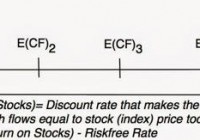
At the beginning of 2014, the expectation was that government bond rates that had been kept low, at least according to the market mythology, by central banks and quantitative easing, would rise and that this would put downward pressure on stocks, which were already richly priced. Perhaps to spite the forecasters, stocks continued to rise in 2014, delivering handsome returns to investors, and government bond rates continued to fall in the US and Europe, notwithstanding the slowing down of quantitative easing. Commodity prices dropped dramatically, with oil plunging by almost 50%, Europe remained the global economic weak link, scaling up growth became more difficult for China and the US economy showed signs of perking up. Now, the sages are back, telling us what is going to happen to markets in 2015 and we continue to give them megaphones, notwithstanding their forecasting history. Rather than do a standard recap, I decided to use my favored device for assessing overall markets, the equity risk premium (ERP), to take a quick trip down memory lane and set up for the year to come. The ERP: Setting the stage The ERP is what investors demand over and above the risk free rate for investing in equities as an asset class. At the risk of sounding over-the-top, if there is one number that captures investors’ hopes, fears and expectations it is this number, and I have not only posted multiple times on it in the last few years but also updated it every month on my website . In making these updates, I have had to confront a key question of how best to measure the ERP. Many practitioners use a historical risk premium, estimated by looking at how much investors have earned on stocks, relative to the returns on something risk free (usually defined as government bills & bonds). Due to the volatility in stock returns, you need very long time periods of data to estimate these premiums, with “long time period” defined as 50, 75 or even 100 years of data. At the start of each year, I estimate the historical risk premiums for the United States and my January 1, 2015 update is below: Based on this table, the historical equity risk premium for the US is between 2.73% to 8%, depending on the time period, risk free rate and averaging approach used. I will also cheerfully admit that I don’t trust or use any of these numbers in my valuations, for three reasons. First, using a historical risk premium requires a belief in mean reversion, i.e., that things will always go back to the way they used to be, that I no longer have. Second, all of these estimates of risk premiums carry large standard errors, ranging from 8.65% for the 2005-2014 estimate (effectively making it pure noise) to 2.32% for the 86-year estimate. Third, it is a static number that changes little as the world changes around you, which you may view as a sign of stability, but I see as denial. In pursuit of a forward-looking, less noisy and dynamic equity risk premium, I drew on a standard metric in the bond market, the yield to maturity: In the equity market analogue, the bond price is replaced with stock index level, the bond coupons with expected cashflows from stocks, with the twist that the cash flows can continue in perpetuity: (click to enlarge) There are both estimation questions (Are cashflows on stocks just dividends, inclusive of buybacks or a broader measure of residual free cashflows to equity?) and challenges (Do you use last year’s cash flow or a normalized value? How do you estimate future growth? How do you deal with a perpetuity?), but they are not insurmountable. In my monthly estimates for the ERP for the S&P 500, here are my default assumptions: (click to enlarge) This estimate is forward-looking, because it is based on expected future cashflows, dynamic, because it changes as stock prices, expected cash flows and interest rates change, and it is surprisingly robust to alternative assumptions about cash flows and growth. The spreadsheet that I use allows you to replace my default assumptions with yours and check the effects in the ERP. The ERP in 2014 Using the framework described in the last section, I estimated an equity risk premium of 4.96% for the S&P 500 on January 1, 2014: (click to enlarge) During 2014, the S&P 500 climbed 11.39% during the year but also allowing for changes in cash flows, growth and the risk free rate, my update from January 1, 2015, yields an implied equity risk premium of 5.78%: (click to enlarge) At the start of each month in 2014, I posted my estimate of the ERP for the S&P 500 on my website. The figure below graphs out the paths followed by the S&P 500 and the ERP through 2014: (click to enlarge) The ERP moved within a fairly narrow band for most of the year, ranging from just under 5% to about 5.5%, with the jump to 5.78% at the end of the year, reflecting the updating of the growth rate. The Drivers of ERP in 2014 To understand the meandering of the ERP during 2014, note that it is determined by four variables: the level of the index, the base year cash flow, the expected growth and the government bond rate, and is a reflection of the risk that investors perceive in equities. In the figure below, I chronicle the changes in these variables during 2014, at least in my ERP estimates. (click to enlarge) A confession is in order. While I update the index levels and government bond rates in real time, I update cashflows once every quarter and the growth rates materially only once a year (at the start of each year). One reason for the precipitous jump in the ERP in the January 1, 2015, update is the updating of the long term growth rate to 5.58% on that date. Updating the cashflow and growth estimates more frequently will smooth out the ERP but not change the starting and ending points. Perspective: Against history and other markets When I stated earlier in the post that the ERP was the one number that encapsulated investor hopes and fears, I was not exaggerating, since every statement about the overall market can be restated in terms of the ERP. Thus, if you believe that the ERP at the start of 2015 is around 5.78% (my estimate but you can replace with yours), your market views can be laid bare by how you answer the following question: Given what you perceive as risk in the market, do you think that 5.78% is a fair premium? If your answer is that it (5.78%) is too low (high), you are telling me that you think stock prices are too high (low). One reason that I posit that I am not a market timer is because I struggle with this question and there are two simple comparisons that I use for comfort. One is to compare the ERP today to implied quit risk premiums in previous years to see how it measures up to historic norms. The figure below summarizes implied equity risk premiums from 1960 to 2014: Looking at the historical numbers, the current ERP looks high, not low; it is close to the norm if you use only the post-2008 time period. It is this argument that I used to contest the notion that the market was in a bubble in June 2014 . The other is to compare the equity risk premium to risk premiums in other asset markets. In the bond market, for instance, the default spread for corporate bonds is a measure of the risk premium and the figure below compares the equity risk premium to the Baa default spreads each year from 1960 to 2014: Again, if history is any indication, equity risk premiums do not look inflated, relative to Baa default spread, though it is entirely possible that both spreads are too low. (You can download the data and check for yourself.) We are and will continue to be inundated by experts, sages and market prognosticators, each wielding their preferred market measures, trying to convince us that markets are under or overvalued. In this New York Times article from December 31, 2014 , looking at where the market stands going into 2015, the writer pointed to two widely followed statistics, the Shiller PE, a measure of how stocks are priced relative to inflation-adjusted earnings, and the Buffett ratio, relating the market cap of US stocks to the US GDP, and suggested that both pointed to an over valued markets. Both Robert Shiller and Warren Buffett are illustrious figures, but I think that both statistics are flawed, the Shiller PE, because it does not control for low interest rates, and the Buffett ratio, because of its failure to factor in the globalization of US companies. On market timing, I prefer to set my own course and am not going to be swayed by celebrity name-power in making my judgments. The Weakest Links If you believe at this point that I am sanguine about what stocks will do next year, you would be wrong. The nature of equity investing is that it is always coupled with worries and that the best laid plans can be destroyed by events out of your control. The notion that stocks always win in the long term is misplaced and there is a reason why we earn a risk premium for investing in equities. Looking at 2015, these are the three biggest dangers that I see: 1. An Earnings Shock? While current stock prices can be justified based on current cash flows, the cash flows to equity investors in 2014, from dividends and buybacks, represented an unusually high percentage of earnings, which, in turn, were at a high watermark, relative to history. Note that US companies paid out 87.58% of earnings to investors, below the 2007 & 2008 levels, but still well above the historical average (73.68%), and the profit margin of 9.84% in 2014 is the highest in the 2001-2014 time period. Both aggregate earnings and the payout ratio will be tested in the year to come. With aggregate earnings, the first test will be in the near term as the dramatic drop in oil prices in 2014 will play havoc with earnings at oil companies. As I noted in my earlier post on oil prices, lower oil prices may create a net positive benefit for the economy, but the immediate earnings benefit to the rest of the market will be modest. The second test may come from slower economic growth. While the US economy looks like it is on the mend, earnings at US companies are increasingly global, and a slowing down of the Chinese economic machine coupled with more stagnation in Europe, may net out to lower earnings. With the payout ratio, the challenge will be to deliver the earnings growth that investors are expecting, while paying out the high percentage of earnings that they are right now. 2. Fear the Fed? I have made this point before in my posts, but it is worth making again. While the equity risk premium has gone up significantly since the pre-2008 crisis, all of the increase in the risk premium has come from the risk free rate dropping and not from expected returns on stocks increasing. (click to enlarge) If the US 10-year T.Bond rate were at 4%, closer to pre-2008 levels, right now, the equity risk premium would be only 3.95%. 3. Crisis, contagion and collapse? If we learned nothing else from 2008, it should be this. We are all part of a global economy, connected at the hip, and while that can yield benefits, the contagion risk has increased, where a crisis in one part of the world spills over into the rest of it. Again drawing on my post on oil, one danger of the sudden collapse in oil prices is that it has not only increased uncertainty about economic growth in the next year but also increased the risk of large, levered oil companies defaulting and sending shockwaves through the rest of the economy. The perfect storm, of course, would be for all three phenomenon to occur together: a drop in earnings and an increase in interest rates, with an overlay of a global crisis, with catastrophic consequences of stocks. I think that the odds of this happening are low, because the circumstances that cause an earnings collapse are the ones that would keep interest rates low, but I may be missing something. If you disagree, you could take the safe route and hold cash, but unless your probability assessments of a crash are high and a crash is imminent, that does not strike me as prudent. (I have reattached the spreadsheet that I developed for my post on bubbles that you can use to make your own assessment.) Bottom line Like every other year in my investing memory, I start this year both hopeful and fearful, hopeful that financial markets will navigate through whatever the new year will throw at them and fearful that there will be something that will rock them. Given what I know now, I don’t see any reason to dramatically alter my exposure to stocks, bonds or real assets, and I will continue to look for stocks that I think are underpriced. I wish you the very best in your investment choices this year as well and I hope that no matter what happens to your portfolio, you are healthy and happy! Attachments: Data Sets Historical Returns for US stocks, T.Bonds and T.Bills: 1928-2014 Implied Equity Risk Premiums for S&P 500: 1960-2014 ERP, Baa Yields and Real Estate Cap Rates: 1960-2014 Spreadsheets Implied ERP Spreadsheet: January 1, 2015 Data Update 2015 Posts An ERP Retrospective: Looking back (2014) and Looking forward (2015)

WDIV Could Be Fun If Prices Deviate From NAV With Poor Liquidity

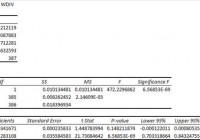
Summary I’m taking a look at WDIV as a candidate for inclusion in my ETF portfolio. Poor liquidity ruins the reliability of statistics and creates significant spreads during trading hours. The correlation to SPY looks low, but I can’t trust it because of the liquidity issues. If an investor is using a tax advantaged account that doesn’t pay commissions on trading the ETF, it could be interesting to play the spreads and deviations from NAV. I’m not assessing any tax impacts. Investors should check their own situation for tax exposure. Investors should be seeking to improve their risk adjusted returns. I’m a big fan of using ETFs to achieve risk adjusted returns relative to the portfolios that normal investors can generate for themselves after trading costs. I’m working on building a new portfolio and will be analyzing several of the ETFs that I am considering for my personal portfolio. One of the funds that I’m considering is the SPDR S&P Global Dividend ETF (NYSEARCA: WDIV ). I’ll be performing a substantial portion of my analysis along the lines of modern portfolio theory, so my goal is to find ways to minimize costs while achieving diversification to reduce my risk level. What does WDIV do? WDIV attempts to track the total return (before fees and expenses) of an unnamed index that tracks the stocks of global companies with strong dividends. At least 80% of the assets are invested in those companies, or ADRs that represent those companies. WDIV falls under the category of “World Stock”. Does WDIV provide diversification benefits to a portfolio? Each investor may hold a different portfolio, but I use the SPDR S&P 500 Trust ETF (NYSEARCA: SPY ) as the basis for my analysis. I believe SPY, or another large cap U.S. fund with similar properties, represents the reasonable first step for many investors designing an ETF portfolio. Therefore, I start my diversification analysis by seeing how it works with SPY. I start with an ANOVA table: (click to enlarge) The correlation is excellent at 74%. I want to see low correlations on my international investments. Extremely low levels of correlation are wonderful for establishing a more stable portfolio. I consider anything under 50% to be extremely low. However, for equity securities an extremely low correlation is frequently only found when there are substantial issues with trading volumes that may distort the statistics. Standard deviation of daily returns (dividend adjusted, measured since Jun e 2013) The standard deviation is very attractive. For WDIV, it is 0.6626%. For SPY, it is 0.6904% for the same period. SPY usually beats other ETFs in this regard, so a lower volatility level is very impressive. Because the ETF has fairly low correlation for equity investments and a low standard deviation of returns, it should do fairly well under modern portfolio theory. Liquidity looks fine Average trading volume is an issue. The average volume is running between 6,500 and 7,000 shares per day. Very low average trading volumes can result in statistics that are substantially less reliable. I will continue with my process for analyzing the ETF, but this is a red flag investors should know about. Within the time period I was looking at, there were only a few days where the change in dividend adjusted close was equal to 0.00%. When we see that the closing price did not change, it is possible that no shares were trading hands that day. If the bid and ask were moving but no shares traded hands, then a change of 0.00% understates the actual volatility and may weaken or strengthen the correlation. Therefore, investors should take the statistics with a grain of salt because they may be slightly more favorable to WDIV than they should be. Mixing it with SPY I also ran comparisons on the standard deviation of daily returns for the portfolio, assuming that the portfolio is combined with the S&P 500. For research, I assumed daily rebalancing because it dramatically simplifies the math. With a 50/50 weighting in a portfolio holding only SPY and WDIV, the standard deviation of daily returns across the entire portfolio is 0.6314%. With 80% in SPY and 20% in WDIV, the standard deviation of the portfolio would have been 0.6567%. If an investor wanted to use WDIV as a supplement to their portfolio, the standard deviation across the portfolio with 95% in SPY and 5% in WDIV would have been 0.6808%. Why I use standard deviation of daily returns I don’t believe historical returns have predictive power for future returns, but I do believe historical values for standard deviations of returns relative to other ETFs have some predictive power on future risks and correlations. Yield & Taxes The distribution yield is 4.19% and the SEC yield is 3.74%. Those are very strong yield figures for an ETF. This ETF could be worth considering for retiring investors. I like to see strong yields for retiring portfolios because I don’t want to touch the principal. By investing in ETFs I’m removing some of the human emotions, such as panic. Higher yields imply lower growth rates (without reinvestment) over the long term, but that is an acceptable trade off in my opinion. I’m not a CPA or CFP, so I’m not assessing any tax impacts. Expense Ratio The ETF is posting an expense ratio of 0.40%. I want diversification, I want stability, and I don’t want to pay for them. I view expense ratios as a very important part of the long-term return picture because I want to hold the ETF for a time period measured in decades. An expense ratio of this level is enough to concern me, but world ETFs are prone to higher expense ratios. Market to NAV The ETF is at a 0.31% premium to NAV (Net Asset Value) currently. Premiums or discounts to NAV can change very quickly so investors should check prior to putting in an order. Generally, I don’t trust deviations from NAV, and I will have a strong resistance to paying a premium to NAV to enter into a position. This ETF has relatively poor liquidity, so investors should also watch out for a large bid/ask spread. At the time of my writing, the spread was 0.25%. I’m not big on crossing that spread, so I’d be one of the people that would use a limit order and wait for the seller to come to me. Due to the fairly low trading volumes and the possibility that the order would be partially filled, I’d either have to set the order to only accept complete fills or only do the trade in accounts that trade the ETF without commissions. For comparison, the spread on SPY right now is less than 0.01%. Largest Holdings The diversification is pretty good, but not incredible. For the expense ratio, I would want more. However, the fund is supposed to be investing in high dividend yielding securities, so the investment universe for the fund may be more limited. (click to enlarge) Conclusion I’m currently screening a large volume of ETFs for my own portfolio. The portfolio I’m building is through Schwab, so I’m able to trade WDIV with no commissions. I have a strong preference for researching ETFs that are free to trade in my account, so most of my research will be on ETFs that fall under the “ETF OneSource” program. The correlation and standard deviation were great, but the potential for statistics to be misleading because of poor trading volumes leaves me concerned that the numbers may not be reliable enough. When I combine risk that the data is flawed, the moderately high expense ratios, and the bid-ask spread, I’m not really blown away by this ETF. It could be an interesting ETF to put on a watch list for the trading price to deviate from NAV and then step into a short-term position through a tax advantaged account that was not paying commissions, but I don’t think I will want to use it as my primary “international exposure” ETF. Additional disclosure: Information in this article represents the opinion of the analyst. All statements are represented as opinions, rather than facts, and should not be construed as advice to buy or sell a security. Ratings of “outperform” and “underperform” reflect the analyst’s estimation of a divergence between the market value for a security and the price that would be appropriate given the potential for risks and returns relative to other securities. The analyst does not know your particular objectives for returns or constraints upon investing. All investors are encouraged to do their own research before making any investment decision. Information is regularly obtained from Yahoo Finance, Google Finance, and SEC Database. If Yahoo, Google, or the SEC database contained faulty or old information it could be incorporated into my analysis. The analyst holds a diversified portfolio including mutual funds or index funds which may include a small long exposure to the stock.