Tag Archives: undefined

Comparing 4 Tactical/Momentum ETFs

Summary Momentum is regarded as the premier anomaly due to its persistent outperformance over long periods of time. With grim clouds presently hanging over today’s stock markets, tactical/momentum ETFs may allow an investor to conduct “passive market timing.”. This article is a brief overview of several recently launched tactical/momentum ETFs. Introduction Momentum is often regarded as the premier anomaly due to its persistent outperformance over long periods of time. Stocks that have done well recently tend to continue to do well, while stocks that have done poorly recently tend to continue to do poorly. The momentum concept is embodied in aphorisms such as “Cut your losers and let your winners run.” Interestingly, momentum often runs counter to the tenets of value investing, which champions buying low and selling high. In a one-to-one contest however, the momentum premium beats the value premium hands down. In data presented in an article by GestaltU, the difference between high momentum (Sharpe = 0.58) and low momentum (0.05) stocks was much greater than the difference between value (0.49) and growth (0.23) stocks in the U.S. The p -value of the Sharpe ratio difference for momentum was

DGRS Looks Like Great Diversification At First, But Poor Liquidity Is More Likely

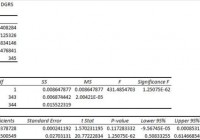
Summary I’m taking a look at DGRS as a candidate for inclusion in my ETF portfolio. The ETF tracks small dividend paying stocks, but the yield isn’t too great. The correlation to SPY is low, but the statistics are unreliable because of poor liquidity. Diversification within the portfolio isn’t bad, but it isn’t amazing either. I’m not assessing any tax impacts. Investors should check their own situation for tax exposure. Investors should be seeking to improve their risk adjusted returns. I’m a big fan of using ETFs to achieve the risk adjusted returns relative to the portfolios that a normal investor can generate for themselves after trading costs. I’m working on building a new portfolio and I’m going to be analyzing several of the ETFs that I am considering for my personal portfolio. One of the funds that I’m considering is the WisdomTree U.S. SmallCap Dividend Growth Fund (NASDAQ: DGRS ). I’ll be performing a substantial portion of my analysis along the lines of modern portfolio theory, so my goal is to find ways to minimize costs while achieving diversification to reduce my risk level. What does DGRS do? DGRS attempts to track the total return (before fees and expenses) of the WisdomTree U.S. SmallCap Dividend Growth Index. At least 90% of the assets are invested in funds included in this index. DGRS falls under the category of “Small Blend”. Does DGRS provide diversification benefits to a portfolio? Each investor may hold a different portfolio, but I use (NYSEARCA: SPY ) as the basis for my analysis. I believe SPY, or another large cap U.S. fund with similar properties, represents the reasonable first step for many investors designing an ETF portfolio. Therefore, I start my diversification analysis by seeing how it works with SPY. I start with an ANOVA table: (click to enlarge) The correlation is excellent at 74.6%. I want to see low correlations on my investments. Extremely low levels of correlation are wonderful for establishing a more stable portfolio. I consider anything under 50% to be extremely low. However, for equity securities an extremely low correlation is frequently only found when there are substantial issues with trading volumes that may distort the statistics. Standard deviation of daily returns (dividend adjusted, measured since August 2013) The standard deviation is great. For DGRS it is .8929%. For SPY, it is 0.6717% for the same period. SPY usually beats other ETFs in this regard. However, many ETFs won’t lose this badly to SPY, but it is worth noting that the standard deviation is pretty high. The best way to counteract the high standard deviation for an ETF with low correlation is to simply use it as a fairly small part of the portfolio. Liquidity is awful Average trading volume is absolutely terrible. The average volume for the last 10 days is only 3,181 shares. It’s possible to buy and sell in an ETF with terrible liquidity, but it is a very unattractive feature for the casual investor seeking diversification. I checked the change in closing values looking for the 0.00% change in dividend adjusted close that could indicate a day in which 0 shares changed hands. In the time period I used, from August 2013 through the middle of December 2014, there were 11 days where there was no change. It is possible that this is simply a coincidence, but investors should be aware that the presence of these days represents a challenge to the validity of the correlation and standard deviation that were calculated. The real values may be lower or higher, though I think higher is more likely than lower. Mixing it with SPY I also run comparisons on the standard deviation of daily returns for the portfolio assuming that the portfolio is combined with the S&P 500. For research, I assume daily rebalancing because it dramatically simplifies the math. With a 50/50 weighting in a portfolio holding only SPY and DGRS, the standard deviation of daily returns across the entire portfolio is 0.7321%. With 80% in SPY and 20% in DGRS, the standard deviation of the portfolio would have been .6811%. If an investor wanted to use DGRS as a supplement to their portfolio, the standard deviation across the portfolio with 95% in SPY and 5% in DGRS would have been .6721%. Why I use standard deviation of daily returns I don’t believe historical returns have predictive power for future returns, but I do believe historical values for standard deviations of returns relative to other ETFs have some predictive power on future risks and correlations. Yield & Taxes The distribution yield is 1.85%. This is a little low for retirees hoping to use the yield for income, but I’d be even more concerned about the poor liquidity if the investor had any liquidity needs. I wouldn’t consider an illiquid investment with only a moderate distribution yield if I were a retiring investor. I’m not a CPA or CFP, so I’m not assessing any tax impacts. Expense Ratio The ETF is posting .38% for both the gross and net expense ratios. I want diversification, I want stability, and I don’t want to pay for them. The expense ratio on this fund is higher than I want to pay for equity securities, but not high enough to make me eliminate it from consideration. I view expense ratios as a very important part of the long term return picture because I want to hold the ETF for a time period measured in decades. Market to NAV The ETF is at a .09% premium to NAV currently. Premiums or discounts to NAV can change very quickly so investors should check prior to putting in an order. The premium isn’t enough to be concerned about, but the liquidity issues could still result in a large bid-ask spread. If an investor was determined to invest in DGRS, I would hope they would use limit orders and be wary of crossing the spread. Largest Holdings The diversification within the ETF isn’t too bad. Unfortunately, it isn’t too good either. The top ten positions are all in the 2% to 1% range. (click to enlarge) Conclusion I’m currently screening a large volume of ETFs for my own portfolio. The portfolio I’m building is through Schwab, so I’m able to trade DGRS with no commissions. I have a strong preference for researching ETFs that are free to trade in my account, so most of my research will be on ETFs that fall under the “ETF OneSource” program. While I like the low correlation, I’m concerned that if liquidity were higher the correlation would also be higher. If the ETF had a substantial increase in volume without a significant increase in correlation, I’d be contemplating it. As it stands currently, I don’t see enough value to make it worth the headache of the low liquidity. I’ll be knocking it off my list of ETFs to consider for my long term portfolio. Additional disclosure: Information in this article represents the opinion of the analyst. All statements are represented as opinions, rather than facts, and should not be construed as advice to buy or sell a security. Ratings of “outperform” and “underperform” reflect the analyst’s estimation of a divergence between the market value for a security and the price that would be appropriate given the potential for risks and returns relative to other securities. The analyst does not know your particular objectives for returns or constraints upon investing. All investors are encouraged to do their own research before making any investment decision. Information is regularly obtained from Yahoo Finance, Google Finance, and SEC Database. If Yahoo, Google, or the SEC database contained faulty or old information it could be incorporated into my analysis. The analyst holds a diversified portfolio including mutual funds or index funds which may include a small long exposure to the stock.

Best Multi-Asset ETFs For 2015

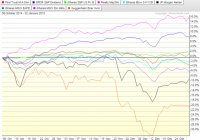
Summary MDIV remains the go to choice for a multi-asset ETF. Actively managed INKM saw its first test during a down market and it passed the test, outperforming the competition and emerging with an increased cash position. IYLD could find itself at the top of the heap at the end of 2015 if volatility remains elevated throughout the year. In last year’s article, The Best Multi-Asset ETF , I looked at which multi-asset ETFs were best under different conditions. Since the October 6 date of publication, there’s been a lot of volatility in the energy and currency markets, and several multi-asset ETFs were negatively impacted. For those who want a background on an individual fund, each of the seven ETFs was covered separately: Performance in Q4 2014 First, let’s look at a chart of the underlying assets held by most multi-asset ETFs. In the chart below are ETFs directly held by some multi-asset funds, or proxies which cover asset classes found in multi-asset funds. Along with MDIV are the SPDR S&P Dividend (NYSEARCA: DVY ), the iShares S&P U.S. Preferred Stock (NYSEARCA: PFF ), the iShares Cohen & Steers Realty Majors (NYSEARCA: ICF ), the iShares iBoxx $ High Yield Corporate Bond (NYSEARCA: HYG ), the JPMorgan Alerian MLP Index (NYSEARCA: AMJ ), the iShares MSCI EAFE (NYSEARCA: EFA ), the iShares MSCI Emerging Markets (NYSEARCA: EEM ) and the Guggenheim Canadian Energy Income (NYSEARCA: ENY ). (click to enlarge) That is a wide range of returns for a three-month period, partially because the start of the chart occurs during the early autumn sell-off in global markets. ICF doubled the return of its nearest competitor, which was dividend paying stocks. MDIV is in the middle of the pack along with preferred shares, junk bonds, and the EAFE. The big losses came from MLPs and Canroys, victims of the collapse in oil prices. Here’s a chart showing how multi-asset ETFs performed since October 6. (click to enlarge) Performance Review MDIV was given the title of Best Multi-Asset ETF because it spreads investments across asset classes such as REITs, MLPs, common stocks, preferred stocks, and junk bonds. The fund doesn’t take on extra risk to bump up its yield, incorporates some volatility factors in its model to reduce volatility, and should generally fall in the middle of the multi-asset ETF pack. MDIV gained 8.07 percent in 2014, and it mainly went sideways from October 6 on, gaining about 1.5 percent. MLPs are 20 percent of the portfolio and they under performed by a wide margin over the past three months, but REIT shares are also 20 percent of assets and they rallied more than MLPs fell. Overall, MDIV performed as expected, falling in the middle of the pack while delivering a positive return. GYLD was named the runner-up because it takes a global approach to the multi-asset model. However, enhanced risk was highlighted: GYLD used exposure to Venezuelan bonds and Canroys to achieve a higher yield. These assets were among the worst performers over the past three months and it led to a roughly 6 percent loss for the ETF. GYLD also fell 3.48 percent in 2014. As long as the U.S. dollar remains in a bull market, GYLD will struggle relative to domestic multi-asset ETFs, but energy is having a bigger impact on the portfolio. If energy remains weak, GYLD will lag the field. CVY was dubbed the “not-so-multi-asset-ETF” due to its hefty weight in common stocks, but it also made use of Canroys and MLPs to boost the portfolio’s total yield. The result was a heavy energy tilt: as of September 30, the most recent sector breakdown, CVY had 27 percent of assets in energy. This cost the fund over the past three months, and lowered CVY’s 2014 return to negative 4.33 percent. YDIV was the other poor performer over the past three months due to it being an international fund holding non-U.S. dollar assets. Australian and Canadian assets made up nearly 40 percent of assets back in September and 39 percent of the fund was in the two countries as of January 2, 2015. Australia and Canada are influenced by commodity prices, and Australian resource exports are hurt by the slowing Chinese economy. YDIV also has some assets in Chinese banks and Hong Kong companies, which raises the potential exposure to a China slowdown to more than 40 percent of assets. YDIV was going to underperform domestic multi-asset funds in 2014 no matter what simply due to being an international fund holding non-dollar assets, but it only fell 0.79 percent in 2014, and only 3.38 percent in the past three months because it isn’t directly exposed to commodities, specifically energy. This helped it beat both GYLD and CVY last year, two funds that were much more exposed to energy. IYLD was one of the stronger performers over the past three months because it mainly invests in bonds, to the tune of 75 percent of assets. Domestic dividend paying equities make up 10 percent of assets, with another 10 percent in international dividend paying equities, plus 5 percent in international real estate. IYLD also benefited from declining interest rates at the long-end; its 5 percent holding in the iShares Barclays 20+ Year Treasury (NYSEARCA: TLT ) was up 27 percent in 2014. IYLD rallied 10.29 percent for the full year and it climbed 1.88 percent in the past three months. The last two funds covered were FDIV and INKM, both actively managed. INKM’s performance was sub-par from its inception in April 2012, but financial markets enjoyed mostly smooth sailing for most of its life. Since October, INKM has beaten the multi-asset competition, gaining 3.41 percent in the past three months and 8.80 percent in 2014. INKM’s managers have adjusted the portfolio since September 25 (when I covered it here ). The fund raised cash from near 0 percent to 4 percent. High yield bonds are up from 6 percent to 9 percent. Equity exposure was cut from near 42 percent to 37 percent. Among individual holdings, the SPDR Barclays Long Term Treasury (NYSEARCA: TLO ) has climbed from 5.15 percent in September to 6.21 percent exposure. The SPDR Emerging Markets Dividend (NYSEARCA: EDIV ) was cut from 5.82 percent to 2.84 percent. The SPDR Dow Jones International Real Estate (NYSEARCA: RWX ) was raised from 4.85 percent to 6.23 percent. The SPDR Barclays High Yield Bond (NYSEARCA: JNK ) was increased from 6.09 percent to 8.95 percent. The SPDR Barclays Emerging Markets Local Bond (NYSEARCA: EBND ) was cut from 4.00 percent to 2.96 percent. One of the big questions with a fund such as INKM was how it might perform if markets moved against high-yield assets, such as due to rising interest rates. Long-term rates didn’t rise in late 2014, but energy prices tumbled, the dollar rallied sharply and high-yield bonds sold off. INKM managers navigated the past three months well and if they can keep it up, this fund will be a serious contender for investor capital. The 30-day SEC yield is still one of the lowest of the group at 3.25 percent, but if managers are able to mitigate losses during unfavorable periods for multi-asset ETFs, it could turn into a long-term outperformer. The other actively managed multi-asset ETF has a short history of only 5 months, but FDIV delivered similar results to INKM in the past three months, gaining 1.77 percent. Interestingly, FDIV’s managers moved in the opposite direction of INKM’s managers. Back on September 29, FDIV had 16.30 percent of assets in high-yield bonds and senior loans. As of January 2, the portfolio exposure to high-yield bonds was cut to 12.48 percent, with exposure to international sovereign bonds increased about 2 percentage points, MLP exposure increased 1 percentage point and dividend paying equities increased 1.5 points. FDIV has a 30-day SEC yield of 3.88 percent. After a rough period for multi-asset ETFs, both actively managed funds look more attractive today than they did three months ago. Best Fund For The Start of 2015 Assuming the U.S. dollar continues to strengthen, emerging markets and commodities remain weak and long-term interest rates do not rise, the following multi-asset ETFs look most attractive. For investors not worried about rising rates or trouble in high-yield bonds, but concerned about weakness in equities or MLPs, IYLD is a solid choice. It has 75 percent exposure to fixed income and a 5.83 percent yield, with dividends paid monthly. MDIV remains the go-to option for long-term passive investors. It won’t deliver big returns, but it yields 5.93 percent and also pays dividends monthly. If energy recovers and equities climb in 2015, MDIV will likely outperform IYLD. Given its track record over the past three months, INKM also looks attractive for total return investors who want active management. Of course, if you expect a big rebound in energy, GYLD or CVY look more attractive. GYLD currently yields 6.70 percent, but beyond risk of capital losses, there’s also the risk of dividend cuts if energy prices continue on their present trajectories.