Tag Archives: stocks

TerraForm Power – A Great Mix Of Growth And Yield
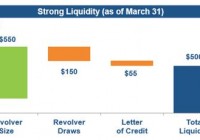
Summary Once again increased dividend guidance to $1.75 per share and $2.05 per share for 2016 and 2017. In a better position to support growth which is 24% CAGR currently. The recent acquisition of Vivint Solar will further strengthen TERP’s position in residential rooftop space. TerraForm Power Inc. (NASDAQ: TERP ), the yieldco formed by SunEdison (NYSE: SUNE ) should benefit from the leadership position of SunEdison in the industry today. SUNE is aggressively adding projects to its portfolio, which makes the investment case for TERP even stronger. TerraForm Power is in a good position to acquire projects from SunEdison. The recent acquisition of Vivint Solar (NYSE: VSLR ) will further strengthen the yieldco’s residential solar portfolio. TerraForm has been frequently increasing its dividend and CAFD guidance which is a good sign for the investors. I remain highly bullish on the stock, given the rate at which SunEdison is transferring quality projects to its yieldco. Why I like TerraForm Power 1) Strong Portfolio of projects – The inventory of project dropdowns have increased three times to 3.6 GW since the IPO, which is expected to grow by another 2.9 GW in 2016 and furthermore in the future. Not only there are transfers from its solar sponsor SunEdison, there have been acquisition from third parties as well amounting to ~1.4 GW since the IPO. The project conversions from SunEdison more than doubled from 6 GW to 14 GW in the last one year. TERP will leverage from the strong presence of SunEdison in the downstream project business. The portfolio of projects include utility projects in wind and solar energy and distributed generation projects. TerraForm currently has 17% of DG projects by installations, but they contribute to about 30% by cash flow. The recent announcement of Vivint Solar acquisition will further strengthen the yieldco’s residential portfolio, with TERP buying 523 MW of rooftop projects worth $922 million. The portfolio has expanded from 808 MW in the last year to almost 1.7 GW currently. The potential for growth in dividend per share also increases with increase in the dropdown inventory. 2) Diversifying into wind energy – As already mentioned, 30% of the assets in the total portfolio comprises of wind energy assets. This will help the yieldco benefit from the any slowdown in the solar markets. It acquired 521 MW of five wind farms from Atlantic Power, with an annual CAFD of ~$44 million. However, these assets are not dropped down in the vehicle immediately, but are stored in “warehouse”. 3) Q1 Performance was good – Revenue during the quarter was $75 million and adjusted EBITDA was $52 million. Cash available for distribution was $39 million as at the end of Q1 2015 as compared to $17 million as at the end of Q4 2014, which was in line with expectation. Drop downs from SunEdison were 167 MW in the first quarter, representing $17 million of CAFD opportunity in 2015. 4) Improved Credit & Liquidity – TerraForm Power increased the size of its revolver by $100 million to $650 million. There is sufficient liquidity in the form of cash and revolver credit to fund acquisitions. (click to enlarge) Source: TerraForm IR 5) Improved Dividend Guidance – TerraForm increased its dividend guidance to $1.35 per share from $0.90 per share at the time of its IPO and also provided a dividend growth target of 24% over the next five years. TerraForm achieved its full year DPS in the first quarter itself. The guidance has improved as a result of SunEdison accelerating the rate of dropdowns to TERP and effective conversion of the pipeline. The CAFD guidance has almost doubled since the time of the IPO. This is a very good sign of growth for TERP, since cash available for distribution is an important metric to measure the success of a yieldco. In addition, TERP has also increased its dividend per share guidance from $1.70 to $1.75 and from $2.00 to $2.05 for the years 2016 and 2017 respectively. (click to enlarge) Source: TerraForm IR Risks USA centric – Most of TERP projects are located in the USA which is increasingly moving towards solar energy. However, the recent rate of return in US projects are declining. Austin Energy in Texas got 1.2 GW of solar bids for just less than 4 cents . This might be a cause of concern for installers and developers. With improving technologies and declining cost, the prices are further expected to go down. Source: TerraForm IR Stock Performance & Valuation Currently the stock is trading at ~$31, which is very close to its 52 week low price. The market capitalization value is $3.8 billion . The P/B of 5.5x is lower than its peer 8point3 Energy Partners (NASDAQ: CAFD ) at 9.1x. TERP stock has come down due to the fall in oil prices. Most of the solar stock prices have come down due to this factor. However, falling oil prices are having absolutely no major fundamental effect on the growth of the solar energy markets worldwide. Note oil is mostly used for transportation and hardly anyone uses it for electricity power generation. Conclusion TerraForm is planning to expand into other geographies like Japan and Mexico and is also looking at new opportunities like the storage market. The company has a strong growth potential due to the aggressive expansion by its sponsor as well as from third-party M&A. The investors should like the translation of acquisitions into dividends and returns. TerraForm is also looking at expanding into the residential segment, where the dollar per megawatt is higher. I remain highly bullish on this stock and would recommend adding on dips. Disclosure: I/we have no positions in any stocks mentioned, and no plans to initiate any positions within the next 72 hours. (More…) I wrote this article myself, and it expresses my own opinions. I am not receiving compensation for it (other than from Seeking Alpha). I have no business relationship with any company whose stock is mentioned in this article.
Why Capital Allocation Matters

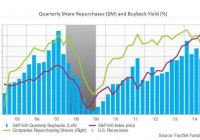
Summary Despite being a direct factor of long-term investor returns, few investors actually focus on identifying management teams that allocate capital well. Empirical studies suggest that even most management teams do not fully understand the importance of capital allocation on their business. The “holy grail” in investing is to find an excellent business, trading at a discount to fair value with a management team that allocates capital well. Introduction: Capital allocation is a topic of great importance to investors and management teams. At the core of any business is the simplistic NPV/IRR model which is used to answer a very simple question: Where should we invest? Whether a company invests in a new factory or an individual invests in a security, the concept is the same: If I outlay an amount today, how much will I expect to get in return in the future. Capital allocation in its simplest form is allocating capital from its various sources to its highest return. As author William Thorndike argued in his work, ” The Outsiders: Eight Unconventional CEOs and Their Radically Rational Blueprint for Success ,” the goal of a CEO is to properly allocate capital to its next highest return. The argument for such a quantitative measure of success is in stark contrast to the numerous more qualitative theories to excellent management. This article will focus on the goals of capital allocation and how an investor should logically assess the decisions management teams and Boards of Directors are making in regards to capital allocation decisions. As I previously mentioned in an older article, over long periods of time, compounding at higher rates creates exponential differences in ending values. Just like with investing, allocating capital in projects at high rates of return won’t matter as much in the short term but will matter tremendously in long term. Why Capital Allocation Matters: Capital allocation is the most critical aspect to generating long-term investment returns, yet despite many management teams making mention of the topic, their track record remains poor. A recent article posted in the HBR made a record of faults of current CEOs and their lack of focus on capital allocation. This is despite the fact that much of the financial theory regarding how value in a firm is created was first theorized in 1960s. So why do most CEOs perform poorly at what is arguably the most important for their position? A powerful argument, aptly discussed by legendary investor Warren Buffett in his 1987 Berkshire Hathaway (NYSE: BRK.A ) (NYSE: BRK.B ) Annual Letter, is that CEOs are more popularity contest than aptitude test. CEOs usually come up through the ranks of a company’s most important divisions such as sales, marketing, R&D or engineering. Their background and skill set is completely different as compared to what is actually required of them when they are promoted to CEO. This mismatch between a CEO’s background and the expectation for proper capital allocation by a firm’s investors has created the basis for typical activist investing. For all investors, the matter is still paramount when making investing decisions, especially those that are long term in nature. For the same exact business, excellent capital allocation will deliver excellent shareholder returns while poor capital allocation will do the opposite. How to Assess Capital Allocation Decisions: Management teams have a basic toolbox of decisions they can make to generate returns. The equation itself is relatively straightforward. First, capital can be obtained in four ways, the sale of debt, the sale of equity, the sale of assets and through internally generated operating cash flow. Next, the capital can be allocated in five different ways, either the issuance of dividends, the repurchase of stock, the retirement of debt, the purchase of other assets (M&A) or the reinvestment back into the business (i.e. Capex or net working capital additions.) Among each of these decisions, no specific one has precedence over the others. This is a critical concept that few investors or management teams truly appreciate. Whether capital is obtained through issuing debt or through operating cash flow, the capital is still finite and should be treated as such. A common misconception that many management teams and investors have is their view that operating cash flow is free and costless. This is not true as its real cost is the opportunity cost of other projects that could be done with the cash. Investors have been and should be upset when a management team uses operating cash flow to spend it on new internal projects with poor prospects of sufficient returns. Lastly, the question of capital allocation is not cut and dry. The best answer a management team could give investors regarding their view on capital allocation is: “it depends.” A common answer by some management teams might be to first spend on the business itself (new Capex or R&D) then pay a dividend and then use the rest of the excess capital for share repurchases. The graph below depicts this concept as share repurchases tend to peak during cyclical economic peaks, when operating cash flows are at their highest levels. (click to enlarge) This decision process is flawed, however, because capital should be allocated towards its next highest return. When a business is earning very high returns in its core business, reinvestment makes sense but if incremental returns are slowing, the company should not spend more despite the prospects of the business growing future revenues and profits. If the share price is substantially undervalued, the company should forego cash dividends and instead repurchase stock. If the share price is extremely expensive, M&A multiples far too high and all reinvestment opportunities exhausted, the last resort for management should be to pay a special cash dividend. This kind of flexibility in decision making may make investors nervous or less likely to buy a stock but it is the correct mindset for management teams who wish to drive attractive long-term shareholder returns. Finding Management Teams with Good Capital Allocation Skills: How does one find which management teams are apt at capital allocation? First, assess how a company’s management team discusses and presents its view on capital allocation. Does management think growth in the business should come at all costs? Are they beholden to a cash dividend no matter what other options for capital allocation exist? Do they not have an internal hurdle rate for returns when they do an M&A transaction? These types of viewpoints are indicative of a management team that does not have a solid grasp on proper capital allocation. Good management teams will describe the financial reasoning for their decisions. For example, for an M&A transaction, mentioning of the multiple to EBITDA or cash flow and how the deal is accretive to EPS and attractive on an ROIC basis are all needed to be sure the management team is doing due diligence. If a company is making share repurchases, they should make mention of their view on how undervalued the shares are. If the company is making share repurchases no matter what the multiple of the stock is to EPS or FCF, that is a telltale sign that management isn’t focused on capital allocation. Conclusion: Investors should be very wary of management teams and their capital allocation skills. Many CEOs move up through a company in divisions that don’t train them in proper capital allocation, leaving them less than apt at making investors above average shareholder returns. By staying focused on how management teams allocate capital, investors can figure out whether their investments’ management teams are making capital allocation decisions that maximize future shareholder returns. Disclosure: I/we have no positions in any stocks mentioned, and no plans to initiate any positions within the next 72 hours. (More…) I wrote this article myself, and it expresses my own opinions. I am not receiving compensation for it (other than from Seeking Alpha). I have no business relationship with any company whose stock is mentioned in this article.