Tag Archives: stocks

Retail Investors Pull Back From Equity And Bond Funds

For the fund flows week ended November 11, the benchmark Dow Jones Industrial Average lost 165 points to settle at 17,702. Equity mutual fund investors made net redemptions of $1.7 billion for the week (of which $765 million was from large-cap funds), while equity exchange-traded funds saw net inflows of $643 million. A sour market in bonds (a decline of 0.64% for the week) may have led bond mutual fund investors to redeem shares. Overall, taxable bond mutual funds saw net outflows of $875 million for the week, which was the first outflow after four previous weeks of inflow activity. Money market funds saw net inflows of $6.5 billion, of which institutional investors added $11.3 billion and retail investors cashed out $4.8 billion. By Jeff Tjornehoj For the fund flows week ended November 11, the benchmark Dow Jones Industrial Average lost 165 points to settle at 17,702. Equity mutual fund investors made net redemptions of $1.7 billion for the week (of which $765 million was from large-cap funds), while equity exchange-traded funds (ETFs) saw net inflows of $643 million; investors backed out of the SPDR S&P 500 Trust ETF ( SPY , -$1.5 billion) and made modest contributions to the iShares Russell 2000 ETF ( IWM , +$1.6 billion) and the iShares MSCI EAFE ETF ( EFA , +$1.3 billion). A sour market in bonds (a decline of 0.64% for the week) may have led bond mutual fund investors to redeem shares. Overall, taxable bond mutual funds saw net outflows of $875 million for the week, which was the first outflow after four previous weeks of inflow activity. With no end in sight to the asset bleeding, Lipper’s Loan Participation Funds classification (-$213 million) marked 16 weeks of outflows by retail investors. Like their equity counterparts, high yield funds suffered outflows (-$543 million) among mutual fund investors, but unlike equities also saw net outflows on the ETF side (-$1.3 billion). Overall, bond ETFs saw $2.8 billion of net outflows. The week’s biggest bond ETF net outflows belonged to the SPDR Barclays Capital High Yield Bond ETF ( JNK , -$1.2 billion), while the iShares Core Total US Bond Market ETF ( AGG , +1.3 billion) led the net inflows list. Municipal bond mutual fund investors added $229 million net to their accounts, and those funds now have had inflows for six straight weeks – for their best showing since March. Money market funds saw net inflows of $6.5 billion, of which institutional investors added $11.3 billion and retail investors cashed out $4.8 billion. For more analysis please watch this video:
Is A Liquidity Crunch In The Solar Sector Ahead?

By Ronald Delegge Stocks in the solar and alternative energy space are getting crushed. Will it lead to a liquidity crunch? Since the beginning of the year, the Guggenheim Solar ETF (NYSEARCA: TAN ) has lost a stunning 21.80% in value compared to a +0.20% gain for the SPDR S&P 500 Trust ETF (NYSEARCA: SPY ). And while a 21.8% loss is most certainly ugly, many individual stocks within the solar sector are getting slaughtered. Widely held solar stocks like SolarCity (NASDAQ: SCTY ) and SunEdision (NYSE: SUNE ) are down 55.85% and 81.92%, respectively. Others like First Solar (NASDAQ: FSLR ) have lost 17.29% while SunPower (NASDAQ: SPWR ) is down 32.99%. All of these stocks are among the top 10 holdings in the $262 million Guggenheim Solar ETF. Most solar stocks are reporting large earnings per share (EPS) losses. For third-quarter earnings, SunEdison reported a $284 million loss compared to a $283 million loss from a year earlier. That prompted its stock to sink further and the company is slashing up to 15% of its workforce and scaling back its growth plans by 20%, according to reports. The Maryland Heights, MO-based company is the globe’s largest developer of renewable energy. Meanwhile, SUNE holders are getting burned, literally. Top institutional owners of SUNE include David Einhorn’s Greenlight Capital, Daniel Loeb’s Third Point, and Vanguard. Hedge fund managers like Einhorn and Loeb are having their worst collective performance since 2011. Like SunEdison, SolarCity has negative earnings and missed its third quarter EPS of $-2.41 by 46 cents. SolarCity, which is headquartered in San Mateo, CA, designs, installs, and leases its solar power systems. (click to enlarge) Other alternative energy ETFs that own solar shares like the Market Vectors Global Alternative Energy ETF (NYSEARCA: GEX ) and the PowerShares WilderHill Clean Energy Portfolio ETF (NYSEARCA: PBW ) have dropped more than 20% over the past six months. Negative earnings coupled with crashing stock prices plus changing risk appetite by investors will lead to an inevitable shakeout in the overcrowded solar marketplace. And the liquidity crunch has already started. In the meantime, prudent investors should add these questions to their due diligence checklist before diving in: When will the risk appetite for financing the aggressive growth plans of money-losing solar projects wane? When will institutional investors with significant losses finally bail and what further impact will it have on already beaten up share prices? How will a recession or credit crunch impact the ability of solar companies to operate? How much will existing shareholders be diluted when solar companies decide to sell more shares to raise capital? With cheap natural gas prices, will utilities increase competition with solar by lowering electricity rates? Sector ETFs that invest in solar stocks, if you decide to hold them, always go into a person’s non-core investment portfolio, whereas a person’s core portfolio is always diversified across the five major asset classes via ETFs that are accurate proxies of each category. Disclosure: None Original Post

Is China A Building Block In Your Portfolio?

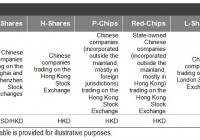
By Ellen Law After China’s stock plunge in Q3 2015, many investors have had two different views toward China. The bearish camp avoids buying Chinese stocks, as they think the Chinese market is volatile, and that the earlier stock market bubble has not fully burst when it comes to the problems of shadow banking, margin lending, and an overheating property market. The bullish camp holds a different view, claiming that Chinese stocks are cheap now and that the panic sell-off had been exaggerated. It claims that the valuation of China is getting lower, which presents a potential buying opportunity, especially for long-term investors. No matter which view you take, either bearish or bullish on China, one cannot simply ignore China, considering its size and importance in the world economy and long-term economic growth. For this reason, it may not come as a surprise that some indices and investment products were launched for a pure play in China after the recent sell off, such as the S&P China 500, which seeks to track all Chinese share classes, including A-shares and offshore listings. Alphabet Soup of Chinese Share Classes To capture the complete Chinese story, investors may invest in different Chinese share classes. However, Chinese share classes are often seen by foreign investors as being quite complex. A-, B-, H-, L-, N-, and S-shares are just like the different letters mixed in alphabet soup. In reality, only a handful of share classes, namely A-, H-, and N-shares, represent around 99% of the total market capitalization of the Chinese equities market. A-shares are Chinese companies trading on the Shanghai and Shenzhen exchanges in renminbi. International access to these domestic shares has been limited, but they have become more open due to the market liberalization supported by the Chinese government. H-shares are similar to A-shares, but they trade on the Hong Kong Stock Exchange in Hong Kong dollars. They are open to international investors without any restriction. N-shares are Chinese companies trading on the New York Stock Exchange and NASDAQ in U.S. dollars. Some of them are fast-growing internet and technology stocks, such as Alibaba (NYSE: BABA ) and Baidu (NASDAQ: BIDU ). For the list of Chinese share classes, please refer to Exhibit 1. Liberalization of China’s A-Share Market It is worth noting that the historically restricted A-share market has now been made more readily available to international investors, and thanks to the launch of the Qualified Foreign Institutional Investor (QFII), Renminbi Qualified Foreign Institutional Investor (RQFII), and Shanghai-Hong Kong Stock Connect (Stock Connect) programs, both QFII and RQFII allow approved applicants to access to the A-share market via a quota system. The total QFII and RQFII quotas have reached $78.97 billion and RMB 419.5 billion ($66.3 billion), respectively.[1] The Stock Connect is a significant measure that links the Shanghai and Hong Kong stock exchanges, allowing mainland Chinese investors to purchase selected eligible shares listed in Hong Kong, and, at the same time, letting foreign investors (both institutional and retail) buy eligible Chinese A-shares listed in Shanghai. The Stock Connect is expected to expand to the Shenzhen stock exchange soon, since both the Hong Kong and Shenzhen bourses have said the launch preparations had been completed and were waiting regulatory approval. [1] State Administration of Foreign Exchange, data as of Oct. 29, 2015. Disclosure: © S&P Dow Jones Indices LLC 2015. Indexology® is a trademark of S&P Dow Jones Indices LLC (SPDJI). S&P® is a trademark of Standard & Poor’s Financial Services LLC and Dow Jones® is a trademark of Dow Jones Trademark Holdings LLC, and those marks have been licensed to S&P DJI. This material is reproduced with the prior written consent of S&P DJI. For more information on S&P DJI and to see our full disclaimer, visit www.spdji.com/terms-of-use .