Tag Archives: seeking-alpha

Is SCHE Just Too Risky?
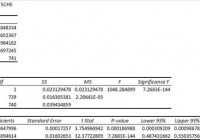
Summary I’m taking a look at SCHE as a candidate for inclusion in my ETF portfolio. The risk level is very high SCHE is the only ETF in the portfolio. I’m finding exposure over 5% to be too dangerous. The ETF has a solid dividend yield and extremely diversified holdings, but still needs to be combined with other ETFs. I’m not assessing any tax impacts. Investors should check their own situation for tax exposure. Investors should be seeking to improve their risk adjusted returns. I’m a big fan of using ETFs to achieve the risk adjusted returns relative to the portfolios that a normal investor can generate for themselves after trading costs. I’m working on building a new portfolio and I’m going to be analyzing several of the ETFs that I am considering for my personal portfolio. One of the funds that I’m considering is the Schwab Emerging Markets ETF (NYSEARCA: SCHE ). I’ll be performing a substantial portion of my analysis along the lines of modern portfolio theory, so my goal is to find ways to minimize costs while achieving diversification to reduce my risk level. What does SCHE do? SCHE attempts to track the total return of FTSE Emerging Index. The ETF falls under the category of “Diversified Emerging Markets”. Funds within this category usually invest at least 50% of their assets in developing nations. For SCHE specifically, the fund aims to invest at least 90% of the assets in stocks within the Emerging Index. The ETF is interested in large and middle cap companies. It is designed to avoid excessive exposure to individual industries. Does SCHE provide diversification benefits to a portfolio? Each investor may hold a different portfolio, but I use (NYSEARCA: SPY ) as the basis for my analysis. I believe SPY, or another large cap U.S. fund with similar properties, represents the reasonable first step for many investors designing an ETF portfolio. Therefore, I start my diversification analysis by seeing how it works with SPY. I start with an ANOVA table: (click to enlarge) The correlation is about 58.6%, which is extremely low for an equity investment. This low correlation bodes very well for the ETF when we start looking at risk adjusted returns. Standard deviation of daily returns (dividend adjusted, measured since January 2012) The standard deviation is bad. There’s no need to sugar coat it. The period I’m using has had relatively low volatility which causes most investments to show lower values for standard deviation. For the period I’ve chosen, the standard deviation of daily returns was 1.0774%. For SPY, it was 0.7300% over the same period. This makes SCHE one of the most volatile ETFs I have examined. Mixing it with SPY I also run comparison on the standard deviation of daily returns for the portfolio assuming that the portfolio is combined with the S&P 500. For research, I assume daily rebalancing because it dramatically simplifies the math. With a 50/50 weighting in a portfolio holding only SPY and SCHE, the standard deviation of daily returns across the entire portfolio is 0.8512%. However, in my opinion, putting 50% of a portfolio in emerging markets is speculative and resembles gambling more than investing. If the position in SPY is raised to 80% while SCHE is used at 20% the standard deviation of daily returns drops down to 0.7617%. In my opinion, the proper exposure here needs to be fairly low. Remember that as a portfolio becomes more diversified the variance of returns depends more on covariance among the assets rather than their individual variance. With 95% in SPY and 5% in SCHE the portfolio has a variance of 0.7356%. I think this is the highest exposure I would consider. Why I use standard deviation of daily returns I don’t believe historical returns have predictive power for future returns, but I do believe historical values for standard deviations of returns relative to other ETFs have some predictive power on future risks and correlations. Yield & Taxes The distribution yield is 2.44%. The SEC 30 day yield is 2.64%. Those yields aren’t bad and make this ETF look attractive as part of a dividend portfolio. However, the ETF invests in foreign securities and I’m not a CPA or CFP. Investors concerned about tax consequences should seek advice from someone knowledgeable about their tax situation. Expense Ratio The ETF is posting .14% for an expense ratio. This is low relative to many ETFs, though I prefer to see equity REITs with expense ratios under .10%. Market to NAV The ETF is trading at a .29% premium to NAV currently. That’s high enough to be a slight disincentive to investing, but not huge. This value can change very abruptly so investors should check it before placing an order. By the time this is published, that value will probably different. Largest Holdings The diversification within the ETF is good, as shown by the following chart: (click to enlarge) Only one position is over 2% and by the 6th company exposures are under 1.50%. That’s fairly solid diversification. If an investor is choosing to use ETFs, I would expect their goal to be the diversification benefits and low expense ratios. SCHE passes both of those tests. Investing in the ETF is largely relying on modern portfolio theory. The argument for the investment is the very low correlation of the portfolio to the major U.S. index funds. Making an investment requires a belief that markets are at least somewhat efficient so that the companies within the portfolio will be reasonably priced. Conclusion I’m currently screening a large volume of ETFs for my own portfolio. The portfolio I’m building is through Schwab, so I’m able to trade SCHE with no commissions. I have a strong preference for researching ETFs that are free to trade in my account, so most of my research will be on ETFs that fall under the “ETF OneSource” program. In my opinion, SCHE looks like a possible candidate for inclusion because of the low expense ratios and low correlation but the standard deviation of returns on the individual ETF were so high I am questioning whether I will stick to the 5% exposure I had initially planned or if I will lower it even farther. If I have to lower the exposure to something like 1%, it is hardly worth including because it is one more investment to track. For investors planning on investing more than $100,000 through ETFs the appeal of a 1% position increases. When I start compiling more complex portfolios, I will include SCHE in my tests. It’s a little on the risky side, but as long the position is 5% or less I think it will work.
Time To Go Shopping For Retail ETFs

Summary Strength in retail was a major factor in the Q3 U.S. GDP read. The sector looks very strong going into 2015. The ETFs discussed in this article provide easy and affordable access to the sector. The latest read on U.S. GDP growth surprised many. Analysts were expecting a pretty big number, but Q3 growth of 5% smashed estimates. With the energy sector, oil especially, in a steady decline, some have been left scratching their heads as to where this growth is coming from. After a sustained slump, it looks like retail is back in the game, especially going into Q4. The sector overall is looking good, as lower gas prices and higher employment leave consumers with more money to spend on discretionary items. Retail back in business According to some of the macro numbers that have been released recently, the retail sector seems to be picking up strength as we near the end of the year. November retail sales rose 0.7% year-over-year for the best performance in eight months, beating estimates for a 0.4% increase, in part due to falling oil prices and increased employment. In fact, gas prices are at their lowest point in four years, and the hiring increase has been the largest in over a decade. Higher spending is distributed quite evenly across product categories, such as electronics and furniture, although car sales seem to be doing particularly well. Sales of cars and light trucks hit an annualized rate of 17.1 million in November, up from 16.4 million in the month before. Excluding autos, retail sales rose 0.5% versus an expected 0.1%. The fact that consumers are spending their higher disposable income instead of squirreling it away is encouraging, and indicates that consumers are optimistic about the economy. Things aren’t expected to slow down in Q4 either. Growth of 5% in Q3 GDP came in well ahead of a previous estimate of 3.9%, and comes on top of a 4.6% increase last quarter after a fairly easy comp with last year’s harsh winter. There are a host of indications that the U.S. economy may be shifting gears. Personal spending jumped 0.6% together with a 0.4% rise in personal income. This strong performance is expected to carry over into Q4, with projected growth revised up to 2.8% from a previous 2.6%. Getting in For investors looking to ride the strength of the U.S. consumer, without putting in too much effort, retail ETFs look like a good bet. Let’s take a look at a few of the options in the consumer discretionary space. As usual, the obvious choice is SPDR’s offering: the S&P retail ETF (NYSEARCA: XRT ). With around $1.7 billion in AUM, it’s the largest and also the most liquid. The expense ratio is fairly low at 0.35%. A bit pricey at around 19 times trailing earnings overall, the ETF is up around 8% year-to-date. Its three biggest holdings are Whole Foods (NASDAQ: WFM ), Tractor Supply (NASDAQ: TSCO ) and L Brands (NYSE: LB ), and some 74% of its holdings are classed under consumer cyclicals, making it a slightly more volatile play than the next ETF choice. Another option, and one which has performed considerably better, is the Market Vectors Retail ETF (NYSEARCA: RTH ), which is up 17% so far this year. A more defensive option, roughly 38% of the ETFs holdings are in the consumer defensive space. Its three biggest holdings are Wal-Mart (NYSE: WMT ), Amazon (NASDAQ: AMZN ) and Home Depot (NYSE: HD ). At an expense ratio of 0.35%, it’s fairly inexpensive, and the P/E ratio of 19 times trailing earnings is also in line with SPDR’s comparable ETF. A more actively managed choice would be Powershares Dynamic Retail (NYSEARCA: PMR ). This active management results in a higher expense ratio of 0.63%, and the ETF is up around 11% so far this year. At the moment, its top holdings are Costco (NASDAQ: COST ), Kroger (NYSE: KR ) and O’Reilly Automotive (NASDAQ: ORLY ). All stocks in the basket are screened on a number of fundamental growth metrics, and are moved up or down in weight accordingly. As it has not outperformed the Market Vectors Retail ETF, and is pricier in terms of expense ratio, this one looks a bit less enticing. For me, Market Vectors’ offering looks like the best bet due to its low expense ratio, solid performance this year, and relatively defensive character. However, all three will do a good job in providing a portfolio with some exposure to strength in U.S. retail. Conclusion There are now tangible signs that the U.S. economy is picking up steam, with a huge Q3 GDP beat fueling expectations for further growth. Retail sales have been a major driver behind this increase, and the sector looks excellent going into the holiday season. The three ETFs discussed here provide affordable and efficient access to the consumer discretionary sector, and getting in before the holiday figures come in could provide some very decent returns going into 2015.

Will NRG Energy’s Residential Solar Ambitions Play Out?

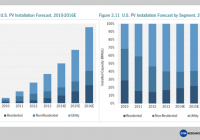
Summary NRG Energy is a uniquely forward-looking utility in its renewable energies commitment. NRG Energy’s entrance into the residential solar space could be the most important aspect of the company moving forward. The company boasts many unique advantages over its residential solar competitors. While there is little doubt that NRG Energy will become a major player in the residential solar sector, the company is unlikely to take over SolarCity as the market leader. NRG Energy (NYSE: NRG ) is primarily known as a fossil fuels utility, but it also has an affinity to renewable energies unlike any other utility company in the country. In 2013, they had even company ranked as the second largest utility-scale solar contractor, right behind First Solar (NASDAQ: FSLR ). Despite NRG Energy’s enormous presence in utility-scale solar generation, the company’s increasing residential solar focus is the most exciting aspect of the company. While the company is barely on the radar in the residential solar sector, having accounted for only 13.5 MW installed in 2013 as opposed to industry-leaders [SolarCity (NASDAQ: SCTY )] 280 MW, the company still has grand plans to become the largest residential solar company in the U.S. In order to evaluate the legitimacy of this claim, the company must be examined in relation to the current residential solar landscape. The State of the Residential Solar Industry The residential solar sector is currently in the process of heavy consolidation. Larger companies like SolarCity and Vivint Solar (NYSE: VSLR ) are devouring market share at an extremely rapid rate. In little more than a year, for instance, SolarCity and Vivint Solar went from a combined marketshare of about 33% to almost 60%. What is even more impressive about this industry-wide marketshare consolidation is that the process has not even come close to slowing down. It would not be terribly surprising to see SolarCity gain 50% of the marketshare within the next year or so. Analysts have repeatedly underestimated the economies of scale present in residential solar. The conventional wisdom has been that local/smaller companies would have an advantage over larger corporations due to their higher regional expertise. Despite this, it appears that the huge financing, structural, and integrations advantages that larger corporations posses vastly outweigh their relative weaknesses. This fact, of course, is great news for NRG Energy, as they are a huge company with virtually limitless resources, especially in context to the budding residential companies. NRG Energy has even gone so far as to state that “we’re a fortune 250 company that… is competing with some well-performing startups. While this is certainly an exaggeration, it nonetheless hints at the company’s huge comparative size. Graphical representation of residential solar’s potential (click to enlarge) Source: GTM Research Advantages NRG Energy’s residential market share is only a few percentage points, which makes the company’s goal of becoming the largest residential installer sound ridiculous. This claim though, is not as crazy as it sounds upon closer inspection. While NRG Energy has not installed many MW’s of residential solar, the company has spent years building out an extensive infrastructure . In addition, NRG Energy boasts many advantages that are unique to its situation. The most obvious advantage that NRG Energy possesses is its size. The company has been forward thinking enough to be one of the first large utilities to truly embrace the residential solar trend, and this foresight will pay huge dividends for the company in the future. The size of NRG Energy could give it a significant competitive advantage over its residential solar competitors in the form of cheaper capital, scaling, financing, etc. Even SolarCity, the largest residential installer, does not compare to the financial clout of NRG Energy. By virtue of being one of the first large utilities to enter into residential solar, NRG Energy has set itself up in a great position over its future competitors. In addition, NRG Energy is one of the largest utilities in the U.S., boasting over 2 million retail customers. The company’s 2 million customer base will give it an unrivalled platform of potential customers. Even if a small percentage of this number were to switch to residential solar, this would give NRG Energy a residential market share on par with the likes of Vivint Solar, or even SolarCity. Of course, NRG Energy would not actually be gaining any new customers, as the company is essentially just converting some of its old customers to solar. Regardless, the market share they gain in the residential solar sector because of this is perhaps the most important outcome, as marketshare is perhaps the most important metric in an early stage industry. The residential solar is poised to be huge, and any opportunity to gain market share early on should be taken. NRG Energy’s commitment to residential solar cannot be denied. The company is so serious about this blooming sector that is has even created a separate division for it called NRG Home Solar. As per Kelcy Pegler (President of NRG Home Solar), “we are in this residential solar space to win.” Potential Obstacles/Risks Despite all the advantages that NRG Energy would enjoys, taking over SolarCity as the top residential solar company would be an extremely tall order. NRG Energy is somewhat late to the game, and the company still has a lot of catching up to do. The good news is that the only real competition in the residential sector so far is SolarCity and Vivint. Despite this, these two companies, especially SolarCity, are extremely well-managed and competitive. First off, it is highly unlikely that NRG Energy would have a cost structure anywhere near that of SolarCity, and to a lesser degree Vivint Solar. In order to stay competitive with the top residential companies, NRG Energy may have to sacrifice its margins early on to stake out a significant piece of market share. While this may be troublesome for smaller companies, NRG Energy has a balance sheet that could sustain the potential cash bleed. Additionally, while the company is considered forward thinking for a utility, it is highly unlikely that NRG Energy compares to SolarCity in terms of innovation. SolarCity has been virtually pushing the residential solar industry by itself for the past few years. In fact, it could be argued that the residential solar industry is in the state it is today precisely because of SolarCity. While there is little doubt that NRG Energy’s residential solar team is talented, it hardly compares to SolarCity’s management team, which boasts the likes of Elon Musk, Lyndon Rive, Peter Rive, Brad Buss, etc. Conclusion NRG Energy’s residential goals are certainly ambitious, with the company planning to have 35,000 to 40,000 installations by the end of 2015. Although this number would only be a fraction of SolarCity’s, it is still a huge leap from where they are today. The company is in fact planning a stupendous growth rate of 300-400% for the next few years. If any company can threaten the dominance of SolarCity, it is NRG Energy. Despite this, it is highly unlikely that NRG Energy will be able to overtake SolarCity as the market leader. On top of the fact that SolarCity already owns 40% of the residential solar market share, the company has intangibles that NRG Energy will unlikely be able to overcome, even in light of NRG Energy’s numerous advantages. Having said that, there is a distinct possibility of NRG Energy becoming a huge player in the residential solar space, and even beating out Vivint Solar for the number 2 spot. Given the massive potential of the residential solar industry, NRG Energy’s entrance into residential solar will be a win no matter what. With a market capitalization of $9.16B, NRG Energy’s valuation is pretty much in line with comparable fossil fuel utilities. This valuation though, largely ignores the company’s involvement in the immensely promising solar sector. At its current market capitalization, the company holds great upside in the long-term.