Tag Archives: seeking-alpha

3 Low Beta ETFs For A Choppy Market
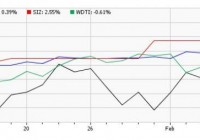
The U.S. stock market is caught in a web of uncertainty since the start of this year and sees little chance of it clearing up in the months ahead. This is primarily thanks to geopolitical tensions, sliding oil prices, turmoil in Greece, sluggish European and Japanese growth, weakness in key emerging markets, and weak corporate earnings. Additionally, the currency war has escalated with many countries choosing loose monetary policies to stimulate growth and prevent deflationary pressure. This is in contrast to the U.S. Fed policy of tightening the stimulus. The diverging central bank policies have propelled the U.S. dollar against the basket of various currencies to multi-year highs. Further, both the World Bank and International Monetary Fund (IMF) recently cut their growth forecast for the next two years. The World Bank projects the global economy to expand 3% this year and 3.3% in the next, down from 3.4% and 3.5%, respectively. On the other hand, IMF lowered its global growth outlook to 3.5% from 3.8% for 2015, representing the sharpest cut in three years. Growth for 2016 is forecast at 3.7% versus the previous projection of 4%. Another reason for the recent market pullback has been the U.S. monetary policy, wherein the Fed is on track to raise interest rates but the timing is still uncertain. Amid these uncertainties, investors are seeking exposure to alternative sources of income rather than equity and bonds. For these investors, an allocation to low beta funds could be the safest bet, as long as the disorder lingers. Why Low Beta? Beta measures the price volatility of the stocks or funds relative to the overall market. It has a direct relationship to the market movements. A beta of 1 indicates that the price of the stock or fund tends to move with the broader market. A beta of more than 1 indicates that the price tends to move higher than the broader market and is extremely volatile while a beta of less than 1 indicates that the price of the stock or fund is less volatile than the market. With that being said, low beta ETFs exhibit greater levels of stability than their market sensitive counterparts and will usually lose less when the market is crumbling. Though these have lesser risks and lower returns, the funds are considered safe and resilient amid uncertainty. However, when markets soar, these low beta funds experience lesser gains than the broader market counterparts and thus, lag their peers. Given the huge levels of volatility in the market, investors could find the following ETFs as intriguing options until the market track becomes clear. WisdomTree Managed Futures Strategy ETF (NYSEARCA: WDTI ): Beta – 0.02 This actively managed fund seeks to deliver positive returns in rising or falling markets that are uncorrelated to equity or fixed income returns. It uses a quantitative, rules-based strategy to provide returns that correspond to the performance of the Diversified Trends Indicator and invests in a combination of U.S. treasury futures, currency futures, commodity futures, commodity swaps, U.S. government and money market securities. This strategy seeks to benefit from both rising or declining price trends via long and short positions in commodity, currency, and U.S. treasury futures market. The product has amassed $209.9 million in asset base and trades in a light volume of about 34,000 shares a day. Expense ratio came in at 0.95%. The fund has added 0.3% so far in the year. QuantShares U.S. Market Neutral Size ETF (NYSEARCA: SIZ ): Beta – 0.14 This fund invests in low capitalization securities while at the same time short high capitalization stocks of approximately equal dollar amounts within each sector. It seeks to deliver the spread return between high and low ranked stocks. This can easily be done by tracking the Dow Jones U.S. Thematic Market Neutral Size Index. The product holds a long position in 200 stocks and a short position in another basket of 201 stocks. It will generate positive returns when the basket of long stocks outperforms the short portfolio. The fund is expensive charging 1.49% in fees per year and trades in a paltry volume of under 1,000 shares per day. BTAL is unpopular having AUM of $1.2 million and has added 0.9% so far this year. IQ Hedge Market Neutral ETF (NYSEARCA: QMN ): Beta – 0.19 This product tracks the IQ Hedge Market Neutral Index, which seeks to replicate the risk-adjusted return characteristics of hedge funds using a market neutral hedge fund strategy. It invests in both long and short positions in asset classes while minimizing exposure to systematic risk. This strategy seeks to have a zero beta exposure to one or more systematic risk factors including the overall market (as represented by the S&P 500 Index), economic sectors or industries, market cap, region and country. The portfolio consists of a variety of ETFs including a number of fixed income funds and equity funds. The ETF allocates heavy weights in fixed income products like the Vanguard Short-Term Bond ETF (NYSEARCA: BSV ), the iShares 1-3 Year Treasury Bond ETF (NYSEARCA: SHY ) and the Vanguard Total Bond Market ETF (NYSEARCA: BND ) focusing on Treasury and corporate securities that are of high quality. The ETF is often overlooked by investors in the hedge fund space with AUM of just $15.3 million and average daily volume of about 3.000 shares. It charges 85 bps in fees and expenses and is up 0.2% in the year-to-date timeframe. Bottom Line These products could be worthwhile for low risk tolerance investors and have the potential to outperform the broad market, especially if market uncertainty persists over the coming months.
General American Investors Company, Inc. Targeted By Activist Fund

Summary General American Investors Company, Inc. currently trades at a 13.94% discount to net asset value and has been targeted by the well-known closed end fund activist Phil Goldstein. Phil Goldstein has a long track record of fighting and winning proxy battles against closed end funds, whose boards resist initiating value enhancing liquidity events to benefit shareholders. A market neutral position, long GAM vs. short the S&P 500, offers an attractive opportunity for alpha generation based on the fund’s deep discount to NAV and involvement of activists. General American Investors Company, Inc. (NYSE: GAM ) is a diversified closed end fund that invests mostly in large-cap domestic common stocks. The fund has consistently traded at a double-digit discount to its net asset value for the past five years. The current discount is 13.94%. This past October, Special Opportunities Fund (NYSE: SPE ) submitted a shareholder proposal to General American Investors Company, Inc. requesting the Board of Directors to authorize a self-tender offer for all outstanding common shares at or close to net asset value. If more than 50% of the fund’s common shares are submitted for tender, then the tender offer should be cancelled and the fund should be liquidated or converted to an ETF or open-end mutual fund. If SPE is successful in its campaign, then shareholders stand to capture a windfall gain of as much as 14%. Special Opportunities Fund is a closed end fund run by the well-known hedge fund activist investor Phil Goldstein , co-founder of Bulldog Investors. SPE and Bulldog invest primarily in undervalued assets and engage in activism to unlock the value of their investments. SPE and Bulldog mainly target closed end funds which trade at large discounts to net asset value and pressure management to engage in value enhancing liquidity events, such as share repurchases or, in some cases, liquidation. They have had numerous successes with their activist campaigns and are not easily deterred once they set their sights on a particular target. GAM filed a preliminary proxy on February 6th, which includes the shareholder proposal submitted by SPE. The proxy also states that SPE is proposing to elect three of its own nominees as directors of the company. The Board of Directors of GAM has unanimously opposed the shareholder proposal and is recommending shareholders to vote against it. The board’s statement of opposition lists the standard multitude of reasons why they believe that the proposal is not in the best interest of shareholders. Many of the reasons are valid, but it is very difficult to argue that an event resulting in an instantaneous narrowing of the fund’s discount would not be beneficial to all shareholders. Since it is not the focus of this article, I won’t attempt to address the individual bullet points presented by the board. The list is too long to summarize, so please refer to pages 12-15 of the preliminary proxy for the details. Conclusion There are many different scenarios that can play out during this activist campaign. The most likely scenario is that the Board of Directors of GAM pursues a smaller buyback in order to placate Mr. Goldstein and avoid a proxy fight. Two of Bulldog Investors’ recent proxy fights may provide some insight into the potential expected outcomes. Firsthand Technology Value Fund (NASDAQ: SVVC ) entered into an agreement with Bulldog last May. Under the terms of the settlement , Bulldog agreed to withdraw its nominees for the fund’s Board of Directors and withdraw its proposals regarding termination of the fund’s investment management agreement. They also agreed not to present any proposals at the annual meeting and to vote their shares in accordance with the Board’s recommendations. In return, SVVC approved a plan to repurchase up to $10 million of common stock in the open market, and to conduct a self-tender offer for at least $20 million worth of common stock at 95% of net asset value. The fund also agreed to liquidate its Facebook (NASDAQ: FB ) and Twitter (NYSE: TWTR ) holdings and to distribute any net realized gains from those holdings to shareholders within 60 days of completing those liquidations. Facebook and Twitter accounted for close to 30% of the fund’s holdings at the time of the announcement. The net result for SVVC shareholders who submitted shares for tender was a return of more than 45% of their capital at close to NAV. Bulldog was also recently successful in pressuring Nuveen Investments to restructure two of its closed end funds and conduct a tender offer for 25% of the outstanding common shares at 98% of net asset value. Nuveen Global Income Opportunities Fund (MUTF: XJGGX ) and Nuveen Diversified Currency Opportunities Fund (MUTF: XJGTX ) were combined into a new fund called Nuveen Global High Income Fund (NYSE: JGH ). The net result for JGH shareholders who submitted shares for tender was a return of more than 43% of their capital at 98% of NAV. It is likely that SPE would agree to a similar proposal from GAM. Unfortunately, there is not a high probability of SPE’s proposal garnering more than 50% of shareholders’ votes due to the constituency of General American’s shareholder base. Only 30% of the outstanding shares are held by institutions and mutual funds. Small investors who own the remaining 70% of the fund tend to be apathetic when it comes to voting proxies. Let’s examine a few possible scenarios with hypothetical probabilities: Hypothetical Return Scenarios For GAM Outcome Potential Return On Shares Tendered At Current NAV Discount % Of Shares Submitted For Tender Total Return Probability Of Occurrence Probability Weighted Return Fund Liquidates Or Converts To Open-End Mutual Fund 13.94% 100% 13.94% 15% 2.09% Fund Initiates Tender Offer For 25% Of Outstanding Common Shares At 98% Of NAV 13.66% 49% 6.97% 40% 2.79% Fund Initiates Tender Offer For 10% Of Outstanding Common Shares At 98% Of NAV 13.66% 49% 2.79% 25% 0.70% Management Takes No Action And NAV Discount Remains Unchanged 0% 0% 0% 5% 0% Management Takes No Action And NAV Discount Widens To Five Year Low Of 16.4% -2.46% 0% -2.46% 15% -0.37% Expected Return 5.21% Although the above scenarios are hypothetical, they provide a framework to help assess the potential returns associated with different outcomes. They also reflect my best guess as to the final result. My opinion is that the majority of scenarios offer a favorable risk-reward profile for a market neutral position, long GAM common vs. short the S&P 500 ETF (NYSEARCA: SPY ). My recommendation is to enter into a market neutral position: long GAM and short 1.1X the dollar amount of the S&P 500. The reason for suggesting a hedge ratio greater than one to one is to account for the fact that the fund often employs leverage of approximately 16%, which magnifies returns relative to the S&P 500. The fund also held 8.5% of its assets in money markets as of year end, which will offset some of the effects of leverage. A one to one hedge ratio would not be my preference due to the aforementioned factors. The obvious risks to this trade are that GAM’s correlation to the S&P 500 breaks down and leads to an underperformance in GAM’s net asset value relative to the S&P 500. Another risk is a further widening of GAM’s discount to NAV. While these risks are by no means negligible, the broad diversification of the fund’s large-cap holdings tend to make it unlikely to diverge too much from the S&P 500. The fund’s discount to NAV has averaged approximately 14.3% for the past one, three, and five years, which is close to the current discount. The discount did, however, fall below 20% during the height of the financial crisis in 2008 and 2009. It is highly likely that the discount would widen dramatically again if another market panic sets in. Lastly, the success of this strategy hinges solely on SPE’s ability to succeed in its proxy campaign. The close of business on February 17, 2015 has been fixed as the record date for the determination of the stockholders entitled to notice of, and to vote at, the shareholder meeting. Investors who want to vote in favor of SPE’s proposal must purchase shares on or before February 10, 2015. Disclosure: The author is long GAM, SPE, SVVC, JGH. (More…) The author wrote this article themselves, and it expresses their own opinions. The author is not receiving compensation for it (other than from Seeking Alpha). The author has no business relationship with any company whose stock is mentioned in this article. Additional disclosure: I am currently long “GAM”, “SPE”, “SVVC”, and “JGH” and short “SPY”. I may initiate long or short positions in any or all of the aforementioned securities over the next 72 hours. I plan to vote in favor of SPE’s shareholder proposal and its nominees to the board of GAM.

Price Stability In An ETF: The Appeal Of Guggenheim Defensive Equity

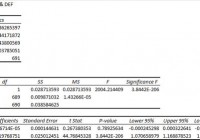
Summary I’m taking a look at DEF as a candidate for inclusion in my ETF portfolio. The only weakness I see is that the ETF has a higher expense ratio as it turns over assets more frequently than I would want. The correlation and standard deviation is very attractive. The data is based on solid liquidity, so feel it is fairly reliable. I’m keeping DEF in the running for my entire portfolio due to the price stability of the ETF. Investors should be seeking to improve their risk adjusted returns. I’m a big fan of using ETFs to achieve the risk adjusted returns relative to the portfolios that a normal investor can generate for themselves after trading costs. I’m working on building a new portfolio and I’m going to be analyzing several of the ETFs that I am considering for my personal portfolio. One of the funds that I’m considering is the Guggenheim Defensive Equity ETF (NYSEARCA: DEF ). I’ll be performing a substantial portion of my analysis along the lines of modern portfolio theory, so my goal is to find ways to minimize costs while achieving diversification to reduce my risk level. What does DEF do? DEF attempts to track the total return (before fees and expenses) of the Sabrient Defensive Equity Index. At least 90% of the assets are invested in funds included in this index. DEF falls under the category of “Large value”. Does DEF provide diversification benefits to a portfolio? Each investor may hold a different portfolio, but I use the SPDR S&P 500 Trust ETF (NYSEARCA: SPY ) as the basis for my analysis. I believe SPY, or another large cap U.S. fund with similar properties, represents the reasonable first step for many investors designing an ETF portfolio. Therefore, I start my diversification analysis by seeing how it works with SPY. I start with an ANOVA table: (click to enlarge) The correlation is 86%. That is a reasonable correlation level under Modern Portfolio Theory. Lower levels of correlation allow more of the risk associated with individual investments to be effectively diversified away. For an ETF that will hold several large U.S. equity securities, that’s a very appealing level of correlation as long as the liquidity is good. Standard deviation of daily returns (dividend adjusted, measured since April 2012) The standard deviation is amazing. For DEF it is .576%. For SPY, it is 0.748% for the same period. SPY usually beats other ETFs in this regard. Because the standard deviation is fairly low and the correlation is pretty good, I’m expecting to see substantial diversification benefits that would make DEF a reasonable fit in most portfolios. Liquidity is moderate Over my sample period the average trading volume was around 35,000 shares per day. Over the last ten days it was over 55,000. Mixing it with SPY I also run comparisons on the standard deviation of daily returns for the portfolio assuming that the portfolio is combined with the S&P 500. For research, I assume daily rebalancing because it dramatically simplifies the math. With a 50/50 weighting in a portfolio holding only SPY and DEF, the standard deviation of daily returns across the entire portfolio is 0.639%. Notice that this is significantly lower than SPY alone. With 80% in SPY and 20% in DEF, the standard deviation of the portfolio would have been .700%. If an investor wanted to use DEF as a supplement to their portfolio, the standard deviation across the portfolio with 95% in SPY and 5% in DEF would have been .735%. Why I use standard deviation of daily returns I don’t believe historical returns have predictive power for future returns, but I do believe historical values for standard deviations of returns relative to other ETFs have some predictive power on future risks and correlations. Yield & Taxes The distribution yield is 2.5%. It’s a reasonable yield for an investor trying to avoid excessive trading costs. A decent distribution yield can help investors avoid feeling a need to open their portfolio up too frequently. Expense Ratio The ETF is posting .66% for a net expense ratio. I want diversification, I want stability, and I don’t want to pay for them. I view expense ratios as a very important part of the long term return picture because I want to hold the ETF for a time period measured in decades. I’m not thrilled with the expense ratio, but it can be tricky to find ETFs with such a low standard deviation of returns and moderate correlation. Market to NAV The ETF is at a .02% premium to NAV currently. Premiums or discounts to NAV can change very quickly so investors should check prior to putting in an order. The ETF is large enough and liquid enough that I would expect the ETF to stay fairly close to NAV. Generally, I don’t trust deviations from NAV and I will have a strong resistance to paying a premium to NAV to enter into a position. I wouldn’t worry about .02%. Largest Holdings The diversification within the ETF may be a substantial part of the lower standard deviation. (click to enlarge) Conclusion This ETF looks like a contender. In the interest of reducing the deviation of returns I find defensive funds appealing as part of a diversified portfolio. The correlation at 86% isn’t too bad and the fund still showed decent returns and holds some of the same companies as SPY while being less volatile. There are some clear diversification benefits here. If an investor was going to hold only SPY or DEF over the next 20 years, I’d expect SPY to end higher. However, the appealing aspect of DEF is that it can reduce the risk of the portfolio. In the context of a more complicated portfolio that is being rebalanced and contains some more volatile ETFs, I like the role of DEF. The average liquidity isn’t too bad. The days with no change in dividend adjusted close is high enough to give me a little concern (18), but there were no days that actually reported 0 trading volumes. Therefore, I think the liquidity is fairly decent and I wouldn’t treat it as a major concern. Having a decent distribution yield doesn’t hurt either in the context of a long term investor. There’s only one area that concerns me. The ETF is posting a fairly high expense ratio relative to the other strong contenders for this space in my portfolio. The portfolio turnover is also very high at 87%. That surprised me a bit. For a defensive ETF, I would expect less shifting in the positions. For comparison, SPY has a turnover ratio of 3%. One strike against the ETF won’t be enough to eliminate it from consideration. I’ll admit that the largest position being Staples makes me scratch my head a little bit, but the position was still under 1.5% so I’d say the diversification is solid and I wouldn’t worry about it. Investors should notice that the ETF does also hold some significant positions in REITs. That doesn’t bother me, but each investor has a different situation. I was expecting to use an ETF dedicated to REITs to increase my exposure in that regard. Disclosure: The author has no positions in any stocks mentioned, and no plans to initiate any positions within the next 72 hours. (More…) The author wrote this article themselves, and it expresses their own opinions. The author is not receiving compensation for it (other than from Seeking Alpha). The author has no business relationship with any company whose stock is mentioned in this article. Additional disclosure: Information in this article represents the opinion of the analyst. All statements are represented as opinions, rather than facts, and should not be construed as advice to buy or sell a security. Ratings of “outperform” and “underperform” reflect the analyst’s estimation of a divergence between the market value for a security and the price that would be appropriate given the potential for risks and returns relative to other securities. The analyst does not know your particular objectives for returns or constraints upon investing. All investors are encouraged to do their own research before making any investment decision. Information is regularly obtained from Yahoo Finance, Google Finance, and SEC Database. If Yahoo, Google, or the SEC database contained faulty or old information it could be incorporated into my analysis. The analyst holds a diversified portfolio including mutual funds or index funds which may include a small long exposure to the stock.