Tag Archives: seeking-alpha

Grexit Fears And Fed Meeting Put These ETFs In Focus

This week started with a rough stock market session as major benchmarks finished the day in the red. The Dow Jones Industrial Average fell more than 200 points in early Monday trading and was down 0.6% at the close. In fact, the steep decline eroded all the gains made this year and sent the Dow Jones into red from the year-to-date look as well. The downswing has mainly been blamed on growing concerns over the future of Greece in the Euro zone. Tensions on Rise The latest talk between Greece and its international creditors collapsed yet again last weekend, sparking off threats of default and a possible Greek exit from the Euro zone. The move sent panic alarms ringing all over the globe and renewed uncertainty in the global stock market. Notably, the Greek bourse fell 4.9% on Monday trading session, spreading the contagion across the European, Asian and U.S. markets. Added to the Greece concern is the Federal Reserve’s two-day meeting, which ends on Wednesday. Investors have been cautious and are keeping a close eye at this meeting to find out whether the Fed Chair Janet Yellen modifies the language regarding the rates hike or adds some color to the decision. While the Fed will not raise interest rates at this meeting, a spate of better-than-expected economic data has raised speculation for a hike in September or October. The Fed is expected to release its policy statement, economic outlook and interest rate forecasts at the end of the ongoing meeting. Market Impact The events have led to risk-off trading with lower risk securities, including precious metals and bonds, in vogue. Meanwhile, the broad U.S. market fund (NYSEARCA: SPY ) saw volume that exceeded 124 million shares on the day, well above average shares of roughly 105 million. A few ETFs were severely impacted by the news of the Greece deal failure while a few were in focus ahead of the Fed meeting. Below are four ETFs which are especially volatile in the wake of the Greece crisis and amid uncertainty regarding the timing of the interest rates hike: Global X FTSE Greece 20 ETF (NYSEARCA: GREK ) The Greece ETF was the worst performer on the day, losing 6.5% on elevated volume of 1.5 million shares compared to 815,000 shares on average. The fund tracks the FTSE/ATHEX Custom Capped Index and is home to a small basket of 21 companies. It is heavily concentrated on the top firm – Coca Cola HBC – at nearly 21% while other firms make up for less than 10% share. Financials takes the top spot at 25% in terms of sector holdings, followed by consumer staples (21%), consumer discretionary (16%) and telecom (10%). The product has AUM of $330 million and charges 61 bps in fees per year from investors. iPath S&P 500 VIX Short-Term Futures ETN (NYSEARCA: VXX ) While volatility products have been terrible performers over the medium and long terms due to a contangoed market and a steep roll cost, they are intriguing picks during periods of turmoil or uncertainty. That being said, VXX gained 4.2% in the session while volume hit 56.4 million shares, well above the 39.1 million average. The note has amassed $1.1 billion in AUM and charges 89 bps in fees per year. The ETN focuses on the S&P 500 VIX Short-Term Futures Index, which reflects implied volatility in the S&P 500 Index at various points along the volatility forward curve. It provides investors with exposure to a daily rolling long position in the first and second months VIX futures contracts. SPDR Gold Trust ETF (NYSEARCA: GLD ) Gold is often viewed as a store of value and a hedge against market turmoil. The product tracking this bullion like GLD could be an interesting pick to play the market turbulence. The fund tracks the price of gold bullion measured in U.S. dollars, and kept in London under the custody of HSBC Bank USA. It is the ultra-popular gold ETF with AUM of $26.7 billion and expense ratio of 0.40%. However, the ETF added just 0.4%, exchanging more than 500,000 shares in hand. The upside was capped in anticipation of a hawkish stance in the Fed meeting that would further boost the dollar against the basket of major currencies and dampen the safe haven appeal across the board. iShares 20+ Year Treasury Bond ETF (NYSEARCA: TLT ) The U.S. government bonds tracking the long end of the yield curve often carry a safe haven status. The flight-to-safety on Greece default concerns led these bonds higher in early trading but soon eroded most of the gains on rising rates concern. As such, the ultra-popular long-term Treasury ETF – TLT – was up only 0.2% on the day on below average daily volume. It tracks the Barclays Capital U.S. 20+ Year Treasury Bond Index and has AUM of over $4.3 billion. Expense ratio came in at 0.15%. Holding 30 securities in its basket, the fund focuses on the top credit rating bonds with average maturity of 26.90 years and effective duration of 17.20 years. Original post
Why Is A U.S. Mutual Fund Company Interested In E3 Gaming Expo?

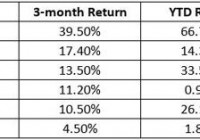
The video game’s annual interactive extravaganza event, Electronic Entertainment Expo, officially kicked off Monday at the Los Angeles Convention Center. Popularly called E3, the event showcases some exciting yet-to-be-launched game titles and consoles. What is interesting for mutual funds is that an American mutual fund firm has just became the largest shareholder in Nintendo ( OTCPK:NTDOY ). Apart from the craze for virtual reality systems, video streaming services and games specifically designed for PCs and mobile devices, many say the console games demand will prove its strength. That should again be good news for Nintendo and other console makers. According to DFC Intelligence estimates, sales of console systems including Xbox One, Nintendo’s Wii U and PlayStation 4, and their respective games may reach $15 billion in 2015. This is a 7% jump from last year. Also, there are a host of press conferences lined up from major companies, sparking further expectations for gamers and investors. Gaming industry giants like Sony (NYSE: SNE ), Microsoft Corp. (NASDAQ: MSFT ), Nintendo, UbiSoft Entertainment SA ( OTCPK:UBSFY ), and Bethesda Softworks, LLC are holding press conferences. Mutual funds having exposure to the video gaming industry are funds to watch out for now. U.S. Mutual Fund Now Top Nintendo Shareholder A filing with Japan’s Finance Ministry showed investment adviser to the American Funds family, Capital Research & Management, owned 16.4% stake in Nintendo. This is up from 15.3% in early March. This increased stake reflects the increasing amount of bets on the Japanese videogame company’s fortunes and revival efforts. Nintendo’s Wii U videogame console has lagged rivals like Sony’s PlayStation 4 and Microsoft’s Xbox One. However, Nintendo has been making efforts recently to gain momentum. Nintendo has made a move to expand its classic franchises into new areas. In March, Nintendo finally entered the mobile gaming business by collaborating with leading Japanese mobile game maker, DeNA. Under the deal, the two companies will develop gaming applications for smart devices based on Nintendo’s intellectual property. According to market research firm, NPD Group, the Nintendo 3DS video game console became the top selling video game hardware platform in the U.S. in February. Nintendo at E3 At E3, Nintendo will not have a traditional press conference. Instead, it will have the Nintendo Digital Event, a pre-recorded announcement. It will be streamed online on Jun 16. The company’s main highlights will be Fire Emblem X Shin Megami Tensei, Star Fox Wii U and Mario Maker. In the E3 event, Nintendo also had a Pre-E3 Super Smash Bros. video presentation on June 14. This had a lot of revelations about the Wii U and 3DS games’ futures and they are slated for major updates. Among other announcements, gamers are looking forward to the gameplay reveal for Star Fox (Wii U). It is the sequel to Nintendo Star Fox 64, which was announced after Nintendo’s E3 conference in 2014. Is E3 a Major Boost for Video Game Makers? The world’s biggest video game show definitely offers a major business opportunity for video game developers. These companies not only get to exhibit their upcoming titles and products but also create a certain hype, which helps drive sales, especially for titles/products launched after the E3 event. Of late, the video game industry hasn’t done too good financially. Last year, U.S. software sales of games declined 14% to $5.47 billion. However, hardware sales rose 20% to $5.07 billion, partly saving the industry with a 1% net increase in retail sales. Things went further downhill in the first half of 2015, with overall industry sales decreasing 13% to $507.6 million. Reportedly, software sales were down 25%, while hardware sales dropped 18% year over year. Video Game Industry Stock Performance The table below, presents the stock performance of some of the major players in the video game industry: (click to enlarge) Calculated via Google Finance Meanwhile, Sony has soared 87.7% over the 1-year period while its year-to-date return is 48.7%. However, Microsoft is down 1% so far this year and its 1-year return is 11.5%. US Mutual Funds’ Exposure to Gaming Industry E3 is a perfect platform for the video game industry with companies showcasing and promoting their upcoming products and experiences to boost demand. Since the event has kicked off, let’s look at the top mutual fund holders. Major fund houses like Fidelity and Vanguard have exposure to the video gaming industry. For example, Fidelity OTC Portfolio (MUTF: FOCPX ), carrying a Zacks Mutual Fund Rank #2 (Buy), holds 2.03% total shares in Activision. As of May 31, Vanguard Total Stock Market Index had 1.22% of total shares and as of Apr 30. According to Morningstar, Vanguard Mid-Cap Index (MUTF: VMCIX ) had 1.85% of total shares of Electronic Arts as of May 31. American Century Heritage Investor (MUTF: TWHIX ) and Prudential Jennison Mid Cap Growth A (MUTF: PEEAX ) are also major investors in Electronic Arts. While TWHIX carries a Zacks Mutual Fund Rank #3 (Hold), PEEAX holds a Zacks Mutual Fund Rank #4 (Sell). Coming to Nintendo, Fidelity Select Technology Portfolio (MUTF: FSPTX ), Fidelity Advisor Technology A (MUTF: FADTX ) and Praxis International Index A (MUTF: MPLAX ) own shares in the console maker. While FSPTX carries a Zacks Mutual Fund Rank #1 (Strong Buy), FADTX is Buy rated while MPLAX holds a Zacks Mutual Fund Rank #3. Original Post Editor’s Note: This article discusses one or more securities that do not trade on a major U.S. exchange. Please be aware of the risks associated with these stocks.

Knowing What’s Inside Your International ETF

Summary MSCI is pushing off inclusion of Chinese A-shares into benchmark indices until China clears up some issues. FTSE, though, is already transitioning A-shares into global benchmarks. How the changes will affect emerging market index-based ETFs. By Todd Shriber & Tom Lydon Index providers MSCI (NYSE: MSCI ) and FTSE Russell recently made waves in the exchange traded funds universe due to their diverging treatment of China A-shares. In late May, FTSE Russell said it will transition A-shares into global benchmarks. Last week, MSCI said it is postponing the addition of A-shares to its indexes, pending China’s ability to clear up some market accessibility issues, though the index provider added if China is successful in those efforts, A-shares could be added to MSCI indexes outside of the providers’ regular classification schedule. What that means for investors in the Vanguard FTSE Emerging Markets ETF (NYSEARCA: VWO ) , the largest emerging markets ETF by assets, and the iShares MSCI Emerging Markets ETF (NYSEARCA: EEM ) is that VWO is heading toward a 5.6% A-shares allocation while EEM is in a wait-and-see mode. “Vanguard said that it recently received a $1.6 billion initial quota for China A-shares for use in its funds that the company believes will provide exposure to China’s largest issuers and a level of diversification that isn’t otherwise available in the market. Vanguard plans to apply quarterly for additional quota and increase its exposure to China A-shares as it transitions to a new FTSE index. However, with $69 billion in assets currently in Vanguard Emerging Market share classes, we think investors will need watch for how closely it can continue grow its exposure to China as planned,” said S&P Capital IQ in a recent note. EEM currently has a China allocation of about 25.1%, nearly 1,100 basis points above South Korea, the ETF’s second-largest country weight. VWO devotes 28.7% of its weight to Chinese stocks. Speaking of South Korea, Asia’s fourth-largest economy highlights another important difference between EEM and VWO. “For the past year, the biggest difference between Vanguard and iShares emerging market ETFs was the exclusion of South Korea in the Vanguard products,” said S&P Capital IQ. With the iShares MSCI South Korea Capped ETF (NYSEARCA: EWY ) up just 0.2% this year, EEM is up 2.4%, trailing the 4% gain posted by VWO. Investors don’t have to wonder what a diversified emerging markets with an appropriate A-shares allocation and no South Korea weight looks like, because the KraneShares FTSE Emerging Markets Plus ETF (BATS: KEMP ) answers that question. KEMP is the first diversified emerging markets ETF to include A-shares by way of 24.5% weight to the KraneShares Bosera MSCI China A ETF (NYSEARCA: KBA ) , the lone U.S.-listed A-shares ETF that tracks an MSCI index . KEMP has outpaced EEM and VWO this year. S&P Capital IQ has marketweight ratings on EEM and VWO. Vanguard FTSE Emerging Markets ETF (click to enlarge) Disclosure: The author has no positions in any stocks mentioned, and no plans to initiate any positions within the next 72 hours. (More…) The author wrote this article themselves, and it expresses their own opinions. The author is not receiving compensation for it. The author has no business relationship with any company whose stock is mentioned in this article.