Tag Archives: seeking-alpha

LS Opportunity Fund Changes Sub-Advisor, Objective, Strategy

By DailyAlts Staff There have been a number of changes to the LS Opportunity Fund (MUTF: LSOFX ) over the past several months. On April 23, the fund’s Board of Trustees filed paperwork with the SEC announcing the termination of the fund’s sub-advisory relationship with Independence Capital Asset Partners. According to sources, this change was due to the retirement of Jim Hillary, a portfolio manager on the fund and Chairman, CEO and CIO of Independence Capital Asset Partners. In addition to Mr. Hillary’s retirement, the firm will be returning capital to his hedge fund investors. Following the termination of Independence, the fund appointed Prospector Partners, LLC, a Connecticut based asset manager, as an interim sub-advisor and transitioned the portfolio to Prospector on May 28. Shareholders are being asked to approve Prospector as the sub-advisor, along with additional changes to the fund as outlined below, at the upcoming shareholder’s meeting on September 17. Changes to Fund Objectives and Implementation Now the LS Opportunity Fund is planning changes to its investment objective and strategy, as well as giving its advisor more power to hire and fire sub-advisors. According to a July 15 SEC filing, these changes will not result in higher fees for investors, nor will they alter the long/short equity orientation of the fund’s strategy. There is, however, a moderate change to the implementation of that strategy, which will now allow the fund to combine long positions with shorts of two or more stocks in the same sector, whereas previously, it called for “pair trades” of one long and exactly two shorts. The fund’s investment objective has also been slightly revised, with the new objective “to seek to generate long-term capital appreciation by investing in both long and short positions within a portfolio consisting of primarily publicly-traded common stock, with less net exposure than that of the stock market in general.” Formerly, the word “risk” appeared in place of “net exposure” in the fund’s stated objective. Fund Performance The LS Opportunity Fund, which launched in September 2010, has a three-star rating from Morningstar. For the three-year period ending June 30, the fund returned 7.76%, ranking it in the top 38% of funds in its Morningstar category. More recently, however, the fund’s returns haven’t been as strong: Year-to-date, through June 30, the LS Opportunity Fund’s -3.57% returns ranked in the bottom 13% of long/short equity funds. For more information, view a copy of the fund’s prospectus .
Vanguard Wellington Fund: Can One Fund Do It All?

VWELX is one of the oldest balanced funds around. It has a great track record of success and is dirt cheap to own. This could be the cornerstone on which you built a portfolio, or even your entire portfolio. Vanguard Wellington Fund (MUTF: VWELX ) dates back to 1929, that puts it among an elite group of funds in the pooled investment world. And, unlike many of Vanguard’s funds, it isn’t an index fund. If you are looking for a single fund to be your portfolio or to be your portfolio’s backstop, this fund should be on your short list. What’s it do? Vanguard Wellington Fund is a balanced fund, placing roughly two-thirds of its assets in stocks and the rest in bonds. Its primary goal is long-term capital appreciation with a moderate amount of income. When selecting securities Wellington Management uses a value approach. In practice that means buying “established large companies” in which earnings, or earnings potential, is not fully reflected in share prices. On the bond side, Wellington Management, “…selects investment-grade bonds that it believes will generate a moderate level of current income.” That’s not very exciting, but the true value of the bond assets is diversification. So boring is good here. How’s that working out? So far, Vanguard Wellington’s done a great job for investors. Over the trailing 15-year period through June, the fund has an annualized total return of roughly 8%, including reinvested distributions. That may not sound all that exciting, but that’s pretty much the point of a balanced fund. Solid, but boring. That 8%, by the way, puts the fund in the top 4% of all similar funds tracked by Morningstar. But the risk/reward trade off deserves more examination than this. For example, over that trailing 15-year period Vanguard Wellington’s standard deviation, a measure of volatility, was roughly 9.5. Compare that to the S&P 500 500 Index’s 15 and you start to see the benefit. Oh, and the S&P returned roughly 4.5% a year annualized over that 15 year span… Now that makes Vanguard Wellington start to look pretty good. And, perhaps the best part, the fund is dirt cheap to own with an expense ratio of just 0.26%. That’s active management for a price that’s not much higher than an index fund. Not a bad deal at all. So what? That brings us back to what you might want to do with this fund. For starters, it’s a fund that’s appropriate for just about any investor to own, aggressive or not. For those who don’t want to bother with the work of investing it could easily be the only fund you every need to buy. A true one and you’re done offering. However, there’s a small problem here if you are looking for income. Vanguard Wellington’s trailing yield is just 2.4%. Unless you have a lot of money, that’s not going to be enough to live on. That leaves two options. First is to set up an automatic withdrawal program so that you get regular checks from the fund. In good times Vanguard Wellington’s gains will more than make up for a modest withdrawal program (say the old rule of thumb 4%). However, in bad years, you’ll be drawing down capital. Despite the fact that past performance is no guarantee of future returns, historically speaking the fund would have more than made up for its lean years. The other option, and perhaps the better choice for more active investors, is to use Vanguard Wellington as your core holding. That means you don’t have to worry too much about the base of your portfolio, allowing you to spend more time finding other investments that can provide you with more income. A core and explore type portfolio structure. And one that would allow you to take on more risk with the explore portion because of the relatively low risk of the core. For example you might pair higher distribution closed-end funds with Vanguard Wellington. In the end, Vanguard Wellington is a great fund. It isn’t right for everyone, but it could have a place in almost any portfolio. That includes being the only holding all the way to being a cornerstone of a more diverse portfolio. If you are trying to simplify, take a moment to look at Vanguard Wellington Fund. Disclosure: I/we have no positions in any stocks mentioned, and no plans to initiate any positions within the next 72 hours. (More…) I wrote this article myself, and it expresses my own opinions. I am not receiving compensation for it (other than from Seeking Alpha). I have no business relationship with any company whose stock is mentioned in this article.

Senior Loan Funds: Buy Inexpensive Defense Against Rising Interest Rates

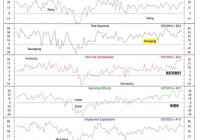
Instability in Greece and China further emphasizes the ‘asynchronous recovery’ where the US might decouple from the reset of the world. In this scenario, investors would want to prepare for mild to moderate increase in US interest rates, and diversify towards rising interest rate assets. Blackstone Strategic Credit (BGB) is one such opportunistic play with a total yield value proposition worth considering. Investing is a confusing thing these days. There’s a pundit for every theory. There’s Jeff Gundlach and Bill Gross talking about the Bond ‘freight train’ and how interest rates are going to rise. There are pundits talking about how Greece and China are going to fall off the cliff (so interest rates fall further), or how secular stagnation is going to be a long-term malaise on the world economy. You can prepare for the two extremes by investing in bonds and commodities, but what about the muddle in the middle? How do you deal with the Asynchronous Global Recovery where the US trends gently higher while the rest of the world grapples with issues that are behind us? This muddle – slow(er) growth than past recoveries but higher interest rates than we have today, is something your portfolio should have an allocation to. This is where Bank Loan (or Senior Loan) funds come in. Bank Loans do better as the economy does better, but in ways that are unique to their asset class. Since they are an out-of-favor asset, buying a closed end fund or CEF gives you the additional pop of a NAV discount that will turn into a NAV premium at a future point. The right CEF thus gives you asset exposure at a discount, and therefore protection on the downside and returns on the upside. US is in (Gentle) Recovery Mode. We could argue endlessly for any of many sides (deflation, recession to be, recovery) based on the indicators we pick, but the hiring and compensation market (see Figure) suggests a gentle recovery to be the most likely possibility. Indirect data suggest that end market conditions that are interpreted as recessionary (e.g. housing starts) are a sign of labor shortage, not low demand. Asset Class Div ersification. The adjoining figure from Credit Suisse shows you the correlations between Bank Loan funds and a number of other common asset classes over the last 20 years. While Bank Loans have had a moderate correlations to High Yield over that period, they provide Asset Class diversification against most of the other traditional asset classes. High Yield has some unique near-term concerns including withdrawal risk (a matter Carl Icahn took a megaphone to in the recent past) and duration exposure, so I believe the current correlation to be notably below the 20 year correlation. Many Choices, Some Better than Others. The adjoining figure provides you a list of options within the Senior Loan CEF category. If you eyeball their charts – you will notice their performance to be highly correlated, and uniformly uninspiring over the last 2 years. But the future isn’t the past. The future is a Wall Street expectation of at least a gentle recovery, global unrest notwithstanding. You would probably do reasonably picking any one of these earning a 6-7% interest while you wait. A number of these funds are trading at a NAV discount of 10-12%, having traded at premiums to NAV in times past. So there is another shared element of the upside. But I favor Blackstone Global Credit (NYSE: BGB ) within the category for a couple of reasons. First, Senior Loans are at the ‘spicy’ end of fixed income, with a risk (and return) that is greater than stodgier asset categories such as Treasuries. I prefer to go with fund managers who have a Private Equity background and do ‘spicy’ as a matter of routine. If there are liquidity issues as Mr. Icahn raises as an issue, Blackstone has successfully navigated rockier waters than most. Second, hedge fund manager SABA Capital (which has a long history of outperforming the indices) took a 5% stake in BGB . BGB is the only Senior Loan Fund on SABA’s portfolio, and is perhaps their testament to the veteran management team in a specialized space. It is worth mentioning that Senior Loan funds are tied to what’s called the LIBOR floor . With rates below the LIBOR floor, interest might not trend upward until interest rates go up 50 to 75 basis points. But with a 6-7% interest and 10% NAV discount, there is a total return thesis that gives you income, NAV return and inflation protection. Disclosure: I am/we are long BGB. (More…) I wrote this article myself, and it expresses my own opinions. I am not receiving compensation for it (other than from Seeking Alpha). I have no business relationship with any company whose stock is mentioned in this article.