Tag Archives: seeking-alpha

A Look At The Energy Sector Impact On Dividend ETFs
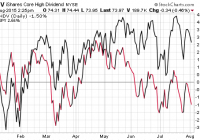
Summary While every index is slightly different, one theme that you often see repeated throughout the high dividend arena is an emphasis on big energy names. As a result of the energy sector woes over the last 12 months, I thought it prudent to look at the overall impact of these stocks on total return. One example of a fund with an outsized allocation to energy stocks is the iShares Core High Dividend ETF. One of the most popular strategies at our firm is the Strategic Income Portfolio, which focuses on a multi-asset approach to generate consistent income and overall low volatility. In order to accomplish those goals, we are continually scanning the ETF landscape to evaluate suitable equity income funds that meet our investment criteria. These ETFs typically consist of high-quality stocks with above-average dividend streams and low internal expenses. While every index is slightly different, one theme that you often see repeated throughout the high dividend arena is an emphasis on big energy names. Exxon Mobil (NYSE: XOM ) and/or Chevron Corp. (NYSE: CVX ) are commonly in the top 10 holdings of these diversified dividend portfolios. According to dividend.com, XOM has a current dividend yield of 3.74% while CVX yields 5.00%. As a result of the energy sector woes over the last 12 months, I thought it prudent to look at the overall impact of these stocks on total return. In addition, it should be noted that ETFs with a fundamental or dividend weighting methodology may be increasing their energy exposure in the future to adjust for the higher yields these companies are now paying. One example of a fund with an outsized allocation to energy stocks is the iShares Core High Dividend ETF (NYSEARCA: HDV ). This ETF is based on the Morningstar Dividend Yield Focus Index, which selects 75 stocks based on their high dividend yields and financial history. HDV currently has $4.3 billion in total assets, a 30-day SEC yield of 3.90%, and an expense ratio of 0.12%. The top holding in HDV is XOM, which makes up 8.3% of the total portfolio. Energy stocks as a whole are the second largest sector in HDV with a total weight of 18.45%. Obviously, this is going to result in these energy companies making a big impact on total return and overall yield. On a year-to-date basis, HDV is down 1.50% while the broad-based SPDR S&P 500 Trust ETF (NYSEARCA: SPY ) has gained 2.63%. This path of divergence really kicked into high gear over the last two months as the energy sector rolled over once again. While this overweight exposure has certainly been a drag on HDV, it hasn’t been a catastrophic event because of the counterbalancing effect of consumer staples and healthcare stocks. Other well-known dividend ETFs with a relatively healthy dose of energy exposure include: Vanguard High Dividend Yield ETF (NYSEARCA: VYM ) ~ 11.90% energy Schwab U.S. Dividend Equity ETF (NYSEARCA: SCHD ) ~ 11.40% energy WisdomTree Equity Income ETF (NYSEARCA: DHS ) ~ 13.55% energy First Trust Morningstar Dividend Leaders Index ETF (NYSEARCA: FDL ) ~ 10.62% energy Investors who believe the carnage in the oil & gas space is due for a bounce may be more inclined to choose a dividend ETF with a higher weighting in this sector. Conversely, those that are less enthusiastic about the prospects for an imminent recovery may choose to underweight or avoid these funds altogether. I continue to own VYM as a core equity income holding in my Strategic Income Portfolio. Despite its flat performance so far this year, the diversified basket of over 430 dividend-paying stocks offer attractive value characteristics and a dependable 30-day SEC yield of 3.26%. In addition, the ultra-low 0.10% expense ratio keeps the overall portfolio fees to a minimum. The Bottom Line One of the most important exercises that individual investors can do is analyze the index construction of their ETF holdings. Take note of any sectors that your funds are overweight or underweight in order to gauge how they will react under different circumstances. That way you are prepared in the event that a significant divergence occurs and can make adjustments as necessary. In addition, it’s important to reevaluate the portfolio on a quarterly or semi-annual basis. These funds undergo regular rebalancing and may shift their exposure based on the mandate of the index provider. Disclosure: I am/we are long VYM. (More…) I wrote this article myself, and it expresses my own opinions. I am not receiving compensation for it. I have no business relationship with any company whose stock is mentioned in this article. Additional disclosure: David Fabian, FMD Capital Management, and/or clients may hold positions in the ETFs and mutual funds mentioned above. The commentary does not constitute individualized investment advice. The opinions offered herein are not personalized recommendations to buy, sell, or hold securities.
5 Buy Ranked Small Cap Growth Mutual Funds To Invest In

Growth funds become a natural choice for investors when capital appreciation over the long term takes precedence over dividend payouts. These funds focus on realizing an appreciable amount of capital growth by investing in stocks of firms whose value is projected to rise over the long term. Small cap funds are a good choice for investors seeking diversification across different sectors and companies. Investors with a high risk appetite should invest in these funds. Small cap funds generally invest in companies having market cap lower than $2 billion. The companies, smaller in size, offer growth potential and their market capitalization may increase subsequently. Below we will share with you 5 buy rated small cap growth mutual funds. Each has earned a Zacks #1 Rank (Strong Buy) or a Zacks #2 Rank (Buy), as we expect these mutual funds to outperform their peers in the future. PNC Multi Factor Small Cap Growth A (MUTF: PLWAX ) seeks capital growth over the long run. PLWAX invests a lion’s share of its assets in small cap companies. The market capitalizations of these companies are identical to the size of the companies listed in the Russell 2000 Growth Index or less than the past three years average of the largest capitalization company listed in the index. The PNC Multi Factor Small Cap Growth A fund has returned 21.5% over the last one year. PLWAX carries an annual expense ratio of 1.12% as compared to category average of 1.34%. BlackRock Small Cap Growth Equity Investor A (MUTF: CSGEX ) invests a major portion of its assets in domestic small cap companies. CSGEX defines small cap companies as those which are having market capitulation size within the range of the Russell 2000 Index. CSGEX may also consider IPOs for potential investment. The BlackRock Small Cap Growth Equity Investor A fund has returned 15.6% over the last one year. Travis Cooke is the fund manager and has managed CSGEX since 2013. Hartford SmallCap Growth A (MUTF: HSLAX ) seeks capital growth over the long run. HSLAX invests a lion’s share of its assets in small cap companies having market capitalizations similar to those included in the Russell 2000 and S&P SmallCap 600 Indices. HSLAX maintains a multi-portfolio manager structure. HSLAX may invest a maximum of 20% of its assets in non-dollar denominated securities of companies located in foreign land. The Hartford SmallCap Growth A fund has returned 19.4% in the last one year. As of June 2015, HSLAX held 350 issues with 1.96% of its assets invested in iShares Russell 2000 Growth. Harbor Small Cap Growth Investor (MUTF: HISGX ) mostly invests in small cap companies, whose market capitalization lies within the range of the Russell 2000 Growth Index. HISGX invests a large portion of its assets in a diversified portfolio of equity securities of around 75 to 85 small cap companies. The Harbor Small Cap Growth Investor fund has returned 20.7% over the last one year. HISGX has an expense ratio of 1.2% as compared to category average of 1.34%. Invesco Small Cap Discovery A (MUTF: VASCX ) seeks capital appreciation. VASCX invests heavily in small cap companies that are believed to have strong capital growth prospect. VASCX may allocate a maximum of 25% of its assets in foreign companies. The Invesco Small Cap Discovery A fund has returned 19.3% over the last one year. As of June 2015, VASCX held 105 issues with 1.64% of its assets invested in Cavium Inc.

Upcoming Political Risks For TransCanada Corp And The Keystone XL Pipeline

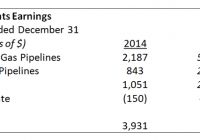
Summary Upcoming Canadian Federal Elections present significant risks for TransCanada Corp. The proposed Keystone XL and Energy East Pipeline projects will face strong headwinds if the NDP wins a minority. Expect increased short term volatility as these events unwind and the possible outcomes become more clear to investors. TransCanada Corporation (NYSE: TRP ) is a Canadian midstream oil and gas company operating in three main business segments: Natural Gas Pipelines, Liquids (crude) Pipelines and Energy. Its pipeline operations extend from Canada to the U.S and Mexico. Revenue breakdown for 2014 between these segments can be seen bellow: (click to enlarge) ( 2014 Annual Report ) TRP currently has two large proposed pipeline projects that have created a lot of public reaction recently and have become hot topic for the media and politicians from both the U.S and Canada. These projects are the Keystone XL and Energy East pipelines. With the Canadian Federal election to be held on October 19th, 2015, it is critical to evaluate each party’s stance on these two proposed projects. Keystone XL Pipeline Overview: The Keystone XL pipeline would transport crude oil for Alberta to Nebraska, expanding the current and operational Keystone Pipeline System. The proposed pipeline would measure 1,897 km long, possess a capacity of 830,000 barrels of oil per day and is estimated to cost $8 billion with $2.4 billion already invested. The pipeline faces a difficult regulatory environment. Since it crosses international borders between Canada and the United States, it is required to obtain a Presidential Permit from the Department of State. The Permit is awarded if the proposed Project serves the national interest, which is a very broad term and requires the consideration of many factors such as energy security, environmental, cultural and economic impacts. Energy East Pipeline Overview: The Energy East Pipeline would transport crude oil from Alberta and Saskatchewan to the eastern Canadian refineries as well as other export markets. In terms of length, this pipeline would span 4,600 km, have a capacity of 1.1 million barrels per day and is estimated to cost $12 billion. The regulatory environment for this project is administered by the NEB (National Energy Board) in Canada, which likely stands to approve the project providing the environmental requirements are met and political support remains. Upcoming Canadian Elections: The outcome of the upcoming Canadian Federal Elections slated for October 19th 2015 will have a significant impact on the likelihood of the Keystone XL and Energy East pipelines being completed. While both Harper’s Conservative party and Trudeau’s Liberals support both projects, the NDP led by Tom Mulcair is currently opposed. While the NDP has yet to win a federal election, this year may be its best chance yet. After a break through election in 2011 in which the NDP replaced the Liberals as the current opposition party. To add to the fact, the Alberta NDP recently won the Albertan provincial election, widely considered a Conservative stronghold and native land of Stephen Harper. The Tory’s have called an early election with the hopes of outspending their opponents. New rules introduced increase the spending limit for longer campaigns. The hope is that this will allow them to outspend the NDP and Liberals on advertising during the critical final weeks leading to the election. While still extremely early in the race, it is worth noting that the NDP currently holds a small but growing lead over the Tories. (click to enlarge) Source: CBC.ca . United States Political Front: As for the U.S political front, Obama has strongly opposed the Keystone XL project and it is extremely unlikely this position will change during the remainder of his term in office. TRP’s hopes lie with the next administration from which they can expect a better odds that they will receive support. Hillary Clinton recently refused to provide a direct answer to whether or not she supports the Project, stating that her current position and the potential for he involvement in a possible lawsuit prevents it. While she is unable to provide any comments at this time, her refusal to offer outright support for Obama on this issue signals that she may be more supportive of the project. As for the Republicans, Jeb Bush tweeted his support : “Keystone is a no-brainer. Moves us toward energy independence & creates jobs. President Obama must stop playing politics & sign the bill.” The economic benefits of the project throughout the U.S would make it difficult for any Republican candidate to oppose it. Conclusion: The impact of an NDP victory in the upcoming Canadian Federal Election presents a significant risk for TransCanada Corp. Two of TRP’s flagship pipeline projects, Keystone XL and Energy East, currently supported by the Tories, are strongly opposed by the NDP. While TRP appears to be a sound value play in the midstream O&G market, offering a juicy 4.31% yield and stable operating cash flows, the upcoming political risks should not be underestimated. Disclosure: I/we have no positions in any stocks mentioned, and no plans to initiate any positions within the next 72 hours. (More…) I wrote this article myself, and it expresses my own opinions. I am not receiving compensation for it (other than from Seeking Alpha). I have no business relationship with any company whose stock is mentioned in this article.