Tag Archives: seeking-alpha

Are Investors Choosing The Right Indices And ETFs?
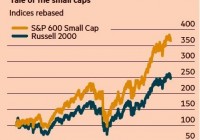
Summary ETFs are financial instruments that add an extra layer of risk that may not be suitable or ideal for all investors. Interestingly, since 2000, the S&P 600 has significantly outperformed it’s counterpart, the Russell 2000. Subconsciously, fund managers may be hurting their returns by stating they are “overweight” or “underweight” a stock, especially if using an easy to beat benchmark. Individual investors can gain an edge on professional fund managers by simply investing in indices and ETFs with a superior long-term track record. It’s conceivable that “brand names” will start to matter, as ETFs and Index Funds become more popular over the next decade. Introduction Warren Buffett has famously stated that Americans are better off investing in a simple index fund like the Vanguard S&P 500 ETF (NYSEARCA: VOO ). Investing in the S&P 500 exposes investors to American businesses and allows them to reap the benefits of an expanding and capitalistic economy. Branching away into different indices and ETFs introduces investors to varying degrees of risk and fall empty handed on the returns advertised. For example, an ETF that is composed of 30 securities is not only priced based on its underlying portfolio of securities, but also in accordance to the supply and demand of the ETF itself. This double jointed structure introduces several liquidity and volatility risks to investors in times of market turbulence and downturns. Furthermore, there are all sorts of differentiated structures that provide for excessive risk in hopes to achieve higher returns. Notably, all levered bull and bear ETFs. These structures introduce another layer of unknowns and risks for investors, with the speculative potential to increase returns. However, an investor is likely to achieve not only a lower risk profile, but higher returns by simply scrutinizing their portfolio with a careful eye– looking for an edge. The Russell 2000 vs The S&P 600 For the conservative investor, a seemingly simple question of investing in an ETF covering the Russell 2000 (like the iShares Russell 2000 ETF ( IWM)) or the S&P 600 (like the SPDR S&P 600 Small Cap ETF ( SLY)) can yield dramatically different results. As reported by the Financial Times on Monday August 17, 2015, the S&P 600 has outperformed its counterpart the Russell 2000 since year 2000–by a significant margin. Specifically, since the beginning of 2000, the S&P 600 would have turned a $100 investment into a little over $360 and a $100 investment in the Russel 2000 would have turned into approximately $250. Image Sourced from Finanical Times Hence, the framework on an underlying index can have a profound influence on an index’s performance, the related ETF’s performance, and an investor’s overall return. The S&P 600 may cover a slimmer portion of the small cap universe, but this may be for good reason. After all, an investor only needs to own 30 stocks to be amply diversified from systemic market risk. According to the Financial Times, the S&P 600 index requires companies to have a record of making profits before it is included in the index. Furthermore, it sets a far higher standard for liquidity (compared to Russell 2000). It’s no wonder then that small-cap investment firms use the Russell 2000 to track their performance against. It’s easier to beat! It’s amazing how two simple rules can create significant long-term value for clients and investors. As such, it appears reasonable to assume that an index’s brand and portfolio construction will have even more of an impact on investors’ decisions going forward. How robot advisors and, to an extent, human advisors, will account for these seemingly minute details remains to be seen. Regardless, a wise and enterprising investor will have an edge. A passive minded investor, with an enterprising spirit, would be able to increase their returns by sacrificing a small amount of time to discover discrepancies such as this-especially long-term investors who have 15+ year time horizons. Index Business Growing In Size and Power Building ETFs based on indexes has become a huge business, with hundreds of billions riding on the skirts of simple structures. The owners of these indexes, whether it’s MSCI (NYSE: MSCI ), FTSE Russell, or the S&P (NYSE: MHFI ) will continue to have more and more power and influence on the financial markets-along with their clients like Vanguard and Blackrock (NYSE: BLK ). Whether or not they use this power wisely is another question, one that I’m not overly optimistic about. Furthermore, transparency can be a double-edged sword. For instance, the Russell 2000 follows very transparent rules by alerting investors in advance which stocks will move in and out on the day each June when the index is reshuffled (making it easier to beat). The S&P 500 Index has discretion to include companies that have a history of recording a profit, maintaining a balance between sectors, and typically only includes new companies when a vacancy is created (often through a merger). Invariably this causes the stock to pop as it is added to the S&P 500 Index, creating agony among fund managers attempting to beat it. Psychology of the Index Behavior psychology (or anything to do with human behavior) continues to have a heavy influence on the performance of fund managers. It’s well-known that investors and fund managers must account for self-bias and over-confidence once they buy a particular security, otherwise their judgment may become impaired and make mistakes. Recently, there has been a change in the way fund managers and analysts talk about their portfolios. For instance, they often speak of being “overweight” or “underweight” a particular stock, rather than stating they “own” a stock. By stating that they are “overweight” or “underweight,” fund manager’s are subconsciously increasing the influence a benchmark index has on their portfolio allocation and investment returns. It’s well known that the majority of actively managed mutual funds fail to beat their benchmarks. Therefore, it stands to reason that individual investors should outperform fund manager’s who chose the Russell 2000 as their benchmark–by simply investing in the S&P 600! While past performances do not guarantee future returns, it’s hard to argue the long-term track-record of the S&P 600 compared to the Russell 2000 over the past 15 years. In essence, investors who look at a stock as a fractional ownership of an underlying business will have both a psychological and fundamental advantage over other investors during a long-term time horizon. Fund managers that state they “own” a stock are still subject to subconscious self-bias and overconfidence; however, it’s likely they would focus more of their time on the fundamentals of the business, rather than the makeup of a particular benchmark. A stock’s total return, after all, is proportional to the company’s long-term operating performance and returns on capital, not because of its weighting in a particular index. Conclusion Just like it’s never wise to ask your barber if you need a haircut, investors shouldn’t accept over-simplified financial products and investments, especially from Wall Street. A little bit of research and passion to find an edge can go a long way. Remember that in a group of 100 investors, only 49 can be better than average-despite everyone’s opinions that they are in the top 20%. Managing your time wisely and performing diligent research has the potential to add a percentage or two to your total returns over your lifetime. In addition, you will incur fewer trading and tax expenses due to mistakes and disappointments. Apply diligent research, patience, and a long-term time horizon to maximize the benefits you receive from the miracles of compound interest. Don’t let sloppy benchmark indices get in your way–invest in the best ones. Disclosure: I/we have no positions in any stocks mentioned, and no plans to initiate any positions within the next 72 hours. (More…) I wrote this article myself, and it expresses my own opinions. I am not receiving compensation for it (other than from Seeking Alpha). I have no business relationship with any company whose stock is mentioned in this article.

Add These Investment-Grade Bond Funds To Your Portfolio

Bonds are assigned ratings based on credit quality. Bond rating firms, like Standard & Poor’s, assign the ratings using upper- and lower-case letters. Usually, “AAA” and “AA” (high credit quality) and “A” and “BBB” (medium credit quality) are the investment-grade bonds. Government bonds, or Treasuries, are not assigned any rating. They generally qualify as the highest credit-quality bonds. A downgrade of a company’s bonds from “BBB” to “BB” reclassifies the debt to “junk” from investment-grade. These can negatively affect bond prices, and the effect of even a one-step drop in quality is problematic for the issuer. Bond funds, however, are a good investment during a low-rate environment. Below, we will share with you 5 buy-ranked Investment-Grade Bond mutual funds. These may be Investment-Grade Bond – Long, Investment-Grade Bond – Intermediate, Investment-Grade Bond – Miscellaneous or Investment-Grade Bond – Short. Each has earned a Zacks Mutual Fund Rank #1 (Strong Buy) or a Zacks Mutual Fund Rank #2 (Buy) , as we expect these mutual funds to outperform their peers in the future. Putnam Absolute Return 700 Fund Inst (MUTF: PDMYX ) seeks to earn 700 basis points, or 7% higher return than U.S. Treasury bills. This higher return of 7% is on an annualized basis, generally over a minimum of 3 years under any market condition. PDMYX combines beta strategy and alpha strategy to seek consistent absolute return. The beta independent investment strategy provides exposure to the investment markets, while the alpha strategy pursues returns from active trading. PDMYX has a 3-year annualized return of 5.3%. The annual expense ratio for Putnam Absolute Return 700 Y is 0.99%, lower than the category average of 1.70%. John Hancock Funds Strategic Income Opportunities Fund C (MUTF: JIPCX ) invests a minimum of 80% of its assets – foreign government and corporate debt securities, U.S. government and agency securities, domestic high-yield bonds, and investment-grade corporate bonds and currency instruments. These may be foreign currency- or US dollar-denominated. JIPCX has a 3-year annualized return of 3.4%. Daniel Janis is the fund manager and has managed JIPCX since 2006. American Funds Intermediate Bond Fund of America Retirement (MUTF: RBOGX ) seeks current income in tune with the quality and maturity standards mentioned in its prospectus. The fund mostly invests in bonds and other debt securities having ratings of A- or better or A3 or better. The bonds, debt securities and money market instruments will have dollar-weighted average effective maturity of at least three years and a maximum of five years. RBOGX has a 3-year annualized return of 1.1%. As of June 2015, RBOGX held 510 issues, with 1.36% of its total assets invested in Canada Govt. 1.5%. Vanguard Intermediate-Term Investment Grade Fund Inv (MUTF: VFICX ) invests a majority of its assets in fixed-income securities of high quality. A large proportion of the securities held are short- and intermediate-term securities rated investment-grade. The average maturity period of the fund ranges from five to ten years. VFICX has a 3-year annualized return of 2.6%. The annual expense ratio for Vanguard Intermediate-Term Investment-Grade is 0.20%, lower than the category average of 0.87% Oppenheimer Core Bond Fund Inst (MUTF: OPBYX ) seeks total return. It invests a large chunk of its assets in investment-grade debt securities. A maximum of 20% of OPBYX’s assets may be invested in junk bonds. Not more than 20% of assets will be invested in foreign debt securities. The fund has a 3-year annualized return of 3.4%. Krishna K. Memani is the fund manager and has managed OPBYX since 2009. Original Post

Fragile Five EMs Redefined? ETFs To Watch

Taper tantrums were heard all over the emerging markets in 2013, especially in the “Fragile Five” countries. These countries – Brazil, Turkey, India, Indonesia and South Africa – were then hugely reliant on foreign capital to finance their external deficits, which put these at risk post QE exit by the Fed. This was because the end of the cheap-dollar era had led to an uproar in these markets, with their currencies plunging to multi-year lows. The widening current account deficit and worsening external debt conditions were the main headaches of the pack. Moreover, most of these nations had some structural problems of their own, which added to this turbulence. However, more than two years have passed since then, and several changes – mainly political – have taken place in those countries. While a shift in political power and pro-growth reformative changes boosted India in the mean time, the changes in Indonesia are yet to reap returns. Meanwhile, India and Brazil managed to shrug off these risks to a large extent, while Colombia and Mexico have entered this vulnerable bunch. These two have joined other three laggards, namely Indonesia, Turkey and South Africa, to form a new Fragile Five emerging market bloc, per JPMorgan Asset Management. What Pushed India and Brazil Out of the Fragile League? India has been able to reduce its current account deficit to 1.4% of GDP from 5% in 2013, the steepest cutback by any major emerging market, per Bloomberg . While Brazil has not been successful on this front, as the commodity market crash restrained the economy to excel on this current account metric, the country offers foreign investors the highest interest rates. Notably, foreign investors park their money in the riskier emerging market bloc for higher yields. Brazil’s real cost of borrowing is the highest among the world’s leading emerging markets. This might keep the flair for Brazil investing still alive among some yield-hungry investors, despite the fast-deteriorating fundamentals of the economy. Coming to the ETF exposure, all Brazil ETFs were in deep red this year, losing more or less 30% each. Only one fund, the Deutsche X-trackers MSCI Brazil Hedged Equity ETF (NYSEARCA: DBBR ), lost 10% due to its currency-hedged technique. However, India ETFs appear steadier, with exchange-traded products swinging between profits and losses. Highest gains of 7.6% were accumulated this year by the EGShares India Consumer ETF (NYSEARCA: INCO ). DBBR has a Zacks ETF Rank #3 (Hold), while INCO has a Zacks ETF Rank #1 (Strong Buy). What Brought Mexico and Colombia In? The second-largest economy of Latin America, Mexico was fated for a downtrend mainly due to the oil price rout. Oil revenue makes up about a third of the Mexican government’s revenues. This, coupled with the recent strength in the greenback caused an extreme upheaval in Mexican peso recently and led the currency toward its lowest close on record in early August. The Mexican peso fell about 3.7% in the last one month (as of August 13, 2015). On August 12, the country’s central bank lowered its 2015 economic growth outlook to the range of 1.7-2.5% from 2-3% to reflect lower-than-expected export and reduced oil output. Due to the low inflation, Mexico’s interest rate is also low at 3%, way low from an EM perspective. As per J.P. Morgan, the economy’s real interest rate hovers around zero which leaves no way out for the government to ease the monetary policy further and quicken the economy. In short, low yield opportunity fails to lure investors toward Mexico. Mexico ETFs were moderately beaten up in the early part of this year, but crashed in the last one-month phase, with the Deutsche X-trackers MSCI Mexico Hedged Equity ETF (NYSEARCA: DBMX ), the iShares MSCI Mexico Capped ETF (NYSEARCA: EWW ) and the SPDR MSCI Mexico Quality Mix ETF (NYSEARCA: QMEX ) all losing in the range of 3.5-6%. Thanks to the currency-hedged approach, DBMX lost the least. DBMX has a Zacks ETF Rank #2 (Buy), while EWW has a Zacks ETF Rank #3. Colombia was another victim of the oil crash. Oil accounts for more than half of its exports. As a result, Latin America’s fourth-largest economy was hard hit by a drop in foreign direct investment in the oil sector, which continues to widen the current account deficit. The country’s currency tumbled 25% against the greenback in the last one month. The Colombian peso’s 37% fall in the last one year was the third-worst performance among 151 currencies tracked by Bloomberg . The economy’s 2015 growth will mark the most sluggish pace in six years, and its current account deficit will likely be the widest in three decades, per Bloomberg. Two Colombia ETFs, the Global X MSCI Colombia ETF (NYSEARCA: GXG ) and the iShares MSCI Colombia Capped ETF (NYSEARCA: ICOL ), have lost 30% so far this year, while around 12% losses were incurred in the last one month. Both GXG and ICOL have a Zacks ETF Rank #5 (Strong Sell). Original Post