Tag Archives: pro

Exelon Corporation: A Promising Investment Opportunity
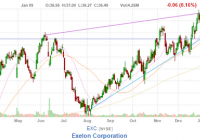
Summary The acquisition of Pepco will grant Exelon enhanced operational capacity as well as increase its ability to serve a greater number of customers in the different counties of the United. This acquisition will also result in expanded regulated business that will improve Exelon’s risk profile and ensure more stable revenue and earning steams compared to unregulated operations. Moreover, the hedging of commodity risk has not only ensured Exelon’s future earnings stability but has also given it a competitive edge in the industry. The company has a significant amount of debt to supports its project financing which will result in a focused business model. Based in Chicago, Illinois in the United States of America, Exelon Corporation (NYSE: EXC ), a well-known energy producer, has been pleasing its investors for a long time and has witnessed a sharp rise of more than 35% in its stock price over the past year. Source: Finviz The impressive performance was mainly due to some smart moves recently taken by the company. These initiatives have not only made the future profits more predictable but they have also given Exelon a competitive edge in the market. I believe Exelon is a promising investment opportunity for the long term. Let us analyze a few factors that support my opinion on the stock. Strategic Acquisitions and Divestitures Have Resulted in a More Focused Business Model Exelon Corporation has been making several acquisitions over the past few years that have not only enhanced its operational capacity but have also enabled it to enter and cater to new and growing markets. In April 2014, Exelon announced it would acquire Pepco Holding, Inc. which is one of the largest energy delivery companies in the Mid-Atlantic region that currently serves approximately 2 million customers in Delaware, the District of Columbia, Maryland and New Jersey. This merger will bring together Exelon’s gas and electric utilities – BGE, ComEd and PECO – and Pepco Holdings’s (PHI’s) electric and gas utilities – Atlantic City Electric, Delmarva Power and Pepco thus improving the combined operational capacity. This acquisition will enhance the company’s operational capacity as well as increase its ability to serve a greater number of customers in the different counties of the United States. As Exelon’s CEO said, “The combination of our companies will provide us an opportunity to take the customer service and reliability improvements we’ve already made in Maryland to an even greater level.” Moreover, the acquisition of Pepco will result in expanded and strong regulated business operations. This merger is expected to increase Exelon’s regulated business exposure to 60% to 65% during 2015-2016 which was previously approximately 55% to 60% on a standalone basis. The expanded regulated business will result in an improved risk profile with more stable revenue and earning steams compared to non-regulated operations. However, the Public Service Commission (PSC) has recently asked for some changes in the merger requirements that Exelon’s president has not agreed with. Since the PSC staff has demanded all the utilities to be managed at micro level with an independent board of directors for Pepco, this would impair Exelon’s ability to exercise control over its subsidiaries. Among the requests, the PSC staff has also demanded a $50 payment to each Delmarva residential customer, a $40 million 10-year set aside for Delaware workers’ job protection and some charitable commitments. These requests, if agreed upon, can result in heavy costs for Exelon thus hurting its future profitability. On the other side, the non-inclusion of these points would force the staff to push the commission to deny the company’s merger application. Presently, Exelon is facing a dilemma regarding the commission’s demands. This posed a possible risk to its future profitability. Perhaps, fair negotiations with the PSC staff could result in a win-win situation. Similarly, Exelon has been selling some of its non-core business assets in order to create a more optimized asset portfolio. To date, the company has divested five non-core assets which has resulted in nearly $1.4 billion of after-tax sales proceeds. This included the sale of its Fore River, Quail Run and West Valley plants for total after tax proceeds of $975 million during the third quarter of 2014. The company can use the sales proceeds to finance the acquisition of Pepco and build two combined-cycle gas turbine (CCGT) units in Texas that will enhance the company’s generation capacity as each unit is expected to add nearly 1,000 MW of capacity to their respective sites. Strategic acquisitions and dispositions have resulted in a more focused business model with improved generation capacity. This will support Exelon’s ability to successfully cater to the growing markets and give it an edge over those in its peer group. Effective Hedging Ensues Stable Earnings in Future Exelon’s energy generation business is exposed to commodity price volatility that can reasonably affect its future top and bottom lines. I believe the company can ensure stable revenue and earning streams in the future because it effectively reduces the commodity risk by hedging a portion of its portfolio on a three-year rolling basis. The hedge targets are approximately 90% – 98% in the first year, 70% – 90% in year two and 50% – 70% in year three. Source: Investor Presentation The hedging activity will help the company to meet its future cash requirements and other financial objectives that include dividends and investment-grade credit rating under a stress scenario. This again gives Exelon a competitive edge in the market and makes it an attractive investment option especially for dividend investors who seek a stable cash flows stream. Significant Debt Financing Supports the Core Business In the past, Exelon raised a significant amount of debt for project financing. Over the past three years it has successfully raised nearly $3 billion to finance several projects including Antelope Valley Solar Ranch, ExGen Renewables, Continental Wind and ExGen Texas Power. These projects have significantly increased the company’s generation capacity with no debt maturing earlier than 2021. Moreover, the company recently announced it would issue $750 million of senior notes maturing in 2020 with a coupon rate of 2.95%. The net proceeds will partially be used to pay-off Exelon’s exiting senior loan notes of $550 million with a coupon rate of 4.55% maturing in June 2015. This would result in interest costs savings of nearly $9 million annually and $4.5 million semi-annually that will boost the company’s future bottom line. Additionally, the remaining proceeds can be used to finance the Pepco acquisition that is expected to benefit Exelon in the long term. Significant debt financing will help Exelon to expand its core business and increase its generation capacity which will in turn support its ability to appropriately cater to the market. Rising Competition can limit its Future Growth Although Exelon is the largest nuclear energy producer in the United States, many alternative energy producing methods can give the company a tough time in the coming years. Presently, natural gas energy producers seem to maintain the lead. Due to the heavy capital outlay required for nuclear power plants and the way their reactors work, it is not easy to stop power generation whenever desired. On the other hand, natural gas fired plants are less capital intensive and the power generation can be easily tailored to meet the desired demand schedule. This gives natural gas energy producers a cost advantage over nuclear energy producers, thus enabling them to easily attract a greater number of customers by offering lower prices. Moreover, rapidly declining natural gas prices are further reducing the electricity production cost for these energy producers. During December 2014, the U.S. natural gas prices fell below $3 per million British thermal units for the first time since 2012. Source: Yahoo Finance Natural gas is the second largest source of power generation in the U.S. and produced nearly 27% of the country’s total electricity in 2013. The continuous decline in the natural gas prices and flexibility offered by less capital intensive natural gas fired plants supports the energy producers’ ability to price electricity at comparatively lower rates than nuclear energy producers thus capturing a major market share. In addition, the conventional energy producing methods including the coal fired and nuclear plants are severely affecting our climates, economies and most importantly, health. The electricity production in the United States accounts for more than one third of the total global warming emissions by the country. The coal fired power plants accounts for nearly 25% of these emissions whereas, natural gas fired plants represent only 6%. The rising concerns about global warming have forced many countries to invest in clean energy. The graph below shows the rising trend of clean energy consumption in the last 5 decades in different countries of the world. Source: Vox As the government is continuously encouraging the use of renewable source of energy, many renewable energy producers will witness a rising demand curve for their services in the near future. PPL Renewable Energy, one of Exelon’s competitors, is concentrating on natural gas and wind energy for power generation and has benefited from the falling natural gas prices in the past. Moreover, the company is continuously increasing its investment in renewable and clean energy production. Its hydroelectric expansion project in Montana has increased its clean energy generation capacity by 70% . The company’s hydro plants in Pennsylvania and Montana have a combined capacity of 757 megawatts of clean energy. Since Exelon is facing intense competition from both natural gas and renewable energy producers, it needs to focus on and invest in alternative energy producing methods for maintaining its market share. Conclusion The sum and substance of my analysis is that Exelon’s recently enacted initiatives have made it is well-positioned to serve the growing market. The strategic acquisitions and dispositions have resulted in a more focused business model along with improved generation capacity. A significant amount of debt financing also supports its future projects. Moreover, the hedging of commodity risk has not only ensured Exelon’s future earnings stability but has also given it a competitive edge in the industry. All of these factors make Exelon a safe and promising investment opportunity for long-term investors. However, Exelon also needs to focus on and invest in natural gas and clean energy producing methods for maintaining a decent market share in this highly competitive environment. Based on my analysis, I give the stock a buy recommendation.
InfraCap MLP ETF: Can An Actively Managed ETF Add Value To The Alerian MLP Index?

Summary The InfraCap MLP ETF is one of the new, actively managed ETFs, bringing return-enhancement strategies to the ETF space. MLP-focused funds face additional tax hurdles not faced by ETFs in other market sectors. The InfraCap fund strategies may help overcome those hurdles. The investment results from the new MLP can be directly compared to the largest MLP ETF, allowing investors to see if the active management strategies work. A new MLP-focused ETF, InfraCap MLP ETF (NYSEARCA: AMZA ) takes an interesting approach to offsetting the rather large hurdles facing an ETF that tracks the widely followed Alerian MLP Infrastructure Index – AMZI . Since AMZA is based on the index tracked by the largest MLP-focused ETF, results from the ETF can be directly compared. Challenges for an MLP ETF Several features of MLPs and the MLP indexes provide distinct challenges for an ETF that wants to mimic the returns of a specific ETF. These challenges result in significant underperformance by the ETF compared to the index or a well-selected basket of individual MLPs. Tax rules concerning investment funds and MLPs provide the biggest drag on returns. A fund that holds more than 25% of its portfolio in MLPs is forced to structure as a corporation and pay corporate income taxes on net income reported by the owned MLP units. A fund organized as a corporation will also adjust its calculated NAV for an accrued, deferred income tax liability. The result is an NAV that lags the index value gains by the 35% top corporate income tax rate. A second challenge for an Alerian index focused ETF is the structure of the AMZI index. The index includes just 25 midstream MLPs, with the five largest partnerships – Enterprise Products Partners, L.P. (NYSE: EPD ) , Magellan Midstream Partners, L.P. (NYSE: MMP ) , Plains All American Pipeline, L.P. (NYSE: PAA ) , Energy Transfer Partners, L.P. (NYSE: ETP ) , and MarkWest Energy Partners, L.P. (NYSE: MWE ) – accounting for 41% of the index value. The result is just a few large MLPs – good or bad – have an over-weighted impact on the index results. Benefits of an MLP Focused Fund Before jumping into the discussion about the AMZA ETF, here are a couple of reasons to use an MLP ETF as a way to get exposure to this historically high-yield, high-average total returns sector: A fund turns the MLP K-1 reporting tax hassle into a simple 1099 reporting investment. Typically, MLP fund dividends are a combination of non-taxable return of capital and ordinary income. A fund may be a better way to get MLP exposure inside of a tax-advantaged account such as an IRA. Owning MLP units inside of an IRA can produce additional tax reporting and tax payments out of the tax-deferred account. The corporate income tax accrual has the additional effect of increasing the yield of an ETF compared to the index. While the AMZI currently yields 5.74%, the tracking ETF yields 6.81%, even with 0.85% in expenses. InfraCap MLP ETF Active Management Adjustments to AMZI According to its prospectus , the InfraCap MLP ETF typically owns the same 25 midstream MLPs tracked by the AMZI index. However, the ETF’s active management strategy allows management to use any or all of the following strategies to boost returns or safeguard against declines. Underweight and overweight MLPs compared to the AMZI based on Infrastructure Capital Advisors proprietary model that values MLPs based on commodity prices, cash flow forecasts, and relative valuations. Fund management will sell call options to enhance the yield earned by investors. AMZA can employ up to 33.3% leverage. The use of leverage provides an offset to the corporate income tax bite. Management can reduce leverage or even move into cash if the model determines the MLP sector is overvalued. The bottom line is that with AMZA, investors get a strategically managed MLP ETF with an expense ratio of just 0.95%. This is significantly less than the typical expenses of an MLP-focused closed-end fund (which also incurs the corporate income tax bite) and the 0.85% expenses of the $9 billion in assets ALPS Alerian MLP ETF (NYSEARCA: AMLP ) . AMLP tracks the Alerian MLP Infrastructure Index. Since AMLP tracks the AMZI index and AMZA holds the same components weighted by its model, it will be interesting to see if the active management strategies produce extra return for investors. AMZA was launched in October 2014 and has gathered $7 million in assets. So we have two questions: Will the active management model work? And will investors buy into it?

Divergence Of Oil And Gas Prices Offers Golden Pair Trade Opportunity

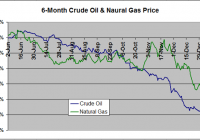
Summary Natural gas has slumped 33% over the last six months, but crude oil has fallen further, by 53%. As a result , the oil-gas ratio has tumbled 40% to 15.5, in the 4th percentile over the last five years. Theoretically, as gas becomes relatively more expensive to oil, drilling should shift away from oil and even into gas, if prices remain competitive, resulting in a normalization of the ratio. A long USO, short UNG pair trade will capitalize on this ratio returning to historical levels without net exposure to the tenuous commodity sector as a whole. Should the ratio return to its five year average of 25, a long USO/short UNG trade will net approximately 23%. A leveraged long UWTI/short UGAZ trade will yield approximately 70%. Investing in natural gas has been a challenge over the last year. After spiking to multi-year highs last winter thanks to the coldest winter in the past 20 years, the price of the commodity has been decimated over the past six months due to a combination of a mild summer and autumn that suppressed demand and record production. At Friday’s closing price of $3.12/MMBTU, the commodity is down 32.5% since June 1, 2014. As hard as it’s been to be a bull in the natural gas space, crude oil traders have an ever rougher deal. Thanks to record-setting U.S. production and OPEC willing to play a dangerous game of chicken with U.S. producers, the normally less-volatile crude oil is down 52.5% during the same period. Figure 1 below compares oil and natural gas prices over the last six months. (click to enlarge) Figure 1: 6-Month Oil/Gas Price Change (Pricing Data Sources EIA: NYMEX Futures Prices & Natural Gas Futures ) Depending on what source you read, oil is bound for either a rapid bounce to $60/barrel or doomed to slog around at $40/barrel for the next year or two. Likewise, for every article dooming natural gas to $2.00/MMBTU for the foreseeable future, another is predicting a new polar vortex that will send price soaring back to $4.00/MMBTU. Admittedly, there is an abnormally large degree of uncertainty in both sectors. Instead of trying to predict price movements in either commodity, this article will discuss a strategy to capitalize on a divergence from the historical relationship between the price of natural gas and oil. While natural gas has had a poor six-month performance, it is crude oil that has really been taken to the cleaners. As a result, natural gas has become more expensive relative to crude oil. Figure 2 below shows the Crude Oil-to-Natural Gas ratio over the last six years dating back to 2008. (click to enlarge) Figure 2: Oil-To-Gas Ratio 2008-Present (Source as above) The first half of 2008 marked the end of the era of vertical well drilling. In 2009 and beyond, directional drilling and fracking technology made the cost of hydrocarbon production significantly cheaper. However, the technology disproportionately benefited natural gas drillers. The crude oil-to-natural gas ratio therefore ballooned from around 12 in 2008 to a peak of 50 in early 2012 as natural gas prices plummeted to briefly under $2.00/MMBTU and oil prices stabilized around $100/barrel. The ratio has generally oscillated between 20 and 30 thereafter. However, as oil prices have tanked much faster than natural gas over the last six months, the ratio has plummeted over 40% from 27 in mid-July 2014 to 15.5 as of Friday’s close. This represents the 25th percentile since 2008 and the 4th percentile since 2010-the rough start of the fracking era. Rather than betting on a recovery in either natural gas or oil prices, an alternative strategy is a pair trade that bets on the recovery of this ratio to the historical range. This entails taking a short position in a natural gas ETF such as the United States Natural Gas ETF (NYSEARCA: UNG ) and a long position in an oil ETF such as the United States Oil ETF (NYSEARCA: USO ) such that a recovery in the crude oil-to-natural gas ratio will result in a net profitable position. If natural gas slumps and oil rallies-resulting in a rapid recovery in the ratio-both positions profit. If both natural gas and oil rally, but oil rallies more-resulting in a slower recovery in the ratio-the profits from the long oil position will outweigh the losses from the natural gas short. Likewise, should both fall but natural gas fall faster, the opposite will be true-profits from the natural gas short will outweigh losses from the oil long. Of course, should natural gas outperform oil, the pair trade will be a losing one-and because there is a short position involved, the losses may be extensive. However, this will result in the crude oil-to-natural gas ratio falling towards 10 and deviating even further from the historical averages. Approximate returns of this trade going long USO and short UNG are shown below in Figure 3 based on crude oil-to-natural gas ratio. I say “approximate” because the exact profitability varies slightly depending the exact prices of the two commodities (i.e. Oil at $60 and Gas at $3 vs. Oil at $40 and Gas at $2, both for a ratio of 20). These calculations assume a price of crude at $60/barrel, which represents the median of current analyst estimates for a 6 month price target, and natural gas at the corresponding value to satisfy the given ratio. Of note, real world returns may actually be boosted compared to these projections. It is well-established that rollover losses from contango can decimate an ETF. This is something that has plagued natural gas ETFs given the frequency at which this commodity trades with a large contango. Oil traditionally trades at a much smaller contango. Thus “excess” profits in the UNG short due to contango not affiliated with organic price movements will likely outweigh much smaller “excess” losses in the USO long due to contango. (click to enlarge) Figure 3: Projected profitability of a Long USO/Short UNG Pair Trade depending on Oil/Gas Ratio Should the ratio bounce just 30% to 20, the trade will return 14%. Should the ratio return to its 5-year historical average of 25, the trade returns 23%. I am currently invested in this trade using a position size that comprises 15% of my portfolio. Should the ratio slump under 15, I will look to slowly add to my positions. These returns can be boosted by using leveraged ETFs. Figure 4 below shows the same curve using a long Velocity Shares 3x Crude Oil ETN (NYSEARCA: UWTI ) and short Velocity Shares 3x Natural Gas ETN (NYSEARCA: UGAZ ) pair trade. (click to enlarge) Figure 4: Projected profitability of a Long UWTI/Short UGAZ Pair Trade depending on Oil/Gas Ratio Using this trade, profits will be around 41% should the ratio recover to 20 and 70% should the ratio climb to 25. However, this trade is not without risk. The excess leverage boosts losses such that should the crude oil-to-natural gas ratio fall to 10, losses will comprise the entire position due to the ballooning value of the short UGAZ short position. Secondly, the leveraged ETFs are not designed to track their underlying commodities in the long term. These ETFs tend to underperform, particularly in a choppy trade environment. Thus, should it take the oil-to-gas ratio > 6 months to reach a target level, expect actual returns to be less than projected. Beyond simple technicals-oil is due for a bounce after a nearly linear 6-month decline-the fundamental rational behind this trade is simple. As natural gas becomes more expensive relative to crude oil, it becomes less and less profitable to drill for liquid hydrocarbons versus gaseous hydrocarbons and rigs are gradually shunted from oil-directed to gas-directed. This trend is already reflected in the Baker Hughes Rig count. Figure 5 below shows the % change in oil-directed and gas-directed rigs over the past 6-months. (click to enlarge) Figure 5: Baker Hughes Rig Count Change In Oil And Gas Rigs Over The Last Six Months (Source: Baker Hughes ) Natural Gas-directed rigs have fallen 4.9% to 310 as of last Friday while Crude Oil rigs have fallen by 11.0% to 1366, or by 170 oil rigs and 16 gas rigs. Should this trend continue, it is likely that the crude oil supply will gradually stabilize while natural gas supply is more likely to remain near record levels, increasing the odds that the oil-to-gas ratio normalizes to historical levels. Additional disclosure: The author is also short UNG as discussed in the article.