Tag Archives: management

Now Long Gold And Natural Gas For The 1% Portfolio

This portfolio requires ongoing attention and management. We must justify the extra time invested by producing solid gains. Investing small is imperative in this portfolio. We keep diversified and our investing automatic to control fear and greed. We were put shares of (NYSE:GDXJ) & (NYSE:UNG) over the Christmas. We will monitor these closely and sell covered calls when the opportunity arises. It’s good to be back after the break and I want to wish everyone a very happy new year and let’s work together to ensure 2015 is a very profitable year for all of us. I hope each and every one of you will pick up some ideas and strategies from our 1% portfolio as we march into 2015. We have called this the “1% portfolio” so that the focus is on position size. I understand that it is very difficult for a portfolio to have 100 different underlyings but this portfolio always strives to increase the amount of positions as this has many distinct advantages. As we are starting the year off, let’s go through how this portfolio is set up and also where we are exactly with the 1% portfolio after the Christmas break. First of all this is an income portfolio. Our goal as income investors is to make money every month. We do this through option selling (puts and calls) and dividend pay-outs. This portfolio requires ongoing management because we monitor when an underlying has earnings, when it pays its dividend, when option premium is inflated and obviously the price action of the underlying. If you are looking for a portfolio that it almost completely hands off, then this portfolio is not for you. We are looking for above average gains – at least 25% on our money every year. We need at least this to justify the time we invest in our portfolio management. Investors who don’t want to actively manage their portfolios should just buy some good blue-chips stocks and collect the dividends every quarter as this strategy should overtime give you 7-10% on your money but we want more and the strategies below is how we do it. Firstly we keep our positions very small. Selling covered calls is a good strategy when there is rich option premium in the underlyings but greed creeps in when the underlying rallies hard. When emotions get involved, trading can get reckless. We control this by keeping our positions small and staying diversified. You are never going to “miss” a windfall when you are small and also one position can’t bankrupt you if you remain small in your portfolio. Nevertheless having multiple positions brings its own complexities. When investing small and investing for income, more time must be invested and also we must research the fundamentals of more underlyings. This is where an investor could slip up in this type of portfolio. Instead of doing thorough due diligence, an investor may open a position in an underlying just to collect a dividend which is not what we advocate here. Everything must be lined up properly for this portfolio to be profitable especially the fundamentals of the respective underlying. Secondly in order to collect income, we must sell at a profit. Therefore again when we open option, stock & ETF positions, we put in automatic orders (Good Till Cancelled) to collect income. It is all automatic and we put in these orders at order entry. These orders are working 24/5 for you and their sole aim is to collect income. Moreover these orders take the fear and greed elements out of your trading. We trade on logic not on emotion. When investing in ETFs , we are extremely mindful of where we are in all asset classes. Below is a list of where we believe we are currently in these asset classes. We diversify as much as we can. 1. Agricultural commodities. Corn, Wheat and Sugar are extremely depressed on a historical basis. We will be taking bullish positions in these when the opportunity arises. 2. Precious Metals – Again oversold, especially the mining sector. We will be taking bullish positions in these when the opportunity arises 3. US Equities – Overbought on a historical basis. We only will be going long on our selected blue chips at these levels (Stocks that have flourished historically). If we get a sharp correction, we will add more equities to the mix. 4. Real estate. We believe we are nearing a top in this asset class. We will not be going long here. 5. US Bonds. We believe again that bonds are overbought and are definitely due a correction. We are mindful that this correction may not take place for a substantial period of time. Nevertheless we will not be going long as the risk does not justify the reward at these levels. We made some profits on Coca-Cola (NYSE: K ) over the Christmas period and we also got put stock such as (NYSEARCA: GDXJ ) & (NYSEARCA: UNG ). We will wait until these recover somewhat before we sell some covered calls. We never should have realized losses in this portfolio as we never sell our underlyings at a loss. All we should have should be realized gains and unrealized gains or losses. Updated Portfolio (02-01-2015) Open Positions (Position size kept Ultra Small) Underlying Strategy Result GDXJ – 19/11/2014 Sold 25-DEC26 Naked Put (Now Long Stock) Open UNG – 20/11/2014 Sold 21-DEC26 Naked Put (Now Long Stock) Open USO – 25/11/2014 Sold Jan02-27.5 Naked Put Open USO – 10/12/2014 Sold Jan16-22 Naked Put Open MCD – 17/12/2014 Sold Jan15-95 Covered Call Open KO – 11/12/2014 Sold Jan23-43.50 Covered Call Open CVX -19/12/2014 Bought Stock 19/12/2014 Open CORN – 15/12/2014 Bought Stock – 15/12/2014 Open GDX Bought Stock 09/12/2014 Open MCD Bought Stock 25/11/2014 Open KO Bought Stock 25/11/2014 Open K Bought Stock 25/11/2014 Open TBT Bought Stock 28/11/2014 Open KOL Bought Stock 25/11/2014 Open AXP Bought Stock 05/12/2014 Open BDX Bought Stock 05/12/2014 Open IBM Bought Stock 05/12/2014 Open Closed Positions (Per One Lot Of Options Sold) Underlying Strategy Result GDXJ – 17/11/2014 Sold 22-DEC26 Naked Put $38 Profit MCD – 20/11/2014 Sold 94-DEC26 Naked Put $48 Profit KO – 20/11/2014 Sold 43-DEC26 Naked Put $21 Profit MCD – 16/12/2014 Sold Jan15-95 Covered Call $25 Profit AXP – 16/12/2014 Sold Jan9-95 Covered Call $44 Profit K – 30/12/2014 Sold Jan16-67.5 Covered Call $67 Profit MCD – 15/12/2014 Dividend $0.85 KO – 15/12/2014 Dividend $0.305 K – 15/12/2014 Dividend $0.49
EQT Corporation Holds Valuable Assets

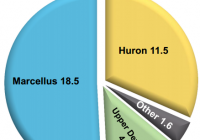
Summary EQT is one of the largest natural gas players in the market that is involved in production and midstream activities. The company also enjoys healthy growth prospects. EQT has announced its plans to drill 181 new wells in the Marcellus Shale in 2015 which is one of the most efficient natural gas plays in the US. EQT is in a good position to report healthy financial performances. The consensus target price and the relative valuation reveals attractive upside at its current price. EQT Corporation (NYSE: EQT ) is one of the largest and most dynamic US natural gas producers involved in production and midstream activities. The company aims to fulfill the growing demand for natural gas in the US. EQT is an efficient company that owns valuable gas reserves in the US. EQT has reported healthy financial performances in the past and despite short-term challenges it is in a strong position to create value for its investors in the coming years. EQT Owns Valuable Natural Gas Assets The Marcellus Shale is one of the most productive and efficient gas plays in North America and EQT has greatly benefited from the growth in reserves in the Marcellus Shale. The Marcellus Shale produces about 40% of the US shale gas production. EQT owns about 580,000 net acres in this shale. The total reserves held by EQT account for about 36.4 trillion cubic feet equivalent (cfe) and about half of these reserves (18.5 Tcfe) are present in the Marcellus play. Source: EQT website EQT has reaped healthy growth in the reserves in the Marcellus play with proven reserves growing by a CAGR of 32% in the past few years. EQT estimates the total resource potential of the Marcellus Shale to be 23.9 Tcfe. EQT has announced its capital investment program for 2015 in which it plans to drill 181 wells in the Marcellus Shale. EQT has the proven ability to develop reserves and this new capital investment for drilling new wells will also prove to be beneficial. (click to enlarge) Source: EQT website EQT plans to make a total capital expenditure of $2.5 billion, out of which $2.3 billion is to be spent on EQT’s production activities. Apart from drilling wells in the Marcellus Shale, EQT has also announced that it will drill 58 Upper Devonian wells, 15 Permian wells, and 5 Utica wells. An Efficient Industry Leader EQT possesses more than a century of experience and this makes it an efficient company with leading cost structure in the industry. EQT’s finding and development cost of $0.88 per Mcfe is well below the industry average of $2.74 per Mcfe. EQT also enjoys very low operating costs compared to the industry. EQT’s operating expense is $0.52 per Mcfe which is well below the industry’s average operating cost of $1.68 per Mcfe. The company’s valuable assets and efficient operations make it a strong business with healthy growth prospects. A Look at Historical Performance EQT has reported healthy financial performances in the past decade. The revenue grew by a healthy CAGR of 7% in the past ten years. EQT managed to increase its gross and operating margins which allowed top line growth to translate to the bottom line. The gross margin improved from 45.4% in 2004 to 80.9% in 2014. The operating margin improved from 24% in 2004 to 44% in 2014. Net income increased by a CAGR of 6% in ten years. This improvement in the financial performance is indicative of the strength of EQT’s business. EQT holds valuable assets that have the ability to create value for its investors in the future. (click to enlarge) Source: Morningstar.com The Consensus Target Price Estimate EQT’s healthy prospects are the basis of the attractive valuation made by analysts covering EQT. The consensus target price reveals upside potential at its current share price of $77.50. The mean target price of $113.11 presents an upside of 46% and the median target price of $114.50 presents an upside of 48% based on the current price. The most optimistic intrinsic value estimate of $134, if realized, presents an upside of 73%. It is worth noting that the most conservative intrinsic value estimate of $93 also presents a very attractive upside of 20%. EQT is a great enterprise with assets that make it an attractive long-term investment. Investors that wish to GAIN exposure in the oil and gas industry should consider investing in EQT. The following is a summary of target price estimates polled by Thomson Reuters from 18 brokers covering EQT. Source: Yahoo Finance Relative Valuation EQT’s price to earnings ratio of 24.92 shows that it is overvalued compared to the industry, sector, and S&P 500. However, after incorporating forecasted growth in the price to earnings multiple, THE RESULTANT PEG ratio shows that EQT is undervalued compared to all the benchmarks used. EQT’s share is an appropriate investment at its current share price. Source: Yahoo Finance Conclusion EQT Corporation is a strong business that has reported healthy financial performances in the past. It is one of the most efficient industry players with a low cost structure. It owns huge reserves of natural gas and has the proven ability to economically develop reserves. EQT has announced its 2015 CAPEX plan worth $2.5 billion with proposals to drill 181 more wells in the Marcellus Shale which is one of the most prolific plays in the US. EQT enjoys healthy growth prospects and this makes it a valuable long-term investment. The consensus target price and the relative valuation show that EQT is an attractive investment based on its current price.

2015 Could Be A Good Year For Europe ETFs

European equities could outperform in 2015. However, potential investors should hedge currency risk with Eurozone hedged-equity ETFs. Region outlook and focus on hedged-equity ETFs. European equities and related exchange traded funds could outperform in 2015, capitalizing on lower energy prices, an improved export outlook and potentially more European Central Bank easing. For instance, the iShares MSCI EMU ETF (NYSEARCA: EZU ) and the SPDR EURO STOXX 50 (NYSEARCA: FEZ ) both focus on Eurozone countries. Alternatively, investors seeking to capture Eurzone market exposure can also consider a hedged-equity ETF that will help diminish the negative effects of a depreciating euro currency. For example, the Deutsche X-Trackers MSCI Europe Hedged Equity ETF (NYSEARCA: DBEU ), iShares Currency Hedged MSCI EMU ETF (NYSEARCA: HEZU ) and WisdomTree Europe Hedged Equity Fund (NYSEARCA: HEDJ ) hedge against the euro currency and would outperform a non-hedged Europe equity ETF if the euro currency continues to depreciate. DBEU, though, takes a slightly broader approach to the European markets, including about a 40% combined tilt toward the United Kingdom and Switzerland. HEZU and HEDJ only cover Eurozone member states. Wall Street analysts believe that European equities could be one of the best places to invest in 2015, reports Sara Sjolin for MarketWatch . “Europe was a market ‘darling’ this time last year, then became a pariah,” economists at Morgan Stanley said in a research note. “[Now] we like European equities, (especially cyclicals) and European ABS.” Mislav Matejka, chief European equity strategist at J.P. Morgan, even predicts that Eurozone stocks could outperform U.S. equities next year. Specifically, the investment banks are pointing to three factors that will support the region: the ECB, a cheap euro currency and low oil prices. ECB President Mario Draghi has hinted that the central bank could introduce further stimulus in early 2015 and even enact a bond purchasing program. “The mantra is ‘Don’t fight the ECB’ – the central bank is set to inject €1,000 billion and to add sovereign bonds to its buying program,” analysts at Société Générale said in a research note. While the euro currency has depreciated 10% against the U.S. dollar so far, analysts believe there is more room to fall after the ECB enacts further easing. Consequently, the weak euro will help bolster the Eurozone’s large exporting industry, making goods cheaper for foreign buyers. Morgan Stanley predicts the cheap currency could add at least 2% to earnings per share for European companies next year. Lastly, lower energy prices will have an immediate effect on consumers, allowing Europeans to spread around their cash for discretionary purchases and spur growth. Additionally, the cheap oil will lower input costs for companies’ profit margins and lift earnings. Furthermore, analysts believe that if the ECB begins a quantitative easing plan, the financial sector will be a key beneficiary. Most major Eurozone banks are already in good shape and should capitalize on improved credit supply and loan demand. For targeted Europe financial exposure, investors can take a look at the iShares MSCI Europe Financials ETF (NASDAQ: EUFN ) . However, the ETF does not hedge against currency risks. Max Chen contributed to this article .