Tag Archives: management

The Chilean Economic Miracle Is Over: Is Chile Still A Good Investment?
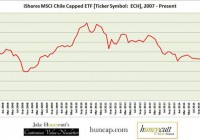
Summary The Chilean stock market has fallen over 50% from its peak due to a weakening copper market. Chile has consistently been ranked as one of the most “economically free” nations in the world. Given the plunging stock market coupled with Chile’s strong economic model, it’s worthwhile to explore for investment. Unfortunately, the political pendulum is swinging back towards the Socialist direction, creating new headwinds for the Chilean economy. Chilean investment could become attractive in the future, but the dual headwinds of a declining copper market and Socialist politics make the risks too high for now. I like seeing a bit of distress in the market. I frequently get asked, “how’s the market doing?”, and I never know how to reply, because for me, I’m typically more excited when it’s doing poorly than when it’s doing well. A down market means there are likely attractive opportunities. A boom market means I have to make some tough decisions on whether to continue to hold some stocks that might not be great values moving forward. I can’t say I’m thrilled about where the S&P 500 is right now. I detailed this issue a bit last year in an article, ” Projecting the Forward Returns on the S&P 500 .” In that article, I concluded that high valuations for US stocks would make it difficult to achieve strong returns moving forward; at least without a significant correction. Certainly, on a micro level, there are still some good deals to be found, but they are not in abundance by any means. Given this, it’s only natural to search outside the US for opportunities. Latin America is an obvious alternative. Smart economic policies in places like Chile, Peru, Colombia, Panama, and Costa Rico have led to improving long-term economic growth over the past few decades. Several Latin American nations have strong capital markets, as well, making it an ideal place to seek out investments. Chile has stuck out to me particularly due to the relatively poor performance of its stock market over the past few years, coupled with high ratings in economic freedom indices. Since its peak in December 2010, the iShares MSCI Chile Capped ETF (NYSEARCA: ECH ) has lost 53% of its value, falling from $80 down to $37. It has now rebounded slightly to about $41. (click to enlarge) Based off of this, Chile seems like an ideal place to seek out investments. However, there are a few issues with this thesis. For this article, I’ll detail the pros and cons of Chilean investment. The Copper Boom and Bust The first question to ask is “why has Chile crashed?” The answer to this question is surprisingly simple: copper. In 2012, copper accounted for 20% of Chile’s GDP and 60% of its exports . Since February 2011, copper prices have fallen about 35%; a substantial decline for such a short period. (click to enlarge) Even now, copper prices are still well-above historical levels. I explored this issue in depth back in December 2011 in my article, ” Copper Producers Could Still Have a Long Way to Fall .” If one adjusts copper prices for inflation using CPI , they will quickly discover that copper still looks somewhat expensive even after the 35% drop of the past few years. The historical average is about $4,600 per Metric Ton, which is currently 28% below the current price level. If we go back further and look at the pre-boom average of $3,440 per Metric Ton, copper would have to fall another 45% to reach that level. (click to enlarge) When a nation’s economy is heavily dependent upon copper and copper prices plunge, then it’s probably to be expected that its stock market would suffer some heavy damages. You can see the correlation between the iShares MSCI Chile ETF , Southern Copper (NYSE: SCCO ), and the S&P 500 (NYSEARCA: SPY ) in the chart below. (click to enlarge) The chart may be a little difficult to read, but the gist of it is that the Chilean ETF and Southern Copper both rebounded quickly and dramatically after the financial crisis, while the S&P 500 lagged behind. From about mid-2011 onwards, it’s been just the opposite with the S&P 500 gaining upward momentum, while ECH and SCCO have suffered significant losses. Economic Freedom Chile is very dependent upon copper and the outlook for copper is more likely to get worse before it gets better. Why might Chile provide attractive opportunities, anyway? One simple response would be that it has one of the best economic models in all of Latin America. The Canadian free market think tank, the Fraser Institute , provides one of the best measures of economic freedom across the globe. There is a significant correlation between national rankings in the Economic Freedom of the World index and long-term real economic growth. In 1970, Chile had a dismal score under 4.0. It remained near the bottom of the world in the Fraser rankings through the early 80’s. At that point, it made several economic reforms which saw it steadily rise in the rankings. As of 2012, it was ranked #10 out of 152 nations surveyed, with a score of 7.84. On the opposite end of the spectrum has been Venezuela. Venezuela was ranked #11 in the world (out of about 65 nations surveyed at the time) with a score of 7.0 in 1970. Since that time, it has steadily dropped until it was ranked dead last (152nd out of 152 nations) in the world in 2012 with a score of 3.89. That put it behind Myanmar, Zimbabwe, and both Congos in the index. (As a side-note, North Korea was not included). (click to enlarge) You can see the radically different paths of Venezuela and Chile in terms of wealth, as well. Measuring in constant US Dollars, Chile’s per capita income has nearly quadrupled over a 53-year timespan, while Venezuela’s has barely budged. (click to enlarge) Source: World Bank, Google Public Data Chile has achieved 2.6% annualized per capita income growth during this time period, while Venezuela has only achieved 0.1% growth. Chile’s annual per capita growth shoots up to 3.8% if we only examine the period from 1982 onwards. Meanwhile, Venezuela’s 0.1% per capita income growth is probably inflated, since it was dependent upon high oil prices, which have now collapsed. Overall, we can see a tale of two completely divergent economies. Chile’s free market economy and strong capital markets provide compelling reasons why a “beaten down” Chile might be a good investment. However, there are caveats. Death and Taxes Unfortunately, the political pendulum might be swinging back in the other direction in Chile. In December 2013, Socialist Michelle Bachelet won a second term as President , winning the election in a landslide. While her first term was largely uneventful, she gained the support the Communist Party in the 2013 Election, and seemed to veer towards more radical left-wing policies. The cornerstone of her second term has been a massive corporate tax hike . Chile’s corporate tax rate was one of the lowest in the world in the last decade, standing at around 15% – 17%. After an increase in 2011, coupled with the new overhaul, the corporate tax will rise to 35% by 2017. Thus, in a matter of 6-7 years, Chile will have gone from having one of the lowest corporate taxes in the world to one of the highest. This is a major headwind facing the Chilean economy and its stock market. Economically, we know it’s likely to lead to significantly lower long-term growth and will lead fewer companies to consider locating within Chile. As a result, there are some legit fears that the “Chilean Economic Miracle” that has run nearly three decades is coming to an end. It’s probably worth noting that this wouldn’t be the first time that a nation with high growth has paralyzed itself with massive taxes. This was exactly the same formula Japan followed to poor results over the past few decades; and not that dissimilar from the US from 1932 – 1946. Much of the European growth of the 60’s and 70’s was also met by a stream of rising taxes in many nations, which led to subdued growth. Even mindlessly ignoring the economic impact of the taxes, it’s obvious that it will have a significant impact on investors. A company making $10 million in pre-tax earnings generated $8.5 million in post-tax earnings under the old system, but only $6.5 million under the new system. That’s about a 24% decline. It’s difficult to think of too many good things about this. It seems unlikely that the tax hike will be reversed any time soon, especially with the copper market suffering. A weaker copper market likely spells weaker government revenues, and this is a government that is intent on increasing spending. That said, a swing back to its Communist past under Salvadore Allende seems unlikely. Rather, what appears more probable is that Chile pushes into quasi-Keynesian territory, following the path of post-asset bubble Japan and the United States in the Great Depression. The pattern thus far under Bachelet’s second term has been to constantly increase spending to “stimulate” the economy and constantly raise taxes to pay for the spending. Chile Versus the US in 1932 One interesting parallel here is the United States in 1932. Under President Herbert Hoover, the US dramatically increased taxes in ’32 leading to even more distress in equities. However, if you invested at the end of 1932 or at the beginning of 1933, you would’ve done pretty well. Nevertheless, the 1930’s market was relatively stagnant and growth stayed weak throughout the entire decade, due to even further tax increases and poor regulatory policies. Chile might be in a similar situation. If stocks get cheap enough, if could be worthwhile to invest there. But I wouldn’t hold my breath on a quick reversal back to the “Economic Miracle” that ran from the mid 80’s through 2011. Chile will likely experience sluggish growth moving forward due to tax and regulatory headwinds that could become even worse after the initial set of reforms fails. Conclusions In spite of the increasingly poor political environment, Chile does have well developed and stable capital markets. It’s true that politics can ruin investments, but it’s also true that well-established institutions put some limits on radical politics. I’m betting at the very least, that there will be some backlash against the recent Socialist policy shifts. However, it could take some time to develop. If Chile were about to benefit from a major cyclical shift, it still might be an attractive target for investment. Unfortunately, poor political policies coupled with headwinds in the copper market likely mean that the 2010’s will be a dismal decade for the Chilean economy and investment. Even in spite of the over 50% decline in the Chilean markets, the iShares Chile ETF still sells at a 20.2x P/E ratio. I wouldn’t necessarily view this as cause for concern, but it’s difficult to imagine corporate earnings significantly rising much with such an unfavorable tax environment moving forward. However, if the market were to continue to decline, it could become attractive at some point even in spite of the major headwinds. Overall, I do think Chile is worth keeping an eye on. There are more attractive places to invest in Latin America for now, though. Disclosure: The author has no positions in any stocks mentioned, and no plans to initiate any positions within the next 72 hours. (More…) The author wrote this article themselves, and it expresses their own opinions. The author is not receiving compensation for it (other than from Seeking Alpha). The author has no business relationship with any company whose stock is mentioned in this article.
Wintergreen Takes An Evergreen Approach To Stock Selection

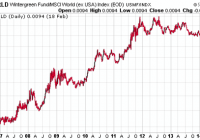
Summary WGRNX is a go anywhere fund with a current focus on Asia’s emerging middle class. Manager David Winters looks for companies showing a trifecta of strong management, improving situation and undervalued shares. The biggest drawback to the fund is the 1.85% expense ratio. Established in 2005, the two-star Morningstar rated Wintergreen Investor Fund (MUTF: WGRNX ) is a world stock category fund that seeks capital appreciation. The fund invests in stocks or convertible securities that manager David Winters believes are available at a discount to their intrinsic value. The fund invests in domestic and foreign issues of any size, including those from emerging markets. Investment Strategy Investment manager David Winters identifies securities through extensive analysis that includes book value, cash flow and earnings multiples. The goal is to select stocks that constitute what the fund manager calls a “trifecta.” These are stocks with good value issued by companies with shareholder-oriented management that are demonstrating improved business operations. The portfolio typically holds around 30 individual positions for the long-term while attempting to minimize turnover. This strategy often leads to owning shares in cash-rich companies that pay dividends or buy back shares. Shares are sold when valuation targets are met. The fund typically maintains 10 percent cash in order to capitalize on opportunities as they occur. WGRNX may invest in arbitrage opportunities that result from mergers, acquisitions, spin offs and consolidations as well as tender offers and liquidations. In addition to arbitrage opportunities, the fund may also take an activist role if the team anticipates that this position will benefit the investment. To minimize risk, the manager may engage in hedging strategies, such as owning gold and foreign currency swaps, purchasing put or call options and shorting stocks. Portfolio Composition The $1.5 billion fund held 14.91 percent of assets in cash as well as 33.01 percent in domestic stocks and 51.79 percent in foreign issues at the end of 2014. Mr. Winters believes that U.S. stocks are overvalued. As a result, the fund’s foreign stock and cash positions are higher relative to the category average and the domestic stock position is lower. The foreign issues have a slight tilt toward Developed Europe. The Asian share portion of the portfolio includes emerging and developed markets minus Japan. The portfolio has a market cap distribution on 55.95 percent giant, 34.49 percent large and 4.87 mid-cap stocks as well as a total 4.72 percent stake in small and micro-cap stocks. The fund is overweight consumer cyclical and consumer defensive stocks and underweight financials and healthcare. It does not hold any shares in the telecom or utility sectors. The fund’s aggressive and concentrated portfolio is a reflection of Mr. Winter’s belief that few companies meet Wintergreen’s stringent investment criteria. Only one category fund has a lower average debt/capital ratio and a higher average return on equity. The portfolio has a P/E ratio of 17.21, a price-to-book ratio of 2.70 and a dividend yield of 2.02 percent. Historical Performance and Risk WGRNX has beaten the MSCI World ex-USA Index since inception. Morningstar gives the fund a downside capture ratio of 57.22 percent over the past 5 years, and this performance reflects the fund’s resilience during down markets due to its preference for low-debt companies that have high relative cash positions. WGRNX has a low return rating from Morningstar. It has delivered 1-, 3- and 5-year total returns of 2.37 percent, 6.40 percent and 9.23 percent respectively. This compares to the index averages of 0.77 percent, 6.76 percent and 6.29 percent for the same periods. WGRNX has a below average risk rating from Morningstar as well as a three-year beta and standard deviation of 1.70 and 10.44. The category beta and standard deviation for the same period are 0.76 and 10.85. (click to enlarge) Fees and Expenses With a 1.85 percent total expense ratio, WGRNX is an expensive fund. This expense ratio is higher than 95 percent of funds in the no-load world stock category. The fund also has a 60-day redemption fee of 2 percent and a 12b-1 fee of 0.25 percent. Initial minimum investments are $10,000 for taxable accounts, $3,000 for an IRA and $2,000 for a Coverdell ESA. Fund Outlook WGRNX has a high quality portfolio and strong cash position that makes it well prepared for the next market correction. Winters also keeps turnover low at 12 percent of assets, but this buy-and-hold approach has cost it in the short-term. The fund remains focused on Asia with a concentration on consumer-oriented shares. Top 10 holdings Wynn Macau and Swiss timepiece manufacturer Swatch are plays on Asia’s emerging middle class, and the crackdown on corruption in China, as well as the ongoing economic slowdown there, weighed on results in 2014 as luxury sales declined. Another top 10 holding, Canadian Natural Resources (NYSE: CNQ ), has been battered by the plunge in oil prices. WGRNX should continue to be less volatile than other funds in the world stock fund category. Wintergreen’s continued focus on a sound investment strategy relative to strong business franchises with little debt and Mr. Winters’ conservative stock-picking acumen should enable WGRNX to sustain its strong relative performance in the long-term. A positive not captured in financial data is David Winters’ shareholder advocacy. He’s been a vocal critic of Coca-Cola (NYSE: KO ) management (see his recent interview on Fox Business ) over issues such as compensation and poor operating results. Investors in WGRNX are getting a manager who looks out for their interests all the way to the boardroom. The big stumbling block is the fees, which are too high at 1.85 percent of assets. Investors are starting each year nearly 2 percent behind the category and index, and performance hasn’t been consistently strong enough to justify those fees yet. Unfortunately, there aren’t similar portfolios out there. A fund such as Matthews Asian Growth and Income Fund (MUTF: MACSX ) offers exposure to Asia’s rising middle class, but it doesn’t offer the same exposure via blue chip multinationals offered by WGRNX. Some ETFs such as the iShares MSCI Emerging Markets Consumer Discretionary Sector Index ETF (NASDAQ: EMDI ) also tap into similar themes, but without an Asian focus. The Guggenheim China Small Cap ETF (NYSEARCA: HAO ) offers exposure to Chinese consumers, but only Chinese consumers. Investors can replicate some of the exposure in WGRNX with ETFs such as the iShares Global Consumer Staples ETF (NYSEARCA: KXI ) and the Market Vectors Gaming ETF (NYSEARCA: BJK ). Disclosure: The author has no positions in any stocks mentioned, and no plans to initiate any positions within the next 72 hours. (More…) The author wrote this article themselves, and it expresses their own opinions. The author is not receiving compensation for it (other than from Seeking Alpha). The author has no business relationship with any company whose stock is mentioned in this article.

NextEra Energy, Part 2: Leadership Seen In Diversity, Community, And Renewable Energy

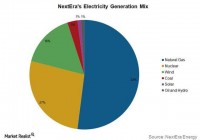
Summary The company ranks very well in diversity hiring, community involvement, and renewable energy. The company does not rate well in women hiring, green productivity, and has limited information in other places. We believe NEE is overall a strong leader in social responsibility. In Part 1 of this article, we saw that NextEra (NYSE: NEE ) is, at this time, not a “buy” for us. We see the upper limit of 2015 pricing in the $105-$110 range, and that the company’s fair value sits in the mid-$80s. Essentially, the company is not a buy for us from a purely financial standpoint. In this part of our research, we will focus on the socially responsible aspects of the company. Our findings are very promising. Yet, failing to see an upside in general, we cannot make an overall positive comment. The company should be respected for its work in socially responsible ways. Socially Responsible Scorecard There are many ways to understand and develop socially responsible investing (SRI). What is “responsible” for each person is vastly different, and what might be “responsible” to one person might be “irresponsible” to others. That is the toughest part of investigating companies for SRI. While pure capitalism to some is the most responsible approach to business, others may see that this could harm other areas such as environmental stewardship or economic development. Others may believe too much capital invested into socially conscientious programs could hurt profits and investors. Therefore, we will try to present as much information as we can to render the best opinion possible. Overall, socially responsible investments are more about leadership and paving the way, rather than compliance. Compliance is doing what is required, while corporate responsibility is about leading and doing more than is required. Companies that lead are always the most respected in the long term, and we believe provide both a safe investment platform as well as peace of mind. The criteria we use to examine the company’s overall social responsibility theme are gender equality, employment and diversity, environmental stewardship, leadership values and community involvement. With all research, some areas have more quantifiable parts, while in other areas, there is not as much. We base our research in taking an aggregate look at leading think tanks, research firms and important websites that cover these topics. We split this research into the aforementioned topics to help create a more holistic opinion. Overview NextEra appears to be a leading firm in the SRI space with strong showing in many key areas. The company was rated as a coveted Ethisphere World’s Most Ethical Companies in the 2014 edition, which shows a dedication to be a leading firm that goes above and beyond compliance. They lead in a number of areas with diversity hires, green energy, and a clear intention for community involvement. The company’s CSR Hub rankings did not show a strong lead, but they were above average. Their “Overall” rating comes in at 60, while Employees and Environment lead the way at 66 and 64, respectively. The company is above average, according to the Hub. The company, though, has won many awards and is a leader in a space that is one of the largest polluters. When we search for companies, we look for the ones that are leaders in various areas of business. NEE appears to be that way. Take a look at the company’s awards here . Some of the most interesting awards we have seen are: — ServiceOne Award for Exceptional Customer Service — Best Employees for Healthy Lifestyles – The Fortunes’s Most Admired Companies Award: In 2014, NextEra Energy was named No. 1 among electric and gas utilities for an unprecedented eighth straight year on Fortune magazine’s listing of “Most Admired Companies.” In that same Fortune survey, the company was named No. 1 electric and gas utility in innovation, No. 1 in social responsibility and No. 1 in quality of products and services. Workforce – Diversity, Compensation, Gender Equality NextEra’s is actually quite strong in their approach to diversity, equality, and compensation, serving as a leader in the way companies should approach their workforce. We believe this is very socially responsible and commendable. The company has been recognized as a top leader in hiring veterans and Hispanics. The company has been recognized by Hispanic Business magazine since 2010 as one of the leaders in diversity hiring. As the award states, “(they) determine the list, the magazine analyzed data on companies’ boards of directors and leadership, recruitment, retention and promotion, marketing and community outreach, and supplier diversity.” As for veterans, ” Vetrepreneur magazine, the voice of the National Veteran-Owned Business Association, gave FPL honorable mention in its compilation of the 2011 Best 10 Corporations for Veteran-Owned Businesses.” The company rates well in other areas of its workforce as well. The Human Rights Campaign rates the company as a 70, which is a rating system for a companies rights to gay, lesbian, and transgender employees. The company has the same rights for same-sex partners as opposite-sex partners and spouses outside of relocation assistance. The company’s 70 rating puts them at the upper end of the rating scale. The company is recognized as well as being one of the companies to have non-discrimination policies for sexual orientation as well. The company didn’t have much information on gender equality for hiring, but the diversity aspect is very positive. As for worker compensation, the company rated a 58 by CSR Hub for worker compensation. The company, though, has positive ratings for safety and health benefits. The company won Best Employers for Healthy Lifestyles for the eighth time for “its ongoing commitment to promoting a healthy work environment and encouraging its workers to live healthier lifestyles. The company was one of just two Florida-based companies and one of only two companies in the energy sector to receive the 2013 Best Employers for Healthy Lifestyles® Award in the prestigious Platinum category.” What we are seeing from the company is a dedication to a workforce and a dedication to policy that promotes safety, diversity, and compensation. We believe this is a leader in this arena, and it complements well their placement as a leading green energy utility. Green Initiative The company has been most recognized for its leadership in green energy. The company is in one of the dirtiest industries, and their reputation is strong. Yet, there are some weaknesses/improvements that need to be made. For as many green awards as the company has won, there are still improvements to be made. Just take a look at this chart to start: (click to enlarge) Despite being labeled the “green” utility, the company is using nearly over 50% in natural gas still, and they also use over a quarter in nuclear, which has some very negative consequences on society if not managed properly as well as waste concerns. In face, the company is really only about 17% actual “green” energy. Further, the company is not the cleanest utility out here. (click to enlarge) The company is definitely one of the cleanest, but it is not as clean as some of the best, and that mix could continue to improve. The company is a “leader,” but we should also understand that this is a company that still uses 50% of their fuel in natural gas. Newsweek’s Green List ranked the company 209th on its Green List, which is one of the most comprehensive looks at companies in the marketplace. This list, though, ranks companies fairly across the board and does not quantify their industry. Naturally, a utility company is going to struggle. The company rated at only 10%, 18%, and 13%, on their energy, carbon, and water productivity out of 100%. The company rated very well, though, on reputation. Out of utilities, the company ranked 15th, which is not exceptional especially given their reputation. Also troubling was the company’s decision not to respond to the Carbon Disclosure Project since 2010. The company did rate an 82 in 2009, which is a decent rating. What is troubling, though, is the CDP is one of the leading, respected firms for rating company plans for carbon versus actual carbon productivity. It is not rating on a single scale but looking at all companies individually. Yet, the company has won numerous awards as you can see here . The company is continuously rated in the Dow Jones Sustainability Index and was rated the best utility for renewable energy by EI New Energy. The company has been rated well for its top electric fleet, and it is rated well for their care and dedication to trees. Overall, the company has solid awards and is rated decently, but we are not as sold as these awards given that some of the leading research gatherers have not gotten necessary information or rated it as well when compared to its competition. What is definitely positive is the company’s leadership that they are the top renewable energy producer. It is an industry that is still mostly based in coal, oil, and natural gas, so the company is better in that regard. Yet, the company’s efficiency ratings aren’t as strong, which is something to consider. Additionally, the nuclear energy angle is considered part of renewable energy, but we are not high on this form of energy due to the direct social risk from it that may be even higher than non-renewable sources. Overall, we would like to see a continued reduction in natural gas and increases in wind and solar power. The company is very low on coal, which is great, and they do help bring other utilities into the mix into these renewable sources. There is still much work to be done. Community Involvement NextEra appears to have a pretty comprehensive strong approach to community. Not only do they rate quite well on their diversity hiring, but they are also leading the renewable utility energy game, which is also positive for the community. Yet, the company also has a very comprehensive direct community plan to volunteer, donate, and be involved in their communities. The company’s 22,000 hours of volunteer time in 2011 in their community and a whole week called Power to Care show some definite leading energy being put back into the community. You can read more about the company’s difference making here . The company has a very progressive hiring plan also for military volunteers that falls into the company’s Diversity Inclusion division that we believe is really respectable. In November, the company was awarded an “Above and Beyond” award in Florida for their strong military hiring program. As a retail company as well, the company has won numerous awards for their customer satisfaction and service. The information we collected here was more limited, but the company definitely appears on the right track. The unseen benefits are what excite us most with their efforts in renewable energy and diversity leadership. Conclusion As you can see, NextEra is a leader in quite a number of areas of social responsibility, but we do have concerns in some areas. We would note they are one of the top companies that are public today, though. Right now, they rate high for us in social responsibility, but we are not as high on their price analysis. We would love to add them on any slight dip in valuation to a socially responsibly crafted investment plan. Disclosure: The author has no positions in any stocks mentioned, and no plans to initiate any positions within the next 72 hours. (More…) The author wrote this article themselves, and it expresses their own opinions. The author is not receiving compensation for it (other than from Seeking Alpha). The author has no business relationship with any company whose stock is mentioned in this article.