Tag Archives: investing

Making The Patient Sicker
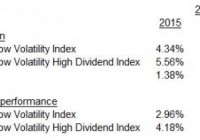
By Craig Lazzara Years ago, I saw a cartoon picturing two Victorian-era doctors discussing a patient. “What did you prescribe for Jones’ rheumatism?” asked the first; the second answered “A cold bath and a brisk walk every morning.” “Good God, man, that will give him pneumonia!” said the first. “I know,” replied the second doctor, “I made my reputation curing that.” Somehow I was reminded of this exchange when I learned from this morning’s news that some institutional investors, smarting from recent losses, are considering increasing their commitment to active equity management. Their operating assumption seems to be that active managers will do a better job of capital preservation in a challenging and volatile market. There’s certainly some plausibility to this argument. It turns out, however, to be another beautiful theory mugged by a gang of facts . The facts come from our periodic SPIVA reports, which compare the results of actively-managed mutual funds against passive benchmarks. Weak markets, it turns out, are no panacea for active managers. In 2008, e.g., 54% of large-cap U.S. funds underperformed the S&P 500. Results were even worse for mid- and small-cap managers (75% and 84% underperformers, respectively). Statistics say, in other words, that moving from passive to active as a way of managing market volatility is likely to make performance worse, not better . Fortunately for anxious investors, passive strategies which focus on the lowest volatility segment of the equity market are most likely to outperform precisely when the market is weakest. Consider, for example, the S&P 500 Low Volatility Index and its cousin, the S&P 500 Low Volatility High Dividend Index: Both of these indices are designed to attenuate the returns of the S&P 500 in both directions; historically, they have both tended to underperform market rallies but outperform when markets are weak. Their reliability as defensive vehicles has far exceeded that of active management. Investors concerned about continuing volatility and market weakness should consider indicizing their defensive strategies. Disclosure: © S&P Dow Jones Indices LLC 2015. Indexology® is a trademark of S&P Dow Jones Indices LLC (SPDJI). S&P® is a trademark of Standard & Poor’s Financial Services LLC and Dow Jones® is a trademark of Dow Jones Trademark Holdings LLC, and those marks have been licensed to S&P DJI. This material is reproduced with the prior written consent of S&P DJI. For more information on S&P DJI and to see our full disclaimer, visit www.spdji.com/terms-of-use .

Best Ways To Invest In Gold Now – Metal Or Miners ETFs?

Gold appears to be one of the hottest trades this year. The precious metal has gained almost 16% this year-making it the best start to the year since 1980 . The rush to gold and other safe havens is a direct result of concerns about the global economy, including China slowdown, oil price plunge and earnings recession in the US. Growing worries that central banks may be running out of ammunition are also aiding gold’s ascent. Further, negative interest rates in Japan and some European countries are also boosting gold prices. Gold critics often argue that it is an unproductive asset since it pays nothing to holders and that argument does make some sense when interest rates are high but in the current ultra-low/negative interest rate environment, there is almost no opportunity cost of holding the metal. Then there are supply factors too. According to a report from the World Gold Council, Gold production declined during Q4 last year – its first quarterly drop since 2008 and they expect this trend to continue as mining firms have cut investments after years of losses. And demand is China and India has been rising. While Indians have been buying jewelry, Chinese have increased their purchases of gold coins and bullion as the country’s currency and stocks continue to weaken. Physically Backed Gold ETFs Physically backed gold ETFs – SPDR Gold Trust (NYSEARCA: GLD ) and iShares Gold Trust (NYSEARCA: IAU ) provide a convenient and cost-effective access to physical gold. ETF Name Ticker AUM Expense Ratio YTD Return SPDR Gold Trust GLD $28.3 bil 0.40% 16.6% iShares Gold Trust IAU $7.2 bil 0.25% 16.8% While IAU has a lower fee, GLD’s excellent trading volumes make its trading very cheap. So, IAU is more suitable for buy and hold investors while GLD is better for shorter-term traders . Gold Miners ETFs Gold miners are leveraged plays on the metal. Miners’ profits rise even with a small increase in the price of the metal. Market Vectors Gold Miners ETFs (NYSEARCA: GDX ) and Market Vectors Junior Gold Miners ETF (NYSEARCA: GDXJ ) are the two most popular ETFs in the space. These ETFs-which are high risk/high reward plays–have been outstanding performers this year. However, in addition to their volatility, investors should also remember these ETFs have a lot of international exposure and associated currency risks. ETF Name Ticker AUM Expense Ratio YTD Return Market Vectors Gold Miners ETF GDX $5.71 bil 0.53% 37.8% Market Vectors Junior Gold Miners ETF GDXJ $1.6 bil 0.55% 32.9% To learn more please watch the short video below: Original post