Tag Archives: ideas

Star Gas Partners: A Deeply Undervalued Beneficiary Of Low Oil Prices Offering 40% To 90% Upside

Summary Star Gas Partners is the largest distributor of home heating oil in the United States, serving residential and commercial customers in fourteen states throughout the Northeastern U.S. and Mid‐Atlantic. At the current valuation the Company is selling at an 18% cash flow yield based on our expectations for $68 million in distributable cash flow in 2015. When valuing SGU at close to a 30% discount to its peer EV/ EBITDA multiples the stock is worth over 90% more than the current share price. Star Gas Partners (NYSE: SGU ) is the largest distributor of home heating oil in the United States, serving residential and commercial customers in fourteen states throughout the Northeastern U.S. and Mid‐Atlantic. The Company has a market value of just $375 million, yet in 2014 generated $1.96 billion in revenues and $103 million in EBITDA. SGU’s revenues are highly recurring, with 97% of customers on automatic delivery schedules. The market for home heating oil is mature but extremely fragmented; Although, SGU has a market share that is likely under 5% it is still 200x larger than its average competitor. The heating oil industry also features attractive financial characteristics, with recurring cash flows and contractually determined gross profit per gallon. Star Gas’s gross profit is largely fixed at $1.00/gallon and the Company constantly hedges its exposure. Considering Star Gas has net debt of approx. $75 million (net debt is adjusted after making changes to working capital to reflect receivable collections) the market is drastically undervaluing the Company. At the current share price of $6.55 the Company is selling at an 18% cash flow yield based on our expectations for $68 million in distributable cash flow in 2015. Essentially, if one were to buy the Company outright at the current price they would net an 18% annual cash return before Capex (Capex is running at approx. $10 million per year). The question one might ask is how can such a high return investment be available in the current low return environment we are in? The answer lies in the following non-fundamental issues that have caused investors to bypass making an investment In SGU: SGU has an inefficient corporate structure- Star Gas was formed as an MLP, yet should ideally be structured as a corporation. Star Gas acts as a partnership, which owns Petro Holdings, which acts as the heating oil corporation. Although Petro Holdings is taxed at the corporate level, any cash moved out of the holdings and into the partnership for either dividends or share repurchases may also be taxable to unit holders as dividends. Therefore, shareholders may be obligated to pay a dividend tax without ever receiving a dividend if funds were used to repurchase shares. Although, the current structure is by no means efficient it is not material enough to justify the current discount of the Company’s shares. Low dividend yield- Although Star Gas generates over $60 million in distributable cash flow it pays out less than $20 million in dividends, which implies a 5% yield. MLP peers typically payout over 80% of their cash flow and at higher yields. Highly seasonal business leads earnings to appear volatile- Because Star Gas makes money in the winter season the Company generates all of its earnings during half the year and loses money during the other half. This presents an appearance of inconsistent earnings from quarter to quarter. Declining business due to competition- The main competition for heating oil distributors is customer conversion to natural gas, which is generally significantly cheaper than heating oil. However, for many heating oil users, the local utility has no gas main capable of reaching their homes. For others, however, once their oil burner requires replacement (estimated cost: $2,000‐$3,000) the economics can be compelling. Conversion costs average $10,000, so the incremental costs of converting can be $7,000 to $8,000. Yet, over the past five years, the loss to natural gas conversion has ranged from 1.5%‐2.0% and the Company’s overall net attrition stood at just 0.9% in 2014. All the above issues have existed now for some time, yet Star Gas continues to increase both profits and shareholder value. Since 2010 the Company has increased annual EBITDA by 44% and reduced shares outstanding by 23% from 75 million shares to 57.2 million shares. Thus, on a per share basis the Company has increased EBITDA from $1.02 to $1.79 or by 75% over the last 4 years. The market also fails to realize that Star Gas is a beneficiary of low oil prices. As heating oil prices have gone down Star Gas’s business has received a major tailwind. The company is now able to buy the same quantity of heating oil while using significantly less working capital therefore minimizing borrowing costs and working capital needs. Furthermore, as a result of lower heating bills the Company’s customers are now less likely to switch to natural gas as conversion economics have come down substantially. This tailwind was evident in their most recent Q1 2015 earnings as the company increased EBITDA by 25% to $45 million. Assuming YOY growth remains flat for the remainder of the year, Star Gas should be able to generate $70 million in cash flow and $60 million in Free Cash Flow for 2015. This should allow the company to either significantly increase its dividend or buyback program. To put things in perspective, Star Gas has a distribution coverage ratio of over 3x their current dividend. If their distribution coverage was similar to that of their MLP peers (1.1x to 1.2x) the company would have a current dividend yield of well over 10%. When we compare Star Gas to larger propane and fuel delivery MLPs the investment looks even more compelling. Company Mkt Cap (In millions) P/E Ratio EV/EBITDA P/CF Dvd Yld Average $ 3,163 20.3x 11.17x 9.87x 7.68% SUBURBAN PROPANE PARTNERS LP (NYSE: SPH ) $ 2,721 20.3x 11.1x 9.6x 7.8% FERRELLGAS PARTNERS-LP (NYSE: FGP ) $ 1,937 23.2x 11.8x 10.2x 8.6% AMERIGAS PARTNERS-LP (NYSE: APU ) $ 4,831 17.4x 10.7x 9.8x 6.7% STAR GAS PARTNERS L.P. $375 11.5x 4.8x 6.3x 5.35% As the larger comps clearly have more diversified stable businesses we do not believe Star Gas should trade at a similar multiple. However, we firmly believe the company should trade at a multiple between 6x to 8x EBITDA. Using that range, Star Gas shares would be worth anywhere from $9.15 to $12.50 per share. This implies potential upside of 40% on the low end to over 90% on the high end. Disclosure: The author is long SGU. (More…) The author wrote this article themselves, and it expresses their own opinions. The author is not receiving compensation for it (other than from Seeking Alpha). The author has no business relationship with any company whose stock is mentioned in this article.
NRG Energy: Bolstering Solar Infrastructure With Partial Acquisition Of Verengo

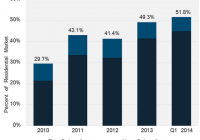
Summary NRG Energy recently acquired Verengo Solar’s Northeast U.S. sales and operations teams, adding on to a list of recent solar acquisitions. The sale of the previous residential solar standout Verengo has been a golden opportunity for NRG Energy to bolster its infrastructure. The addition of Verengo’s sales and operations teams will significantly strengthen NRG Energy’s Northeast residential solar segments. The acquisition-heavy strategy of NRG Energy’s solar segment is in keeping with the vertical integration and consolidations taking place within the distributed solar industry. While NRG Energy’s highly ambitious residential solar strategy is fraught with risks, the potential payoff is enormous. NRG Energy (NYSE: NRG ) has accelerated its move into the distributed solar industry over the past few months. With wild ambitions of overtaking SolarCity (NASDAQ: SCTY ) as the top residential solar company in a few years time, NRG Energy is wise to move into the distributed solar space as fast as possible. The company has already set up a huge distributed solar infrastructure, with its CEO even claiming that the company has “an embedded SolarCity within it. ” In fact, the company is already proclaiming that it will beat out Vivint Solar (NYSE: VSLR ) for the number 2 spot by the end of 2015, which is a tall order considering the companies’ currently huge market share disparity, and Vivint Solar’s rapid growth. NRG Energy has recently announced that it had bought out Verengo Solar’s Northeast U.S. sales and operations planning teams, which marks the latest in a series of ambitious acquisitions. Over the span of a year, the company has acquired the likes of Roof Diagnostics and Solar Pure Energies Group, clearly showing NRG Energy’s intentions of making a big entrance into the residential solar arena. The company’s most recent buyout of Verengo’s NorthEast S&O teams highlights its almost frenzied approach towards residential solar. Verengo Advantage Verengo Solar was the #3 distributed residential solar company before the company’s baffling decision to put itself up for sale. Verengo Solar already has a strong presence in the NorthEast, which was the primary reason for its NorthEast sales and operations teams’s acquisition by NRG Energy. Kelcy Pegler Jr., who is the head of NRG Energy’s solar segment, stated that the acquisition “solidifies some advantages we have, and we have a ton of momentum in the Northeast.” While the reasons behind Verengo’s sale are somewhat confusing (especially in light of the fact that its sale occurred right after the company reached the number 3 spot ), it represents a golden opportunity for NRG Energy to snatch up some of Verengo’s talent. Given NRG Energy’s relative lack of experience in the distributed solar arena, Verengo’s employees complement NRG Energy perfectly. The company’s addition of Verengo’s Northeast sales and operations teams will certainly make the NRG Energy’s rapid transition into residential solar a much smoother one. Trend of Vertical Integration Given NRG Energy’s relatively late start and aspirations for solar dominance, it is only logical for the company to pick up whatever advantages they can through acquisitions. Thus far, NRG Energy has wisely acquired companies that already have infrastructures in place to augment its own, rather than wasting time by building its entire distributed solar infrastructure from scratch. The frequency of such acquisitions are not surprising given the fact that intense consolidations are still occurring among top residential solar companies. The distributed solar industry has gone through a rapid trend of vertical integration and market share consolidation over the past few years. The larger corporations like SolarCity and Vivint Solar have increasingly pushed out more regional competition, implying that vertical integration is not only beneficial, but also essential for success in the distributed solar arena. Vertical integration reduces logistics costs and more importantly, allows for unified system cost-reductions. Such unified cost reductions would be impossible if different segments of distributed solar, such as financing, installations, inverters, etc, were operating under separate entities with varying goals. Bringing all these elements under one roof allows for a more focused, and cohesive approach. This graph depicts the residential solar market share consolidation that has occurred over the past few years. This consolidation has largely been a result of the vertical integration taking place among the top companies, which has pushed out weaker and more regional competition. Note that this graph only captures up to quarter 1 of 2014. As of quarter 2 of 2014, SolarCity and Vivint Solar (the #1 and #2 installers) already have a combined market share of more than 50% . Amazingly, this means that consolidation is actually accelerating, despite the already top-heavy dominance of the solar industry. (click to enlarge) Source: GTM Research NRG Energy has clearly studied these distributed solar market trends, and is applying such knowledge to its own residential solar business model. The company emphasized the important of vertical integration by stating that “it’s an ever-consolidating space in residential solar” and that “with the corporate sophistication of NRG as a Fortune 250 company… it really puts us in an advantaged position to bring on team members, like Verengo, and leverage our position in the space to become the ultimate winner.” Risks Making such an ambitious entrance into a new industry comes with massive risks. NRG Energy has taken the decidedly riskier route of acquiring numerous companies/teams in order to bolster its distributed residential solar infrastructure, rather than growing in a completely organic fashion. While the company has indeed grown many parts of its solar infrastructure organically, such ambitious goals cannot be achieved through organic growth alone. This could very well be the primary motivating factor for the company’s heavy acquisitions strategy. Of course, if NRG Energy’s plans do not pan out, the company would have essentially wasted hundred of millions, and perhaps billions of dollars acquiring and building out its massive residential solar infrastructure. Despite such risks, the rewards are almost certainly worth it, as distributed solar is a potentially transformative industry. If NRG Energy can manage to grab a foothold of this market in its early stages, the company should be rewarded its initial investment many times over. Conclusion While companies like SolarCity and Vivint Solar have already cemented themselves as leading distributed residential solar companies, large portions of the industry’s market share are effectively still up for grabs. The industry is, after all, still in relatively in its infant stages, which means that sufficiently motivated new industry players could muscle their way in. If NRG Energy manages to succeed at even a fraction of its ambitions, the company is set to gain immensely. Given potential market size of distributed generation, and the exponential growth path of solar power, NRG Energy is making an incredibly smart move by moving into the distributed residential solar arena. If NRG Energy keeps up its distributed solar ambitions, the company is set to gain immensely. Disclosure: The author is long SCTY. (More…) The author wrote this article themselves, and it expresses their own opinions. The author is not receiving compensation for it (other than from Seeking Alpha). The author has no business relationship with any company whose stock is mentioned in this article.