Tag Archives: ideas

What To Do When Financial News Headlines Jump Out At You
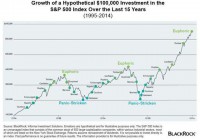
I’ve written about how my aunt calls me when the markets worry her. Needless to say, she’s been calling a lot. Rising interest rates. Sinking oil prices. A strong dollar and weak earnings. Greece, China and Puerto Rico. The news headlines make hay of these swings, and investor emotions can ride along with the dramatic stories. The stock market will spike one day, you feel optimistic and invest, then the market drops back down the next day. Earlier this year, we talked about how the markets would seem more volatile than in recent past. Well, they have delivered on that forecast. After years of relative calmness and steadily rising returns, markets have been jumpier lately. (click to enlarge) Turn your gaze away from the headlines, and instead, take a good look at your investments. It is what you do within your portfolio that matters. Here are four strategies to help your investments navigate the turbulence: Diversify . Market cycles typically move in different patterns. I will save you the academic rationale, but you may want to have some investments zig while others zag. This is the crux of what we call diversification. So the most important way to manage portfolio risk overall is to diversify across stocks, bonds, geographic regions and sectors. Getting this mix right is really important. If you’re new to investing, a low-cost way to achieve a balanced portfolio in one single trade is through a diversified iShares Core Allocation exchange traded fund (ETF). If you already have an established portfolio, review your holdings regularly and talk to your financial planner about diversifying. Go min vol . If you want broad market exposure with potentially less risk, minimum volatility ETFs might be a good fit. These funds seek to track market indexes with a mix of historically less volatile stocks, so you can still invest in global, U.S., developed international and emerging markets with potentially fewer bumps in the road. Bargain shop . Who doesn’t like a good discount? Truth is many U.S. stocks have gotten quite expensive , and it has been harder and harder to find true value. So when the market drops, it can be a great buying opportunity. Talk to your planner about potential deals in the market that can complement your long-term portfolio. Stay put . If your investments are in good shape, make no sudden moves. Over time, markets tend to balance out, and you’re likely to do better staying invested in a diversified portfolio than engaging in frenzied, sometimes expensive, trades. As I do with my aunt, work your way through the four steps above to ensure your investments are sturdy. Successful investors don’t panic over headlines. They stay educated and stay invested. Learn more about what to know and what to do from the mid-year update of The BlackRock List , and get back to enjoying your summer. Original Post Share this article with a colleague
Top American Funds Mutual Fund Performers Of Q2 2015

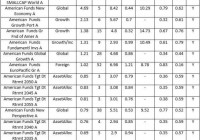
Apart from the top two performers among the American Funds’ mutual funds in the second quarter of 2015, the other funds had lackluster performance. Nonetheless, on comparison with broader markets, American Funds had decent performance. Though American Funds lagged Fidelity’s best gain of 11.6%, it outpaced another behemoth Vanguard’s best gain of 3.8%. It should be noted that Fidelity practices more active management compared to Vanguard’s passive management. If we look at broader markets, we notice the dismal trend. Markets had a dismal run in the second quarter; wherein the S&P 500 and Dow declined 0.2% and 0.9%, the NASDAQ did gain 1.8%. In the first half of 2015, fund inflow slumped 36% year over year to $143 billion. This significant decline was largely due to the dismal trend in the second quarter; wherein inflows were down to $41 billion through Jun 17, comparing unfavorably with the $102 billion of inflows in the first quarter. Only four of the mutual fund categories could post above 10% gain in the first half. This is less than half of the 81% gains scored by mutual funds in the first quarter. These losses however owed a lot to the selloff on the eve of the quarter’s end. Coming back to American Funds’ mutual funds, of the 626 funds under study, 232 funds finished in the green while 2 funds broke even. The average gain for these 232 funds was 1.41%. This compares favorably to the average loss of -0.84% for the 392 funds that finished in negative territory. (Note: This number includes same funds of different classes) American Funds’ mutual funds did manage to outperform its first quarter performance. This is unlike what has happened with key rivals; wherein their second quarter performance has dropped from first quarter. In the first quarter of 2015, this fund family which is among the largest mutual fund families in the US based on assets under management, could clock a maximum gain of just 6% in Q1. Foreign/Global and Growth categories were the top gainers for American Funds in the first quarter and they remain so in second quarter as well. Second Quarter 2015 Review American Funds noted: “Global stocks produced mixed returns as signs of improving economic growth were offset by fears of rising interest rates and a worsening debt crisis in Greece. Telecommunications stocks proved to be a bright spot, driven higher by M&A activity, while the rate-sensitive utilities sector fell the most. Emerging markets stocks advanced, supported by monetary easing in China. Bonds declined and the dollar slipped 4% against the euro.” For North America markets, American Funds said that optimism about the growing economy and the Fed’s comments about gradual rate hike were tempered by Greek debt negotiations concerns. Slowdown in earnings growth also dampened stocks. Meanwhile, potential mergers-and-acquisitions and the Supreme Court’s ruling that upheld subsidies under the Affordable Care Act helped healthcare post the strongest gains in the S&P 500. The consumer discretionary and telecommunication services sectors’ gains were also aided by mergers and acquisition activities. Possibilities of higher rates also boosted financial services companies. However, rate hike concerns affected dividend-paying stocks, largely the real estate investment trusts and utilities. Top 15 American Funds Mutual Funds in Q2 Below we present the top 15 American Funds mutual fund performers of Q2 2015: Note: The list excludes the same funds with different classes, and institutional funds have been excluded. Funds having minimum initial investment above $5000 have been excluded. Q2 % Rank vs Objective* equals the percentage the fund falls among its peers. Here, 1 being the best and 99 being the worst. The top performers for American Funds mutual funds largely belonged to categories such as Global/Foreign and Growth. Asset Allocation too had a decent number of funds listed among the best 15 performers. Morningstar data showed that the foreign category of mutual funds have dominated the gains in the second quarter and the first half of 2015 as well. It was thus justified to have 6 funds from the Global and Foreign category. The top two gainers are from Global category. American Funds SMALLCAP World A (MUTF: SMCWX ) and American Funds New Economy A (MUTF: ANEFX ) have gained 6.1% and 4.7%, respectively. Both these funds carry a Zacks Mutual Fund Rank #1 (Strong Buy). In fact, the other two funds with Strong Buy rank are also from Foreign and Global categories. These are American Funds EuroPacific Gr A (MUTF: AEPGX ) and American Funds New Perspective A (MUTF: ANWPX ). Meanwhile, American Funds Global Growth A (MUTF: PGGAX ), also from Global category, carries a Zacks Mutual Fund Rank #2 (Buy). The only fund from this category to carry a dismal rank is American Funds Intl Gr & Inc A (MUTF: IGAAX ) as it holds a Zacks Mutual Fund Rank #5 (Strong Sell). American Funds Growth Port A (MUTF: GWPAX ) and American Funds Gr Fnd of Amer A (MUTF: AGTHX ) from Growrth category and American Funds Fundamentl Invs A (MUTF: ANCFX ) from Growth/Income category also made it to the list. However, ANCFX carries a Strong Sell rank and AGTHX holds a Zacks Mutual Fund Rank #4 (Sell). GWPAX has a Zacks Mutual Fund Rank #3 (Hold).

Prudential To Launch Global Absolute Return Bond Fund

By DailyAlts Staff Prudential Investments, the iconic blue chip asset manager and insurer, launched its first absolute return bond fund back in March 2011, and that fund has growth to more than $2.7 billion in assets. Now, as the the U.S. Federal Reserve’s interest rate policy begins to deviate from that of other central banks around the world, Prudential is preparing for the launch of its newest alternative mutual fund: the Prudential Global Absolute Return Bond Fund , which is expected to debut on or around October 17, according to an August 3 filing with the SEC . As a fund with an absolute return mandate, the Prudential Global Absolute Return Bond Fund will pursue an objective of positive long-term returns, regardless of market conditions. It will seek to achieve this objective by means of a flexible investment strategy with exposure to a wide variety of asset classes, including bonds and other debt instruments, mortgage- and asset-backed securities, currencies, and derivatives. The dollar-weighted effective duration of the fund’s holdings will normally range from -5 to +5 years. What’s different with this fund, versus the firm’s original absolute return bond fund, is that at least 40% of its assets will be allotted to foreign securities (under normal market conditions), including those from emerging markets. There is no such constraint in the original fund. The Prudential Global Absolute Return Bond Fund will be managed by Michael J. Collins, Robert Tipp, and Arvind Rajan, all of whom are managing directors for Prudential Investments. Mr. Collins is also the firm’s Senior Investment Officer, while Mr. Tipp is Chief Investment Strategist and Head of Global Bonds, and Mr. Rajan is Head of Global Macro for the firm. Shares of the new fund will be available in A-, C-, Q-, and Z-class shares. A- and C-class shares will have respective net-expense ratios of 1.20% and 1.95%, while Q- and Z-class shares will each have fees of 0.95%. The minimum initial investment for A- and C-class shares will be $2,500; while the Q- and Z-class shares will have no initial minimums for qualifying investors. Share this article with a colleague