Tag Archives: georgia

Investors Continue To Shy Away From Below-Investment-Grade Debt Funds

Mutual fund investors have been voting with their wallets on lower-quality bond funds. Funds in Thomson Reuters Lipper’s High Yield Funds and Loan Participation Funds classifications have seen their coffers shrink on a fairly consistent basis since the second half of last year. The net outflows for each have intensified as of late; High Yield Funds has suffered negative flows in 14 of the last 15 weeks (-$17.5 billion), and Loan Participation Funds is currently in a downward spiral of 22 consecutive weeks of net outflows (-$14.4 billion). This recent activity is the continuation of a longer-term trend; High Yield Funds has not experienced a positive annual net inflow since 2012 (+$21.1 billion), while Loan Participation Funds last took in net new money on an annual basis in 2013 (+$57.4 billion). During this latest run the largest net outflows among the high-yield fund universe belonged to some of the more well-known names in the field. The Ivy High Income Fund (MUTF: IVHEX ) (-$1.3 billion), the American Funds American High-Income Trust (MUTF: AHIFX ) (-$1.1 billion), and the PIMCO High Yield Fund (MUTF: PHLPX ) (-$1.0 billion) all saw over a billion dollars leave the fold. Trailing slightly behind this lead group were the BlackRock High Yield Bond Portfolio (MUTF: BHYAX )(-$911 million) and the JPMorgan High Yield Fund (MUTF: JHYUX ) (-$709 million). Similar to the high-yield fund universe, the most significant net outflows for loan participation funds over the most recent tracking period have been concentrated in a handful of funds. Since the start of the fourth quarter of last year there have been four funds whose negative flows have been significantly greater than the rest of the universe: The Oppenheimer Senior Floating Rate Fund (OOSA) (-$2.0 billion), the Fidelity Advisor Floating Rate High Income Fund (MUTF: FFRHX ) (-$1.3 billion), the RidgeWorth Seix Floating Rate High Income Fund (MUTF: SAMBX ) (-$1.1 billion), and the Eaton Vance Floating-Rate Fund (MUTF: EVBLX ) (-$960 million). Click to enlarge

Best And Worst Q1’16: Utilities ETFs, Mutual Funds And Key Holdings

The Utilities sector ranks last out of the ten sectors as detailed in our Q1’16 Sector Ratings for ETFs and Mutual Funds report. Last quarter , the Utilities sector ranked fifth. It gets our Dangerous rating, which is based on aggregation of ratings of nine ETFs and 34 mutual funds in the Utilities sector. See a recap of our Q4’15 Sector Ratings here . Figure 1 ranks from best to worst eight Utilities ETFs and Figure 2 shows the five best and worst-rated Utilities mutual funds. Not all Utilities sector ETFs and mutual funds are created the same. The number of holdings varies widely (from 20 to 255). This variation creates drastically different investment implications and, therefore, ratings. Investors should not buy any Utilities ETFs or mutual funds because none get an Attractive-or-better rating. If you must have exposure to this sector, you should buy a basket of Attractive-or-better rated stocks and avoid paying undeserved fund fees. Active management has a long history of not paying off. Figure 1: ETFs with the Best & Worst Ratings – Top 5 Click to enlarge * Best ETFs exclude ETFs with TNAs less than $100 million for inadequate liquidity. Sources: New Constructs, LLC and company filings Figure 2: Mutual Funds with the Best & Worst Ratings – Top 5 Click to enlarge * Best mutual funds exclude funds with TNAs less than $100 million for inadequate liquidity. Sources: New Constructs, LLC and company filings The Fidelity MSCI Utilities Index ETF (NYSEARCA: FUTY ) is the top-rated Utilities ETF and the American Century Quantitative Equity Utilities Fund (MUTF: BULIX ) is the top-rated Utilities mutual fund. Both earn a Neutral rating. The Guggenheim S&P 500 Equal Weight Utilities ETF (NYSEARCA: RYU ) is the worst-rated Utilities ETF and the ICON Utilities Fund (MUTF: ICTVX ) is the worst-rated Utilities mutual fund. RYU earns a Dangerous rating and ICTVX earns a Very Dangerous rating. 79 stocks of the 3000+ we cover are classified as Utilities stocks, but due to style drift, Utilities ETFs and mutual funds hold 255 stocks. PPL Corporation (NYSE: PPL ) is one of our favorite stocks held by Utilities ETFs and mutual funds. It is the only Utility stock that earns an Attractive rating. Since 1998, PPL has grown after-tax profits ( NOPAT ) by 10% compounded annually. Over this timeframe, PPL has improved its return on invested capital ( ROIC ) from 6% to 7%, which is the highest ROIC of all 79 Utilities stocks under coverage. Despite the continued strength of PPL’s business, the stock is only up 6% over the past decade and shares are currently undervalued. At its current price of $36/share, PPL has a price to economic book value ( PEBV ) ratio of 0.6. This ratio means that the market expects PPL’s NOPAT to permanently decline by 40% from its current levels. If PPL can grow NOPAT by just 3% compounded annually for the next decade , the stock is worth $59/share today – a 64% upside. Connecticut Water Service (NASDAQ: CTWS ) is one of our least favorite stocks held by Utilities ETFs and mutual funds and earns a Very Dangerous rating. Throughout the history of our model, which dates back to 1998, Connecticut Water Service has never generated positive economic earnings . The company’s ROIC has declined from 5% to 3% over the same timeframe. However, at its current price of $41/share the stock remains significantly overvalued. To justify its current price, Connecticut Water Service must grow NOPAT by 7% compounded annually for the next nine years . While this may not seem like much in terms of profit growth, keep in mind that CTWS has failed to generate economic profits in any year for nearly two decades. Figures 3 and 4 show the rating landscape of all Utilities ETFs and mutual funds. Figure 3: Separating the Best ETFs From the Worst ETFs Click to enlarge Sources: New Constructs, LLC and company filings Figure 4: Separating the Best Mutual Funds From the Worst Mutual Funds Click to enlarge Sources: New Constructs, LLC and company filings D isclosure: David Trainer and Kyle Guske II receive no compensation to write about any specific stock, sector or theme. Disclosure: I/we have no positions in any stocks mentioned, and no plans to initiate any positions within the next 72 hours. I wrote this article myself, and it expresses my own opinions. I am not receiving compensation for it. I have no business relationship with any company whose stock is mentioned in this article.
Making The Patient Sicker

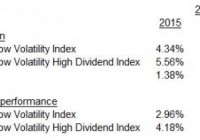
By Craig Lazzara Years ago, I saw a cartoon picturing two Victorian-era doctors discussing a patient. “What did you prescribe for Jones’ rheumatism?” asked the first; the second answered “A cold bath and a brisk walk every morning.” “Good God, man, that will give him pneumonia!” said the first. “I know,” replied the second doctor, “I made my reputation curing that.” Somehow I was reminded of this exchange when I learned from this morning’s news that some institutional investors, smarting from recent losses, are considering increasing their commitment to active equity management. Their operating assumption seems to be that active managers will do a better job of capital preservation in a challenging and volatile market. There’s certainly some plausibility to this argument. It turns out, however, to be another beautiful theory mugged by a gang of facts . The facts come from our periodic SPIVA reports, which compare the results of actively-managed mutual funds against passive benchmarks. Weak markets, it turns out, are no panacea for active managers. In 2008, e.g., 54% of large-cap U.S. funds underperformed the S&P 500. Results were even worse for mid- and small-cap managers (75% and 84% underperformers, respectively). Statistics say, in other words, that moving from passive to active as a way of managing market volatility is likely to make performance worse, not better . Fortunately for anxious investors, passive strategies which focus on the lowest volatility segment of the equity market are most likely to outperform precisely when the market is weakest. Consider, for example, the S&P 500 Low Volatility Index and its cousin, the S&P 500 Low Volatility High Dividend Index: Both of these indices are designed to attenuate the returns of the S&P 500 in both directions; historically, they have both tended to underperform market rallies but outperform when markets are weak. Their reliability as defensive vehicles has far exceeded that of active management. Investors concerned about continuing volatility and market weakness should consider indicizing their defensive strategies. Disclosure: © S&P Dow Jones Indices LLC 2015. Indexology® is a trademark of S&P Dow Jones Indices LLC (SPDJI). S&P® is a trademark of Standard & Poor’s Financial Services LLC and Dow Jones® is a trademark of Dow Jones Trademark Holdings LLC, and those marks have been licensed to S&P DJI. This material is reproduced with the prior written consent of S&P DJI. For more information on S&P DJI and to see our full disclaimer, visit www.spdji.com/terms-of-use .