Tag Archives: etfs

An Extraordinary Edge You Have As A Small Investor
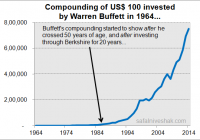
It goes without saying that capital allocation is a CEO’s most important job. How he allocates capital over the long run is what determines the value he creates for the business and its shareholders. But the reason many CEOs fail in profitably allocating capital is their incentives, which are aligned to what they can do in the next 1-2 years than what they must do in the next 7-10 years. This is also how most investors and money managers work – especially after a period of good performance, they would rather go for the kill in the next few months or maybe 1-2 years, than build portfolios that would do well over a 10+ year period. “Who wants to get rich in old age?” goes the thought process. “Why not gun for a 30-40% return and retire rich in the next 10 years?” After all, this is what simple math suggests. If you can invest Rs 5,000 per month and do that every month for 25 straight years, and at an annual rate of return of 30%, you will have almost Rs 34 crores after 25 years. On the other hand, if you earn just 20% annually, and everything else remains same, the amount in your bank after 25 years would be just Rs 4 crores. That’s a difference of a huge Rs 30 crores. Now most people would wonder, “Who would want to earn 20% and be left with just Rs 4 crores when you can go for the kill (read, 30%) and end with Rs 30 crores extra before you get old?” This is perfect reasoning, my dear friend. But, if you are not a full-time investor with a great knack of pulling out winner after winner, aiming for 30% annual return from the stock market is akin to starting your climb up Mt. Everest with a dash. Especially when you start in a bull market – and a lot of the 30-percenters of the last 4-5 years have started in the bull market – and consider that you may after all be a distant cousin of Usain Bolt, it’s easy to fall for the ‘go for the kill’ mindset. I’m sure a lot of stock market pros reading this would want to shut me up here, because they do believe they have the capabilities to earn such great returns, and sustainably. I have nothing to offer them here, but best wishes. But if you aren’t a pro, and if you are not very old, I would suggest you to take note of the only thing you can control in your investment journey – which also happens to be your biggest advantage as an individual investor in your pursuit of creating wealth from the stock market. And what’s that? It’s surely not the amount of return you want to earn, however much you try. That’s not in your control. But the only thing you are in complete control of is… Time! As an entrepreneur, here is what I count amongst the best advice I ever received on the concept of how managers can make best profitable capital allocation decisions for significant value creation. This comes from Amazon’s Jeff Bezos – If everything you do needs to work on a three-year time horizon, then you’re competing against a lot of people. But if you’re willing to invest on a seven-year time horizon, you’re now competing against a fraction of those people, because very few companies are willing to do that. Just by lengthening the time horizon, you can engage in endeavors that you could never otherwise pursue. At Amazon we like things to work in five to seven years. Note the big idea here – “Just by lengthening the time horizon, you can engage in endeavors that you could never otherwise pursue.” This is also true when you are investing in the stock market. Just by lengthening the time, you stay with good quality businesses – or businesses that remain good – you can create wealth you could have never thought of, and by the time you need that wealth. Like the CEO of a privately held company who can make decisions for the future without worrying about next quarter’s earnings, you can use time arbitrage to benefit from time-tested investment processes without the worry, and often financial damage that comes from recklessly chasing quick returns. Your Biggest Edge There are three main sources of edge you may have as an investor – Informational – What you can know that others don’t know Analytical – How you can process what is known better than others Behavioural – How sensibly you can behave as compared to others Now, it’s rare to possess all the three edges. It’s not impossible, but rare. In markets that are mostly efficient, having an informational edge is difficult. Many people are doing all they can to talk to customers, suppliers and industry experts to glean further insight into a company or an industry and profit from anomalies. And then, if you claim to possess too much of an informational edge, you run the risk of a face-off with the stock market regulator on the issue of insider information. Then, as far as analytical edge is concerned, it can be obtained through extreme smartness and hard work. Having such an edge means that even if you have the same information as everyone else, you’ll be able to process it better than others and see what the market doesn’t see. But having such an edge is also really hard, because there are a lot of very smart people motivated to analyze things better and faster than you. You will realize this if you are intellectually honest. So the high degree of analytical competition renders this edge a non-edge in the long run. Michael Mauboussin addresses this concept in his book, The Success Equation , where he writes – The key is this idea called the paradox of skill. As people become better at an activity, the difference between the best and the average and the best and the worst becomes much narrower. As people become more skillful, luck becomes more important. That’s precisely what happens in the world of investing. Anyways, that leaves the final source of edge an investor can have i.e., behavioural, or how you behave. So, while many investors may have the same information as others, or have the same analytical rigour, they behave differently. And most of how you behave is determined by how patient you are in real life and whether you have adequate time and staying power available with you. Most people are not patient when it comes to the stock market, and despite knowing the pitfalls of behaving badly. Now, when it comes to staying power, here is how Prof. Sanjay Bakshi defined it in his recent post – From the vantage point of the investor, staying power comes from: 1. Large number of years left to invest. 2. Ability to handle volatility through financial strength – low or no debt and significant disposable income preventing the need to liquidate portfolio during inappropriate times. 3. A frugal nature. 4. Ability to handle volatility through psychological strength. 5. A very long-term view about investing. 6. Structural advantages – investing your own money or other people’s money who will not or cannot withdraw it for a long long time. 7. Family support during tough times. As you can see from the list above, most factors that create staying power for you as an investor are related to how you behave. And the reason this is a great edge you have against the big, institutional investors – who otherwise may have analytical and informational edges – is that your behaviour is completely under your control as against the latter who often behave (frequently irrationally) how their clients want them to behave. If Mr. Market and its other participants are discounting things 12-15 months down the line, and if you can look out 5-10 years, you will have a time arbitrage advantage, which is a structural advantage to have. In short, as an individual, small investor, if you are… Not chasing unreasonable returns, and Invest money that you won’t need for the next 8-10 years … you are perfectly placed to benefit from time arbitrage and take opportunities handed to you by others who are… Chasing unreasonable returns and are thus more prone to making serious mistakes (if their expectations are not met), Investing borrowed money that they must return, even if the markets are bad, and Investing under an institutional setup and thus suffer from institutional compulsions like short-term incentives. How bigger and better an edge can you have? To quote Warren Buffett – The stock market is a no-called-strike game. You don’t have to swing at everything – you can wait for your pitch. The problem when you’re a money manager is that your fans keep yelling, “Swing, you bum!” That’s about swinging (buying a good quality business) when the price is right. And then you let time take over. To quote Buffett again… Time is the friend of the wonderful company, the enemy of the mediocre. Time is also your wonderful friend, dear investor. You only need to trust in it, and let its magic work. If you can spot a great value (you can learn to do that), you just need to buy it and then sit still as long as it remains good value (difficult, but very much possible). This is the single-most profitable form of investing in the world. It’s Not Easy, but Very Effective I will be honest here. Time arbitrage is not easy. A few months of a falling market or seeing your stocks going nowhere can feel like years. The impulse to “do something” can be overwhelming. Unfortunately, that impulse, more often than not, would hurt your long-term returns. Time arbitrage, on the other hand, yields tremendous financial and psychological benefits for those with the discipline to hold fast against the noise. This is an edge worth cultivating. It costs nothing but time and can be applied by anyone, including you. I would leave you with this chart of how Buffett compounded during his 50+ years at Berkshire… Note from the chart that his compounding began to show after he crossed 50 years of age, and after investing through Berkshire for 20 years. When you imagine yourself at 85, like Buffett is today, you may not see yourself come even a distant close to what he has achieved over these years. But like he did, if you can start early and keep at it, when you are 40 or 50, you would realize that you did yourself a great deed by giving your wealth time to grow, and a lot of it. If you are not dependent on investing for your living, please don’t try to go for the kill. Be bold at your work so that you earn more, save more, and thus invest more. Don’t try to act bold in the stock market. As Howards Marks said… There are old investors, and there are bold investors, but there are no old bold investors. You got the point, right?
Up 25% In 2 Weeks, I’m Out Of My Short Volatility Trade

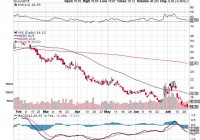
I recommended shorting VXX two weeks ago at the height of the Greece situation. That trade is up about 25% in two weeks as VXX is making new lows. Contango is still high so shorting VXX will still be profitable but I’m ringing the register here. A couple of weeks ago I wrote an article about the short term volatility ETF VXX (NYSEARCA: VXX ) during the height of the nonsense coming out of Greece. At the time panic levels were elevated and the VXX had climbed nicely from $17 to $21+ and the VIX term structure was nearly flat in the near months. That, combined with what I was quite sure was a situation that would be resolved peacefully by the EU, led me to believe VXX was expensive at $21.51 and I said investors should short it from that level. If we fast forward to today that proved to be the near exact top in VXX and we now see it making new lows once more. That trade worked out very nicely but what do we do now? (click to enlarge) The spike in VXX was pretty easy to call because the situation in Greece was blown way out of proportion. It is events like this that I love because people panic and provide us with very easy opportunities to make 20%+ gains in a matter of a few trading days by shorting VXX into these types of things. But now that it is over and the VIX has tanked once more, I think more caution is warranted in trading VXX. The easy spike in the VIX that allows us to take advantage of short opportunities in VXX is gone but contango in the VIX term structure is still very high as out months are elevated compared to the front month. This chart from vixcentral.com shows us that while the VIX spike premium is out of VXX there is still a lot of contango in the term structure so VXX will decay pretty quickly at these levels. This chart puts a magnitude on the contango as you can see the cost of holding VXX is very high right now. That means you’ll see sizable gains over time shorting VXX but the potential for huge short term gains is gone. I like to short VXX when it spikes and contango evaporates because that is a highly unsustainable position as you can see from this chart. At this point we just have negative roll yield and while that’s a powerful force in shorting VXX, it is a medium term story and not a matter of a couple of days. As a result, I’m ringing the register here. My short VXX trade is up ~25% in a couple of weeks and while contango is very high and there is still money to be made shorting VXX, I’m content to take my gains and move on. I’m not calling a bottom in VXX because the bottom continues to go lower but I am saying the easy money has been made. I’ll short VXX again at some point in the future but simply collecting the roll yield when the market looks like it might be topping is too risky for me. Disclosure: I/we have no positions in any stocks mentioned, and no plans to initiate any positions within the next 72 hours. (More…) I wrote this article myself, and it expresses my own opinions. I am not receiving compensation for it (other than from Seeking Alpha). I have no business relationship with any company whose stock is mentioned in this article. Share this article with a colleague

What Greece And China Teach Us About Investing

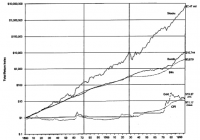
By Andy Rachleff It’s been a crazy couple of weeks for the investing world. China’s stock market – after one of the biggest run-ups of any market in history – has suffered a 40% collapse in just a few weeks. Greece has teetered on the brink of default, and still may or may not exit the euro. The U.S. has drawn up a major new deal with Iran, oil is down sharply, and Indian stocks are rallying like mad. What should an investor do? In a word: Nothing. If there’s anything that the day-by-day machinations of the market teach us, it is that slow and steady wins the race. The Incredible Mean-Reverting Nature of Stock Returns Investors have long known that staying the course is one of the most important things to do. Some of the best research on this topic comes from the so-called “Wizard of Wharton” – University of Pennsylvania professor Jeremy Siegel. In his New York Times bestselling book, ” Stocks for the Long Run ,” Siegel looked at the performance of equities from 1802 through 1997, the year the book was first published. His findings were astonishing: Despite the day-to-day volatility that we all feel, the actual long-run returns of stocks are remarkably consistent. Here’s how Siegel summarized his findings: ” Despite extraordinary changes in the economic, social, and political environment over the past two centuries, stocks have yielded between 6.6 and 7.2 percent per year after inflation in all major subperiods. The wiggles on the stock return line represent the bull and bear markets that equities have suffered throughout history. The long-term perspective radically changes one’s view of the risk of stocks. The short-term fluctuations in market, which loom so large to investors, have little to do with the long-term accumulation of wealth. ” His last line bears repeating: ” The short-term fluctuations in market, which loom so large to investors, have little to do with the long-term accumulation of wealth. ” Siegel found that almost no matter what period you looked at, stocks delivered about 7% after inflation. The Civil War, World War I, World War II, even the Great Depression (marked by the second black vertical line) were hiccups compared to the overall trend. The pattern repeats in other countries, including those that have experienced catastrophic collapses. World War II, for example, sheared 90% off the value of German equities… but German stocks completely rebounded by 1958, rising 30% per year, on average, from 1948 to 1960. They went on from there to new highs. Averaged out over the long haul, their return is a consistent 6.6% real return… a figure that continues through this day. The same is true for Japan, the UK, and all other markets that Siegel has studied; in the short run, volatility, but in the long run, profits. Can’t We Just Side-Step the Disaster Spots? Of course, the best possible outcome would be to steer clear of pullbacks, selling when markets are about to collapse and buying when they start to recover. This is the marketing pitch used by virtually every active manager in the world, and it is intuitively compelling. “Greece has been a disaster for years,” you can’t help but think. “Surely, if I had been paying attention, I would have sold and avoided its recent fall.” “China’s stock market was clearly a bubble,” you ponder. “The economy is slowing; reforms are stagnating; any idiot would have sold out before things got bad!” Unfortunately, the data shows that even highly-paid professionals are bad at sidestepping these pullbacks, and everyday investors are worse. As mentioned repeatedly on this blog, every piece of significant data shows that the vast majority of active mutual fund managers underperform the market over any meaningful period of time. Despite all their highly-paid analysts and fancy data services, they can’t beat a broad-based index. But the dirty little secret is, as bad as professional money managers are at beating the market, retail investors – on average – do worse. In a major study published in February 2015 , Morningstar looked at the difference between the average return of mutual funds and the actual returns that investors enjoyed. The data is brutal: While the average U.S. equity mutual fund returned 8.18% for the decade ending December 31, 2013, the average dollar invested in U.S. equity funds returned just 6.52%. For international equity funds, the situation was worse: an 8.77% return for the average fund, but a 5.76% return for investors. (click to enlarge) John Reckenthaler, the vice president of research at Morningstar, explained what was happening in Barron’s last year. “The problem,” the magazine wrote, summarizing his comments, “is that investors tend to get in and out of an asset class at the wrong time.” In other words, we tend to buy high and sell low. The problem is worse in the more volatile asset classes, ostensibly because we’re more likely to panic. (It’s not just Morningstar. DALBAR conducts an annual study that looks at the same effect over rolling twenty-year periods. Its last finding shows that investors underperformed the market by 4.2% per year over the past twenty years.) Don’t Buy What They’re Selling The reason we don’t hear much about the power of long-term investing – and the truth about the futility of trading – is that long-term investing is boring and it’s cheap. The financial media thrives by encouraging you to panic, and large parts of the financial industry make money only when you act. Big moves sell newspapers, and high trading activity means commissions for online brokers. The only people who don’t profit from that activity are investors themselves, because as it turns out, we can’t predict the future. Even as we finalize this post, Greece is possibly stabilizing, Chinese stocks have evened out and the crisis-du-jour involves gold. Did you see that coming? Do you know what comes next? It’s hard to stare down a significant market correction and stick to your plan. When the US government shut down in September 2013 during the budget showdown, we saw a large number of clients refrain from continuing to add deposits. They paid handsomely for missing out on the rebound. If you invest regularly, harvest your losses and rebalance your portfolio, you’ll end up benefiting from market corrections in multiple ways. It won’t be easy. But over the long haul, it will really pay off. For more on this topic please read: Stay the Course, Even While You’re Down There’s No Need to Fear Stock Market Corrections Invest Despite Volatility Disclosure Nothing in this article should be construed as a tax advice, solicitation or offer, or recommendation, to buy or sell any security. While the data Wealthfront uses from third parties is believed to be reliable, Wealthfront does not guarantee the accuracy of the information. The analysis uses information from third-party sources, which Wealthfront believes to be, however Wealthfront does not guarantee the accuracy of the information. There is a potential for loss as well as gain. Actual investors on Wealthfront may experience different results from the results shown. Andy is Wealthfront’s co-founder and its first CEO. He is now serving as Chairman of Wealthfront’s board and company Ambassador. A co-founder and former General Partner of venture capital firm Benchmark Capital, Andy is on the faculty of the Stanford Graduate School of Business, where he teaches a variety of courses on technology entrepreneurship. He also serves on the Board of Trustees of the University of Pennsylvania and is the Vice Chairman of their endowment investment committee. Andy earned his BS from the University of Pennsylvania and his M.B.A. from Stanford Graduate School of Business.