Tag Archives: etfs

Bulls Weigh On Gold As Losses Mount In NUGT

The Direxion Daily Gold Miners Bull 3x Shares ETF (NYSEARCA: NUGT ) shares were down yet again on Friday morning after a day of huge losses on Thursday. Most of Wall Street has turned its back on gold as the U.S. heads toward a rate rise later on in 2015, and the risk of both inflation and deflation melt away. We’ve seen a wide range of negative outlooks on gold since the fall in the price of the metal began earlier in July. The bulls have, for the most part, stayed out of the limelight. There’s good reason for that. Most of those who are bulls now were bulls three months ago, and they’ve been proven wrong. Right now most are trying to rework their models or abandon gold altogether. Here’s what some of them are saying. Stepping back, doubling down, and staying quiet An old adage says to buy into gold as soon as the last bull has left town. We’re not sure if that’s true just yet, but it’s clear that many former gold bugs have left their positions and are trying to recover losses in the market. Jonathan Barratt, chief investment officer at Ayers Alliance has long been happy to put money in gold, but he’s turning against the metal right now. “From a technical perspective,” he told CNBC, “it doesn’t look hot.” He said that the price of the metal has “broken through some very critical areas.” On the other hand, some observers are doubling down on the metal. In a report published on July 3, Bank of America Merril Lynch forecasted that gold prices would rise to $1,300 in 2016 . “We are on the cusp of a bull market,” reads the report. The investment house says that “gold can be supported even if the U.S. central bank turns less accommodative, as long as the Fed just normalizes monetary policy.” John Paulson and David Einhorn, two hedge fund managers known for their bets on gold , will have to disclose their positions in ETFs and miners of the metal next month. The final date for 13F filings is on August 14. Then, or perhaps the day before, we’ll be able to see if gold’s big hedge fund fans are still backing the metal. Gold ETFs remain a danger Leveraged ETFs carry risks that don’t exist in pure metal trading. That’s why NUGT has lost more than 70 percent of its value in the last three months. There are very few outspoken Wall Street voices who will advise a bet on the ETF as a result. Leverage is dangerous, and it’s not for the faint of heart. The NUGT ETF tracks an index of gold mining shares and seeks to deliver returns of three times those on the index. The price of NUGT has become very separate from the price of gold as a metal in recent weeks as a result. Even gold bulls aren’t likely to advise a bet on the ETF. The risks are simply too great for all but the most thrill-seeking of traders. There’s no outspoken bulls of the index in the limelight, and there isn’t likely to be, at least until the price of gold turns around.

3 Unique ETFs Beating The Market

With the domestic economy recovering slowly but steadily and interest rates expected to remain low in near future, the overall backdrop for U.S. stocks remains positive. But as the bull market approaches its seven year anniversary, the easy money in stocks has already been made. Global growth worries, lackluster earnings, valuation concerns, China stock market turmoil and uncertainty relating to the Fed will also continue to weigh on the market. It is thus no surprise that the broad market continues to trade sideways with lackluster returns year-to-date. But some stocks have delivered outsized returns this year. Similarly some innovative ETFs following specialized strategies or tracking high growth areas have been rewarding their investors with stellar returns in 2015. Considering their outperformance potential, these could be held as satellite holdings in the portfolio, in order to spice up overall returns. A Shining Biotech Star: The ALPS Medical Breakthroughs ETF (NYSEARCA: SBIO ) Biotechs have been leading the bull market for the last 6-7 years. After this massive surge, valuations look lofty now by many measures, but there are still many reasons to be positive on the sector. Surging M&A activity, positive drug trial results and steady growth in the number of drugs being approved by the FDA have further boosted investor optimism and will continue to support these stocks. This fund tracks the Poliwogg Medical Breakthroughs Index. It invests mainly in mid and small cap stocks with market cap between $200 million and $5 billion. The index screens the U.S. listed biotech and pharma companies with one or more drugs in Phase II or Phase III FDA clinical trials. The index also screens for liquidity (average daily trading volume more than $1 million) and sustainability (cash for at least 2 years at their normal burn rate). Per ALPS, due to “patent cliff”, many blockbuster drugs from the 1990s and 2000s have been losing patent protection and large drug companies are struggling to replenish their pipelines. Further, due to time-consuming procedure and an alarming rate of failure for drug development, the bigger firms usually rely on new therapies processed by smaller firms that spend a lot more on R&D compared to their larger peers. This fund holds 75 stocks with Anacor Pharma (NASDAQ: ANAC ), Receptions and Horizon Pharma being the top 3 holdings. The product charges 50 bps in fees. Company specific risk is limited due to modified market cap weighting with maximum 4.5% of assets. The product launched in December last year and has gathered about $200 million in assets so far. SBIO has soared almost 52% this year. Foil Hackers with the PureFunds ISE Cyber Security ETF (NYSEARCA: HACK ) Our world is becoming increasingly digital-bringing us many exciting opportunities and possibilities–but also creating enormous challenges. Abundance of digital information and sophisticated tools available to process and share this information make it very hard to ensure data security in this interconnected world. That is why cybersecurity threats and cyberattacks are on the rise. Consequences of hacking can be huge. Further, the threat landscape has been evolving; hackers could steal not only financial data but also critical and sensitive information that could be used for criminal or extremist activities. Per Deloitte’s Q2 CFO survey, “CFOs in North America view cyberattacks as a serious threat, but many have doubts about their organization’s level of preparedness.” Surging demand for protection against these cyber threats will continue to drive demand for spending on cybersecurity. This ETF provides exposure to a diverse group of hardware and software companies in the cybersecurity industry. The product charges an expense ratio of 75 basis points. It made its debut in November last year and has already managed to gain almost $1.4 billion in assets, thanks mainly to some high profile cyberattacks of late. The ETF holds 32 securities in its portfolio and is well spread out across holdings, due to modified equal weighting methodology. Investors should however note that some of these cybersecurity stocks have been quite hot lately, leading to valuation concerns but given surging demand for these services, the ETF could be an excellent longer-term holding for investors who can ride out shorter-term volatility. The ETF is up more than 17% year-to-date. 2015 has turned out to be a pretty good year so far for hedge funds after many years of underperformance. Gains this year have been driven partly by the booming M&A activity, particularly in the healthcare sector and savvy stock selection. Most investors would like to invest like George Soros, Carl Icahn and John Paulson but the $2.9 trillion hedge fund industry is accessible only to very wealthy investors. Further, hedge fund investing is expensive as they usually charge an annual asset management fee of 2% and a performance fee of 20% of fund’s profits (2 and 2 fees). Fortunately for ordinary investors, there are some ETFs that provide access to investing secrets of such gurus, without charging the hefty fees that their funds charge. This ETF is based on the AlphaClone Hedge Fund Long/Short Index. The index uses AlphaClone’s proprietary “Clone Score” methodology to aggregate the hedge funds ideas on a quarterly basis. Clone scores, which are calculated bi-annually, are based on hedge funds managers’ performance. Index constituents are equally weighted but can have overlap bias. The index also has a hedge mechanism built in, which is triggered on or off when the S&P 500 index crosses its 200 day moving average at any month end. If the market goes down, the index goes from long-only to market hedged (50% short exposure to S&P 500). Launched in May 2012, this product has been able to attract about $195 million in assets so far. It has 86 holdings currently with Apple (NASDAQ: AAPL ), Valeant Pharmaceuticals (NYSE: VRX ) and Celgene Corp (NASDAQ: CELG ) being the top holdings. ALFA is slightly pricey, charging 95 basis points in expenses. It is up more than 8% year-to-date. Over the past three years, ALFA has climbed by 75% compared with 61% for the SPDR S&P 500 Trust ETF ( SPY). Link to the original post on Zacks.com
The Low Volatility Anomaly: Risk Parity

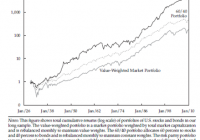
Summary This series offers an expansive look at the Low Volatility Anomaly, or why lower risk securities have historically produced stronger risk-adjusted returns than higher risk securities or the broader market. After examining the historical evidence of the outperformance of lower volatility stocks and bonds relative to their higher risk comps, this article examines a cross-market strategy. The long-run success of risk parity investing is closely linked to our previously discussed Leverage Aversion Hypothesis. In previous articles in this series, I have demonstrated the presence of the Low Volatility Anomaly in both the equity and fixed income markets. In the introductory article to this series , I demonstrated that a low volatility bent (NYSEARCA: SPLV ) to the broader equity market has outperformed both the broader market (NYSEARCA: SPY ) and high beta stocks (NYSEARCA: SPHB ) on both an absolute and risk-adjusted basis over the last quarter century. In the last article in this series , I demonstrated that lower levered BB rated bonds have produced higher absolute returns than higher levered single-B and CCC-rated bonds historically, as the higher yields on the lower rated securities failed to make up for their higher realized default rate. Our empirical evidence thus far has examined the Low Volatility Anomaly within distinct asset classes. This article examines a potential application across asset classes. Risk Parity A 2012 research paper by Clifford Asness, Andrea Frazzini, and Lasse H. Pedersen, ” Leverage Aversion and Risk Parity ” demonstrates that in an investment landscape characterized by, at a minimum, declining incremental returns for higher risk assets, then an approach to asset allocation, risk parity investing, that seeks to diversify in terms of risk and not dollars is preferable. To diversify by risk, more money is invested in low-risk/low volatility assets than in high risk/high beta assets, and leverage is applied to low risk assets to increase both expected returns and risk to its desired level. (If this sounds familiar to the aforementioned ” Betting Against Beta ” analysis, note the overlap in two of the authors.) In their study with data dating to 1926 (see below), the authors demonstrated that a portfolio that targets an equal risk allocation between bonds and stocks meaningfully outperforms 1) U.S. stocks and bonds weighted by total market capitalization, and 2) a portfolio rebalanced monthly to maintain a fixed 60%/40% stock/bond weighting. A preference for risk parity investing necessarily implies expected stock returns continue to produce an insufficiently high equity risk premium as was witnessed by the underperformance of the equity market relative to levered fixed income in the historical sample depicted above. The ballyhooed equity risk premium ( Mehra and Prescott 1985 ), like the risk premium attributable to high beta stocks, is negative in this data over this time horizon featuring multiple business cycles. This phenomenon has given rise to this notion of risk parity investing, a method of diversifying by risk rather than dollars in equities and bonds. This of course runs counter to the traditional notion of holding the market portfolio levered according to the investor’s risk profile instilled by the Capital Asset Pricing Model (CAPM), the model we have been exposing throughout this series. Our first hypothesis for the presence of the Low Volatility Anomaly detailed in this series was the Leverage Aversion Hypothesis . If higher risk-adjusted returns can be made through leveraged fixed income than holding un-levered equities, then risk parity can be viewed as another form of exploitation of the Low Volatility Anomaly. Disclaimer My articles may contain statements and projections that are forward-looking in nature, and therefore, inherently subject to numerous risks, uncertainties and assumptions. While my articles focus on generating long-term risk-adjusted returns, investment decisions necessarily involve the risk of loss of principal. Individual investor circumstances vary significantly, and information gleaned from my articles should be applied to your own unique investment situation, objectives, risk tolerance, and investment horizon. Disclosure: I am/we are long SPLV, SPY. (More…) I wrote this article myself, and it expresses my own opinions. I am not receiving compensation for it (other than from Seeking Alpha). I have no business relationship with any company whose stock is mentioned in this article.