Tag Archives: earnings-center

X-Raying CEFL (Part 2): Geographical Distribution
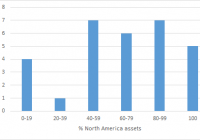
Summary A previous article in this series investigated the leverage and expense ratio statistics of CEFL, a 2X leveraged CEF fund-of-funds. This article presents the geographical breakdown of CEFL. How much international exposure does CEFL contain? Introduction The ETRACS Monthly Pay 2xLeveraged Closed-End Fund ETN (NYSEARCA: CEFL ) is a 2x leveraged ETN offered by UBS. CEFL tracks twice the monthly return of the ISE High Income Index [YLDA], an index that is comprised of high-yielding close-ended funds [CEFs]. The methodology used to construct YLDA has been summarized here . The YieldShares High Income ETF (NYSEARCA: YYY ) tracks the same index as CEFL. While many investors are attracted solely by CEFL’s high yield (currently 20.39% ttm), I believe that it is also important to look “under the hood” of the fund and to understand its characteristics. In a previous article , we delved into the holdings of CEFL to derive relevant leverage and expense ratio statistics regarding this fund. From that analysis, we found that CEFL is approximately comprised of one-third equity and two-thirds debt, CEFL is effectively leveraged by 240%, and CEFL exhibits a total expense ratio of 4.92% per dollar invested in the fund (or 2.05% per dollar of assets controlled), after accounting for acquired fund expenses. This article seeks to present the geographical distribution of CEFL in terms of its overall holdings, or in terms of equity and debt components. Methodology The geographical distribution of the component funds was obtained from CEFConnect , Morningstar or the fund websites. As some CEFs only report their allocation by region rather than by country, it was decided to present the data in terms of region only. The five regions are North America (includes Canada), Europe (includes Russia), Asia Pacific (includes Japan and Australia), Latin American and Middle East/Africa (includes Turkey). There is also a sixth category of “other” due to the fact that some funds do not report beyond their top 10 country holdings. The funds The following table shows the fund name, ticker symbol, % assets, and % of assets in region. Fund Ticker Assets North America Europe Asia Pacific Latin America Middle East/Africa Other GAMCO GLBL GOLD NAT RES (NYSEMKT: GGN ) 4.52% 77.9 11.5 2.1 6.0 2.5 0.0 DOUBLELINE INCOME SOLUTIO (NYSE: DSL ) 4.38% 47.4 13.0 0.0 14.6 0.0 24.9 EATON VANCE TM GL DIV EQ (NYSE: EXG ) 4.28% 55.6 36.2 8.1 0.0 0.0 0.0 FIRST TRUST INTERMEDIATE (NYSE: FPF ) 4.28% 49.2 39.7 0.0 1.2 0.0 9.9 ALPINE TOTAL DYNAMIC DIVD (NYSE: AOD ) 4.27% 53.2 29.0 5.6 0.0 0.0 12.3 EATON VANCE LIMITED DURAT (NYSEMKT: EVV ) 4.26% 90.5 5.4 0.0 0.0 0.0 4.1 MFS CHARTER INCOME TRUST (NYSE: MCR ) 4.24% 67.6 11.8 2.3 0.0 0.0 18.3 CLOUGH GLBL OPPORTUNITIES (NYSEMKT: GLO ) 4.24% 88.9 3.6 12.3 0.0 0.0 -4.7 BLACKROCK CORPORATE HIGH (NYSE: HYT ) 4.20% 100.0 0.0 0.0 0.0 0.0 0.0 ALPINE GLOBAL PREMIER PRO (NYSE: AWP ) 4.19% 31.8 26.9 28.5 3.7 2.2 6.9 WESTERN ASSET EMG MKT DBT (NYSE: ESD ) 4.18% 0.0 25.4 4.5 57.3 0.0 12.8 VOYA GLBL EQTY DIVD FUND (NYSE: IGD ) 4.12% 45.8 39.3 8.7 0.0 0.0 6.2 PRUDENTIAL GL SH DUR HI Y (NYSE: GHY ) 4.11% 69.4 20.0 0.0 2.0 0.0 8.6 PIMCO DYNAMIC CREDIT INCO (NYSE: PCI ) 4.11% 76.1 6.5 12.0 5.5 0.0 0.0 BLACKROCK INTL GROWTH&INC (NYSE: BGY ) 3.91% 11.7 54.5 28.0 1.3 2.1 2.4 MORGAN STANLEY EMERGING M (NYSE: EDD ) 3.88% 0.0 33.3 23.3 43.2 26.6 0.0 EATON VANCE TAX-MGD DV EQ (NYSE: ETY ) 3.81% 92.9 6.6 0.0 0.0 0.5 0.0 ABERDEEN ASIA-PAC INCOME (NYSEMKT: FAX ) 3.43% 2.7 3.2 94.1 0.0 0.0 0.0 PRUDENTIAL SHORT DURATION (NYSE: ISD ) 3.15% 100.0 0.0 0.0 0.0 0.0 0.0 CALAMOS GLOBAL DYNAMIC IN (NASDAQ: CHW ) 3.11% 57.8 24.0 11.5 1.0 1.3 4.4 MFS MULTIMARKET INC TRUST (NYSE: MMT ) 2.84% 100.0 0.0 0.0 0.0 0.0 0.0 BLACKSTONE/GSO STRATEGIC (NYSE: BGB ) 2.65% 100.0 0.0 0.0 0.0 0.0 0.0 ALLIANZGI CONVERTIBLE & I (NYSE: NCV ) 2.42% 100.0 0.0 0.0 0.0 0.0 0.0 WESTERN ASSET HIGH INC FD (NYSE: HIX ) 2.19% 98.2 0.0 0.0 0.0 0.0 1.8 BLACKROCK MULTI-SECTR INC (NYSE: BIT ) 1.89% 84.7 12.6 1.2 0.0 0.0 1.6 WELLS FARGO ADV MULTISECT (NYSEMKT: ERC ) 1.56% 78.8 4.6 2.2 4.5 2.3 7.6 ALLIANZGI CONV & INCOME I (NYSE: NCZ ) 1.35% 84.2 15.8 0.0 0.0 0.0 0.0 WELLS FARGO ADVANTAGE INC (NYSEMKT: EAD ) 1.33% 94.9 4.4 0.1 0.0 0.0 0.6 NUVEEN PFD INC OPP FD (NYSE: JPC ) 1.12% 57.6 35.4 0.0 0.0 0.0 7.0 INVESCO DYNAMIC CREDIT OP (NYSE: VTA ) 0.96% 70.1 19.8 0.0 0.0 0.0 10.1( The following chart shows the frequency distribution of CEFs at different percentages of North American assets, the vast majority of which are U.S. assets. Geographical distribution The respective regions shown in the table above were, after accounting for the leverage of each fund, summed to determine the overall geographical distribution of CEFL. The results are presented in the graph below. We can see from the chart above that North America accounts for just over two-thirds (68.2%) of the assets of CEFL. The second-largest region is Europe, at 14.8%, followed by Asia Pacific, at 8.3%. Latin American and Middle East/Africa represent relatively minor regions at 3.9% and 0.4%, respectively. Finally, 4.4% of the assets were unaccounted for in this analysis. The next chart shows the geographical breakdown for the equity and debt components of CEFL. Recall that CEFL is comprised of approximately one-third equity and two-thirds debt. Note that for hybrid funds, I have made the assumption that the region distribution is the same for the equity and debt components of the fund. We can see from the chart above that the debt portion of CEFL contains more North American exposure (71.6%) compared to the equity portion (57.1%). On the other hand, the equity portion of CEFL contains more European exposure (25.9%) compared to the debt portion (11.4%). Discussion and conclusion This article sought to evaluate the geographical exposure of CEFL. The main conclusion from this analysis was that CEFL contained around two-thirds of North American (primarily U.S.) assets, meaning that the fund has around one-third of international exposure. What does this mean for investors? Obviously, investors who are uncomfortable with any level of international exposure should avoid CEFL, as around one-third of the fund is in foreign assets. However, other investors may be attracted to the diversification benefits offered by the international exposure of CEFL. For example, a portfolio of 70% U.S. stocks and 30% international stocks (close to the geographic allocation of CEFL) has returned 11.4% a year since 1950, which is about 2% more than S&P500, but with about 10% less risk. Additionally, I like that the North American component of CEFL contains a higher allocation to debt vs. equity than the European component of CEFL. European debt is currently low-yielding and hence expensive, with struggling countries like Spain (2.26%) and Italy (2.28%) having the same 10-year bond yields as the U.S. (2.26%), and even lower yields for Germany (0.75%) and France (1.16%). On the other hand, European stocks are a lot cheaper than U.S. stocks, with CAPE ratios of 8.6 and 16.5 for emerging and developed Europe, respectively, compared to 26.0 for the U.S. Therefore, value investors like myself would be especially pleased with CEFL’s higher allocation towards European equities compared to European debt. I hope this information will be useful for investors in or considering investing in the fund. Disclosure: I am/we are long CEFL. (More…) I wrote this article myself, and it expresses my own opinions. I am not receiving compensation for it (other than from Seeking Alpha). I have no business relationship with any company whose stock is mentioned in this article.
NRG Energy – A Business Pivot At Just The Right Time

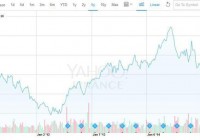
Summary There are major trends impacting the Utility sector: Fuel fluctuations, renewable energy targets, increasingly connected customers and innovations in distributed generation. The interest rate environment is favorable for highly leveraged Utility companies to refinance at attractive rates. NRG is using this drawdown period to shift their business to benefit from these trends in the future. The utility sector is going through a period of margin compression and market disruption which is challenging for a group of companies which are expected to pay stable dividends. The sector is being impacted by changing trends in renewable energy, increasingly connected retail customers, fluctuations in fuel costs and the increasing economic validity of distributed generation. NRG (NYSE: NRG ) is using this challenging business environment and the current low interest rates to pivot all of the Company’s businesses to benefit from these trends going forward. Make no mistake, NRG is undergoing major restructuring of their business model. The Company taken a hard look at all facets of the company and is making broad changes. One major change is that NRG has reorganized their company organizational structure, which is summarized in the Business Overview section below, to fit their view on trends in the Utility sector. Another major change is how NRG is approaching regulatory risks regarding the environment. 31% of NRG’s generation fleet is “dirty” coal-fueled power plants, the Company is currently burning cash upgrading these plants to bring them on pair with cleaner Combined Cycle Gas Turbine plants which are fueled by Natural Gas. The bottom-line benefits of the coal plant upgrades have yet to be seen. By analyzing the NRG’s current business environment, future trends in the sector, growth plan, risk management strategy and expert opinions we can tentatively postulate that the Company will produce sub-par results in the near-term, but has positioned itself as a Utility sector leader in the long-term. (click to enlarge) *from Yahoo Finance Business Overview: NRG Energy, Inc. is a competitive power company that produces, sells and delivers energy and energy products and services in major competitive power markets in the United States. Further the Company is a leader in the Utility sector and is 48th in the Fortune 100 Largest Companies in the United States. NRG owns and operates around 52,000 MWs of generation and engages in trading of wholesale energy, capacity, fuel and transportation services. Further the Company directly sells energy and sustainable services to retail customers. There are three major grouping within NRG: NRG Business: Was traditionally known as the Wholesale Power Generation Business, but now also includes business-to-business solutions. These solutions include, demand response, commodity sales, energy management and energy efficiency. Further this branch includes the distributed generation team for NRG. NRG Home: Is the consumer facing retail power operations, including solar. The branch serves 2.8 million recurring customers and is the largest retail energy provider in Texas and one of the largest in the United States. NRG Renew: The branch of NRG which develops mirco grid solutions as well as renewable products and services for large clients. In 2014, NRG Renew became one of the largest domestic wind-operators after an acquisition from EME . NRG Yield: A publicly traded dividend growth-oriented company formed to serve as the primary vehicle through which NRG owns operates and acquires contracted renewable and conventional generation. NRG Carbon 360: Consists of the Company’s carbon capture business. The branch plans to develop carbon capture technologies for NRG with an aim to prolong the life of NRG’s coal fleet and convert the carbon emissions to a marketable asset. (click to enlarge) * from 10-k Trends: The NRG has stated that the U.S. energy industry is going to be increasingly impacted by a long-term societal trend towards sustainability. Further the company stated that the information technology revolution, which has enabled greater personal choice, will increase churn in the U.S. retail energy sector. The sector specific trends above need to be considered in context with two current trends in the Natural Gas Market and Credit Markets which directly impact NRG’s business results. The Natural Gas Market has been in a downward price trend since its peak in 2007. While it might seem counter intuitive, downward Natural Gas prices actually reduce margins for NRG’s power generation portfolio, this relationship is explained further in the Risk Management section below. If Natural Gas reverse trend and begin rising, NRG will see an expansion of margins from their generation fleet. (click to enlarge) * Henry Hub Natural Gas Prices, Monthly from WSJ The Credit Markets have been in a decreasing interest rate environment since 2007. Like many Utilities, NRG is heavily leveraged, which means the company has significant exposure to interest rate risk, these risks are explained further in the Risk Management section below. If the Credit Markets reverse their trend and NRG cannot hedge adequately, the Company will be forced to devote much of their operating capital to debt repayments. (click to enlarge) *from the US Treasury Database Growth Plan: from the 10-k Enhance Generation: Continue to invest in upgrading the Company’s coal-fueled generation fleet. Expand Retail : NRG has increased its exposure to the Texas retail energy market in order to gain access to the competitive pricing structure of the ERCOT market. Further the company is diversifying its retail brand names to capture more segments of the market. Go Green: The company recently acquired the largest wind farm in north America. See it here . Smart Capital Allocation: NRG has hedged a portion of its coal and nuclear capacity with decreasing hedge levels through 2019. As a result of the GenOn aquisition , the majority of the Company’s generation is in forward capacity markets that extend three years into the future. As of December 31, 2014 the Company had purchased fuel forward under fixed price contracts, for approximately 50% of its expected coal requirement from 2015 – 2019. Risk Management: from the 10-k Many of NRG’s Power Generation Facilities Operate Without Long-term Power Sale Agreements: The Company’s “merchant” generation fleet operates without long-term power sales agreement, and therefore are exposed to market fluctuations. Without long-term agreements NRG cannot be sure that these facilities will operate profitability in future energy price environments. Exposure to Fluctuation in The Natural Gas Markets: In many of the markets NRG operates in the price of power is typically set by natural gas-fired power plants which have traditionally had higher variable costs than NRG’s coal-fired plants. Decreases in natural gas prices have resulted in a corresponding decrease in the market price of power which significantly reduces the operating margins of the Company’s baseload generation assets. At extremely low natural gas prices, gas plants become more economical than coal generation, in such environments NRG coal-fired units cycle more often or even shut down. 31% of NRG’s generation fleet is coal-fueled. Disruptions of Fuel Supplies: NRG relies upon coal, oil and natural gas to fuel a majority of its generation facilities. Delivery of these fuels depends upon continuing viability of counterparties as well as upon the infrastructure available to serve each facility. There are many risks which can disrupt the distribution of fuel such as, weather conditions, demand levels, changes in market liquidity, etc. For an example of these risks please read this article on well freeze-offs. Competition in the Wholesale Power Markets: Many of the Company’s facilities are old, newer plants owned by the competition are often more efficient than NRG’s aging plants. In order to compete effectively NRG seeks to use its scale and aggregate fuel supplies, efficiently utilize transportation services and transmission services from other Utilities and third-parties. Power Outages: Old facilities require periodic maintenance, and unexpected outages are extremely costly for NRG. Government Regulation: NRG’s business is subject to extensive U.S. federal, state and local laws and foreign laws. Except for ERCOT (Texas), most of NRG’s generation companies are considered ‘public utilities’, which subjects these generation companies to FERC oversight, ratemaking and environmental oversight. There are many ongoing regulatory issues, here are a few examples that the Company is currently dealing with: Cross-State Air Pollution Rule , MATS , CO2 Emissions , and Byproducts, Wastes, Hazardous Materials and Contamination. Interest Rate Risk: NRG’s substantial debt could have negative consequences including: Increasing NRG’s vulnerability to general economic and industry conditions Requiring large portions of NRG’s cash flow from operations to be dedicated to the payment of interest, reducing the Company’s ability to pay dividends Limits NRG’s ability to enter into long-term power agreements Limits NRG’s ability to obtain additional financing for working capital Limiting NRG’s ability to adjust to changing market conditions and placing it at a competitive disadvantage compared to its competitors who have less debt. Expert Opinion: (click to enlarge) * from Yahoo Finance The experts are currently bearish on the prospects of NRG’s near-term stock price. Most experts are providing a “Neutral” or “Hold” rating to NRG. However with NRG’s current price of $25 per share, there is still an upside of 22% to the median price estimate of $30.50. (click to enlarge) * from Yahoo Finance The experts expect NRG to have a difficult year during 2016. EPS is expected to decay from $0.83 for 2015 to $0.17 during 2016. Further the revenues are expected to stagnate between 2015 to 2016 with estimated revenues of $15.33B and $15.31B respectively. Recent News: The California Public Utilities Commission approved the SDG&E Power Purchase and Tolling Agreement for the NRG Energy, Inc Carlsbad Energy Center. The Center is a 500 MW, five unit natural gas peaking plant in southern California. Reliant launches integrated home security, automation solutions. CEO David Crane wins 2015 C.K. Prahalad Award for Global Business Sustainability Leadership. NRG moves to spot 48 on the Fortune 500 List. The Company acquired Goal Zero , a leading provider of portable solar power and battery packs. Through the acquisition NRG hopes to increase cross selling between mass market system power, residential solar and personal power. Conclusion: In conclusion NRG is going through a difficult business pivot. Low Natural Gas prices have hurt NRG’s margins for the electricity generation fleet. However, the low interest rates in the Credit Markets have given NRG financial flexibility to restructure the Company into position which benefits from the major trends in LNG technology adoption, renewable energy, distributed generation and increased energy connectivity of retail customers. NRG is a massive company, so these changes are going to be slow and relatively painful for the company’s bottom line in the near-term. However, if NRG and David Crane can weather this challenging business environment then the Company will be able to apply its scale to capture increasing margins as the Natural Gas Markets bounce back. I recommend NRG as a near-term Short, but a long-term Buy, because the Company’s margins are tied to the fluctuations in the Natural Gas Markets. The Company will refinance at currently attractive interest rates and the global Natural Gas Markets are slowly moving towards parity with one another as the adaptation of LNG technology allows for easier transportation of Natural Gas. These two factors should allow NRG to boost their cash flows from operations and reward long-term investors. Disclosure: I/we have no positions in any stocks mentioned, and no plans to initiate any positions within the next 72 hours. (More…) I wrote this article myself, and it expresses my own opinions. I am not receiving compensation for it (other than from Seeking Alpha). I have no business relationship with any company whose stock is mentioned in this article.

Will South Korean Equities Take Off After A Japanese Rally?

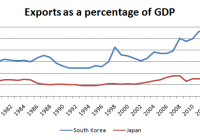
Summary Over the decades, the South Korean economy has become heavily dependent on exports. In recent years, strong won have not facilitated growth of South Korea’s GDP and the profitability of local companies. Korean equities trade at very low multiples that limit the downside risk. The introduction of any monetary stimuli could potentially kick off an equity rally. In that case, DBKO could be a winning security. Unlike Japanese stocks, the South Korean equity market has not performed well in recent years. While the most popular Japanese index, Nikkei 225, has appreciated more than 110% since the start of Abenomics in late 2012, South Korean KOSPI has gained almost nothing during the same period. Even though Japan and South Korea have much in common, they are very different in many aspects as well. For example, both countries are known for exporting high-tech products and high-quality vehicles. The South Korean economy is, however, much more reliant on exports, as demonstrated by the graph below. Data Source: The World Bank Strong won and stagnating profitability The reason behind the recent lackluster South Korean equity market returns lies in weak corporate profitability caused primarily by strengthening won. While earnings of companies listed on the First Section of the Tokyo Stock Exchange rose by 97.9% from 11/30/12 (the beginning of Abenomics) to 4/1/2015, earnings of companies included in the MSCI Korea decreased by 2.6% over the same period. It is not a big surprise that earnings of companies such as Samsung ( OTC:SSNLF ), LG Display (NYSE: LPL ), Hyundai ( OTC:HYMPY ) and Kia Motors ( OTC:KIMTF ) were significantly hindered by strong domestic currency as more than half of their revenue comes from outside of the country. Cheap valuation Based on PE multiples, South Korean equities remain incredibly cheap in global comparison. Over the above-stated period, PE of MSCI Korea has expanded from only 10.0x to 10.3x as price and earnings remained almost unchanged. To gain a better insight, PE of TOPIX has decreased from 15.0x to 14.9x thanks to strong corporate profitability due to weakening yen. Moreover, some sectors of Korea Exchange trade at extremely low multiples. This is specifically the case with autos, semiconductors, banks and IT, which last month traded with PE of 6.13x, 8.84x, 8.16x and 10.54x respectively. Some sectors like autos and banks traded even below their book value, with PBV ratios of 0.90 and 0.56 respectively. Will BOK follow in BOJ’s footsteps and introduce monetary stimulus? Without a doubt, the relative strength of South Korean won has been distinctively magnified by foreign quantitative easing programs. South Korea has suffered a great loss of its product competitiveness on overseas markets in particular against Japan. Because both countries compete in very similar markets, the BOJ’s aggressive quantitative easing program has been fatal to South Korean exports. Despite the BOK cutting interest rates to record low levels, the question remains: What will the central bank do after it runs out of its conventional monetary policy measures? We can only speculate for now, but I don’t believe that South Korea would abandon the global currency war if it realizes how important exports are for its economy. President Park stated recently at the National Assembly: We are standing at a crossroads, facing our last golden opportunity; which road we take will determine whether our economy takes off or stagnates. Now is the time for the National Assembly, the Administration, businesses and the people to come together as one and make dedicated efforts to resuscitate the economy. Graph: JPY/KRW since the start of Abenomics (click to enlarge) Source: Yahoo Finance Conclusion The launch of any quantitative easing from the side of BOK would be a bold turning point not only for South Korean won, but also for profitability of South Korean companies as more than half of their revenue comes from abroad. Therefore, subscribing to commentaries of BOK’s board members and closely monitoring the JPY/KRW currency pair can become a potentially rewarding activity. The largest and most liquid South Korea ETF is the iShares MSCI South Korea Capped ETF (NYSEARCA: EWY ), which seeks to replicate the MSCI Korea index. However, this is not a FX-hedged fund and its capital returns in case of introduction of any monetary stimulus would be diminished by currency losses for investors denominated in U.S. Hence, I would consider buying the other two funds – the Deutsche X-trackers MSCI South Korea Hedged Equity ETF (NYSEARCA: DBKO ) and the WisdomTree Korea Hedged Equity ETF (NASDAQ: DXKW ). They both have the same expense ratio of 0.58% and around the same percentage share of assets within its top ten holdings. The key difference between these two funds is in their holdings. Whereas DXKW consists of shares of only 47 firms, DBKO is diversified across 107 companies with significant exposure to Samsung Electronics, which accounts for a fifth of the fund’s assets. Top 10 Equity Holdings as of 17-Jun-2015 Name & Ticker Weight (%) Samsung Electronics Co Ltd 20.77 Sk Hynix Inc ( OTC:HXSCF ) 4.13 Hyundai Motor Co 3.25 Naver Corp ( OTC:NHNCF ) 2.82 Shinhan Financial Group Ltd (NYSE: SHG ) 2.75 Posco (NYSE: PKX ) 2.33 KB Financial Group Inc (NYSE: KB ) 2.31 Hyundai Mobis Co Ltd 2.25 LG Chem Ltd ( OTC:LGCLF ) ( OTC:LGCEY ) 2.13 Amorepacific Corp ( OTC:AMPCF ) 2.10 Data Source: Deutsche Asset & Wealth Management I believe that significant exposure to Samsung Electronics may pay off, as it is one of the most valuable brands in the world with a proven track record of sales CAGR 20.8% from 1989 to 2013 as well as above average earnings growth potential, currently trading at 9.4x PE. Therefore, I believe that DBKO is the single best security to own for eventual South Korean economy revival. Disclosure: I/we have no positions in any stocks mentioned, but may initiate a long position in DBKO over the next 72 hours. (More…) I wrote this article myself, and it expresses my own opinions. I am not receiving compensation for it (other than from Seeking Alpha). I have no business relationship with any company whose stock is mentioned in this article.