Tag Archives: earnings-center

NiSource Is Overvalued And Speculative
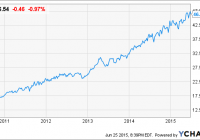
Summary NI is not suitable for either the Defensive Investor or the Enterprising Investor following the ModernGraham approach. According to the ModernGraham valuation model, the company is overvalued at the present time. The market is implying a 10.15% earnings growth over the next 7-10 years, considerably more than the rate the company has seen in recent years. Utilities often attract investors due to consistent earnings and dividend payments, and NiSource (NYSE: NI ) is no exception. Several qualitative factors make the company interesting to numerous investors. For example, Seeking Alpha contributor Josh Young recently wrote that the company’s spin off of its pipeline business makes it potentially a good value, a view that The Socially Responsible Investor also holds . Both of these articles provide great qualitative issues to consider, but one must first look at a quantitative analysis of the company. In fact, Benjamin Graham, the father of value investing, taught that the most important aspect to consider is whether the company is trading at a discount relative to its intrinsic value. It is through a thorough fundamental analysis that the investor is able to determine a potential investment’s merits. Here’s an updated look at how the company fares in the ModernGraham valuation model. This model is inspired by the teachings of Benjamin Graham and considers numerous metrics intended to help the investor reduce risk levels. The first part of the analysis is to determine whether the company is suitable for the very conservative Defensive Investor or the less conservative Enterprising Investor who is willing to spend a greater amount of time conducting further research. In addition, Graham strongly suggested that investors avoid speculation in order to remove the subjective elements of emotion. This is best achieved by utilizing a systematic approach to analysis that will provide investors with a sense of how a specific company compares to another. By using the ModernGraham method , one can review a company’s historical accomplishments and determine an intrinsic value that can be compared across industries. NI data by YCharts Defensive Investor – Must pass at least 6 of the following 7 tests: Score = 5/7 Adequate Size of Enterprise – Market capitalization of at least $2 billion – PASS Sufficiently Strong Financial Condition – Current ratio greater than 2 – FAIL Earnings Stability – Positive earnings per share for at least 10 straight years – PASS Dividend Record – Has paid a dividend for at least 10 straight years – PASS Earnings Growth – Earnings per share has increased by at least one-third over the last 10 years, using three-year averages at the beginning and end of the period – PASS Moderate PEmg (price over normalized earnings) ratio – PEmg is less than 20 – FAIL Moderate Price to Assets – PB ratio is less than 2.5 or PB x PEmg is less than 50 – PASS Enterprising Investor – Must pass at least 4 of the following 5 tests tobe suitable for a Defensive Investor: Score = 3/5 Sufficiently Strong Financial Condition, Part 1 – Current ratio greater than 1.5 – FAIL Sufficiently Strong Financial Condition, Part 2 – Debt-to-Net Current Assets ratio less than 1.1 – FAIL Earnings Stability – Positive earnings per share for at least 5 years – PASS Dividend Record – Currently pays a dividend – PASS Earnings Growth – EPSmg greater than that 5 years ago – PASS Valuation Summary Key Data Recent Price $46.54 MG Value $40.93 MG Opinion Overvalued Value Based on 3% Growth $23.43 Value Based on 0% Growth $13.74 Market Implied Growth Rate 10.15% Net Current Asset Value (NCAV) -$50.77 PEmg 28.80 Current Ratio 0.82 PB Ratio 2.26 Balance Sheet – March 2015 Current Assets $2,261,000,000 Current Liabilities $2,758,000,000 Total Debt $7,958,000,000 Total Assets $24,899,000,000 Intangible Assets $3,928,000,000 Total Liabilities $18,375,000,000 Outstanding Shares 317,400,000 Earnings Per Share 2015 (estimate) $1.73 2014 $1.67 2013 $1.70 2012 $1.39 2011 $1.03 2010 $1.01 2009 $0.84 2008 $1.34 2007 $1.14 2006 $1.14 2005 $1.04 Earnings Per Share – ModernGraham 2015 (estimate) $1.62 2014 $1.49 2013 $1.33 2012 $1.14 2011 $1.04 2010 $1.06 Dividend History NI Dividend data by YCharts Conclusion NiSource does not qualify for the Enterprising Investor or the more conservative Defensive Investor. The Defensive Investor is concerned by the low current ratio along with the high PEmg ratio, while the Enterprising Investor is only concerned with the level of debt relative to the current assets. Therefore, all value investors should only proceed with the next stage of the analysis, which is a determination of an estimate of intrinsic value, with a speculative attitude in mind. From a valuation side of things, the company has grown its EPSmg (normalized earnings) from $1.04 in 2011 to only an estimated $1.62 for 2015. This level of demonstrated growth does not support the market’s implied estimate for earnings growth of 10.15% over the next 7-10 years. The company’s recent earnings history shows an average annual growth in EPSmg of around 11.22%; however, the ModernGraham valuation model reduces such a rate to a more conservative figure, assuming some slowdown will occur. As a result, the model returns an estimate of intrinsic value falling within below the current price, indicating NiSource is overvalued at the present time. Disclosure: I/we have no positions in any stocks mentioned, and no plans to initiate any positions within the next 72 hours. (More…) I wrote this article myself, and it expresses my own opinions. I am not receiving compensation for it (other than from Seeking Alpha). I have no business relationship with any company whose stock is mentioned in this article.

3 Healthcare Funds To Buy As Supreme Court Upholds ObamaCare

Fund holdings, ETF investing “}); $$(‘#article_top_info .info_content div’)[0].insert({bottom: $(‘mover’)}); } $(‘article_top_info’).addClassName(test_version); } SeekingAlpha.Initializer.onDOMLoad(function(){ setEvents();}); The Supreme Court has ruled 6-3 to uphold a key provision of the Affordable Care Act. The Supreme Court ruling holds that the Affordable Care Act can authorize federal tax credits for eligible Americans living not just in states with their own exchanges but also in the states that use the federal market place. This decision is not only a major win for the Obama Administration, it is also a win for healthcare companies. After the announcement, the S&P 500 healthcare index rose .85 percent and many hospital stocks enjoyed gains of 8 percent and above. These reactions from the market, show that Wall Street views the Supreme Court decision as a positive sign for the continuance of strong growth in the healthcare sector. With this Supreme Court decision and the historical steadiness of the healthcare sector, it would be wise to consider investing in this sector or increasing your investment exposure. Below we will share with you 3 buy-ranked healthcare mutual funds. Each has earned either a Zacks Mutual Fund Rank #1 (Strong Buy) or a Zacks Mutual Fund Rank #2 (Buy) as we expect these mutual funds to outperform their peers in the future. Fidelity Select Medical Delivery Portfolio (MUTF: FSHCX ) seeks long-term capital growth. FSHCX invests a major portion of its assets mainly involved in operations related to hospitals, nursing homes and other organizations engaged in providing healthcare services. FSHCX primarily focuses on acquiring common stocks of companies throughout the globe. Factors including financial strength and economic conditions are considered to invest in a company. The Fidelity Select Medical Delivery Portfolio fund is non-diversified and has returned 17.1% in the year-to-date frame. FSHCX has an expense ratio of 0.79% as compared to a category average of 1.37%. Turner Medical Sciences Long/Short C (MUTF: TMSCX ) invests a large chunk of its assets in healthcare firms. TMSCX uses a long/short growth strategy for reduction of volatility and capital preservation during market downturns. TMSCX mainly focuses on acquiring securities of companies having market capitalizations greater than $250 million. TMSCX is expected to maintain a portfolio of 15 to 75 securities long, and 15 to 75 securities short. The Turner Medical Sciences Long/Short C fund has returned 27.6% in the year-to-date frame. As of May 2015, TMSCX held 40 issues with 4.96% of its assets invested in Prothena Corp. pls (NASDAQ: PRTA ). Janus Global Life Sciences D (MUTF: JNGLX ) seeks capital appreciation over the long run. JNGLX invests the lion’s share of its assets in securities of life science oriented companies. JNGLX invests a minimum of one-fourth of its assets in firms from the “life sciences” domain. The Janus Global Life Sciences D fund has returned 21.8% in the year-to-date frame. Andrew Acker is the fund manager and has managed JNGLX since 2007. Original Post Share this article with a colleague

3 Small-Cap Growth ETFs To Buy For Q3

Contrary to popular believe, the Fed dove is still to fly far from the border of the U.S. economy. In its latest June meeting, the Fed remained accommodative and hinted at a slower rate hike trail when the step is actually taken. To add to this, the Fed slashed its projection for the benchmark interest rate for 2016 and 2017, though the guidance for the ongoing year was kept unchanged. This indirectly promised investors a few more months of cheap money inflows. On the other hand, the U.S. economy is taking root. Fed officials even went on to say that the rebounding U.S. economy is strong enough to endure one or two rate hikes this year and insisted that the rate hike decision will be solely economic data reliant. The ”soft patch” of Q1 has disappeared with “moderate” economic growth momentum in Q2. The economy wrote a turnaround story with better than expected job growth data along with strong construction spending, automobile sales and housing numbers. Some dampeners of Q1 including a harsh winter and strikes at the Western Coast ports will not be present in Q3, though a relatively stronger greenback (against a basket of currencies) might cause occasional threats to U.S. exports and the large-cap stocks. This economic development set the stage for the small-cap growth ETF’s outperformance. Small cap stocks are broadly leading the market higher this year and are comfortably surpassing their large cap cousins. The ultra-popular small cap ETF iShares Russell 2000 ETF (NYSEARCA: IWM ) is up 6.9% year to date (as of June 19, 2015) against 2.4% gains in the SPDR S&P 500 ETF Trust (NYSEARCA: SPY ) . This trend will likely continue in the coming quarter, presuming that a risk-on sentiment will hang on in the marketplace and the focus will stay on the domestically exposed stocks. Investors should note that small-cap stocks are seen as an indicator of the domestic economy. These pint-sized companies deal mainly with the domestic economy. Due to their less global exposure, these stocks remain relatively less ruffled by a strong dollar. So this part of capitalization would be one of the best bets if the Fed takes the rate hike plunge later on the year. Moreover, indecisiveness is prevalent in the global markets due to Greek debt worries, slowdown in China and Japan, rate issues in the U.S. and the consequent movement in the greenback and finally the volatility in oil prices. These happenings might weigh on large-cap stocks leaving small-cap growth stocks and ETFs as intriguing choices. These growth focused small caps have actually outperformed the broad market small cap ETFs lately by a pretty wide margin and have the potential to carry forward the trend. Small-Cap Growth ETFs Upgraded to Buy Rating Below, we highlight three small-cap growth ETFs all with Zacks Rank #1 (Strong Buy) or #2 (Buy), any of which could be an excellent play in the third quarter. Investors should note that each of these ETFs went through a Zacks rank upgrade recently. SPDR S&P 600 Small Cap Growth ETF (NYSEARCA: SLYG ) This ETF was upgraded from Zacks ETF Rank #3 (Hold) to Zacks ETF Rank #1. The ETF tracks the S&P SmallCap 600 Growth Index. Holding 351 securities, this fund is also well spread out across each sector and security. Each security accounts for less than 1.27%, while sector wise, Financials, Consumer Discretionary, Healthcare, Information Technology and Industrials take the top five spots each with double-digit exposure, leaving a decent allocation for the utilities and telecom sectors. This $575 million fund trades at a paltry volume of 20,000 shares a day suggesting additional cost beyond the expense ratio of 0.15%. The ETF is up 9.6% year to date (as of June 19, 2015). iShares Morningstar Small-Cap Growth ETF (NYSEARCA: JKK ) The product was upgraded from Zacks ETF Rank #3 to #2. This is an overlooked choice in the small cap space with AUM of $141.5 million and average trading volume of close to 2000 shares a day. The 252-stock fund tracks the Morningstar Small Growth Index. It is well spread out across components as none of these holds more than 1.15% of assets. Sector wise, information technology (28.90%), and healthcare (22%) take the top two spots. The fund charges 30 bps in annual fees from investors and has gained 10.4% so far this year. Guggenheim S&P SmallCap 600 Pure Growth ETF (NYSEARCA: RZG ) This ETF was upgraded from Zacks ETF Rank #3 to #1. The fund targets the small cap U.S. market and follows the S&P SmallCap 600 Pure Growth Index. Holding 132 securities in its basket, it is well spread out across components with each holding less than 2.17%. Financials, Healthcare, Consumer Discretionary, Information Technology, and Industrials are the top five sectors with double-digit allocation each. The fund has amassed $166 million in its asset base and trades in light volume of about 20,000 shares a day on average. Expense ratio comes in at 0.35%. The product has surged 14.5% so far in the year. Original Post