Tag Archives: china

5 ETF Winners And Losers From The Earnings Season

The Q2 2015 earnings season is about to end, with the retail sector being the only big chunk left to release reports. Apart from dollar strength and energy weakness, the earnings season has so far been a decent one, with no big surprises or shocks. On an ex-energy basis, earnings from 416 companies out of 500 grew 5.3% on 1.3% on revenue growth. This would have created a new all-time quarterly record, if we could rule out energy drawbacks. However, on a general note, earnings from the S&P 500 so far have decreased 2.4% this season on an annual basis, with a beat ratio of 70.5%, while revenues declined 4.1%, with a beat ratio of 49.6%, as noted by the August 5 issue of the Zacks Earnings Trend . Estimates for the current period are being cut, but the size of negative revisions for the current period is not as stern as we saw in the prior quarters. Whatever the case, investors must be interested in finding out which sectors and their related ETFs lead or lag in the context of the Q2 earnings season. To do so, we have analyzed the sector ETF performance for the last one month, which was practically the key earnings period, and find the top ETF winners and losers from the season. Below, we profile those products . Winners PowerShares KBW Property & Casualty Insurance Portfolio ETF (NYSEARCA: KBWP ) This insurance ETF added over 5.6% in the last one month (as of August 11, 2015). The insurance sector posted earnings and revenue growth of 3.4% and 0.3%, with beat ratios of 57.9% and 52.6%. The looming Fed rate hike, sector consolidation, buybacks and dividend hikes also favor the sector and the ETF. KBWP has a Zacks ETF Rank #3 (Hold). iShares U.S. Healthcare Providers ETF (NYSEARCA: IHF ) Total earnings for 88.8% of the Medical sector were up 10.6% on 7.3% higher revenues, while 87% beat on bottom lines and 67.4% on top lines. As a result, IHF was up over 4.5% in the last one month. IHF has a Zacks ETF Rank #1 (Strong Buy). PowerShares KBW Regional Banking Portfolio ETF (NYSEARCA: KBWR ) This regional banking fund benefited greatly from nearing Fed policy normalization. The space boasts solid Zacks Ranks. In any case, U.S. banks reported solid earnings this season, with 11.6% growth in earnings on 0.6% decline in revenues. Banks recorded a 66.7% beat on earnings, with a 60% top line beat. KBWR was up 4.2% in the last one month. The fund has a Zacks ETF Rank #2 (Buy). iShares U.S. Home Construction ETF (NYSEARCA: ITB ) The housing sector has rebounded considerably this season on the construction boom. Earnings from the construction sector were up 6.7% on 2.1% higher revenues. The beat ratios on both counts were 53.8% and 30.8%, respectively. ITB has a Zacks ETF Rank #3. Columbia Select Large Cap Growth ETF (NYSEARCA: RWG ) This active large-cap growth ETF does not deal with a specific sector, but better reflects the above-average growth prospects of the overall market. As of now, Visa (NYSE: V ), Alexion Pharma (NASDAQ: ALXN ) and Nike (NYSE: NKE ) are its top three holdings, each with over 4% weight. Since the fund is active in nature, it should better capture the earnings impact as these funds actively select and remove stocks. RWG was up about 4%. Losers First Trust ISE-Revere Natural Gas Index ETF (NYSEARCA: FCG ) This product offers exposure to the U.S. stocks that derive a substantial portion of their revenues from the exploration and production of natural gas. Thanks to the weakness in energy prices, underperformance in FCG was expected from this earnings season. The fund was down 13.5% and has a Zacks ETF Rank #4 (Sell). SPDR S&P Metals and Mining ETF (NYSEARCA: XME ) The metals and mining industry has been a dreadful investing area for quite some time now, as commodities crashed on the dollar strength and reduced demand from China and other key consuming nations on growth concerns. Several of its key constituents came up with unenthusiastic results this season. The fund lost over 12% of its value in the last one month. PowerShares S&P SmallCap Energy Portfolio ETF (NASDAQ: PSCE ) This fund provides exposure to the energy sector of the U.S. small cap segment. No wonder an energy ETF, that too of smaller capitalization, will be come under extreme pressure post earnings. Given the drastic plunge in energy prices, it was more difficult for the smaller energy companies to absorb losses, as these companies lack scale advantage. As a result, PSCE was down about 9.8% in the last one month and has a Zacks ETF Rank #4. PowerShares Dynamic Semiconductors Portfolio ETF (NYSEARCA: PSI ) The semiconductor space faltered massively post earnings, as earnings declined 12%, while revenues fell 5.4%. Its fundamentals have worsened in the struggling PC market. The second quarter of 2015 witnessed PC shipments falling 9.5% year over year, marking the steepest decline since third-quarter 2013, per Gartner. Quite expectedly, investors rushed to dump the sector. The semiconductor ETF PSI thus lost about 5.8% in the last one month. The fund has a Zacks ETF Rank #3. First Trust NASDAQ-100-Tech Index ETF (NASDAQ: QTEC ) This broader tech ETF also was an underperformer post earnings. This is because the fund mainly invests in the lagging tech sub-sectors. QTEC invests over 40% in semiconductors, over 25% in software, over 14% in Internet, over 10% computer hardware and over 5% in telecom equipment. Notably, computer software services saw an earnings decline of 4.6%, telecom equipment segment endured an earnings decline of 11% and electronics division posted about 10% of negative earnings growth. QTEC was down 4.6% in the last one month. Original Post
Canaries In The Investment Mine Have Stopped Serenading

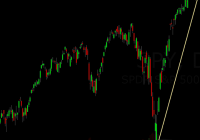
In an effort to boost the U.S. economy, the central bank of the United States has used higher stock prices as a weapon of perceived wealth creation. Here’s the downside. When you implicitly and explicitly suggest that rates will remain lower for longer, people begin to count on risky assets being safer than they are. With all four of the classic canaries unable to serenade, the historical probability of a sharp correction for the broader U.S. market increases significantly. Eleven months ago, I talked about four classic canaries in the investment mines: (1) commodities, (2) high yield bonds, (3) small-cap stocks, (4) emerging market stocks. I explained that when all four of those canaries stop singing, riskier ETFs tend to break down. Indeed, in September of 2014, commodities were tanking, high-yield bonds were plunging, small-cap stocks were faltering and emerging market stocks were plummeting. The canaries were losing their voices. Not surprisingly, the broader U.S. markets eventually followed suit in rather dramatic fashion. In fact, everyone’s favorite large-cap benchmark (S&P 500) had nearly pulled back 10% from a record high. Then came the 16th of October. Stocks had coughed up yet another 1% through mid-day. With the broad-market benchmark pushing the 10% correction level, the president of the St. Louis Fed, James Bullard, suggested that his colleagues at the U.S. Federal Reserve could always rethink the use of additional bond buying with an extension of quantitative easing (QE). And at that time, Bullard talked about worldwide economic uncertainty being a reason for continuing “QE3.” Here’s what happened next: Today, the “Bullard Bounce” still reverberates off the walls and ceilings of the New York Stock Exchange. Why? Investors believe the Fed is willing to do whatever it takes to preserve higher stock prices. Keep in mind, in an effort to boost the U.S. economy, the central bank of the United States has used higher stock prices as a weapon of perceived wealth creation. When you pressure investors to take on risks that they would not normally have taken by pushing interest rates to ‘rarely-before-seen’ lows – and when you entice consumers to finance gratification through credit rather than through savings – asset prices rise precipitously. Higher home prices and higher stock prices make people feel wealthier. Here’s the downside. When you implicitly and explicitly suggest that rates will remain lower for longer, people begin to count on risky assets being safer than they are; similarly, the size of debts can become some so large that those who trusted the policy makers lose the ability to service the debt (let alone pay it back) when borrowing costs go up. Now let us tie together last year’s four classic canaries with the subsequent Bullard bounce and today’s financial markets. The PowerShares DB Commodity Index Tracking ETF (NYSEARCA: DBC ) has accelerated its decline since July and currently seeks depths that haven’t been seen since the heart of the Great Recession. That’s one canary that cannot sing. Meanwhile, high yield bonds via the SPDR Barclays Capital High Yield Bond ETF (NYSEARCA: JNK ) is accelerating its decline that began in June. Canary #2 has a bone its throat. Circumstances are not much better for small-cap stocks and emerging market stocks. The iShares Russell 2000 ETF (NYSEARCA: IWM ) sports a P/E of 20.6 according to Morningstar. It has fallen 6.3% from its late June pinnacle and sits slightly below its long-term 200-day moving average. In another words, Canary Numero 3 is having difficulty vocalizing. The Vanguard FTSE Emerging Markets ETF (NYSEARCA: VWO ) may provide value-du-jour with is P/E of 14, yet China’s recent currency devaluation and Russia’s oil price losses make it difficult for investors to see a forest for the trees. After all, VWO is sitting near 52-week lows and has been in a steep downtrend since May. (The fourth of the four canaries isn’t singing.) With all four of the classic canaries unable to serenade, the historical probability of a sharp correction for the broader U.S. market increases significantly. What’s more, just like the September-October pullback of 2014, market internals have been deteriorating at a noteworthy pace, whether one is looking at waning breadth of bullish stock participation or widening credit spreads between investment grade and higher yielding corporates/junk corporates. It follows that a sell-off not unlike the one that occurred in September-October of 2014 is extremely likely to transpire here in 2015. However, there are several differences this time around. For one thing, revenues have declined for two consecutive quarters, making valuations even more questionable than in 2014. In a similar vein, earnings have gone flat. Historically, stocks tend to fade when corporations are less capable of producing top-line and bottom-line results (as opposed to merely beating the analyst estimates). What’s more, this time around, there’s less certainty of the Federal Reserve defending stocks at the 10% correction level. Granted, Bullard employed a “do whatever it takes” strategy to send stocks skyrocketing last year by bringing up global economic uncertainty. It would be extremely easy for the Fed to use an excuse that economic weakness in Europe, Asia, Australia, Latin America – pretty much everywhere – requires that they tighten at a sloth’s pace. For example, they raise rates at one-eight of a point rather than one-quarter, or they execute a one-n-done quarter-point for 3-6 months. That would likely encourage risk assets to get back on track. Nevertheless, until there is clarity on Fed policy, all of the signs point to “risk-off” outperforming “risk-on.” Downside risks remain elevated until the Federal Reserve shines light on its game plan going forward. Even if the path for tightening is described as ultra-slow and measured, investors will need to weigh just how much the higher costs of borrowing might adversely impact the cost of debt servicing for corporations; that is, we may see further erosion of profitability from an earnings picture that is already flat. People, companies as well as countries tend to forget that debt is still debt. If the overall cost of servicing debt is lowered through rate games, and the debts are increased because families/corporations/nations are taking the worm on the fish hook, it does not mean that the hook itself won’t cause severe damage or death. Again, non-financial corporations are more leveraged at 37% than they were in 2007 at 34%. Higher borrowing costs from the U.S. Federal Reserve? That’s going to be more than an inconvenient challenge. Disclosure: Gary Gordon, MS, CFP is the president of Pacific Park Financial, Inc., a Registered Investment Adviser with the SEC. Gary Gordon, Pacific Park Financial, Inc, and/or its clients may hold positions in the ETFs, mutual funds, and/or any investment asset mentioned above. The commentary does not constitute individualized investment advice. The opinions offered herein are not personalized recommendations to buy, sell or hold securities. At times, issuers of exchange-traded products compensate Pacific Park Financial, Inc. or its subsidiaries for advertising at the ETF Expert web site. ETF Expert content is created independently of any advertising relationships.

It’s August 13, 2015 – Do You Know What’s In Your International ETF?

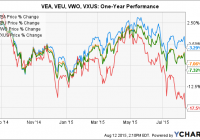
Summary Investors desiring true diversification do well to have some international exposure in their portfolio. However, not all “general” international ETFs are the same, not by a long shot. Knowing what is in your ETF is crucial to making correct decisions, in line with your investment viewpoint and strategy. At least some of my readers may well remember a Public Service Announcement that ran during the 1960s, ’70s, and ’80s according to Time magazine . The question was: ” It’s 10 p.m. Do you know where your children are? ” Historically, this was not simply a general reminder to parents but also due to the fact that curfews were in place in various areas due to riots and other public unrest. A failure to know where one’s children were could lead to complications for the family. When investing, clearly it is beneficial to know what you are investing in. It’s not so much a question of what your strategy is , but rather knowing if the vehicles you have chosen to implement that strategy are actually doing so. All International ETFs Are Not Created Equal As I have suggested previously , every investor should consider holding at least some percentage of foreign stocks in their portfolio. Put simply, such exposure can provide both diversification and the potential for greater growth as compared to a portfolio comprised solely of U.S. stocks. But back to the heading of this section; Not all international ETFs are created equal. For purposes of this article, I am hoping to encourage you to evaluate what, at least in broad terms, is in your international portfolio; to make sure it is actually what you think is in your portfolio. In this article, we will consider that topic using four Vanguard international ETFs that I will describe as “general;” in other words they are not country or even region-specific (e.g. Asia or Europe). Those ETFs are: Vanguard FTSE Developed Markets ETF (NYSEARCA: VEA ) Vanguard FTSE All-World ex-US ETF (NYSEARCA: VEU ) Vanguard Total International Stock ETF (NASDAQ: VXUS ) Vanguard FTSE Emerging Markets ETF (NYSEARCA: VWO ) To get us started, please take a look at the following table, where I have summarized some key data points featuring the sorts of things you may wish to evaluate. VEA, VEU, VXUS, VWO: Comparison of Key Data Points ETF Index Tracked AUM (in $ billions) # of Holdings Expense Ratio Exposure to China VEA FTSE Developed ex North America 52.1 1,398 .09% 0.0% VEU FTSE All-World ex US 25.5 2,490 .14% 5.4% VXUS FTSE Global All Cap ex US 168.4 5,904 .14% 5.2% VWO FTSE Emerging 65.4 1,022 .15% 28.3% If you have read some of my other articles, you probably already know where I am headed with most of the data points I selected. The expense ratio is certainly important since, the lower it is, the closer your ETF will track its selected index and the more money will flow to your pockets. The Assets Under Management (AUM) will affect how liquid the fund is, and the number of holdings gives you some idea how well-diversified the fund is. I’d like, however, to talk about a somewhat random data point I threw in; Exposure to China . As you may be aware, the Chinese stock market has experienced some sharp declines of late. As you can quickly see from the table, the effect of this on our four ETFs ranges from “none at all” for VEA to “quite significant” for VWO. Looking backwards, if one owned VWO and was not aware of this, its recent performance may have come as a shock. Looking forwards, however, VWO may be exactly the ETF you wish to get into, or add to your position in, if you wish to gain some exposure to a possible recovery. With that background, let’s next turn to a one-year chart of the recent performance of each of our four ETFs. VEA data by YCharts No doubt, your eye was immediately drawn to that 17.5% decline in VWO. Without a doubt, this past year has been very challenging for emerging economies. Hopefully, investors with shares in VWO understood this potential and had it weighted appropriately in their portfolios. But the second thing you likely notice is that our 3 other ETFs were affected to very different degrees by this. VEA, which sticks purely to developed markets, has dropped a relatively modest 3.29% over that same period, while both VEU and VXUS were somewhere in between. Let’s now take a quick look at each of the 4 ETFs and how investors may choose among them. In each case, I will make the title of the section a link to that ETF’s fact sheet, in case you wish to examine one or more further. Vanguard FTSE Developed Markets ETF Put simply, as reflected in the name of the index it tracks, this ETF sticks strictly to developed markets outside North America. Please see this article for more definition around the differences between developed and emerging markets. NOTE: Vanguard recently announced that VEA will transition from the FTSE Developed ex North America Index to the FTSE Developed All Cap ex US Index . This is actually sort of a big deal. Currently, this ETF has no exposure to Canada, which could be a negative factor for some investors. This change will correct that, including 234 Canadian stocks and offering exposure to a country rich in natural resources. Of the four, at .09% VEA has easily the lowest expense ratio; extremely low for an ETF investing outside the U.S. At $52.1 billion of AUM, it is a huge fund, offering wonderful liquidity and a tight trading spread of .02%. Over the past 12 months, its distribution yield (distributions over the past 12 months divided by the fund’s Net Asset Value) has been 2.83%. VEA is a wonderful option for the investor who wishes to stay completely away from the volatility of emerging markets. Alternatively, it can be mated with VWO to introduce exposure to emerging markets at whatever level the investor desires, as opposed to the defined exposure offered by VEU and VXUS. Vanguard FTSE All-World ex-US ETF and Vanguard Total International Stock ETF I am going to consider both of these together because there are many similarities between the two. Their expense ratios are the same, at .14%. Their Top 10 holdings are the same. Their exposure to emerging markets is roughly the same; 19.00% for VEU and 18.90% for VXUS. Their exposure to China, which I featured earlier, is also roughly the same. Of the two, VXUS has slightly more exposure to Canada. What, then, is the main difference? Have a look back at our comparative table. You will notice that VEU has 2,490 holdings vs. VXUS’s much larger number of 5,904. This is because the index VEU tracks sticks mostly to large and mid-cap companies, whereas the index VXUS tracks extends all the way down into smaller companies. Interestingly, the differences are a mixed bag. VXUS is almost 7 times the size of VEU in terms of AUM. At the same time, its trading spread is .04% vs. .02% for VEU. As can be seen in the performance chart I featured, VXUS is slightly more volatile due to its inclusion of smaller stocks. VEU comes out slightly ahead in the battle of distribution yields; 2.81% to 2.74%. Really, your decision may come down to two factors: How much exposure you want to Canada (VXUS has 6.6% vs. 5.9% for VEU). Whether you desire the slightly greater growth potential of small stocks in return for potentially greater volatility. Vanguard FTSE Emerging Markets ETF As featured in the previous discussion of VEA, VWO makes a nice complementary ETF to include exposure to emerging markets at whatever level you desire. It is true that you could also add VWO to either VEU or VXUS to weight emerging markets even more heavily. However, the calculation gets a little murkier and you are also losing out on VEA’s wonderful .09% expense ratio. VWO carries an expense ratio of .15% and a distribution yield of 2.82%. NOTE: Vanguard recently announced (see link under VEA) that VWO will transition from the FTSE Emerging Markets Index to the FTSE Emerging Markets All Cap China A Inclusion Index . This will add exposure to China A-Share stocks as well as a much larger number of small-cap stocks. Similar Application Across Other ETF Families Similar concepts can be applied across other ETF families. For example, if you are a Fidelity Brokerage client, you may wish to take advantage of commission-free trading to do something similar with iShares ETFs. I actually built a portfolio doing this in this article on my personal blog. Feel free to have a look to see a similar examination and comparison of the iShares Core MCSI EAFE ETF (NYSEARCA: IEFA ), iShares Core MCSI Total International Stock ETF (NYSEARCA: IXUS ) and iShares Core MCSI Emerging Markets ETF (NYSEARCA: IEMG ). Summary And Conclusion Just as that Public Service Announcement reminded parents of the importance of knowing where their children were in the late-evening, it is important for each investor to understand the contents of their portfolio. Hopefully, using the example of international equities, I have been able to demonstrate why this is the case. Happy investing! Disclosure: I am/we are long VEU, VWO, IXUS. (More…) I wrote this article myself, and it expresses my own opinions. I am not receiving compensation for it (other than from Seeking Alpha). I have no business relationship with any company whose stock is mentioned in this article. Additional disclosure: I am not a registered investment advisor or broker/dealer. Readers are advised that the material contained herein should be used solely for informational purposes, and to consult with their personal tax or financial advisors as to its applicability to their circumstances. Investing involves risk, including the loss of principal.