Tag Archives: china

BIK: Diversified Emerging Markets Means China, Right?

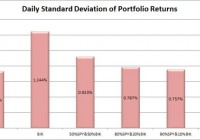
Summary The top 7 holdings are all Chinese, despite the ETF being labeled as diversified emerging markets. The standard deviation is pretty high and makes it difficult to try to use the ETF to lower risk across the total portfolio. On the positive side, the correlation is fairly low and the liquidity was solid which makes the statistics more reliable. I like investing in ETFs, and one of the ETFs I was looking at recently is the SPDR S&P BRIC 40 ETF (NYSEARCA: BIK ). It tracks the S&P BRIC 40 Index, and allocates at least 80% of the funds to the assets in the index. The Morningstar Category is “Diversified Emerging Markets”. However, after looking into it for a while I felt like it would be more representative to say the ETF is heavily invested in China. 67% of the ETF’s investments are in China. The only other markets included are Brazil, India, and Russia. I believe there are two methods for investing. Either you should know more than the other people performing analysis so you can make better decisions, or use extensive diversification and math to outperform most investors. Under CAPM (Capital Asset Pricing Model), it is assumed every investor would hold the same optimal portfolio and combine it with the risk free asset to reach their preferred spot on the risk and return curve. Do you know anyone that is holding the exact same portfolio you are? I don’t know of anyone else with exactly my exposure, though I do believe there are some investors that are holding nothing but the SPDR S&P 500 Trust ETF (NYSEARCA: SPY ). In general, I believe most investors hold a portfolio that has dramatically more risk than required to reach their expected (under economics, disregarding their personal expectations) level of returns. In my opinion, every rational investor should be seeking the optimal combination of risk and reward. For any given level of expected reward, there is no economically justifiable reason to take on more risk than is required. However, risk and return can be difficult to explain. I’ve been approximating risk by using the standard deviation of daily returns. Yields BIK has a 3.45% Distribution Yield and 2.65% SEC Yield. I believe a portfolio with a stronger yield is superior to one with a weaker yield if the expected total return and risk is the same. I like strong yields on portfolios because it protects investors from human error. One of the greatest risks to an otherwise intelligent investor is being caught up in the mood of the market and selling low or buying high. When an investor has to manually manage their portfolio, they are putting themselves in the dangerous situation of responding to sensationalistic stories. I believe this is especially true for retiring investors that need money to live on. By having a strong yield on the portfolio it is possible for investors to live off the income as needed without selling any security. This makes it much easier to stick to an intelligently designed plan rather than allowing emotions to dictate poor choices. In the recent crash, investors that sold at the bottom suffered dramatic losses and missed out on substantial gains. Investors that were simply taking the yield on their portfolio were just fine. Investors with automatic rebalancing and an intelligent asset allocation plan were in place to make some attractive gains. Expense Ratios The expense ratio for BIK is .50% for both gross and net expense ratios. Some analysts are heavily opposed to focusing on expense ratios. I don’t think investors should make decisions simply on the expense ratio, but the economic research I have covered supports the premise that overall higher expense ratios within a given category do not result in higher returns and may correlate to lower returns. The required level of statistical proof is fairly significant to determine if the higher ratios are actually causing lower returns. I believe the underlying assets, and thus Net Asset Value, should drive the price of the ETF. However, attempting to predict the price movements of every stock within an ETF would be a very difficult and time consuming job. By the time we want to compare several ETFs, one full time analyst would be unable to adequately cover every company. On the other hand, the expense ratio is the only thing I believe investors can truly be certain of prior to buying the ETF. I ran some historical numbers on the ETF and compared them to SPY to get a feel for how volatile the ETF was. My starting point was January 2012 and I ran the comparisons over a 3 year sample period. (click to enlarge) The portfolio had a 72.12% correlation to SPY when using daily values, which suggests a fairly significant connection. However, while SPY moved up substantially during the 3 year period, BIK had a fairly weak total return of only a few percentage points. In my opinion, it’s reasonable to think the daily correlation just reflects large amounts of money pouring in and out of the market. The returns over a long time period seem to be substantially less correlated to SPY. While SPY had a total return of 71.4% during that three year period, BIK returned only 4.95%. The liquidity looks solid with around 90,000 shares per day changing hands and 0 days in the last 3 years where the trading volume was 0. What are the holdings? Investors should at least glance at the holdings, even if they intend to buy an ETF on the premise that markets are efficient. By looking at the individual holdings the investors can check if the ETF will have a substantial overlap with other positions that they hold. In the case of BIK, investors should be aware of potential overlap with any other large holdings they have in China. (click to enlarge) Tencent Holdings Ltd. ( OTCPK:TCEHY ) is a Chinese investment holding company and Baidu Inc. ADR (NASDAQ: BIDU ) is a Chinese-language internet search provider. Outside of those 2, everything in the top 6 has China in its name. I assume most people are familiar with Alibaba (NYSE: BABA ). The first holding that isn’t in China is the 8th holding on the list. Conclusion BIK is an interesting ETF. At first it seems like it would be heavily diversified, but China is a fairly major position within the ETF. Therefore, when I am comparing BIK I may focus on comparing it to other Chinese focused ETF as much as I compare to other broadly diversified international ETFs. The standard deviation is very high, but I expect that for emerging markets. The total return for the sample period is quite sad, but the intent of diversification is to ensure a larger sample size that can reduce the overall level of deviations. However, the ETF does have fairly solid liquidity represented in both the average trading volume and the lack of days with shares changing hands. The yields are strong, which is a slight positive, but with the volatility of the ETF a retiring investor using it for yield would still be increasing the volatility of their portfolio. It’s a difficult call on which way to go in that regard and each investor would have to look at their personal tolerances. The ETF was at a significant premium to NAV when I looked. The expense ratio is not unreasonable for the exposure (emerging markets), but it did surprise that the emerging markets included so many major positions related to China. Disclosure: The author has no positions in any stocks mentioned, and no plans to initiate any positions within the next 72 hours. (More…) The author wrote this article themselves, and it expresses their own opinions. The author is not receiving compensation for it (other than from Seeking Alpha). The author has no business relationship with any company whose stock is mentioned in this article. Additional disclosure: Information in this article represents the opinion of the analyst. All statements are represented as opinions, rather than facts, and should not be construed as advice to buy or sell a security. Ratings of “outperform” and “underperform” reflect the analyst’s estimation of a divergence between the market value for a security and the price that would be appropriate given the potential for risks and returns relative to other securities. The analyst does not know your particular objectives for returns or constraints upon investing. All investors are encouraged to do their own research before making any investment decision. Information is regularly obtained from Yahoo Finance, Google Finance, and SEC Database. If Yahoo, Google, or the SEC database contained faulty or old information it could be incorporated into my analysis. The analyst holds a diversified portfolio including mutual funds or index funds which may include a small long exposure to the stock.

Korea Electric Power Corporation (KEP) Q4 2014 Results – Earnings Call Transcript

Korea Electric Power Corporation (ADR) (NYSE: KEP ) Q4 2014 Earnings Conference Call February 11, 2015 02:30 AM ET Executives Bon-Woo Koo – VP and Treasurer Changyoung Ji – Senior IR Manager Analysts Pierre Lau – Citibank Yun Hee-do – Korea Investment Securities Joseph Jacobelli – Bloomberg Intelligence Sujin Bum – Samsung Securities Bon-Woo Koo Good afternoon. This is Bon-Woo Koo, Vice President and Treasurer of KEPCO. On behalf of KEPCO, I would like to thank you all for participating in today’s conference call to announce earnings results for the fourth quarter of 2014. We will begin with a brief presentation on the earnings results, which will be followed by a Q&A session. Today’s call will be presented in both Korean and English. Please note that the financial information to be disclosed today is on a preliminary, unaudited, and consolidated basis in accordance with KIFRS. Any comparison will be on a year-on-year basis between 2013 and 2014. Business, strategies, plans, financial estimates, and other forward-looking statements included in today’s call will be made based on our current expectations and plans. Please be noted that such statements may involve certain risks and uncertainties. Now Senior IR Manager, Mr. Changyoung Ji will begin with an overview of earnings results of the fourth quarter of 2014, first in Korean and repeated in English. Changyoung Ji Now we will provide the overview in English, starting with operating income. In the fourth quarter of 2014, KEPCO recorded a net operating income of KRW5.78 trillion. Taking a closer look, operating revenues increased 6.4% to KRW57.47 trillion. This was attributable mainly to 4.9% increase in power sales revenue, totaling in KRW52.62 trillion and 34.7% increase in revenue from the overseas business amounting to KRW3.22 trillion. Moving on to main operating costs, cost of goods sold, SG&A expenses decreased 1.6% to KRW61.68 trillion. Fuel cost decreased 14.9% to KRW20.59 trillion. Power generation affected by the lower power demand decreased 1.4% and unit cost of fuel declined by 13.7%. Meanwhile, purchased power cost increased 11.2% to KRW12.60 trillion. Unit cost of purchase power decreased 5.6% because of the decrease of S&P caused by the increase of new highly efficient top line and purchase volume increased KRW16.1 trillion. Depreciation cost rose 5.3% to KRW6.09 trillion, mainly due to the newly constructed power substations and new facility additions by power plants. Now let me explain KEPCO’s non-operating segment. Net financial loss was KRW2.25 trillion in the fourth quarter of 2014, which was improved by KRW47 billion. As a result of the foregoing, we recorded a consolidated net income of KRW2.79 trillion in the fourth quarter of 2014. This concludes the overview of KEPCO earnings results for the fourth quarter of 2014. Now let me move on to the Q&A session. Q&A session will be hosted by Mr. Bon-Woo Koo. Question-and-Answer Session A – Bon-Woo Koo This is Bon-Woo Koo, I’m joined with our IR committee members in charge of major business areas at KEPCO. We are prepared to take any questions. Since we will proceed in both Korean and English all Q&As will be interpreted. Please make sure your questions and answers are brief and clear. Operator Now Q&A session will begin. (Operator Instructions). The first question will be given by Mr. Pierre Lau from Citibank. Please go ahead, sir. Pierre Lau I have three regarding your 2014 results. The first one is regarding your unit LNG cost, in the fourth quarter it is up 7.3% year-on-year. So I would like to know why your unit LNG cost increased in the fourth quarter year-on-year despite of the lower oil prices. And also what is your guidance for your unit LNG cost in 2015? That’s question number one. Question number two is what is your guidance for your unit coal cost in 2015? And question number three is what is your expected generation mix for coal and nuclear in 2015? These two kinds of fuel generate 35% and 46% of your total generation in 2014 respectively. And also will you buy net IPP next year — this year in 2015 given that you have more capacity now. Bon-Woo Koo To answer your first question first we have witnessed the drop in the oil price starting in September and October last year and there is inevitably time lag between oil and LNG price decrease and we expect the time lag to be about four to six months’ time. Having said that, we saw the oil price drop in the fourth quarter or starting in October last year and we expected to see that impact on LNG unit price in early 2015. On our guidance for the fuel unit cost for 2015 is as following. For coal, we anticipate the coal price should be KRW120,000 per ton and for LNG, we expect the LNG price to be KRW820,000 per ton. And on the fuel mix to answer your third question, on the fuel mix we believe the LNG to be 10% of overall fuel mix and quarter reporting 9% and nuclear to be 38%. Pierre Lau Okay if LNG 10%, nuclear 48% and coal how many percent? Bon-Woo Koo Coal 49%, nuclear 38% and LNG 10%. Pierre Lau And lastly we will finance output from IPP in 2015. Bon-Woo Koo To answer your question on the energy mix if you look at the IPP proportion, the current number for IPP from 2014 was 14% of overall volume. But in 2015 we expect the number to go up to 19%. And the reason for that is that we are going to increase the co-generation for the high efficient power generation in 2015. Did that answer your question. Pierre Lau Yes thank you. Operator Currently four participants are waiting with your question. The following question is by Mr. Hee-do Yun from Korea Investment Securities. Please go ahead sir. Hee-do Yun Thank you for giving me the opportunity to ask the question. I have two questions first it seems that your operating profit performance is slightly less than we have expected. We believe the reason for that is because executed about KRW350 billion to 3 billion [ph] nuclear waste of Korea Hydro and Nuclear Power Generation Corp. Could you elaborate on what that is really and the back ground of it? Is it going to be a one-time expense for KEPCO? We understand that we launched a project to have a treatment facility for the nuclear waste in [indiscernible], we spent KRW300 billion as a one-time investment. Is this investment by KHNP a similar type of investment or a different one? That’s question number one. The second question is on the dividend payout ratio. Coal gas has just announced that their dividend payout would be about 25%, which is lower than what market has expected. How is KEPCO doing in terms of your discussion with the government in determining your dividend payout ratio? Bon-Woo Koo So clearly our operating profit is lower by about KRW300 billion than market expectation and that is because we have allocated additional cost for trading the waste of nuclear power plant which was ordered by the government. All of that expense was executed in fourth quarter alone and we didn’t have an expense allocated for the first quarter to third quarter of this year. So hence the accumulated expense that we have set aside for this quarter was KRW320 billion and which has resulted in KRW300 billion GAAP in our expected operating profit. This is one-time expense that we have accumulated and moving forward we’ll be accumulating about KRW50 billion per year moving forward under this same expense category. This is however different from the liability for commissioning the nuclear power plant cost, which is a separate line item on our accounting book. To answer your second question, we’re currently in discussion with the government in terms of determining our dividend payout ratio. Current estimation is that our dividend payout ratio will be higher than previous year and we’re discussing with the government to have this impaired ratio higher than 25%. Follow up question for the first question is that will the KRW320 billion for this fourth quarter this year will no longer take place in the subsequent year and going forward there will be only KRW50 billion expense allocated for this category? Is that correct? And what was the reason behind accumulating KRW350 billion this year? And the answer is because we are adding incremental cost to that waste treatment cost because we want to support the region that is going to set up this facility for shipping nuclear waste. And as part of that we have increased the budget in the fourth quarter of this year to support those regions. Operator The following question is by Mr. Shin Ji Yoon from KTB Investment Securities. Please go ahead sir. Shin Ji Yoon I have two questions. First is on the dividend payout ratio. You have stated that you are going to discuss with the government to maintain about 25% dividend payout ratio. Is that going to consider the consolidated balance sheet fees? That’s question number one. Second question is on your generation mix. You said that KEPCO will have a percent LNG and its lower than previous year and IPP ratio will be 19%, which is higher than year-on-year. Is those numbers correct? I would like to verify those numbers. Having said that in 2015, it seems that the base load will be also coming from the new nuclear power plant as well as in the core power plant. What are the neutralization assumptions you’re taking into for 2015 in terms of overall coal generated power and nuclear generated power? Bon-Woo Koo To answer your first question on dividend payout ratio it will be based on the individual Company, not consolidated leases. And because of that the dividend payout will be slightly lower or decreased than previous payout ratio which is before we were introducing the KIFRS in our accounting system. That’s why we’re discussing with the government to maintain 25% or above at the minimum. However the details haven’t been determined and we will let the market know as soon as something has been decided. To answer your second question on the generation mix where the LNG proportion will slightly go down and IPP will go up to 19%, we will verify those numbers for you and get back to you with the accurate number later on and communicate back to you on that. On the utilization rate for different energy mix is that for nuclear it will be about the similar level with 2014 at 84.4%. For coal however there will be slight decrease from 2014 to 93.2%. Shin Ji Yoon On the question on the coal and the nuclear energy mix, so there won’t be any additional increase for coal power plant but for nuclear power plant are we going to consider both Shin Wolsong and Shin Kori or just one of them? Bon-Woo Koo To answer that question in 2015 we said the utilization rate will be 84.4% and that number considers both Shin Wolsong No. 2 and Shin Kori No. 3 facility. Operator The following question is by Joseph Jacobelli from Bloomberg Intelligence. Please go ahead sir. Joseph Jacobelli I wanted some clarity with regards to power plants commissioning schedule in 2015 and 2016, including nuclear and another other coal or gas plants that you maybe commissioning during the period. And the second question is with regards to the debt management. How are the other assets sales going and the overall debt management going? Bon-Woo Koo To answer your first question, for nuclear power plant we are going to add two nuclear power plant in the second half of 2015 which is Shin Wolsong No. 2 and Shin Kori No. 3 power plant. As for coal power plant in 2015 we expect to have 2 power plant within 1000 megawatt capacity by end of the year and in 2016 we expect to add six more on coal powered power plant which will be providing capacity of 8000 megawatts in total. On our equity sales plan, we plan to sell the equity of our KEPCO KPS equity, which we own about 3% and for KEPCO EMC company we plan to sell our 50.4% of the equity that we own and for KEPCO industry development that we own, we planned to sell our 29% of our equity that we own, which is all the equity that we own for that subsidiary. Joseph Jacobelli If I may just a supplement question with regards to the first answer. What about outside Korea? Any commissioning of invested power plants outside Korea please? Thank you. Bon-Woo Koo The new power plant for the overseas office, we’re currently pursuing the project at the moment, but nothing has been determined looking here at the moment. Operator The following question is by Mr. [indiscernible] Private Investor. Please go ahead sir. Unidentified Analyst Your overseas revenue has gone up by 6% – 7%. What has driven this increase in revenue coming from overseas margin? Could you share with us your revenue trend in overseas market in the last five years and what is your expectation for just here? Bon-Woo Koo To answer your question on the overseas business, most of our revenue generated in overseas market is coming from our projects in UAE which has contributed by KRW780 billion this year in revenue. There are other revenues coming in from our outsourcing work from transmission and distribution projects, as well as pipe construction projects. But most of our revenue from overseas market is coming from our UAE project. To elaborate on our overseas business performance, we are seeing our business grow in the Philippines. Also in the second half of last year we have seen the commercial operation of our Mexican power plant in Norte. That has also contributed in our increased revenue. We’re also seeing revenue growth in our China project as well. Also we had a commercial operation for the Amman Asia project in April of 2014. To share with you the profitability level coming from our overseas business is that for our hydraulic and thermal power energy, we’re seeing the profitability compared to our revenue at 15% to 20%. Unidentified Analyst Could share with us the trend for the last five years in terms of your overseas revenue and your expectation for this year? Bon-Woo Koo The numbers that we have shared with you at the moment is our historical revenue for the last three years. We don’t have the numbers for the past years. We will be more than happy to share that with you when we have those numbers. To give you a brief trend on our five year performance for the overseas business is that our revenue in 2011 for the overseas revenue was KRW1.7 trillion whereas this it’s KRW3.2 trillion. In terms of revenue mix overseas business was 3.9% in 2011 but now it’s 5.6% which is based on a consolidated basis. Unidentified Analyst And what is your expectation for this year? Bon-Woo Koo Let us follow up with you on that question. Currently we do not have the numbers for this year’s items. Operator The following question is by Ms. Sujin Bum from Samsung Securities. Please go ahead madam. Sujin Bum First question is on the operating expense for the UAE project. Can you share with us the operating expense? And second question, although it could be difficult for you to share the information regarding this at the moment, but could you if possible share with us your timeline for adjusting tariff this year? Is there any information that you can share with us at this moment? Next question is on the CapEx, it means that there are additional CapEx set aside for the nuclear and coal-fired power plant facility enhancement in 2015 and that’s a significant amount. What is the nature of this CapEx this year? Bon-Woo Koo To answer your first question on the cost of revenue for UAE project, we have seen the cost of revenue go up by — cost of revenue to be KRW2.2617 trillion for this year because we have seen significant progress into the project. To answer your second question on the tariff adjustment discussion with the government, we see that market has had a significant interest in the tax adjustment since the old price of trench [ph] starting in the fourth quarter in 2014. Although the fuel cost decrease is a factor that [indiscernible] have significantly, we’re also seeing some of the factors that drive up tariff such as the Transmission Act as well as the tax rate which is part of the policy cost that is raising tariff. We’re going to submit report on tariff to the government in June of this year and the tariff adjustment will take place afterwards. To answer your question on the CapEx on the power plant is for Thermal power plant, we plan to spend KRW3.3 trillion in construction of thermal power plant and for new renewable energy we have allocated KRW820 billion in CapEx for the new renewable energy. And in refining the power plant facility for thermal power plant the CapEx amounted to KRW1.4 trillion for this year. Just for your information when it comes to our power plant construction if you consider the overall approval process that we have to go through with the government for power plant construction, we assume that about 80% of the CapEx allocated with the project will be executed. Operator The following question is by Mr. [indiscernible] from Shinhan Finance Investment. Please go ahead sir. Unidentified Analyst First I have question on the CapEx following up the previous question. It seems that there is significant purchase set aside for the refinement of nuclear power plant facility and that number increases this year. Do you believe that the nuclear power plant utilization rate of 88% is feasible this year with such a large investment in enhancing these nuclear power plant? Because if you look at previous year, without such a huge CapEx being executed, we only saw 85% of utilization rate for the nuclear power plant. Also last year it seems that you’re setting a sight KRW2 trillion for additional power plant set up. Could you elaborate on those numbers? And third question is on the traffic adjustment. You’re going to be reporting on the total cost of power supply this year and will that include the investment coverage for the subsidiary as well? If not could you be able to share that with us? Bon-Woo Koo To answer your first question, on the nuclear power plant facility enhancement, the number does increase by about two fold this year compared to 2014. But the utilization rate is not 88%. It’s actually 84.8%. On the reason why we’re seeing the increase in CapEx for nuclear power plant is because to give you a high level answer that we are seeing enhanced criteria coming from the government side on the safety of these nuclear power plant which is leading to a higher quality requirement. We would like to share with you the details of that in a separate session. On the 2015 profit guidance, if we exclude the profit coming in from the headquarter sales in last year, we anticipate the number to be at similar level with 2007 at about KRW2 trillion. On our total cost of energy supply calculation, that is actually based off of our regulations set off Ministry of Trade Industry and Energy and KEPCO will be listed as an independent separate entity. Therefore we will not be considering the cost and CapEx on five GENCOs or our subsidiaries. However there our numbers will be reflected in terms of purchased energy cost only. Unidentified Analyst It’s not on a consolidated basis. It will be very difficult for us to anticipate a fair rate of return on your investment. Having said that is there any possibility that you’ll be willing to share with us this separate data for all the GENCOs? Bon-Woo Koo To answer your question the cost and the rate of return for our GENCOs is not directly reflected on the cash calculation of KEPCO. That is done independently by KEPCO. However the adjustment coefficient from the power market will be reflected. Operator The following question is by [indiscernible] from UBS. Please go ahead, sir. Unidentified Analyst First question is on your power demand or cash flow 2015. It seems that your CapEx is less than about KRW800 billion compared to last year. But having seen the enhanced fixed requirement on your facility and new project that is planned in your Company, we see about KRW2 trillion increases in those investment. So could you elaborate on that and is it safe to understand that the investment increase CapEx from KEPCO is offset by decreasing CapEx in the subsidiaries or GENCOs. Second question is on the utilization rate or your coal fired power plant. I would like to clarify the utilization rate. In 2014 you said 88% and in 2015 you anticipate the number to go up to 93.2%. Is that right? Bon-Woo Koo On our 2015 guideline on the power sales is that we see a 2.3% increase year-on-year in terms of power sales and our assumptions for GDP growth is at 3.7%. With the revenue increase at 2.3% we believe the profit to increase by 3.2% year-on-year. On your question on the CapEx, earlier this year yes, we did announce to the media that there will be KRW2 trillion in increase in our CapEx on the facilities. But however the total CapEx so much goes down when we consider the long term transmission and distribution investment cost on a year-on-year basis. When you translate that on our account that will actually decrease the overall CapEx investment and you’re right intense of our subsidiaries’ CapEx decrease offsetting our increase in CapEx by KEPCO. On your question on the coal-fired power plant utilization the rate was 88% in 2014. However we do not have the actual forecast number for 2015. So we use the five year average for the utilization rate for the coal-fired power plant. Our generation mix in 2015 is going to be 49%, which is an increase from 46%. So we also assume that the utilization rate will therefore increase. Unidentified Analyst Another follow up question on the dividend payout ratio. You said it’s going to be over on 25%. It seems up until 2007 your dividend payout was up to 30%. Is it safe for us to assume that level this year? But having had the consolidated basis, is it going to be much higher than the 25% level? Bon-Woo Koo The dividend payout ratio target for the government this year is 25%. However KEPCO is targeting 30% in discussing with the government. So we will do our best to have our dividend payout ratio at 30% level. Just to add to that we are aiming for 30% ex minimum, however currently we haven’t fully discussed this with the government yet. So we will let the market know as soon as something becomes concrete. Because we are approaching the end of our allocated time. We will accommodate just one last question. Operator Currently there are no participants to question. (Operator Instructions). Last question will be given by Pierre Lau from Citigroup. Please go ahead sir. Pierre Lau I have two follow up questions. The first one is your early guidance for coal cost in 2015 will be KRW121,000 per ton. But I find this number even higher than your actual coal cost KRW104,000 per ton. So why the guidance for coal cost unit cost in 2015 higher than the actual number in fourth quarter last year? And the second question is you just mentioned that you will submit your tariff review proposal to the government in June 2015. Why it takes so much time to submit only in June? Bon-Woo Koo To answer your question on the coal unit price, the last year the unit cost price for coal has dropped to a level that is very close to the production cost level. So there is actually no room for the coal price to drop further even if we see the huge drop in the oil price. That is why our guideline for 2015 is slightly above the unit cost of last year. And on your second question on why the submission to the government on the total cost of energy supply is scheduled in June, it is because the cost, although it is based on our budget base, we also have to reflect the previous year’s financial performance into those numbers. So once that financial statement is settled in March and finalized, then we need to do a separate accounting for calculating the tariff calculation, which will be done as a separate effort. Once that is done, we have to go through another auditing process and because of the series of administration process that we have to go through, is it only scheduled to be done in June. Changyoung Ji All right, we will conclude this conference call. Once again, thank you for joining us today. Thank you and good bye.

Norsk Hydro’s (NHYDY) Q4 2014 Results – Earnings Call Transcript

Executives Pal Kildemo – Head of IR Eivind Kallevik – EVP & CFO Analysts Christian Kopfer – Nordea Markets Jason Fairclough – BofA Merrill Lynch James Gurry – Credit Suisse Jatinder Goel – Citi Amit Pansari – Societe Generale Eugene King – Goldman Sachs Hjalmar Ahlberg – Kepler Cheuvreux Rob Clifford – Deutsche Bank Jeff Largey – Macquarie Danielle Chigumira – UBS Eirik Melle – Danske Norsk Hydro ASA ADR ( OTCQX:NHYDY ) Q4 2014 Earnings Conference Call February 11, 2015 3:30 AM ET Pal Kildemo Thank you. Good afternoon and welcome to Hydro’s fourth quarter 2014 conference call. I’m sorry to inform you that our President and CEO, Svein Richard Brandtzaeg, will not be able to attend as he needs to attend his father, who is terminally ill. We will start with a short introduction by CFO, Eivind Kallevik, followed by a Q&A session. For those that did not see this this morning’s webcast of the results presentation, this is available on hydro.com. And that with that, I leave the word to you Eivind Eivind Kallevik Thank you Pal, good afternoon everyone. It is with great pleasure that we today could announce a Q4 result of 2014, which are the highest results that we reported since we became a pure play aluminum company in 2007. The underlying EBIT for the quarter was NOK2.9 billion, roughly two times the NOK1.4 billion from Q3 and up six times compared to the fourth quarter last year. The increase from the third quarter was primarily driven by an increase in all metal price, lifting the results for the primary smelters as prices increased by some 13% measured in NOK. In addition the increase in LME price list the realized alumina price through LME in the contracts, which still account for 75% of the contract portfolio for 2014. We also saw an increase in the Platts Alumina Index price, which also contributed positively. For the second quarter in the row we do see big improvements in operating cost in Alunorte, Paragominas in Brazil as well as increased production levels. The improvement efforts are continuing to come through on the bottom line and here — also here supported by the positive currency developments. I’m also happy to announce that on January 4, ESA, the European Surveillance Authority approved Enova’s NOK1.5 billion support to our Karmoy technology pilot. And provided that we are able to secure power agreements at competitive and sustainable prices this plant will be built. And it will be a vital part of our long-term agenda of reducing energy consumption. The pilot plant will be the world’s most efficient cell with the industry’s lowest CO2 footprint. Also the Board of Directors in Hydro proposed a dividend of NOK1 per share for 2014 and this is for the Annual General Meeting to decide in May. Furthermore, we have also revised the dividend policy for 30% to 40% of net income over the cycle, both measures reflecting the commitment to return cash to shareholders in addition to reflecting the strong balance sheet and positive earnings outlook going forward. If we then end up by summing up 2014, we continued to see a tightening fiscal markets as demand in the world outside China has exceeded production. It’s started to eat into the large inventories that we have seen. This has clearly been reflected in an increased all-in price and is especially enhanced when you convert and translate into Norwegian kroner. As we said at the same time last year, we would stabilize Alunorte production and we have stabilized and lifted both the Alunorte and Paragominas plants and at the same time reduced the cost basis. We have updated on the improvement programs at Capital Markets Day and all of them are now at/or ahead of the plan delivering significant contributions to the bottom line. Now if you look into 2015, we will obviously continue to work on the improvement efforts , both on the commercial and the operational side. As earnings outlook has improved, now is the time for us to really show the strength of the improvement culture, delivering when you have to deliver is one thing, but the true culture is really reflected when deliveries are done in improved times. We will also continue the strong focus on capital discipline going forward in these times of improved earnings. We will continue to high-grade ad perform selective growth in areas such as body-in-white? And recycling as well as smaller scale power operations. And as I mentioned, we will increase our technological lead through the Karmoy technology pilot as another example. The technology pilot will also affect the last point which is to lower our energy consumption and footprint to strengthen our future competitive climate [indiscernible]. And that is of course to be carbon neutral by 2020. Pal Kildemo Thank you Eivind. And operator with that we are ready for questions. Question-and-Answer Session Operator Thank you. [Operator Instructions] We now take our first question from Christian Kopfer from Nordea Markets. Please go ahead. Christian Kopfer Thanks operator and good afternoon. And my first question relates to premiums we have seen premiums coming off, I would not say dramatically, but they have still come off in Europe. So first question relates — or relates to what you see here regarding market sentiment in Europe on the premium side. Eivind Kallevik And you’re right. There is a small softening in the premium market the way we see this in Europe, but remember that the premium situation both in the US and in South East Asia remains relatively strong. And I think you also have to reflect on the fact that the premiums have been going up significantly from during all of 2014 and partly also in 2013. So even though it’s down slightly, it’s still at very high levels from a historical perspective. Now we did see — I think the market and industry saw a significant customer a destocking towards tail end of 2014 and I think it’s really — it is a little bit uncertain at the moment. We will see now when customers come back to the market and start to price metal in Q1 and Q2 as to the significance of this softening. So it’s a little bit too early to say, but it’s still at fairly high levels the way we see this. Christian Kopfer And also on your products, I guess you have already mentioned that the premium on more value added products hold up significantly better. Is that fair still to assume? Eivind Kallevik Yes, I think you shouldn’t expect over time if there is softening of the standard ingot premiums. It’s not unnatural that will have also an impact on the value added products over time. What we’ve guided upon however is that as we get into Q1, with the booking profile that we do have and the bookings that we have done for at first quarter which is roughly 80% to 90% of the production, we expect an increase in our realized premiums of another $60 in Q1 compared to fourth quarter. Christian Kopfer Thanks. And also if you look at it, the difference between the premiums on the European market and in the US, I guess is there any reason why this difference should really remain. I mean I don’t ask for a forecast on premiums but the difference is quite abnormally high at this point, right? Eivind Kallevik What we’ve seen in the past is that these things tend to balance out. I mean you saw the same thing if you go back to fourth quarter of 2013, right? When the premiums in the US started to pick up sharply and European premiums were a little bit lower and then Europe picked up shortly thereafter. So I think you will find that premiums overtime will balance out. Christian Kopfer Thanks. My final question on the Karmoy, the plant that you’re building. Just so I understand correctly, after the — or the net CapEx to Hydro is that the NOK3.9 billion? Eivind Kallevik Well the NOK3.9 billion is the gross figure and then we have rest from Enova of NOK1.5 billion. Operator We will now take our next question from Jason Fairclough from BOA. Please go ahead. Jason Fairclough I guess good afternoon. Thanks for the opportunity to ask questions. Just a couple more questions on your new toy on Karmoy. Just wondering how do you think about this? Is this an ongoing R&D drag on the business or is this a proper asset that will generate its own return on capital? Eivind Kallevik Hi Jason. Well I don’t think it is a toy to be honest, if I can reflect up on that first. It is a proper investment. First and foremost of course it is to demonstrate and verify the technology lead that we believe that we do have in this market. And that plant when operated will also yield returns. In addition of course there will be technological spinoffs from the Karmoy pilot that can be implemented in the other operating plant that we have overtime. So it is a proper investment, but it is to verify the most climate friendly and an energy effective aluminum production in the world. Jason Fairclough If you don’t mind, could I just maybe push you a little bit on how to think about this. So you said first production in 2017, how long do you think before a plant like this would be covering it cost of capital? And I guess in terms of power costs, is it appropriate to think about the power prices that we see in a Nord pool at the moment? Eivind Kallevik I think we haven’t — I mean this is one of the outstanding issues not to return our cost of capital but the power, right. So we made the investment decision basically to move ahead with the project mature it even further, but it’s still pending on what we call sustainable power supply, which certainly has to do with the power prices. And the important part for us is of course to ensure that we have a competitive power source that is sustainable and competitive in a global context where this point will compete. Jason Fairclough Okay, what about the return on capital? Eivind Kallevik This plant will ramp up and when we get there to full production, it should be able to earn its cost of capital the way we see this. And then 2017 is the earliest, right. We expect to do if everything goes according to plan in terms of power source we have a build decision in 2016, early 2016 at the earliest. 2017 is really the earliest when we will see metal out of the plant. Jason Fairclough So last question for me, is this something we should put in our models today or do we really need to wait until we get a final build decision? Eivind Kallevik I think there is no — we haven’t made a build decision. That will not be made until first quarter 2016. But I think your constructive model is from 2017 and onwards. Operator We know take our next question from James Gurry from Credit Suisse. Please go ahead. James Gurry Thanks very much guys, congratulations on a pretty good result today. Just quickly again on that same smelter proposal. So the — I think you’ve got growth CapEx this year of just under NOK1 billion. Is that — is your decision today going to affect that number at all or is it more likely to fall into next year? Eivind Kallevik There will be some growth CapEx in 2015, more to the tune of $100 million to $300 million. James Gurry So you’ll be spending above the NOK6.5 billion? Eivind Kallevik It’s also what we’ve guided on so far. James Gurry Okay, okay. And just quickly on the dividend policy, what’s the relevance of the 40% payout ratio given that your balance sheet meant that you were able to payout a lot higher than the previous 30% payout ratio. So it wasn’t really a relevant measure. Should we think about it as a — you’ve got a minimum dividend policy and perhaps you’ll aim at 40% if you ever get to a sort of steady state consistent earnings basis. Eivind Kallevik I think you have to read this two ways. I think first and foremost — at least for me, it’s important seeing that if we lift the absolute level to NOK1 per share for 2014, and of course we will work hard to maintain a stable dividend also going forward. The lift from 30% to 40% is also a signal that trying to proving that the commitment to serve the shareholders is very strong and the Company will remain also stronger going forward with cash returns. Operator We now take our next question from Jatinder Goel from Citi. Please go ahead. Jatinder Goel Hi good afternoon gents. Just two questions. And apart from seasonality, any additional comments you can make on the weakness of rolled products division for the fourth quarter and how do you see it going forward in to first quarter and rest of 2015? That’s one. And secondly just on the dividend and capital return side you said share buybacks and extraordinary dividends in the period of strong financials, anything you can share on the quantitative side how will you define that strong financials and will that be considered only at the yearend or would you look at returning excess cash by either way in the interims as well? Thank you. Eivind Kallevik Thanks Jatinder. If you look at the rolled product side, first, clearly the — I think the volume in fourth quarter is probably somewhat lower than what the market expected driven not only by seasonality but I think also by customer destocking towards the end of the year, probably to a larger extent than what we’ve seen in the past. The way we read this is this is probably also driven by some customer uncertainty, in particular in Europe as to the strength of the economy going into 2015. We do expect volumes to come back up in the first quarter of the year as normal seasonality kicks in. But remember that we’re starting from a somewhat lower volume quite first quarter 2015 compared to first quarter 2014. So probably slightly lower volumes this quarter compared to same quarter last year. On the dividend side, when it comes to share buybacks, that is something to do — have to be approved by the annual general meeting in May and if that was up for decision, it is a fair assumption that would have been commented upon in today’s presentation. So don’t think you should expect to see that for this year. Operator And we now take our next question from Amit Pansari from Societe Generale. Please go ahead. Amit Pansari Hi. Thanks for taking my questions and couple of it. First is, could you please guide us on what is the net debt levels at Sapa and Qatalum? Second question would be, what kind of interest expense on pension liability do you see in 2015 given that your pension liability has increased. And lastly on the market, what do you read from the inventory declines? What percent of it do you think is going to the market for consumption and what is going to the off market stores. Those would be my questions. Thanks. Eivind Kallevik Yes, if we start with the inventory, which I guess was your last question, Amit. Amit Pansari Yes. Eivind Kallevik We continue to see a decline in the reported inventories. We continued to see that throughout 2014 and we believe that we also see that so far into 2015. The question of course, the big question is where did that metal go. Does now go into the physical market or is it just being rolled into unreported inventories. And it’s probably a little bit of mix of that, but certainly parts of it goes into the physical market, then filling the gap of between production and demand. Besides for 2014, that the gap supply demand or production demand in the western world, world outside China was roughly [1 million] tons. And then in the same speed that we see in 2015. When it comes to the debt level, in Qatalum and Sapa, the aggregated amount is some NOK7.3 billion. And Sapa in isolation is roughly NOK1.6 billion — NOK1 billion for power share, yes. Sorry, NOK1 billion of our share in Sapa. Amit Pansari Right and on interest expense and pension liabilities, do you see any kind of an increase in 2015 compared to 2014 levels? Eivind Kallevik Not very significant change Amit. Amit Pansari Okay. And lastly just a follow up on — in the investment there is substantial increase in primary metal and rolled products in Q4 compared to previous quarter. So what was driving that if you can throw some light on that? Eivind Kallevik That is also partly due to seasonality in fourth quarter and rolled products you basically partly shutdown parts of the plant for maintenance and that’s also when you do a bigger investment upgrades. And typically also do — I think historically you will see that we also do more investments and maintenance investments in the primary smelters in fourth quarter compared to other quarters of the year. Operator We now take our next question from Eugene King from Goldman Sachs. Eugene King Hi all. A couple of questions. Just on Paragominas run rate in Q4 is about nameplate. Can we model above that or would we be safer at nameplate across the full year? Eivind Kallevik Hi Eugene. We’ve guided into Q1 on stable volumes. So I think you should — at least we plan to see the 10’s figure also for the first quarter. And then whether that is 10 even, 10.1, or 10.2 remains to be seen, but at nameplate or slightly above. Eugene King Okay. And then just a second question, just again on duties. The gross payout at the NOK1 a share is about NOK2 billion, but your cash generation is probably spotish. Everything is probably about 8 to 9, which will leave you with a really big net cash position at the end of the year. At what kind of level do you think about introducing a buyback or utilizing that cash balance? Eivind Kallevik I think it’s still early days I think, of this very positive cash generation. We do have a positive earnings outlook, as you know, for the — also in Hydro for the year of 2015. And I think we will have to come back with the cash usage and hope to spend that at the end of the year. But it’s quite clear, even with a NOK2 billion dividend payout, we will very soon be into the positive net cash balance. But we will watch that carefully and spend it wisely. Operator We now take our next question from Hjalmar Ahlberg from Kepler Cheuvreux. Hjalmar Ahlberg Thanks. First a question on Paragominas payment. How much of this payment did you do in Q4 and how much remains? Eivind Kallevik Hi, Hjalmar. We had two charges for the acquisition of the Paragominas shares. Each tranche was roughly 200 — or not roughly. It was $200 million, so $400 million in aggregate. If you do — if you look at what we actually paid for the first tranche, it’s probably — it’s not probably. It’s closer to $50 million, as we had some guarantees from Vale on those — on that asset. So that’s roughly $50 million for the first tranche. Hjalmar Ahlberg Okay. So [indiscernible] remaining or so. Eivind Kallevik So roughly 200 — not roughly. $200 million remaining for the second tranche. The first one cost $50 million instead of $200 million. Hjalmar Ahlberg Okay. Thank you. And looking at the realized alumina price, you were expecting raw material prices in primary metal [indiscernible] to go up. Would that also imply a higher realized alumina price in the bauxite and alumina division? Eivind Kallevik Yes, that is fair to assume. As you know, we sell roughly 50% of our production internally. So as you see, higher earnings and higher prices realized in bauxite alumina, that also will have a negative — positive impact in DNA and negative impact in primary metal. We also expect a somewhat higher ratio of PAX price volumes in 2015, compared to 2014, where roughly 30% will be based on the PAX again existing data, earnings and DNA, and slightly higher costs in the primary metal. Hjalmar Ahlberg Okay. And a question on depreciation. It was up a bit, in both bauxite alumina and primary metals in Q4 versus Q3. Was that due to something special? And would this level remain or would go lower or higher in the next quarter? Eivind Kallevik Well the changes you see in depreciation, Hjalmar, is very much to do with the currency development, and then let’s you translate the BRL depreciation into NOK. It has gone higher, per constant currency development. Hjalmar Ahlberg Okay. Thanks. And just one last on alumina cash cost. You expect it to go up a bit in Q1. Will it go up to those levels in Q1 to Q3, or will it still remain lower than those levels? Eivind Kallevik I think we said it will go up somewhat, compared to the Q4 results, which is not back to the Q3 results, somewhere in between. Operator We now take our next question from Rob Clifford from Deutsche Bank. Rob Clifford Yes, good afternoon. Two questions, one on strategy and one on the market. The market question, you benefited from FX but so do others. Do you think Russia will hold the line and keep production offline, and keep the market tight? And the question on strategy, Karmoy. It’s clearly a commercialization of a technology. How secret is this? Is this something that you’re looking to go on and sell? Is it something you want to use yourself? Why haven’t you gone to Qatar with this technology, given that there is power available there? Is it part of keeping the technology in house, to yourself, or is it a CapEx decision there? So just some comments around the strategy for your smelting technology. Eivind Kallevik If we start with the Russian situation, clearly the Russian production, given the — basically the collapse in the ruble has made that much more competitive, if you like. And it’s hard for us to sit on the [inside of resolve], if not impossible. And we don’t do that, of course, on the Russians’ decisions. But I think they’ve made some fairly clear comments themselves, in terms that they will not ramp up old curtailed capacity, given today’s market or given today’s prices or the market balance in the world, as it is today. So that is what we have to base it on. When it comes to Karmoy, we believe — and the way we see the power prices in Norway at the moment is that it is actually globally competitive. And as such, Karmoy is a very good place to build it, both from a logistical and competence perspective. When it comes to selling the technology, one of the pre-conditions in the approval from the European Surveillance Authority is that we have to license this technology within Europe or within the EU, should other parties want to license the technology. And that of course we would do, if that happened. But it’s only within the EU region. Rob Clifford And so that would be licensed to others. What about use for yourself, looking beyond this is a small pipeline, basically? How else would you use it, if it’s successful? Eivind Kallevik Well it is also to verify when the time is right to build a new smelter, whether that’s a full expansion of Karmoy in due time or whether that is building qatalum 2 or something else. This is the verification of the technology that we’ll be — if successful, be using at the new smelter site. But that’s a long time into the future. Operator We now take our next question from Jeff Largey from Macquarie. Please go ahead. Jeff Largey Yes, hi. Good afternoon. I just have two questions, I guess both focused on bauxite and alumina. The first is just looking at the improvement program there, from B to A, it seems to be, as you say, progressing ahead of schedule. Is there scope that — is there upside scope to this NOK1 billion program or is it just simply that you may be delivering the savings ahead of the end of next — or this year, I should say, 2015? Eivind Kallevik Good afternoon, Jeff. I think, as you say, we are ahead of plan. Original target for 2014 was 600. We have communicated that we delivered 700 at the end of the year, meaning that there is an additional 300 to be delivered for the rest of 2015. Whether there is upside potential above that is not something that we communicated so far. But from experience, it is often so that when you run these programs, you get the mentality change in how to look for improvements and sustainable improvements. And typically, you find something more. If and when we get those quantified, we will of course communicate that to the market, but not as of yet. Jeff Largey Okay. That’s helpful. The second question is just on — back to bauxite and alumina, and on ICMS. As you put in the presentation, the dialogue continues, and this — these ICMS are going to be revisited in July. Can you kind of — I guess can you shed some light on the nature of the dialogue? Is it something that’s a very active dialogue or is it something that really is — you really will kind of revisit in July and will have a decision at some point then? Eivind Kallevik No, it is clearly a situation where we have continuous dialogue. It’s not something that there’s no dialogue today and then we’ll sit down in July. As you know, the election ended not too long ago. The governor is in place. And there are several meeting places, with both the governor, as well as his people on these topics, as we speak. So it’s an ongoing and active dialogue in Brazil. Jeff Largey Is there any sense whether you think you have a case for some relief against these ICMS, or too early to say? Eivind Kallevik I think it is too early to be conclusive. I think both parties understand the importance of this topic. But we don’t — in Brazil and other places, nothing is concluded until it is concluded, in a way. So it’s too early to guide on the specific outcome. Operator We will now take our next question from Danielle Chigumira from UBS. Please go ahead. Danielle Chigumira Hi there, and thanks for the call. A couple of questions, and firstly on the market. You said that you expect a deficit, excluding China. Given the semis export data we’ve seen, as China continues to ramp up, how concerned are that that finds its way into the rest of the market and upsets the positive fundamentals that we’re seeing outside of China? And perhaps to ask the balance sheet question in a slightly different way. All else being equal, if we’re here in a year’s time and spot has prevailed, you would have a substantial cash pile on your balance sheet. Unless something else material comes up, can you see yourselves, in a year’s time, recommending a material buyback to shareholders? Eivind Kallevik Yes, on the China question first. As you know, we did see quite a big increase in semis and fabricated exports out of China, towards the tail end of the fourth quarter. And of course, it has an impact on the deficit in the Western world. The question, how sustainable is these exports? And that has very much to do with the difference or the metal advantage that the Chinese players have at the moment. We have had these situations in the past, and they’ve tended to normalize over time. But it’s a little bit too early to say, in the year, as to how this is going to play out. But obviously it is one of the concerns that we do have. Danielle Chigumira Okay. Eivind Kallevik On the balance sheet side, if we sit here with — in a year’s time with a big pile of cash. We will have the discussions on how to spend that. And it is as we talked about in the past. There is a limit to how much cash, I think, even as [indiscernible] on the balance sheet being non-productive. Whether that will point its way in buybacks or extraordinary dividends as the case, that is still too early to say. That debate we will have to take next year. Danielle Chigumira Okay. Can you give any further color on what that — the limit of that net cash would be, is it NOK2 billion, or NOK5 billion, or NOK10 billion? Eivind Kallevik Not as of today, Danielle. I think we will have to cross that bridge when we get there. Operator We now take our next question from Amit Pansari from Societe Generale. Amit Pansari Hi. I just have one last question on the CapEx plan made for Karmoy. So suppose you find the power solution. Then how do you see that ramp up CapEx? Is it 2016, 2017, 2015, 2016, 2017? So how do you see the split in CapEx? Thanks. Eivind Kallevik We said for this year that roughly 100 to 300 for 2015. Then the major part of the remaining share will obviously come in 2016, partly into 2017, as we ramp up production. But most of that would come in 2016. Operator We now take our next question from Eirik Melle from Danske Market. Eirik Melle Hi. Congratulations on the very solid results today. I was just wondering if you could just comment a little bit on the Chinese export of semis. It’s been quite vast volumes lately, and I was just wondering if you have changed any view on it. Eivind Kallevik Thanks, Eirik. Again, I believe we’ve said in the past, when it comes to primary, we believe China will be balanced on the primary side. And we will say the risk is probably higher on the semis side. And that’s partly what we’ve seen, towards the tail end of fourth quarter. I think it is too early to judge whether this will stay at these levels or increase during 2015. I think we will have to wait until we pass Q1, pass Chinese New Year, and get a little bit into Q2, before we see if this is sustainable or not. At the end of the day, I think it’s going to come back down to the price differential or the metal advantage, between the Chinese metal cost and the Western world price. That’s going to determine the level of exports. Operator [Operator Instructions]. We now take a follow-up question James Gurry from Credit Suisse. James Gurry Thanks again. I just wanted to follow up with the situation in Brazil, the potential power rationing and the higher power costs obviously impacting many, many companies. Can you give us a bit of a scenario on how much you think the cost might go up in each of those situations, just on higher power input cost? Or, if you had to restrict your activities because you couldn’t get power at all, how might that impact the earnings? Eivind Kallevik If you look at the smelter side, remember that we have a power contract with a price agreement, until 2024. So the impact from the smelter is, in a way, purely going to come if there is a curtailment or if there is a rationing of power and we don’t get the power that we are entitled to, in which case we’ll be — probably have to take down capacity somewhat. We don’t know the extent of this, if any, that this will have in the northern parts of Brazil. It’s still so that the northern parts of Brazil is in a better situation when it comes to hydrological balance, than certain other parts of Brazil, which is much more challenged. When I referred to higher power costs in Brazil, that relates more to the Paragominas, the bauxite mine, where we had the power contract that has ended at the end of the year, 2014. And they have to go to the market, to source the energy needed for the year. James Gurry Have you provided previously on what the power expense is for Paragominas? Eivind Kallevik Yes, we’ve — if you look at the power side, we expect that the impact is roughly NOK50 million for Paragominas. Operator We now take our next question from Eugene King from Goldman Sachs. Please go ahead. Eugene King Sorry, guys. Just forgot a couple of things. Just sticking with Brazil, just wondering, am I right in assuming that you’re off the real hedge now and you’re fully exposed to spot real? And then secondly, in terms of excess bauxite, given Paragominas is running slightly above nameplate, is that predominantly spot sales into China? And what kind of price are you achieving on that? Eivind Kallevik When it comes to the currency hedge, which has been in place partly for 2013 and all of 2014, that is now completely out of the books, meaning that we’re fully exposed to the exchange rates for 2015 and onwards. So there’s no new hedge in place. When it comes to bauxite sales, we do have some bauxite sales out of Brazil. We’ve had for quite some time. We haven’t been very specific, in terms of what kind of profits we have on that, but it is — in terms of EBITDA margins and other metrics, it’s a very good business at the moment. And just to be specific on it, it is not Paragominas bauxite that we can sell to the external world because that comes as a slurry to Alunorte. So it’s not allowed to ship it in that state out of the country, due to shipping regulations. So it’s really bauxite out of the mine in MRN that we would sell outside Brazil. Operator As there are no further questions in the queue, I would like to turn the call back to the presenter for any further remarks. Eivind Kallevik Okay. I want to thank you, everyone, for taking the time and speaking to us today. Thank you very much and have a nice evening. Operator This will conclude today’s conference call. Thank you for your participation, ladies and gentlemen. You may now disconnect.