Tag Archives: checkbox

A New Leading Indicator Of Stock Market Direction

Click to enlarge I just discovered a new leading indicator of U.S. stock market direction, and I’d like your thoughts on its efficacy. The following graph shows the history of the indicator going back to 1998. It forecast the market declines in 2000 and 2008, and is currently forecasting another market correction. A high indicator precedes a market sell-off. A low indicator signals a recovery, and a flat indicator is a predictor of average returns. The returns shown in the graph are the average quarterly returns over the year following the indicator date. They’re rolling 4-quarter averages. Click to enlarge The Indicator I created and maintain the Surz Style Pure indexes that break the stock market into large, middle and small, and within each of these sizes into value, core and growth. Morningstar style boxes use a similar approach, and were introduced several years after I launched my indexes. My index definition for large companies is the top 65% of the market. I sort the 6000 companies in the U.S. stock market by capitalization and start adding until I get to 65% of the total capitalization. I’ve recently noted that the breakpoint for large companies has recently reached its highest point ever – $22 billion. A large company, by my definition, is currently above $22 billion. There are currently 227 U.S. companies that meet this rule, with total capitalization of $16 trillion, which is 65% of the $25 trillion total market size. This large company breakpoint is the indicator shown in the graph above. It has successfully predicted the last two market cycles, and is signaling that a major market decline started last year with more to come. This supports my prediction for a 19% loss in 2016 based on pure fundamentals. So why does this breakpoint indicator work, and most importantly will it work this time? Here are some possible explanations: Mega cap market domination is cyclical, and the (capitalization-weighted) market goes where the mega caps go. It’s just another measure of overpricing, big companies becoming too expensive. Investors flee to the safety of big companies when they’re worried, and worry ultimately turns into panic. It’s not a leading indicator at all. The apparent correlations are spurious. What do you think? Have I stumbled onto something? What is it telling us about 2016? Disclosure: I/we have no positions in any stocks mentioned, and no plans to initiate any positions within the next 72 hours. I wrote this article myself, and it expresses my own opinions. I am not receiving compensation for it. I have no business relationship with any company whose stock is mentioned in this article.
Making The Patient Sicker

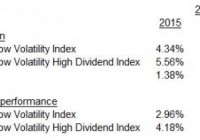
By Craig Lazzara Years ago, I saw a cartoon picturing two Victorian-era doctors discussing a patient. “What did you prescribe for Jones’ rheumatism?” asked the first; the second answered “A cold bath and a brisk walk every morning.” “Good God, man, that will give him pneumonia!” said the first. “I know,” replied the second doctor, “I made my reputation curing that.” Somehow I was reminded of this exchange when I learned from this morning’s news that some institutional investors, smarting from recent losses, are considering increasing their commitment to active equity management. Their operating assumption seems to be that active managers will do a better job of capital preservation in a challenging and volatile market. There’s certainly some plausibility to this argument. It turns out, however, to be another beautiful theory mugged by a gang of facts . The facts come from our periodic SPIVA reports, which compare the results of actively-managed mutual funds against passive benchmarks. Weak markets, it turns out, are no panacea for active managers. In 2008, e.g., 54% of large-cap U.S. funds underperformed the S&P 500. Results were even worse for mid- and small-cap managers (75% and 84% underperformers, respectively). Statistics say, in other words, that moving from passive to active as a way of managing market volatility is likely to make performance worse, not better . Fortunately for anxious investors, passive strategies which focus on the lowest volatility segment of the equity market are most likely to outperform precisely when the market is weakest. Consider, for example, the S&P 500 Low Volatility Index and its cousin, the S&P 500 Low Volatility High Dividend Index: Both of these indices are designed to attenuate the returns of the S&P 500 in both directions; historically, they have both tended to underperform market rallies but outperform when markets are weak. Their reliability as defensive vehicles has far exceeded that of active management. Investors concerned about continuing volatility and market weakness should consider indicizing their defensive strategies. Disclosure: © S&P Dow Jones Indices LLC 2015. Indexology® is a trademark of S&P Dow Jones Indices LLC (SPDJI). S&P® is a trademark of Standard & Poor’s Financial Services LLC and Dow Jones® is a trademark of Dow Jones Trademark Holdings LLC, and those marks have been licensed to S&P DJI. This material is reproduced with the prior written consent of S&P DJI. For more information on S&P DJI and to see our full disclaimer, visit www.spdji.com/terms-of-use .

Nothing New About Gold

By Roger Nusbaum, AdvisorShares ETF Strategist A big part of successfully engaging in markets (success defined as not doing yourself in with poor decision making and having enough money when you need it) is revisiting certain principles that although crucial can be forgotten when they are most important. A great example of this is holding onto a small allocation to gold for its low to negative correlation to equities. I’ve written about this regularly for more than ten years with the main points being that gold continues to not look like the stock market. That was true ten years ago when equities were flattish and gold went up, it was true during the worst of the financial crisis when stocks went down a lot and gold was kind of flattish, it was true in the most recent bull market when equities rocketed and gold sunk. It is playing out as true now as equities have rolled over for the last six months while gold and mining stocks too for that matter have gone up. Play around with some ticker symbols on Google Finance and you’ll see that the S&P 500 is down high single digits for the last six months while ETFs tracking gold are up about 10% and ETFs tracking miners are up in the neighborhood of 30%. While I don’t think too many investors will want to take on the volatility that goes with the miners, the point is still the same. I continue to believe that if gold is the top performing holding you have then chances are things are going so well in the world and that seems to fit right now. Questioning gold’s role as a portfolio holding gained momentum in the media and blogs as equities continued to rally which is in part about impatience which to the intro of this post is one behavior that does investors in. This ties into a slightly bigger concept or investing belief about defense being more important than offense or as I’ve described it; smoothing out the ride. Using gold to help with that objective can be done without having to be very tactical with it; you own it and without having to figure out when equities might turn down, you have the position in place for whenever they do. Clearly this does not resonate with everyone; if it does not resonate with you then you probably don’t own any gold and if it does resonate with you, then you do have some gold but the time to make this decision is not now when volatility is sky high and emotions/indecision might also be elevated. Bigger picture still, is the importance of remembering why you chose whatever you chose for your approach to investing and knowing what type of market environments play to your approach’s strengths and weaknesses. Disclosure: I/we have no positions in any stocks mentioned, and no plans to initiate any positions within the next 72 hours. I wrote this article myself, and it expresses my own opinions. I am not receiving compensation for it. I have no business relationship with any company whose stock is mentioned in this article. Additional disclosure: To the extent that this content includes references to securities, those references do not constitute an offer or solicitation to buy, sell or hold such security. AdvisorShares is a sponsor of actively managed exchange-traded funds (ETFs) and holds positions in all of its ETFs. This document should not be considered investment advice and the information contain within should not be relied upon in assessing whether or not to invest in any products mentioned. Investment in securities carries a high degree of risk which may result in investors losing all of their invested capital. Please keep in mind that a company’s past financial performance, including the performance of its share price, does not guarantee future results. To learn more about the risks with actively managed ETFs visit our website AdvisorShares.com .