Tag Archives: black

ETF Allocation When Stocks Are Stuck In A Moment
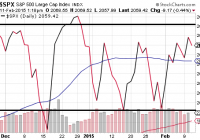
The long-term CAPE average is 16.5. Today’s CAPE is north of 27. CAPE ratios above 27 have only occurred in the months around 1929, 1999 and 2007. I believe that we are closer to the next “common sense” recession than we are to extraordinary acceleration of the U.S economy. The cyclically-adjusted price-to-earnings ratio (a.k.a CAPE, P/E10, Shiller’s P/E) evaluates the average inflation-adjusted earnings for the S&P 500 over the previous 10 years. The long-term CAPE average is 16.5. Today’s CAPE is north of 27. And despite numerous detractors on its predictive value, P/E10 led directly to a Nobel Prize for its creator, Robert Shiller. With 140 years of market data, CAPE ratios above 27 have only occurred in the months around 1929, 1999 and 2007. Equally worthy of note, the Nobel economist’s work accurately identified the bursting of the dot-com bubble (1999-2000) as well as the collapse of the financial system (2007-2008). Unfortunately for those who might like to argue why Shiller’s valuation methodology is irrelevant in 2015, U.S. stock prices are expensive whether you compare them to trailing 12 month earnings, forward 12 month earnings (being revised in light of the energy sector), book value and cash flow. Granted, one can suggest that zero percent rate policy makes Shiller’s P/E impotent; heck, those ridiculously low yields across the curve may make every traditional valuation metric worthless. Still, the more probable set of circumstances is that a bear market in equities is not too far off and that traditional valuation still has at least a single seat at the NYSE. Indeed, if global interest rates continue to decline, strong corporations may do the same thing that they have been doing for the past six years; that is, they may issue low rate investment grade debt and use the funds to repurchase shares of corporate stock. That activity boosts the “E” in company earnings. I still believe this activity will keep equities from dropping off a cliff in the shorter-term. If nothing else, it is largely responsible for keeping the heralded index range-bound for the better part of the last 10 weeks. Looked at another way, why would CEOs commit capital to major projects or human resources right now? The strong dollar is killing exports, weaker foreign currencies are hurting profits, global deflation is hindering sales and volatile oil prices are increasing geopolitical risks. The “go-to” move of share buybacks may very well be the primary driver that keeps the S&P 500 from falling out of bed. We should be cognizant, however, that stock buybacks for the S&P 500 are already approaching the record highs set in mid-2007. Is that a good thing? Or does it merely mask the declining sales and increasing debt of the companies that engage in the practice for too long? On the other side of the coin is the reality that bear markets are inevitable. So I decided to conduct a little exercise. What if the S&P 500 fell an average bear market percentage drop from its 2093 perch? If you split the difference between the average bearish descent since 1926 (35%) and the median plunge since 1871 (38%), the S&P 500 would bottom out near 1330. Let’s take that prospect a step further. The total return for the SPDR S&P 500 Trust ETF (NYSEARCA: SPY ) with dividends reinvested would come in around 17.5% for the first 14-plus years of the 21st century, representing an approximate compounded return of 1.2%. Of course, this would only occur if you had bought-n-held-hoped through all of the downturns – 2000-2002, 2007-2009, 2011, 2015. It gets worse. A 17.5% total return (1.2% compounded) looks even meeker up against an investment grade bond fund like PIMCO Total Return Fund (MUTF: PTTDX ). Assuming an absence of safe haven buying in the hypothetical bearish downturn and using just the performance numbers to date, the fund’s 160% since December 31, 1999 represents 7% annualized. That is for investment grade bonds, folks. “But Gary,” you protest. “You’re speaking in hypothetical scenarios. The return for SPY so far is actually 4.5% at a total return of 85%.” Fair enough. My questions to dismiss the thought process, then, are: (1) Do you believe that bear markets have been removed from the stock investing landscape and, (2) If you do believe in 30%-plus erosion of capital, what is your plan to minimize the damage? The way that I see it, central banks cannot eliminate the inevitability of recessions or bear markets. Moreover, I believe that we are closer to the next “common sense” recession than we are to extraordinary acceleration of the U.S economy. It follows that I have to prepare for the high likelihood of changes ahead. In an investing environment that – by most measures – is becoming increasingly fearful, I emphasize ETF assets on the far left and far right of the risk spectrum . On the right, I will maintain an allegiance to funds like the iShares MSCI USA Minimum Volatility ETF (NYSEARCA: USMV ), the Vanguard High Dividend Yield ETF (NYSEARCA: VYM ) and the Health Care Select Sect SPDR ETF (NYSEARCA: XLV ). They have given me little reason to cut back in that arena. I have even added a modest amount of stock risk to European exporters that might benefit from euro weakness via the iShares Currency Hedged MSCI Germany ETF (NYSEARCA: HEWG ). On the left, I remain dedicated to risk averse assets as I have throughout the prior 14 months. Long duration treasuries have provided remarkable relative value in a world where inferior country debt offers less yield than U.S. debt. I continue to be long ETFs like the Vanguard Extended Duration Treasury ETF (NYSEARCA: EDV ) and the iShares 20+ Year Treasury Bond ETF (NYSEARCA: TLT ). Taxable accounts have a variety of muni possibilities from the iShares National AMT-Free Muni Bond ETF (NYSEARCA: MUB ) to the BlackRock MuniAssets Fund (NYSE: MUA ). Perhaps most importantly, if a stock bear should be around the bend, I am able to use the FTSE Custom Multi-Asset Stock Hedge Index to my advantage. Not only did I join FTSE-Russell in creating the index that many are calling “MASH,” but I recognize the necessity of owning a diverse group of asset types to hedge against an extreme downturn in stocks. Long-dated treasuries, munis, gold, the Swiss Franc, the yen, the dollar, JGBs, German bunds, TIPS and zero coupons figure prominently in the index. Nobody knows when a bear market will emerge. Yet failing to prepare for a catastrophic decline is the worst mistake an investor can make. If nothing else, investors should recognize that the collapse in commodities, never-before-seen lows in global yields and the rapid appreciation of the almighty buck are more indicative of “risk-off” money movement than “risk-on” excitement. Disclosure: Gary Gordon, MS, CFP is the president of Pacific Park Financial, Inc., a Registered Investment Adviser with the SEC. Gary Gordon, Pacific Park Financial, Inc, and/or its clients may hold positions in the ETFs, mutual funds, and/or any investment asset mentioned above. The commentary does not constitute individualized investment advice. The opinions offered herein are not personalized recommendations to buy, sell or hold securities. At times, issuers of exchange-traded products compensate Pacific Park Financial, Inc. or its subsidiaries for advertising at the ETF Expert web site. ETF Expert content is created independently of any advertising relationships.
To Hedge Or Not To Hedge?

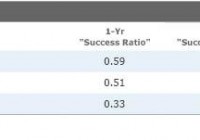
This is an updated version of an ETF Specialist originally published on Feb. 19, 2014. Currency-hedged exchange-traded funds have come into vogue of late in the United States. Investor interest was first piqued by the performance of the oldest and largest of them all: WisdomTree Japan Hedged Equity (NYSEARCA: DXJ ) . The fund owns a portfolio of dividend-paying Japanese stocks that generate more than 80% of their revenue outside of Japan. It gained nearly 42% in 2013, as a massive dose of monetary stimulus contributed to an 18% decline in the value of the Japanese yen, and steady improvement in the global economy gave Japan’s stock market an additional boost. In contrast, iShares MSCI Japan ETF (NYSEARCA: EWJ ) , which tracks a standard market-cap-weighted benchmark and does not hedge its yen exposure, increased by 26% in 2013. Clearly, it paid for U.S. investors in Japanese stocks to have a hedge against a declining yen over this span. But was this a flash in the pan, or do currency hedges have value over longer time frames? With the U.S. dollar marching steadily higher–thanks in part to (relatively) attractive interest rates–and double-digit moves in major currencies making headlines, now is a good time for investors to explore these questions. Back to Basics: Return, Risk, and the Practicalities of Putting a Currency Hedge in Place In simple terms, a domestic investor’s local-currency-denominated return in a foreign security (or a portfolio of them) is equal to the foreign security’s (or portfolio’s) return plus the foreign currency return, plus the product of the foreign security return and the foreign currency return. The last part of this equation accounts for the interplay between the two, and as it is the product of these two figures, its contribution to the overall return will grow as either the foreign asset return or the foreign security return grows larger. Domestic Currency Return = Foreign Security Return + Foreign Currency Return + (Foreign Security Return x Foreign Currency Return) The effect of fluctuating exchange rates can either help or hurt returns. In the case of U.S. investors holding Japanese stocks, the yen’s depreciation hurt the U.S. dollar return for unhedged investors in 2013, as evidenced in part by the iShares fund’s relative underperformance versus the WisdomTree offering. In another extreme example, the 34% appreciation of the Brazilian real contributed to the 124% calendar-year return posted by iShares MSCI Brazil Capped ETF (NYSEARCA: EWZ ) in 2009. These examples highlight that currency effects can be extreme in magnitude. It’s also important to consider currencies’ effect on the risk of a portfolio of foreign securities: The expression for the variance (the square root of which is the standard deviation) of a foreign security or portfolio’s returns is as follows: σ 2 $ = σ 2 LC + σ 2 S + 2σ LC σ S ρ LC,S, where σ 2 $ = the variance of the foreign asset returns in U.S. dollar terms; σ 2 LC = the variance of the foreign asset in local-currency terms; σ LC = the standard deviation of the foreign asset in local-currency terms; 2 S = the variance of the foreign currency; σ s = the standard deviation of the foreign currency; ρ LC,S = the correlation between the returns of the foreign asset in local-currency terms and movements in the foreign currency. This expression demonstrates that the volatility of a foreign asset in domestic-currency terms is directly related to the volatility of the asset in local-currency terms (the first term in the expression) and the volatility of the foreign currency (the second term). It also shows that the higher the correlation between the foreign asset in local-currency terms and movements in the foreign currency, the greater the variance will be in local currency terms. (Again, take the square root and you’ll get the standard deviation.) Hedging away currency exposure will reduce risk, as measured by standard deviation–as can be seen in Exhibit 3 below. How does currency hedging work in practice? Most currency-hedged ETFs will use currency forward contracts to reduce their foreign-currency exposure. A currency forward contract is an agreement between two parties to buy or sell a prespecified amount of a currency at some point in the future (typically one month out in the case of currency-hedged ETFs) at an exchange rate agreed upon between the two parties. Because the value of the forward contract is fixed ahead of time, and the value of the fund will fluctuate during the course of a month as asset prices and cash flows into and out of the fund fluctuate, the forward may not be a perfect hedge. It’s also important to note that these hedges come at a cost, though their price tag typically amounts to just a few basis points in the case of developed-markets currencies in stable interest-rate environments. FX Effects It is useful to look at historical data to frame the effects of currency hedging on investment performance (for U.S. investors in this case). There are two key elements to consider when assessing the effects of currencies on equity portfolios: their contribution to return (as covered above) and their contribution to risk. Exhibit 1 shows “success ratios” for a trio of MSCI benchmarks over the 20-year period ended Jan. 31, 2015. These benchmarks are all tracked by one or more currency-hedged (and unhedged) ETFs. The success ratio represents the portion of the overlapping monthly rolling one-, three-, and five-year periods over these two decades during which the unhedged version of the index outperformed its fully hedged counterpart. For example, the MSCI EAFE Index outperformed its fully hedged counterpart in 59% of these overlapping rolling one-year periods over this 20-year span. In hindsight, in the case of the MSCI EAFE and MSCI Germany benchmarks, the winner could have been predicted by the flip of a (mostly) fair coin. The story is different when it comes to the MSCI Japan Index, where “getting the yen out” has clearly paid off more often than not. Exhibit 2 contains the annualized average returns for each benchmark across each of the overlapping monthly rolling one-, three-, and five-year periods dating back 20 years from the end of January 2015. The differences in relative performance vary between the hedged and unhedged versions of these indexes depending on the length of the measurement period. The MSCI Japan Index is again a unique case, as evidenced by the yawning performance differential between its hedged and unhedged versions. What about risk? Currency risk is a significant contributor to overall risk in the context of a foreign-equity portfolio. Exhibit 3 shows the trailing 20-year annualized standard deviations and Sharpe ratios for the same benchmarks featured in the first two exhibits. In the case of all three benchmarks, it is clear–as evidenced by the difference in Sharpe ratios between the U.S. dollar and hedged versions of the indexes–that currency exposure is a meaningful source of risk, currency hedging can serve to mitigate this risk, and it may ultimately result in superior risk-adjusted performance. To Hedge or Not to Hedge? The best answer to the question of whether it makes sense to hedge the currency exposure of an international-stock portfolio is this: It depends. By hedging foreign-currency exposure, investors can mitigate a source of risk–but at the expense of a potential source of return. The trade-off between the two is important, and investors’ decisions will depend on a variety of factors, including but not limited to their return requirements, risk tolerance, investment horizon, and the costs associated with hedging currency exposure. Disclosure: Morningstar, Inc. licenses its indexes to institutions for a variety of reasons, including the creation of investment products and the benchmarking of existing products. When licensing indexes for the creation or benchmarking of investment products, Morningstar receives fees that are mainly based on fund assets under management. As of Sept. 30, 2012, AlphaPro Management, BlackRock Asset Management, First Asset, First Trust, Invesco, Merrill Lynch, Northern Trust, Nuveen, and Van Eck license one or more Morningstar indexes for this purpose. These investment products are not sponsored, issued, marketed, or sold by Morningstar. Morningstar does not make any representation regarding the advisability of investing in any investment product based on or benchmarked against a Morningstar index.

A Conservative Way To Invest In An Energy Rebound

Summary BCX shares have been depressed after a recent closed-end fund merger because of selling by previous shareholders of BQR. BCX is trading at a 15% discount to NAV. BCX owns stocks with strong balance sheets which will be survivors if the energy bust continues. BCX uses an option writing strategy to reduce risk. Recent increase in VIX means higher options premiums and potential increases in the distribution rate. Many investors have been looking for a good way to benefit from a “bounce” in the energy sector. There are certainly big gains in store if you buy highly leveraged small cap energy stocks and if oil and gas prices quickly recover their losses. But there is also a risk that oil prices will stagnate for quite some time which would lead to many bankruptcies or restructurings in the energy sector. A safer way to invest in an energy rebound is to buy a diversified fund that mainly holds strongly capitalized large cap energy stocks that also hedge using an option over-writing strategy. There is one closed-end fund that currently trades at a 15% discount that fits into this category. The BlackRock Resources & Commodities Strategy Trust (NYSE: BCX ) seeks high current income and current gains, with a secondary objective of capital appreciation. The fund normally invests at least 80% of its total assets in equity securities issued by commodity or natural resources companies, or derivatives linked to commodity/natural resource companies. The fund generally invests in a portfolio of equity securities and utilizes an option over-writing strategy in an effort to seek total return performance and enhance distributions. On December 8, 2014, a three way fund merger was completed where BCF and BQR were merged into BCX. I believe that one cause for the currently wide discount to NAV is that some of the old shareholders of BQR are unhappy with the merger and have been selling their shares of BCX acquired via the merger. I wrote an article on BQR (Blackrock EcoSolutions) about a year ago. The fund was marketed as investing in companies that are “environmentally friendly”. A few weeks ago, I received a message from one of my Seeking Alpha readers who said he bought BQR as a long term investment because he liked their socially conscious investments and good dividend. Shortly after the merger was completed, he looked at his brokerage account and could no longer find BQR. After some digging, he realized it was replaced by BCX. In his words- “If it wasn’t so real I would think this is a cruel joke. Eco Solutions was replaced by Big Oil”. Distributions for BCX vary over time and were reduced late last year because of drops in the underlying portfolio value. The fund currently pays a monthly distribution of $0.0771. Because of weakness in the energy sector, tax loss selling and other selling by prior BQR/BCF shareholders, this may be a good time to buy BCX for bottom fishers or contrarian investors. The discount to NAV is -15.32% which is well above the six month average discount of -13.87%. The 6 month discount Z-score is -1.47, which means that the discount to NAV is about 1.5 standard deviations below the average discount over the last six months. The one year discount Z-score is also attractive at -1.46. Because of the relatively high distribution rate of 9.72% and high discount to NAV, you get to recapture a decent amount of the discount every year. Buying BCX at the market price and receiving NAV from a distribution is equivalent to a gain of 18% on those shares. Multiply this by the distribution rate and you get a discount capture “alpha” of about 1.75% per year. This is more than the annual expense ratio of 1.25%, so adjusted for discount capture, BCX has a negative expense ratio and the fund pays you to own it. Distributions for BCX vary over time and were reduced late last year because of drops in the underlying portfolio value. The fund currently pays a monthly distribution of $0.0771. But if there is a recovery in the energy sector, we could easily see distributions increase dramatically. The recent increase in options volatility, with the VIX above 20, should also benefit funds like BCX that use an options overlay strategy and could lead to a higher distribution rate as they capture the higher option premiums. BCX is more liquid than most other closed-end funds. It trades about $4.5 million a day and usually has a bid-asked spread of only a penny. In summary, BCX is currently a good holding for a patient investor who wants to participate in the energy sector, but wants to get paid a generous distribution while waiting for a rebound. There is good chance of a rebound in the NAV along with a narrowing of the discount within the next year. Top Industry Sector Holdings (12/31/2014) Energy 33.4% Agriculture 31.2% Mining 22.8% Other 10.5% Cash + Derivatives 2.0% Top 10 Holdings (12/31/2014) Exxon Mobil (NYSE: XOM ) 5.92% Chevron (NYSE: CVX ) 5.69% Monsanto (NYSE: MON ) 4.32% Conoco Phillips (NYSE: COP ) 3.89% Royal Dutch Shell (NYSE: RDS.A ) (NYSE: RDS.B ) 3.72% Rio Tinto (NYSE: RIO ) 3.40% Weyerhauser (NYSE: WY ) 2.56% Potash Corp. of Sask. (NYSE: POT ) 2.49% CF Industries (NYSE: CF ) 2.44% Syngenta (NYSE: SYT ) 2.41% Market Cap Breakdown (12/31/2014) Large Cap (> 10 bill) 79.2% Mid Cap (2-10 bill) 13.2% Small Cap ( < 2 bill) 5.5% Cash + Derivatives 2.0% Geographic Breakdown (as of 12/31/2014) United States 67.0% Canada 10.1% United Kingdom 9.2% Switzerland 2.5% Hong Kong 2.3% Cash + Derivatives 2.0% Norway 1.7% France 1.0% Japan 0.9% Australia 0.8% Ticker: BCX BlackRock Resources & Commodities Trust Pays monthly distributions Total Net Assets= $1,112 million Total Common assets= $1,112 million Monthly Distribution: $0.0771 ($0.9252 annual) Annual Distribution (Market) Rate= 9.72% Fund Baseline Expense ratio= 1.25% Discount to NAV= -15.23% Portfolio Turnover rate= 62% Effective Leverage: None Average Daily Volume: 469,000 shares Average $ Volume: $4,500,000 % Overwritten by Options= 23.82% Type of Options= Single Stock