Tag Archives: black
Cost-Efficient Exposure To Momentum
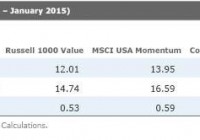
By Alex Bryan In many cases, extrapolating past performance into the future is a bad idea. In fact, securities that have outperformed for several years tend to become more expensive and priced to offer lower returns going forward. But in the short run, recent performance trends tend to persist. Winners over the past six to 12 months tend to continue to outperform for the next several months, while those that have underperformed often continue to lag. This phenomenon is known as momentum. It has been observed in nearly every market studied and across different asset classes over long periods. Investors can get efficient exposure to stocks with positive momentum through iShares MSCI USA Momentum Factor (NYSEARCA: MTUM ) for a low 0.15% expense ratio. This fund tracks an MSCI index that targets large- and mid-cap stocks with strong risk-adjusted price momentum, which differentiates it from traditional momentum strategies studied in the academic literature. This focus on risk-adjusted performance may help moderate the fund’s risk profile and reduce turnover. Volatility in a stock influences price movements, but this component of returns may not last. Risk-adjusted momentum gives a better signal of directional price movements, which may be more likely to persist. MSCI built the fund’s index with capacity in mind, at the expense of style purity. It usually only reconstitutes twice a year and applies a wide buffer to reduce turnover. On paper, momentum strategies appear to work better with reconstitution every month, as momentum is strongest over shorter windows. But in practice, monthly reconstitution can create high turnover and transaction costs. The index’s more tempered approach may improve its cost-efficiency, though it can still experience high turnover. In fiscal 2014, its turnover was as high as 123%. However, it has not yet distributed a capital gain, thanks to the exchange-traded fund structure, which allows managers to transfer holdings out of the portfolio through a nontaxable in-kind transaction with its authorized participants. Momentum is less likely to persist when volatility spikes. In order to address this potential problem, the fund’s benchmark applies conditional rebalancing in between the schedule reconstitution dates when market volatility significantly increases. When this rebalancing is triggered, the index focuses on more recent momentum to construct the portfolio. Investment Thesis In theory, investors should arbitrage any predictable price pattern away. Yet simple momentum strategies have historically worked (on paper) in nearly every market studied. Behavioral finance offers the best explanation for the momentum effect. Those in this camp assert that investors tend to anchor their beliefs and are slow to update their views in response to new information. For instance, event studies have demonstrated that stocks that beat earnings expectations have historically tended to offer excess returns for many weeks after the announcement. Similarly, stocks that miss expectations have tended to continue to underperform. Investors may also be reluctant to sell losers in the hope of breaking even and quick to sell winners in order to lock in gains. This irrational behavior may prevent stocks from quickly adjusting to new information. Once a trend is established, investors may pile on a trade or over-extrapolate recent results, pushing prices away from their fair values, which may contribute to the long-term reversals underlying the value effect (the tendency for stocks trading at low valuations to outperform). While momentum strategies have a good long-term record, they may struggle during periods of high volatility or market reversals. As a result, the fund can underperform when it is most painful. For instance, its benchmark lagged the MSCI USA Index by 3.8% during 2008. Heading into a bear market, momentum strategies tend to overweight riskier stocks, which may underperform during a correction. After a market downturn they tend to load up on defensive stocks, and they may miss out on some of the upside during a sharp recovery. There is also a risk that momentum may become less profitable as more investors attempt to take advantage of it. That said, the momentum effect hasn’t gone away even though it was first published in academic literature in 1993. Like any strategy, momentum can underperform for years. This risk may limit arbitrage and allow momentum to persist. MTUM’s moderate style tilt takes some juice out of the strategy. However, it still captures the essence of the style and at a lower cost than if it pursued a more aggressive rebalancing approach. It has a good chance of beating the market if momentum continues to pay off. But even if momentum doesn’t pan out, the fund’s low expense ratio doesn’t hurt performance much. This is a compelling holding on its own, but it can also offer good diversification benefits to value-oriented investors. That’s because momentum tends to work well when value doesn’t, and vice versa. Therefore, putting them together may reduce the risk of significantly underperforming, as the chart below illustrates. It shows the aggregate wealth accumulated in the MSCI USA Momentum Index, the Russell 1000 Value Index, and a portfolio split evenly between the two, divided by the wealth accumulated in the broad MSCI USA Index. When the line is sloping up, the strategy is beating the market, when it is sloping down, the strategy it is underperforming. Keep in mind that the MSCI USA Momentum Index’s live performance record only started in 2013. Sources: Morningstar Direct, Analyst Calculations. Portfolio Construction MTUM tracks the MSCI USA Momentum Index, which draws stocks from the market-cap-weighted MSCI USA Index, which includes large- and mid-cap stocks. In May and November, MSCI calculates the ratio of each stock’s price returns of the past 13 and seven months (excluding the most recent month to take into account the tendency for performance to reverse during that horizon) to its volatility during the past three years. There isn’t a great theoretical reason to use price returns rather than total returns, but it shouldn’t make a big difference. The index averages these two scores and selects the highest-scoring stocks until it reaches a fixed target number of stocks (currently 122). In order to reduce turnover, new constituents must rank in the top half of the index’s target number of securities to get priority over stocks that were previously in the index. Stocks already in the index only have to rank within 1.5 times the target number of securities to remain in the index. Holdings are weighted according to both the strength of their risk-adjusted momentum and their market capitalization, subject to a 5% cap. In addition to the scheduled semiannual reconstitution, MSCI may rebalance the index when the month-over-month change in the trailing three-month volatility of the market is larger than the 95th percentile of such monthly changes historically. When this occurs, the index only uses each stock’s seven-month risk-adjusted momentum score. Alternatives AQR offers some of the purest momentum funds on the market. However, these funds are only available in a mutual fund format, which can make them less tax-efficient. AQR Large Cap Momentum (MUTF: AMOMX ) (0.49%) ranks the largest 1,000 U.S. stocks by total return over the prior 12 months, excluding the most recent month, and targets the third with the strongest momentum. It weights its holdings according to both the strength of their momentum and market capitalization and rebalances monthly with an adjustment to reduce turnover. While AQR Large Cap Momentum’s $5 million minimum investment may seem a little steep, there is no minimum investment for investors who gain access to the fund through a financial advisor. AQR International Momentum (MUTF: AIMOX ) (0.65% expense ratio) and AQR Small Cap Momentum (MUTF: ASMOX ) (0.65% expense ratio) might also be worth considering. PowerShares DWA Momentum ETF (NYSEARCA: PDP ) is another option, but it is difficult to justify its 0.65% expense ratio. It targets stocks with the best relative strength and rebalances its portfolio quarterly. Historically, PDP has been less sensitive to the standard momentum factor documented in the academic literature than MTUM. Disclosure: Morningstar, Inc. licenses its indexes to institutions for a variety of reasons, including the creation of investment products and the benchmarking of existing products. When licensing indexes for the creation or benchmarking of investment products, Morningstar receives fees that are mainly based on fund assets under management. As of Sept. 30, 2012, AlphaPro Management, BlackRock Asset Management, First Asset, First Trust, Invesco, Merrill Lynch, Northern Trust, Nuveen, and Van Eck license one or more Morningstar indexes for this purpose. These investment products are not sponsored, issued, marketed, or sold by Morningstar. Morningstar does not make any representation regarding the advisability of investing in any investment product based on or benchmarked against a Morningstar index.
Treasury Yields Have Me Shying Away From Buying Some More Dominion Resources
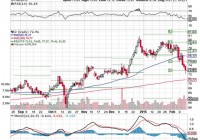
Summary The stock appears to be fairly valued on next year’s earnings estimates. Increasing treasury yields has people investors leaving safe-haven yields plays such as Dominion. The company at least pays a great dividend to help stem the losses on the capital side of things. Dominion Resources (NYSE: D ) is a producer and transporter of energy. It manages its daily operations through three operating segments namely Dominion Virginia Power of DVP, Dominion Energy and Dominion Generation. On February 6, 2015, the company reported fourth quarter earnings of $0.84 per share, which beat the consensus of analysts’ estimates by $0.01. In the past year, the company’s stock is up 2.53% and is losing to the S&P 500, which has gained 14.03% in the same time frame. Since initiating my position in the growth portfolio back on December 23, 2014, I’m down 4%. I’d like to take a moment to evaluate the stock to see if right now is a good time to purchase more for the growth portfolio. Fundamentals The company currently trades at a trailing 12-month P/E ratio of 28.37, which is fairly priced, but I mainly like to purchase a stock based on where the company is going in the future as opposed to what it has done in the past. On that note, the 1-year forward-looking P/E ratio of 18.66 is currently fairly priced for the future in terms of the right here, right now. The 1-year PEG ratio (5.52), which measures the ratio of the price you’re currently paying for the trailing 12-month earnings on the stock while dividing it by the earnings growth of the company for a specified amount of time (I like looking at a 1-year horizon), tells me that the company is expensively priced based on a 1-year EPS growth rate of 5.14%. Financials On a financial basis, the things I look for are the dividend payouts, return on assets, equity and investment. The company pays a dividend of 3.55% with a payout ratio of 101% of trailing 12-month earnings while sporting return on assets, equity and investment values of 2.9%, 12.9% and 7%, respectively, which are all respectable values. Because I believe the market may get a bit choppy here and would like a safety play, I believe the 3.55% yield of this company is good enough alone for me to take shelter in for the time being. The company has been increasing its dividends for the past 11 years at a 5-year dividend growth rate of 6.5%. Technicals (click to enlarge) Looking first at the relative strength index chart [RSI] at the top, I see the stock approaching oversold territory with a current value of 36.65. I will look at the moving average convergence-divergence [MACD] chart next. I see that the black line is below the red line with the divergence bars decreasing in height which tells me bearish momentum may continue in the name. As for the stock price itself ($72.91), I’m looking at $74.85 to act as resistance and the 200-day simple moving average (currently $70.77) to act as support for a risk/reward ratio which plays out to be -2.94% to 2.66%. Wrap Up After taking a look at the stock I think I’ve determined this is not a good place to be buying more of the stock right now. Fundamentally I believe the company to be fairly valued on next year’s earnings estimates and expensive on future earnings growth. Financially, the dividend is great and doesn’t have a lot of room to grow. On a technical basis the risk/reward ratio shows me there is more risk than reward right now. With interest rates on the ten-year treasury beginning to climb these utility names have begun to take a hit. So I’d first like to see the utility stocks decouple first from the treasury yields before I buy some more of this particular name. Disclaimer: This article is in no way a recommendation to buy or sell any stock mentioned. This article is meant to serve as a journal for myself as to the rationale of why I bought/sold this stock when I look back on it in the future. These are only my personal opinions and you should do your own homework. Only you are responsible for what you trade and happy investing! Disclosure: The author is long D. (More…) The author wrote this article themselves, and it expresses their own opinions. The author is not receiving compensation for it (other than from Seeking Alpha). The author has no business relationship with any company whose stock is mentioned in this article.