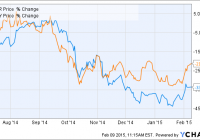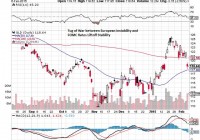
Summary Refuted the recent market doubt of FOMC liftoff in 2015 introduced by Warren Buffett with 3 sources. They are opinions of FOMC voter, San Francisco Fed’s John Williams, strong January 2015 labor data, and influential centrist James Bullard from St. Louis Fed. Current low interest rate environment is put into perspective, and rate hikes will contribute to financial stability in the U.S. Currently, there is a tug of war for financial stability with the U.S. contributing to financial stability and Europe contributing to financial instability. Investors should continue to hold on to GLD even as financial stability has the upper hand this month as the global situation remains fluid and uncertain. Buffett’s Doubt About FOMC Liftoff Famed billionaire investor Warren Buffett has thrown into doubt the feasibility of the first Fed rate liftoff in mid-2015 in a recent interview with CNBC . Buffett makes the point that with the world in trouble, the higher U.S. rates will pull funds into the U.S. and somehow destabilize the global economy. Given the status of Warren Buffett, it is likely that a significant size of the market will be influenced by his opinion. In this article, I am going to look at the possibility of a rate hike in mid-2015, which is the wide market consensus, through 3 different sources. The first source would be the interview which San Francisco Federal Reserve President John Williams had with Steve Liesman of CNBC. John Williams is a voting member of the Federal Open Market Committee (FOMC) this year and has greater influence on monetary policy. It is to be noted that FOMC Chair Janet Yellen was the President of the San Francisco Fed before her ascendancy to FOMC Governor and her current position as Chair of the Fed and FOMC. The second source would be the latest labor market conditions released by the Department of Labor last Friday on 06 February, 2015, for January 2015. This has a high impact on the decision of the Fed to raise rates as part of its employment mandate. The third source would be St. Louis Fed President James Bullard’s essay for the Regional Economist last month. While Bullard is not a voting member of the FOMC this year, he is an influential member of the FOMC and has held his current position from March 2011. Research by Macroeconomic Advisers has showed that Bullard has the most impact on the bond market among all Fed policymakers in 2013. He even outshines the then Fed Chairman Ben Bernanke on an overall basis, but Ben has more influence on a per speech basis. This is due to his position as a policy centrist and his ability to move the FOMC as seen in this Boston Journal article. Hence, his views are an integral part in the analysis of the timeline of the possible rate liftoff. San Francisco Fed’s View of Rate Liftoff San Francisco Fed President John Williams had the CNBC interview recently on 30 January, 2015. Steve Liesman asked the question that is on everyone’s mind, and I reproduce it below (exactly as it appears on the site) for your reference: “LIESMAN: SO DOES ALL THAT KEEP YOU ON TRACK FOR WHAT YOU HAD SAID EARLIER, WHICH IS A MID-2015 FIRST RAKE HIKE, OR LIFT-OFF OF THE FED? WILLIAMS: SO MY CURRENT VIEW AND THIS IS, OF COURSE, MY VIEW. I’M NOT SPEAKING FOR MY COLLEAGUES. IT’S THAT AROUND THE MIDDLE OF THIS YEAR IS THE TIME THAT I THINK IN MY VIEW THAT WE’LL BE GETTING CLOSER TO THE SHOULD WE RAISE RATES NOW OR SHOULD WE WAIT A LITTLE LONGER, COLLECT SOME MORE DATA, GET MORE CONFIDENCE IN THE FORECAST? MY VIEWS ARE BASICALLY THE SAME AS THEY HAVE BEEN FOR THE LAST FEW MONTHS. THE ROUND MIDYEAR IS A GOOD GUESS. FOR WHEN WE REALLY ARE GETTING CLOSE TO THAT POINT, THAT RAISING RATES WILL BE APPROPRIATE. I’M NOT PREDICTING THAT IT WILL BE JUNE OR ANY PARTICULAR MEETING. BUT I THINK WE’RE GETTING CLOSER TO THAT POINT.” Williams had made it clear that he would expect the FOMC to lift rates in mid-2015. Liesman did quite a comprehensive interview with Williams and talked about the issues of employment (which we will revisit again later with the latest report) and inflation. The short story is that Williams has repeated the standard FOMC view that this period of low energy prices is transitory and the Fed has to see past that. His view is that after the end of 2016, this transitory period would have passed and inflation will return to the 2% inflation target. Strong January 2015 Labor Data As for the employment data, Williams predicted a strong economy growing at 3% this year, along with a tight labor market. For 2014, Williams mentioned that the U.S. added, on average, 250,000 jobs per month, and this is strong growth. He would not expect such a strong employment growth this year. If so, he will be pleasantly surprised by the latest January 2015 labor data last week. The Department of Labor reported that the U.S. added 257,000 jobs last month over market consensus of 236,000. This is good news even if it came in lesser than the revised 329,000 for December 2014. In a sign of tight labor market, the average hourly pay rose 0.5% with significant job gains in the retail trade, construction, healthcare, financial services and manufacturing sectors of the economy. The slight increase in unemployment rate was due to 2 factors. The first is a technical readjustment due to new census data collected last year. The second reason is more encouraging because the strong economy has encouraged 155,000 discouraged workers to reapply for jobs. This expanded the labor pool in the U.S., and this is why this is good news despite the slightly higher unemployment rate. Taken together, recent data would encourage the Fed to raise rates at an earlier date. One point to note is that there are some who see the headline growth of 2.6% for the fourth quarter as a disappointment because it is a sharp difference from the 5% figure of the third quarter. However, one should note that the Bureau of Economic Analysis report shows that there was strong growth in consumption, which is 70% of U.S. GDP. It is greater consumption of foreign goods which pushed down net export that caused the relative weakness in the last quarter’s GDP growth. St. Louis Fed’s Support for Liftoff Lastly, I put in Bullard’s view into my analysis of the possible rate liftoff. Bullard penned the following essay titled ” Liftoff: A Comparison of Two Normalization Cycles ” for The Regional Economist last month. He compared the liftoff from September 1992 to February 1993 with rates at 6% to the later liftoff from June 2004 to June 2006 with rates at 5.25%. He described the first liftoff as disorderly and data dependent and the second liftoff as orderly but not market dependent. The disorderly first liftoff with a mixture of 25, 50 and 75 basis point rate hike resulted in a strong and robust economy at the cost of turmoil in the bond markets. The second liftoff was orderly at 25 basis points throughout with consideration for the economic data, but it weakened the economy as low interest rates resulted in a housing bubble, along with lax oversight which burst in 2007. There are 2 things to note in the Bullard’s essay. First, he makes no mention over possible reasons for the Fed not to raise rates this year. In fact, the question is not if the Fed will raise rates, this is a given. The question is how should the Fed raise rates in the most effective way for good economic growth. The second point is more subtle but relevant. Bullard has made the point indirectly that for the sake of financial stability in the U.S., the U.S. should be prepared to take the pain of higher interest rates. It was low interest rates that led to the 2005 housing bubble in the first place, and when it burst, it resulted in a world of pain not only for the U.S., but also the whole world when Lehman Brothers collapsed along with it. There is this central contention that higher interest rates will lead to higher and quality economic growth, and the best way to do so is to raise rates with clear communications to the market. This is the lesson learnt in the 2 rates normalization exercises since 1992. Putting it into Perspective This point of financial stability brings me back to the original point made by Warren Buffett and eventually gold. My opinion is that it is true that the higher interest rates in the U.S. will attract funds to the U.S., and troubled places like Europe, Japan and emerging markets might be adversely affected. There is this view that if the world doesn’t do well, the U.S. will not do well either. However, this is a rather moot point because the funds will want to leave troubled economies in one way or another. The bright spot of the U.S. economy will give these funds a clear destination instead of it being channeled into other asset classes and cause unintended consequences such as a housing bubble. To keep current U.S. interest rate environment in perspective, I quote Williams again (exactly as it appears on the site) from the interview: “LIESMAN: BUT IF INFLATION IS NOT MOVING TOWARDS YOUR 2% TARGET, IF WAGES AREN’T MOVING UP OR ANYTHING CLOSE TO THAT 3% OR 3.5% TARGET, WHY WOULD YOU BE RAISING INTEREST RATES AT THAT TIME? WILLIAMS: WELL I THINK TWO POINTS I WOULD LIKE TO GET ACROSS. FIRST OF ALL, WE ARE GETTING PRETTY CLOSE ALREADY BY THE MIDDLE OF THIS YEAR IN MY VIEW TO FULL EMPLOYMENT. IN OUR EMPLOYMENT MANDATE, I THINK WE’LL BE CLOSER TO ACHIEVING THAT. THE SECOND IS WE HAVE TO REMEMBER WE’RE STARTING FROM A POSITION WITH EXTRAORDINARY MONETARY ACCOMMODATION. WE HAVE ZERO INTEREST RATES, WHICH MEANS NEGATIVE INFLATION ADJUSTED INTEREST RATES. AND OVER A $4 TRILLION BALANCE SHEET. I’M NOT TALKING ABOUT NORMALIZING MONETARY POLICY OR EVEN TIGHTENING POLICY IN A WAY. I’M TALKING ABOUT STARTING TO PROCESS WHERE WE TRIM BACK SOME OF THE EXTRAORDINARY ACCOMMODATION WE HAVE IN PLACE.” I have taken the liberty to underline the most important point in the quote and the rest is to put some context into the quote. This shows that from the Fed’s perspective, this is merely about trimming back the extraordinary monetary accommodation that is long overdue, and this is not as drastic as the market would make it out to be. It should also be noted that the FOMC statement has considered international developments when it issued the bullish statement last month which anchors the mid-2015 rate lift-off expectations. Financial Stability Tug of War Of course, there is the more valid point that it is the opinion of the FOMC voting member that will count in the end result of the actual rate liftoff. After going through these 3 sources, investors should be convinced that rate hikes are likely to be anchored in mid-2015. This is likely to contribute to the financial stability in the U.S. While the current Greek debt drama in Europe is a drag on financial stability, the intention of the FOMC to lift rates is a strong anchor to financial stability. My view is that inflation has a lesser influence on gold prices when compared to the issue of financial stability. The actions of the FOMC will put a floor to the price of gold due to the stability it provides, and funds leaving Europe will find safe harbor in the deep US market. This tug of war between forces of instability in Europe and stability in U.S. is now being pulled in the direction of the U.S. Simply put, the market has priced in the Greek drama last month which saw the sharp gains in gold. This month, the game of brinkmanship is being played out between Greece and the Troika in full public display, but it is unlikely to move the markets much despite the amount of drama generated in the process. This is because the Eurozone is much more prepared to handle the mess of a Grexit with its various backstop mechanisms. Right now, the market assumption is that even if the negotiations fail and Greece has to leave, these backstop mechanisms will be sufficient to absorb the impact. Of course, these assumptions can change as this is a fluid and dynamic situation which will affect other bigger debtor countries like Portugal and Italy. The fallout for these countries is harder to contain. GLD as a Hedge Against Financial Instability (click to enlarge) There are many ways to gain exposure to gold, but my recommendation would be to use the SPDR Gold Trust ETF (NYSEARCA: GLD ) as it is the most liquid Exchange Traded Fund (ETF) for gold exposure with a market capitalization of $30.70 billion and transaction volume of 13 million. We can see from the GLD chart above, the appreciation of GLD from $112 to $126 in January 2015. This 12.5% rise is the market pricing in the European instability, and the subsequent decline from $126 to $118 now reflects the strong economic growth of the U.S., especially the strong labor market data last Friday as mentioned earlier. This has increased the possibility of an earlier rate liftoff by the Fed, which will contribute to greater financial stability in the world. The big question is whether GLD can hold the resistance at $117. Given the instability in Europe, my view is that the $117 resistance level will be a difficult level to cross. However, it is clear that financial stability will have the upper hand this month as the deadline for the Greek debt negotiation is until 28 February, 2015, even if there are pressures to push forward that deadline. As long as both sides are still talking, we can assume that things will be contained at least for this month no matter how drastic the media will make it out to be. In any case, investors should continue to hold GLD in their portfolio and withstand the inevitable volatility in this tug of war over financial stability. Over a longer-time horizon, it is unclear which side will prevail. Hence, it would be a wise decision to hold on to GLD until the situation clarifies itself. Disclosure: The author has no positions in any stocks mentioned, and no plans to initiate any positions within the next 72 hours. (More…) The author wrote this article themselves, and it expresses their own opinions. The author is not receiving compensation for it (other than from Seeking Alpha). The author has no business relationship with any company whose stock is mentioned in this article.