Fidelity Low Priced Stock Fund Is A Value
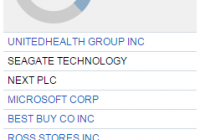
Summary Manager Joel Tillinghast has managed the fund since inception in 1989. He’s racked up an annualized 14% return since inception, versus the less than 10% return of the benchmark. Although it started as a small cap fund, rising assets have forced the fund to increase the average market cap of its holdings. Established in 1989, the Fidelity Low-Priced Stock Fund (MUTF: FLPSX ) was created as a vehicle to invest in out-of-favor small- and mid-cap stocks. The growing assets under management have enabled FLPSX to take on the characteristics of a mid-cap focused value fund while continuing to generate impressive results that still provides investors with high returns. Investing at least 80 percent of net assets primarily in low-priced common stocks, FLPSX seeks to generate returns primarily through capital appreciation. It has done extremely well in the past 15-years, racking up an annualized return of 12.57 percent versus the 4.47 percent return delivered by the S&P 500 Index. That level of market beating performance isn’t as likely due to rising assets, but the fund remains a solid choice for investors. Investment Strategy Joel Tillinghast has managed FLPSX since its inception. Today, he is assisted by a team of six co-managers who are each responsible for approximately 6 percent of the fund. Managers utilize an opportunistic investment approach based on a strict valuation process that predominately targets shares priced below $35 issued by high-quality, small- and mid-sized companies with stable growth prospects. The price per share limitation requires that the managers focus on small-cap stocks with significant growth potential. Generally, the securities should also have a low price-to-earnings (P/E) ratio, generate good cash flow and provide a margin of relative safety. This strategy is based on the belief that many low-priced shares are mispriced by the market and offer the potential for greater returns. They also consider stocks not held in the underlying benchmark index as well as those outside the U.S. to find under-valued, fast-growing companies. On average, one-third of assets are foreign securities. Managers use a long-term, global perspective when selecting individual investments. They identify small- and mid-cap stocks with excellent valuation that are also expected to outperform for many years, allowing the fund to hold securities for the long-term, which is why the fund as a low turnover rate of 12 percent. Tillinghast also hangs on to attractive stocks even if they increase beyond the $35 limit. This causes the funds average market capitalization to drift higher over time. If compelling investment opportunities fail to materialize, the fund will hold a large cash position even if it hampers overall investment returns. Portfolio Composition and Holdings At the end of December 2014, this fund had $44.1 billion in net assets under management. The portfolio held 56.98 percent in domestic equities and 33.4 percent in foreign issues. The foreign sleeve was heavily weighted towards developed markets, mostly Europe and Japan, with a small exposure in emerging markets. The fund also had 0.01 percent bond exposure with the remaining 9.61 percent of assets held in cash. FLPSX’s portfolio has a market cap breakdown of 13 percent giant, 21.27 percent large and 36.56 percent mid, 20.11 percent small and 9 percent micro. This averages out to a median market cap of $5.93 billion, which compares to the category average of $9.7 billion. There were 926 individual holdings within the portfolio at the end of 2014. Managers do not select stocks based on sector exposure, rather sector exposure reflects where they find the best values. At the end of 2014, that left FLPSX overweight (versus the category of mid-cap value) consumer discretionary, information technology and consumer staples, while being underweight financials, healthcare and industrials. The fund’s top 10 individual holdings comprise 25.73 percent of the portfolio. From Fidelity’s website : Several of these holdings highlight the strategy shift and holding stocks even after they cross the $35 threshold. UnitedHealth Group (NYSE: UNH ), for example, currently trades above $100 per share. The fund has a P/E ratio of 13.83 and a price/book ratio of 1.66 along with a dividend yield of 1.91 percent. Historical Performance and Risk The most recent quarterly results were hampered by the fund’s focus on consumer discretionary and information technology as well as its financial holdings and large cash position. Major negative factors included the fund’s exposure to Genworth (NYSE: GNW ), which posted an unexpected third quarter loss, the poor price performance of Microsoft (NASDAQ: MSFT ) and the negative effects of weak holiday sales on British retailer Next. While returns may suffer in the short-term, the investment philosophy of Mr. Tillinghast has produced a 14 percent annualized gain during his 25-year tenure as fund manager. Over this same period, FLPSX has beaten the performance of all its relevant categories and benchmark indices on an impressive risk-adjusted basis. The most recent 1-, 3- and 5-year returns for FLPSX have been 13.58 percent, 15.97 percent and 16.23 percent respectively. This compares to the 15.93 percent, 16.63 percent and 15.96 percent returns of the mid-cap value category over the same periods. The three-year beta and standard deviation for FLPSX are 0.67 and 10.16. FLPSX has Average return and risk ratings from Morningstar. The fund has a trailing 12-month yield of 0.98 percent. Expenses, Fees and Distributions The fund’s net expense ratio is 0.82 percent. The expense ratio changes based on the fund’s relative performance when compared to the benchmark Russell 2000 Index, moving up or down 0.02 percent for every 1 percent of under performance versus the benchmark Russell 2000 Index. FLPSX also has a 90-day, short-term redemption of 1.5 percent. The fund has a minimum initial investment amount of $2,500 for both taxable and non-taxable funds. There is also a minimum balance requirement of $2,000. While the fund does not have check writing, it does support direct deposit and automatic account builder functions. Outlook FLPSX has earned its four-star Morningstar rating for a reason, and that reason is Joel Tillinghast’s strong stewardship of this fund. Performance has been solid in the past few years, but the fund struggled to beat the benchmark and category. Rather than rotate fund holdings in light of the changing nature of the current late-stage recovery in the hope of chasing greater returns, fund manager Tillinghast remains focused on preserving capital and growing FLPSX though solid stock selection. We think FLPSX is poised to rebound as lower oil prices benefit consumer discretionary spending. The fund’s limited exposure to energy stocks should shield it from the negative effects of declining oil prices. The European Central Bank continuing its quantitative easing program should boost the fund’s European stock holdings. While small-cap stocks fell out of favor for much of 2014 and mid-caps trailed large caps, the fund’s focus on quality securities with lower volatility helps propel minimize losses when the overall market retreats. When the category is back in favor, FLPSX will make up lost ground. Disclosure: The author has no positions in any stocks mentioned, and no plans to initiate any positions within the next 72 hours. (More…) The author wrote this article themselves, and it expresses their own opinions. The author is not receiving compensation for it (other than from Seeking Alpha). The author has no business relationship with any company whose stock is mentioned in this article.