Tag Archives: alternative

A Staples ETF Soars Above Its Rivals
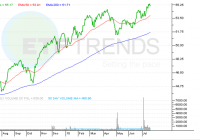
Summary Consumer staples stocks have been performing this year. Focus on the outperforming PowerShares DWA Consumer Staples Momentum Portfolio. How the PowerShares Consumer Staples ETF stacks up against the competition. By Todd Shriber & Tom Lydon Although Treasury yields have been surging in anticipation of the Federal Reserve raising interest rates later this year, 2015 has thus far been a decent year for consumer staples exchange traded funds. The Vanguard Consumer Staples ETF (NYSEARCA: VDC ) is up 4.1% year-to-date, which is well ahead of the 2.9% returned by the S&P 500. However, VDC’s gain is less than half that of the PowerShares DWA Consumer Staples Momentum Portfolio ETF (NYSEARCA: PSL ) . So strong has PSL been this year; it was one of just 12 ETFs hitting all-time highs in Tuesday’s lousy tape. PSL’s strong 2015 showing is proof positive of several things. First, momentum and growth have been trumping value this year. Second, the smart or strategic beta phenomenon, one that is often derided on the basis of nomenclature works at the sector level, not just with diversified broad market ETFs. PSL was one of the 10 PowerShares ETFs that were transitioned to momentum indices from Dorsey Wright & Associates in February 2014. PSL now tracks the Dorsey Wright Consumer Staples Technical Leaders Index, an index “designed to identify companies that are showing relative strength (momentum),” according to PowerShares . PSL has other advantages. Consumer staples have been derided as vulnerable to a strong dollar , but that thesis is most applicable to the sector’s large- and mega-cap names. Think Coca-Cola (NYSE: KO ), Procter & Gamble (NYSE: PG ) and related fare. PSL allocates just 23% of its weight to large caps, roughly the same amount it devotes to small caps, which can endure bouts of dollar strength. Following the Heinz-Kraft merger announcement in March, we noted PSL is home to several credible takeover targets, Hain Celestial (NASDAQ: HAIN ), Monster Beverage (NASDAQ: MNST ), and WhiteWave Foods (NYSE: WWAV ). Those stocks combine for nearly 11% of the ETF’s weight. For its part, PSL is not a stranger to food and beverage M&A. The ETF earned some time in the limelight last year when Tyson Foods (NYSE: TSN ) and Pilgrim’s Pride (NASDAQ: PPC ) fought for Hillshire Brands. Other PSL holdings that have been previously mentioned as potential targets include Constellation Brands (NYSE: STZ ) and Dr Pepper Snapple (NYSE: DPS ), a combined 7.4% of the ETF’s weight. Advisors and investors have been embracing PSL this year. Now home to over $132 million in assets under management, $60.6 million of that has come into the ETF just this year, according to PowerShares data . PowerShares DWA Consumer Staples Momentum Portfolio ETF (click to enlarge) Disclosure: I/we have no positions in any stocks mentioned, and no plans to initiate any positions within the next 72 hours. (More…) I wrote this article myself, and it expresses my own opinions. I am not receiving compensation for it. I have no business relationship with any company whose stock is mentioned in this article.
A Small-Cap ETF With Big Dividend Growth Potential

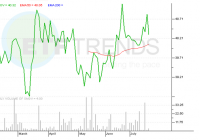
Summary Small-capitalization stocks have rebounded this year. A small-cap ETF that targets dividend growers. How the ProShares Russell 2000 Dividend Growers ETF compares to the benchmark Russell 2000. By Todd Shriber & Tom Lydon Small-caps are rebounding this year as highlighted by a gain of 4.1% for the iShares Russell 2000 ETF (NYSEARCA: IWM ) , the largest small-cap ETF. That is well ahead of the 2.9% returned by the S&P 500 this year. Investors looking for a more conservative, income-oriented approach to the Russell 2000, the benchmark U.S. small-cap index, have a compelling option in the ProShares Russell 2000 Dividend Growers ETF (NYSEARCA: SMDV ) . SMDV, which debuted in February, tracks the Russell 2000 Dividend Growth Index. That index includes small-cap firms with dividend increase streaks of at least a decade. Index constituents are screened for liquidity and dividend status, then selected and equal-weighted subject to a maximum sector weight of 30%, according to Russell Investments. Recent data indicate income investors should give small-caps and the corresponding exchange-traded funds a new look. “From the end of 2013 there has been a 10.2% increase in the number of issues paying a dividend in the S&P SmallCap 600,” according to S&P Dow Jones Indices . SMDV has returned half a percent since coming to market. While that is well behind the returns from the traditional Russell 2000 Index, investors should remember that the fund offers a more conservative approach to small-caps, with a superior yield to the Russell 2000. For example, SMDV’s 30-day SEC yield is 2.22%, or nearly 100 basis points higher than the comparable metric on IWM. Then, there is the potential for dividend growth. “Much of the potential return differential of small cap dividend growers have over other small caps can be attributed to lower historical risk,” according to a ProShares note . “Not only have small cap dividend growers had lower volatility compared with the overall small cap space, they have also had lower drawdowns. It is ‘winning by not losing as much’ that has translated to better returns over time.” SMDV is somewhat sensitive to changes in interest rates by way of an almost 27% weight to the utilities sector, but the fund combats that with a 21.6% weight to financial services names. While financials have been an important source of U.S. dividend growth in recent years, small-caps from that sector offer an advantage when rates rise , because they are highly levered to profit-boosting increases in net interest margin. For the five years ended December 31, 2014, Russell 2000 dividend growers delivered return on equity of 13.4%, 360 basis points ahead of non-dividend growers, according to ProShares data. The index’s dividend growers also delivered EPS growth of 6.2%, compared to 6% for non-dividend growers. ProShares Russell 2000 Dividend Growers ETF (click to enlarge) Tom Lydon’s clients own shares of IWM. Disclosure: I am/we are long IWM. (More…) I wrote this article myself, and it expresses my own opinions. I am not receiving compensation for it. I have no business relationship with any company whose stock is mentioned in this article.

TMV: An Aggressive Choice For Rising Rates

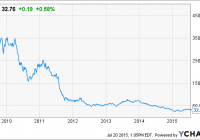
Summary I believe interest rates will increase in the long term. Investors ought to consider options for capitalizing on rising interest rates. TMV is a high risk high reward option for investors who want to hedge their portfolio against rising rates. Introduction I’ve written extensively about how Interest rates are going to rise , and what this means for the individual investor’s long term objectives. I won’t harp on anymore about rising interest rates. If you want to learn more, click on the links above. I’ve covered equity and alternative investment options for capitalizing on an interest rate hike. The majority of those suggestions were stocks, ETFs, and ETNs that benefit conservative or moderately risk averse investors. Today I will make the case, for what I believe to be, the most aggressive inverse leverage tool on the market. Leveraged ETFs give investors increased exposure and ideal results in trending markets. If Interest rates trend upwards, bond prices will decrease and treasury indexes will lose out. Inverse Treasury bond ETFs, however, will make significant returns. For those who strongly believe interest rates will rise significantly, the Direxion Daily 20+ Year Treasury Bear 3x Shares ETF (NYSEARCA: TMV ) has the potential to make the highest percentage returns. TMV Analysis TMV is a treasury bear ETF designed to track a 3X inverse multiple to its underlying index. TMV’s counterpart is the Direxion Daily 30-Year Treasury Bull 3x Shares ETF (NYSEARCA: TMF ). Both ETF’s ought to only be utilized by investors who understand leverage risk, and intend to actively manage their investments. – The Direxion Fact Sheet There is a veritable laundry list of risks associated with leveraged ETFs (particularly 3X ETFs), but when leveraged ETFs are used wisely they come with potentially attractive returns. TMV is designed to track daily results 3X, so long term results may not be as accurate. TMV has a net expense ratio of 0.90% for the pleasure of ownership. Its WAC is 3.52% and average maturity is 26.8 years. Interestingly 62.40% of the indexes bond maturities are 27-30 year bonds. While 20+ Year Treasuries do not perfectly track interest rates (using 10-Year Treasury notes as a base), their is certainly a strong correlation. Rising Rates Rates have hovered around all time lows for over half a decade now due to Fed policies post financial panic in 2008. Rates can only go up, and 10-Year rates are a good measure of rate increases. It is likely that this year , rates will increase (albeit probably marginally). Beaten down inverse treasury ETFs provide direct exposure to these indexes, which provide an opportunity for conditional capitalization in the mid to long term. Inverse Leverage Options There are three big players when it comes to attaining inverse leverage to increasing rates. There is the ProShares Short 20+ Year Treasury ETF (NYSEARCA: TBF ), the ProShares UltraShort 20+ Year Treasury ETF (NYSEARCA: TBT ), and TMV. TBT is valuable for its high market capitalization, and high volume. TBF is slightly less risk, though still a good long term option for conservative investors. TMV, on the other hand, is for those who want to aggressively capitalize on rising rates. Each come with their own risks and rewards It’s fairly apparent that Treasury rates have allowed for suboptimal returns. When rates increase, however returns perform above expectation. To show this let me compare the long term returns of TMV, 10-year rates, and TMF ((Bull)). While this is merely a visual example, it is beneficial for understanding the potential returns. Conclusion There are several inversely leveraged Treasury ETFs on the market that allow investors to capitalize on rising rates. Aggressive investors should consider TMV in the long term because if rates rise, TMV stands to make significant returns. TMV is a fairly inexpensive leveraged ETF that comes with high volume, high AUM, wide recognition, and remarkable long term potential. Disclosure: I/we have no positions in any stocks mentioned, and no plans to initiate any positions within the next 72 hours. (More…) I wrote this article myself, and it expresses my own opinions. I am not receiving compensation for it (other than from Seeking Alpha). I have no business relationship with any company whose stock is mentioned in this article.