Author Archives: Scalper1

Pick A Valid Strategy, Stick With It

I’m not going to argue for any particular strategy here. My main point is this: every valid strategy is going to have some periods of underperformance. Don’t give up on your strategy because of that; you are likely to give up near the point of maximum pain, and miss the great returns in the bull phase of the strategy. Here are three simple bits of advice that I hand out to average people regarding asset allocation: Figure out what the maximum loss is that you are willing to take in a year, and then size your allocation to risky assets such that the likelihood of exceeding that loss level is remote. If you have any doubts on bit of advice #1, reduce the amount of risky assets a bit more. You’d be surprised how little you give up in performance from doing so. The loss from not allocating to risky assets that return better on average is partly mitigated by a bigger payoff from rebalancing from risky assets to safe, and back again. Use additional money slated for investing to rebalance the portfolio. Feed your losers. The first rule is most important, because the most important thing here is avoiding panic, leading to selling risky assets when prices are depressed. That is the number one cause of underperformance for average investors. The second rule is important, because it is better to earn less and be able to avoid panic than to risk losing your nerve. Rule three just makes it easier to maintain your portfolio; it may not be applicable if you follow a momentum strategy. Now, about momentum strategies – if you’re going to pursue strategies where you are always buying the assets that are presently behaving strong, well, keep doing it. Don’t give up during the periods where it doesn’t seem to work, or when it occasionally blows up. The best time for any strategy typically come after a lot of marginal players give up because losses exceed their pain point. That brings me back to rule #1 above – even for a momentum strategy, maybe it would be nice to have some safe assets on the side to turn down the total level of risk. It would also give you some money to toss into the strategy after the bad times. If you want to try a new strategy, consider doing it when your present strategy has been doing well for a while, and you see new players entering the strategy who think it is magic. No strategy is magic; none work all the time. But if you “harvest” your strategy when it is mature, that would be the time to do it. It would be similar to a bond manager reducing exposure to risky bonds when the additional yield over safe bonds is thin, and waiting for a better opportunity to take risk. But if you do things like that, be disciplined in how you do it. I’ve seen people violate their strategies, and reinvest in the hot asset when the bull phase lasts too long, just in time for the cycle to turn. Greed got the better of them. Markets are perverse. They deliver surprises to all, and you can be prepared to react to volatility by having some safe assets to tone things down, or, you can roll with the volatility fully invested and hopefully not panic. When too many unprepared people are fully invested in risky assets, there’s a nasty tendency for the market to have a significant decline. Similarly, when people swear off investing in risky assets, markets tend to perform really well. It all looks like a conspiracy, and so you get a variety of wags in comment streams alleging that the markets are rigged. The markets aren’t rigged. If you are a soldier heading off for war, you have to mentally prepare for it. The same applies to investors, because investing isn’t perfectly easy, but a lot of players say that it is easy. We can make investing easier by restricting the choices that you have to make to a few key ones. Index funds. Allocation funds that use index funds that give people a single fund to buy that are continually rebalanced. But you would still have to exercise discipline to avoid fear and greed – and thus my three example rules above. If you need more confirmation on this, re-read my articles on dollar-weighted returns versus time-weighted returns . Most trading that average people do loses money versus buying and holding. As a result, the best thing to do with any strategy is to structure it so that you never take actions out of a sense of regret for past performance. That’s easy to say, but hard to do. I’m subject to the same difficulties that everyone else is, but I worked to create rules to limit my behavior during times of investment pain. Your personality, your strategy may differ from mine, but the successful meta-strategy is that you should be disciplined in your investing, and not give into greed or panic. Pursue that, whether you invest like me or not. Disclosure: None
2015: How To Make Money In This Lousy Year

It is turning out to be a tough 2015 for stock market investors. The U.S. S&P 500 is trading where it was back on March 31. Fundstrat’s Thomas Lee recently noted that this has been only the second time since 1904 (!) that the S&P 500 has closed the first two quarters of the year with 0% gains. The one strategy that has made diversification look bad over the past five years – staying “dumb and long” in the U.S. stock market – has also run out of steam. There seem to be few other alternatives. After all, the Chinese market crashed, just as I predicted . And who knows how low it would really be if most of the stocks on the Shanghai exchange were actually trading. And back in the United States, even formerly red-hot bullish sectors like biotechnology and cybersecurity have petered out. So What’s Worked in this Market? I follow a lot of different investment strategies, often through various “smart beta” strategies I invest in both personally and on behalf of my clients. Among these strategies, only a few have generated satisfying returns. The First Trust IPOX Index ETF (NYSEARCA: FPX ) is up 9.34% in 2015. And that’s thanks largely to the strong performance of Facebook (NASDAQ: FB ), up 20.7% this year, in which FPX has an 11.86% weighting. The AlphaClone Alternative Alpha ETF (NYSEARCA: ALFA ) has also performed reasonably well, up 6.47%. Among asset classes, private equity is having a solid year, with PowerShares Global Listed Private Equity ETF (NYSEARCA: PSP ) up by 10.28%, boosted by its 8.56% yield. Tough Time for Hedge Funds The smart money across the globe is faring no better. As an average, hedge funds aren’t having a terrible year. But it’s nothing to write home about. The average hedge fund has been up 3.36%, according to Barclay Hedge, while the S&P 500 was up 3.25% over the same time period. But that average hides a multitude of poor performances among the biggest names in the business. Although not technically managing a hedge fund, Carl Icahn, hailed in 2013 as Wall Street’s richest investor, has seen shares in Icahn Enterprises (NASDAQ: IEP ) tumble 12.7% this year. Hedge funds in my neighborhood of Mayfair in London are having a tough time, as well. Odey Asset Management, one of the few remaining “old style” non-institutionalized hedge funds, is down 14.8% after a handful of concentrated bets in small-cap stocks have gone south. The dirty little secret of hedge funds is that most of today’s trading is done by computer. The algorithms of the rocket scientists have squeezed out every last bit of alpha, or superior risk-adjusted returns, in the market. You see that in the performance of trend-following hedge funds, also known as managed futures or commodity-trading advisors, which just suffered their worst month since July 2008 by falling 2.4%. In my view, the only way to make money in this market is “the old fashioned way”: bet big, swing for the fences and hit the lottery (to mix not just two but three metaphors). And that recalls one of my favorite quotes about old style hedge fund investors: “Some people are born smart. Some people are born lucky. Some are born smart enough to be lucky.” And in today’s market, it’s better to be lucky than smart. Buffett’s Lousy Year While the latest round of articles predicting Berkshire Hathaway’s (NYSE: BRK.A ) (NYSE: BRK.B ) imminent demise have yet to appear, Warren Buffett is having a lousy year, with Berkshire shares down 6.28% in 2015. That trails the Standard & Poor’s 500 index, which has gained a mere 1.55%. All of this has analysts scratching their heads. After all, Berkshire trades for less than 1.5x its book value. Barclays has a price target of $259,500 on the stock – 22% above current levels. And after all, Buffett has a reported $16 billion profit on the Heinz and Kraft private equity deals during the last two years. So why the lack of love for the stock? Well, Berkshire’s four largest and highest-profile publicly traded stocks aren’t doing too well. Among American Express (NYSE: AXP ), Coca-Cola (NYSE: KO ), IBM (NYSE: IBM ) and Wells Fargo (NYSE: WFC ), only Wells Fargo has beaten the S&P 500 over the past three- and five-year periods. IBM is worth less than Berkshire paid for it and has lagged behind the S&P by 60%. Coke is still below its 1998 peak. Here’s another irony. My top Buffett clone – Markel Corporation (NYSE: MKL ) – a recommendation in my Alpha Investor Letter newsletter, is hitting the ball out of the park with an investment strategy closely modeled on Buffett’s. And Markel is up a remarkable 28.33% in an otherwise ho-hum 2015, outperforming its model by close to 35% over a mere six months. So how is that for confusing? Psychology: The Small Investor’s Only Real Edge Truth be told, times like these are my favorite times to invest. With CNN’s Fear and Greed Indicator standing in single digits at a mere 7 , this is as close to an ideal time to put my own money to work as I am likely to find (though the index did hit “0” last October). In the absence of infinite gobs of computer power, and with a strong personal aversion to risking too much on any single idea, my only sustainable edge on this market is psychology. That’s why over the years, I’ve trained myself to gain distinct pleasure from investing against Mr. Market’s mood swings. And having had a chunk of cash just waiting on the sidelines, I just invested in several of the worst performing and technically oversold investment strategies in my own 401(k). Will I have caught the bottom of the market? Maybe… or maybe not. But I’m expecting the bets I placed yesterday to be profitable by the end of 2015. Disclosure: I hold FPX, ALFA, PSP, IEP, BRK.B and MKL.

Value Or Momentum? Try Both

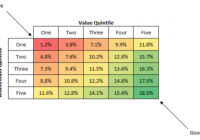
Let’s go back in time 30 years. Remember those “Taste great/less filling” Miller Lite beer commercials from the mid-1980s? You could roughly divide the world’s beer-drinking population into two rival factions: Those that insisted that Miller Lite tasted great… and those that insisted it was less filling. I believe many men lost their lives fighting over this in bars. And I suppose as far as causes go, it’s as good of a cause as any to die for. I consider Miller Lite to neither taste particularly great nor be particularly easy on my stomach. As a native Texan, my heart will always belong to Shiner Bock. But I digress. We’re not here today to discuss beer dogmatism but the far more practical world of investing. As with Miller Lite fans, you can roughly divide the investing world into two camps: Those who favor value strategies and those that favor momentum strategies. Both camps will insist that the academic research – and real world experience – prove that “their way” beats the market over time. And both camps are absolutely right. Simple value screens like Joel Greenblatt ‘s ” Magic Formula ” have beaten the market by a wide margin, and research has shown that a strategy of screening stocks based on simple momentum criteria also beats the market over time. So if value works… and momentum works… what would it look like if we combined the two? Pretty good, actually. Quant guru Patrick O’Shaughnessy wrote an excellent piece last year in which he parses the universe of stocks into value and momentum buckets. Take a look at the following table, taken from O’Shaughnessy’s article. (click to enlarge) The bottom row of the table represents the top 20% of all stocks by momentum. The returns get gradually better as you move down the value scale. In other words, momentum stocks that are cheap outperform momentum stocks that are expensive. And it’s not by a small margin. The cheapest high-momentum stocks returned 18.5% per year, whereas the most expensive high-momentum stocks returned 11.6%. And viewing it through a value lens tells the same story. The right-most column represents the cheapest stocks in the sample using a composite of value metrics. All value-stock buckets performed well. But as you move down the column, the returns get a lot better. In other words, cheap stocks that have recently shown momentum perform better than cheap stocks that don’t. This is a fancier way of repeating the old trader’s maxim to never try and catch a falling knife. Cheap stocks can always get cheaper. What should we take away from this? Value investing works. Momentum investing works. And combining value and momentum works best of all. This article first appeared on Sizemore Insights as Value or Momentum? Try Both. Disclaimer: This site is for informational purposes only and should not be considered specific investment advice or as a solicitation to buy or sell any securities. Sizemore Capital personnel and clients will often have an interest in the securities mentioned. There is risk in any investment in traded securities, and all Sizemore Capital investment strategies have the possibility of loss. Past performance is no guarantee of future results. Original Post