Tag Archives: seeking-alpha

Structured Notes: Read The Fine Print
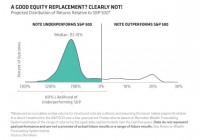
By Seth J. Masters, Richard Weaver, John McLaughlin Structured notes have gained in popularity, but investors would be wise to read the fine print carefully. Our research indicates that these complex instruments rarely live up to their intriguing claims. Nearly $13 billion of structured notes were sold by banks in the first quarter of 2015-more than in any quarter since early 2011. It’s easy to see why. Who wouldn’t like to participate in the equity market’s upside, while protecting their portfolio from potential losses? Unfortunately, our research shows that structured notes seldom deliver the promising outcomes touted in their bold headlines. Structured notes come in many flavors, and we analyzed the claims of several of the more popular varieties. Our analysis found that an oversimplified pitch typically obscures key constraints that adversely impact the investor’s likely final payout. Give with the Left, Take with the Right Consider a recent five-year structured note tied to the broad market that promises the price return of the S&P 500 Index but no loss on the first 28% cumulative drop. Buried in the disclosure are important caveats, including the lack of dividends or yield, plus a five-year waiting period for any distributions. Those who skip the fine print might be tempted to consider this note as a potential replacement for direct stock exposure. In our view, that would be a mistake. Our analysis suggests that this structured note has an 80% chance of underperforming the S&P 500 over the next five years-and by no small amount. Using our Capital Markets Engine, we estimate the median return that investors would forego at just over 12%, as the Display below shows.  A closer look under the hood reveals why. To achieve the optimal balance between upside and downside, banks package a zero-coupon bond with options on the S&P 500. In addition to markups on the embedded bond and options, there’s a healthy sales commission, all of which reduce investors’ return potential. Tying the note to the S&P 500’s price return-as opposed to the total return you’d receive through an S&P 500 index fund or ETF-is another drawback. The index fund includes dividends, which have historically been a meaningful portion of the broad market’s overall gains. Missing out on dividends for five years puts the note at a distinct disadvantage. It explains the lion’s share of the performance gap. Settling for Less Given the structured note’s mix of growth and protection, some might consider a balanced portfolio that includes globally diversified equities, municipal bonds and other diversifiers a more relevant comparison. Here again, the structured note falls short. Projecting thousands of plausible outcomes across all types of market environments, we found that the median outcome for the structured note is more than 6% below what we’d expect from a fully diversified balanced portfolio, as the next Display shows. Given the sales pitch, you might expect the structured note to do better if the S&P 500 price declines over five years. Not so! In down markets, the structured note would protect you from losses up to 28%, but your expected return would be zero. By comparison, we forecast that a balanced portfolio that includes bonds and other diversifiers would have an expected return of 4.5%, with better downside protection from a deeper market drop. That’s because the income from bonds-along with their tendency to move in the opposite direction from equities-can help offset the losses from stocks, while alternatives act as a further diversifier. In short, if investors are willing to accept no return, they are setting the bar too low. For most investors, an income-generating balanced portfolio that is both liquid and likelier to outperform represents a much better solution. When it comes to structured notes, investors need to make sure they’re getting the full picture from their provider. The views expressed herein do not constitute research, investment advice or trade recommendations and do not necessarily represent the views of all AB portfolio-management teams. The Bernstein Wealth Forecasting System uses a Monte Carlo model that simulates 10,000 plausible paths of return for each asset class and inflation and produces a probability distribution of outcomes. The model does not draw randomly from a set of historical returns to produce estimates for the future. Instead, the forecasts (1) are based on the building blocks of asset returns, such as inflation, yields, yield spreads, stock earnings and price multiples; (2) incorporate the linkages that exist among the returns of various asset classes; (3) take into account current market conditions at the beginning of the analysis; and (4) factor in a reasonable degree of randomness and unpredictability.
On Reflection – What Would Happen If A Market Gave Investors More Time To Pause For Thought?

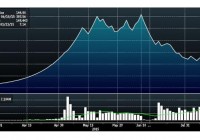
By Kevin Murphy The extreme price volatility experienced of late by the Chinese market has led to the introduction of a variety of measures, including the suspension of trading in numerous companies that we highlighted in Crash course and Key take-away . Almost everything we have read on the subject has painted this kind of market manipulation as an unequivocally bad thing but might there not be a contrarian view? Of course there might and, as instinctive contrarians, here on The Value Perspective, we are happy to offer it. So, would a market where investors are not being quoted stock prices every millisecond really be such a bad thing? To test that idea, let’s imagine a parallel universe where stock quotes happen, say, once a week and see if there are any investment lessons we might take from that. Much of the extraordinary rise seen in China’s markets was driven by what is known in some quarters as ‘momentum’ and in others, less politely, as ‘greater fool theory’ – the idea that, no matter how high a price you pay for a stock, there will always be someone out there with one or two fewer IQ points, who will be prepared to take it off your hands. This does not, of course, always prove to be so. For a very recent example, take a look at the following chart, which shows the trading volumes and price journey of shares in the audio and video entertainment business Baofeng Beijing Technology – the Chinese YouTube, so to speak – after it floated in March. You can see that trading volumes only really picked up after the share price had risen exponentially. (click to enlarge) Source: Bloomberg August 2015 What that suggests – aside from that plenty of people will be out of the money after Baofeng’s recent falls – is that investors can often focus on a stock more because of its price journey than anything that underpins it fundamentally. As such, those investors who thought it a good idea to buy Baofeng at 380x its prospective earnings would have needed to find themselves a particularly sizable fool. So the first investment lesson we might take from our parallel universe and its markedly less frenetic stock market is that, once the constant opportunity to sell on shares is removed, investors have to think a little harder about business fundamentals. Their ability – or, perhaps more accurately, their belief that they will be able – to find a greater fool will have been significantly reduced. A second investment lesson relates to time horizons, which, as regular visitors to will know, we think about a lot on The Value Perspective. Warren Buffett once observed: “I never attempt to make money on the stock market. I buy on the assumption that they could close the market the next day and not reopen it for five years.” As it happens, five years is also the average length of time we own a share. Our focus on business valuation and the margin of safety that it offers means that, here on The Value Perspective, we would not to be too concerned about having to operate in a market that did not quote prices every second of every day – though we of course acknowledge our investors always feel happier knowing they can access their money when they wish. So does this all mean we yearn to operate in that parallel universe and its more considered stock market, where one might expect to see a much greater focus from investors on business fundamentals and longer time horizons? Absolutely not. That would see a lot more people encroaching on our investment turf. As contrarians, we are – this time – perfectly happy with the status quo.

Aberdeen To Acquire Fund-Of-Funds Specialist Arden

By DailyAlts Staff Scotland-based Aberdeen Asset Management is looking to expand its alternative offerings for retail investors in the U.S. On August 4, it announced the acquisition of U.S.-based fund-of-hedge funds manager Arden Asset Management. The move is will provide Aberdeen with immediate entry into both the institutional alternative investment market and the retail alternatives market in the U.S., once the transaction is completed. “The acquisition of Arden emphasizes further Aberdeen’s commitment to diversifying its overall business and to growing its alternatives platform,” said Aberdeen CEO Martin Gilbert, in a recent statement. “Arden’s liquid alternatives platform in the US is particularly attractive as it provides investors with exposure to a portfolio of hedge fund-like strategies but importantly offers daily liquidity.” Arden creates and manages hedge-fund portfolios for corporate and state pension plans, sovereign wealth funds, and other institutional investors. It also has an alternative product with daily liquidity for retail investors. These businesses complement Aberdeen’s hedge fund solutions and will be fully integrated, boosting Aberdeen’s hedge fund assets under management to $11 billion. “The deal creates a combined hedge fund platform with international reach overseen by an experienced team of investment and operational professionals,” said Arden CEO Averell Mortimer. “Becoming part of Aberdeen will enable us to share ideas and best practice that will assist in continuing to build on our proven track record of developing customized hedge fund and liquid alternative solutions for clients worldwide.” The transaction still requires the approval of regulators, including the Irish Central Bank. Aberdeen’s aim is to have the deal completed before the end of 2015. Aberdeen’s acquisition of Arden comes on the heels of announcing in May its acquisition of FLAG Capital Management , a private equity and real assets specialist. Once both deals are completed, Aberdeen’s total alternative investment assets under management will jump to $30 billion. Large asset managers acquiring large funds-of-funds has been an enduring industry trend. In 2005, Legg Mason completed its acquisition of Permal, then one of the world’s largest funds-of-hedge funds managers. More recently, Franklin Templeton acquired K2 Advisors in September 2012. Share this article with a colleague