Tag Archives: radio

Not Your Father’s Low Volatility Strategy
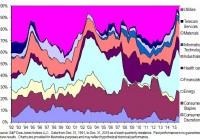
By Fei Mei Chan Low volatility strategies were a popular and growing category in 2015, and if the first several days of 2016 are any indication, it wouldn’t be surprising to see their popularity continue in the New Year. That said, the topic of low volatility investing often comes with much discourse. A frequent argument is that a low volatility tilt is very similar, if not synonymous, to a bet on a small number of sectors or industries. In its 25-year history, the S&P 500 Low Volatility Index has often had high concentration in low volatile sectors – most frequently Utilities, Financials, and Consumer Staples. The index seeks out the least volatile stocks – with no sector constraints – so having large positions in sectors with relatively lower risk is not surprising. However, there’s more to the low volatility story than a sector bet . As an exercise, we produce a hypothetical low volatility portfolio whose sector weights match those of the S&P 500 Low Volatility Index but whose sector returns match those of the complete S&P 500. The hypothetical results tell us to what extent Low Vol’s results come from sector tilts alone, vs. stock selection within sectors. As shown below, over the last 25 years, the hypothetical portfolio’s standard deviation was between those of the S&P 500 and the S&P 500 Low Volatility Index. Being in the Low Vol’s sectors during this period accounted for more than two-thirds of the total volatility reduction achieved by the S&P 500 Low Volatility Index. In the same period, the return increment attributed to being in the “correct” sector was only 24%. More than three-quarters of Low Vol’s outperformance is idiosyncratic to its stock selection methodology. We’re not alone in arguing for the existence of the low volatility effect independent of sector impacts. Baker, Bradley, and Taliaferro , in decomposing the low risk anomaly, found that stock selection contributed to higher alpha, while the contribution from industry selection was negligible. Asness, Frazzini and Pedersen concluded that even holding the industry effect neutral, low volatility bets exhibited positive returns. The implication of all this research is that a sector tilt can’t account for all the performance differentials of low volatility. To assume that the two strategies are synonymous is to leave something on the table. Disclosure: © S&P Dow Jones Indices LLC 2015. Indexology® is a trademark of S&P Dow Jones Indices LLC (SPDJI). S&P® is a trademark of Standard & Poor’s Financial Services LLC and Dow Jones® is a trademark of Dow Jones Trademark Holdings LLC, and those marks have been licensed to S&P DJI. This material is reproduced with the prior written consent of S&P DJI. For more information on S&P DJI and to see our full disclaimer, visit www.spdji.com/terms-of-use .

2016 Investment Strategy With ETFs: Part 2

As we saw in Part 1 of this series , ETFs have been very popular. Understanding the trends in this area is helpful in being able to select ETFs in the right way and for the right purposes. This second part of the series will continue the discussion to understand ETFs in greater detail so that investors can make better choices. One of the important predicted changes is that institutional investors are likely to become more diverse. This will be seen on a global scale. Active ETFs Active ETFs are one area that many industry pundits believe will be the way of the future. As outlined by PWC (2013) : “After a slow start, active ETFs are picking up steam and are likely to become major drivers of a wider range of uses and greater share of wallet across a more diverse client base.” It is believed that this will create challenges in a range of areas, such as in the need for innovative approaches to the regulations associated with portfolio transparency. This has held back active ETFs until now. Additionally, it is not believed that everyone will benefit from active ETFs, and there is unlikely to be a broad-based move away from so-called “style box investing”. ETFs’ Pros and Cons It is thought that ETFs are going to continue to experience some issues as they grow and develop. Some of the problems that have been outlined include performance tracking problems, trade settlement and liquidity. Regulatory challenges, operational risks and poor technical understanding are also likely to hold back demand in some areas. Nonetheless, overall it is anticipated that ETFs are going to have a critical role in the asset management industry in the medium term. It is considered by PWC to be unlikely that ETFs will experience a slowing up of growth or even a reduction in growth in the short to medium term, as they are still very popular. Other changes in this area are likely to include increased customisation. Looking at the changes to ETFs from a different perspective, The Wall Street Journal (2013) asked experts in this area what they think . Like PWC, the Journal documents the increased likelihood of actively managed funds. While to-date these have not done particularly well in attracting investment, it seems this is likely to change in the future. Other projections for this industry include an increase in competition in this area. Some worry that ETFs may be too popular, and that there is too much chopping them around. It is thought that as a result of this, there is potential for some consolidation in this market. There were worries among some of the experts that there could be an increased likelihood of failure of new ETFs produced. The problem is perceived to be that while some of the products have big names behind them and will be able to achieve critical mass, others definitely do not, and these may struggle to attract investment. Some believe that these funds will start looking quite a bit more like managed funds in the future. Investment Strategy It seems that ETFs are here to stay, and their popularity continues to increase. This means that an ETF strategy is a useful component in any investment approach. The strategy used needs to consider the increased number of ETFs worldwide. It is suggested that there are several approaches to make money from expertise with ETFs. One of the suggestions is creating opportunistic products that are based around marketplace events. A second is looking at them as the base for packaged solutions, for annuities or allocation funds. A third is to go down the actively managed route, taking outcome-focused strategies that use ETFs. A final option is looking back and creating products that are sold in an ETF format instead. In doing this, the asset manager needs to understand the ETF system and the opportunities faced. This means also being able to see how distribution platforms and databases can be used. It also involves looking at the ways that investors can be educated, so that people understand what ETFs are and the value that they bring to the table. Differentiating is considered to be particularly important in attracting attention.

Broadleaf Partners Fourth-Quarter 2015 Commentary And Performance Review

Our portfolio and the stock market bounced back aggressively in the fourth quarter, following the Chinese yuan-induced swoon during the third quarter. We finished the full year in positive territory, substantially ahead of our comparative indices and peer group. While there has been much gnashing of teeth over the narrowness of the market’s gains this year, and in particular the contribution of the FANG stocks (Facebook (NASDAQ: FB ), Amazon (NASDAQ: AMZN ), Netflix (NASDAQ: NFLX ) and Google ( GOOG , GOOGL ), we refuse to apologize for actually having the gall to own these names in 2015 and, for some, far earlier. It’s always easy to see what worked in the rear-view mirror, but far harder to discern what’s ahead. Remember this next time someone gives you excuses or even worse, makes you feel like an apology is due for actually winning. Let’s be clear. We are not afraid to part ways with our long-term winners when we think the time is right; we’ve done that repeatedly in the past, and will do it in the future. A strong selling discipline is key to our investment process, and has been instrumental in driving our superior long-term results. My business partner, Bill Hoover, likes to say that buying stocks is easy; knowing when to sell is much harder. I agree. For further information on the fourth quarter and our investment outlook, please see this review: Broadleaf Q42015