Tag Archives: power

Exelon (EXC) Christopher M. Crane on Q2 2015 Results – Earnings Call Transcript

Exelon Corp. (NYSE: EXC ) Q2 2015 Earnings Call July 29, 2015 11:00 am ET Executives Francis Idehen – Vice President-Investor Relations Christopher M. Crane – President, Chief Executive Officer & Director Joseph Nigro – Executive Vice President, Exelon; Chief Executive Officer, Constellation, Exelon Corp. Jonathan W. Thayer – Chief Financial Officer & Senior Executive VP Darryl M. Bradford – Executive Vice President & General Counsel Analysts Greg Gordon – Evercore ISI Steven Isaac Fleishman – Wolfe Research LLC Dan L. Eggers – Credit Suisse Securities (NYSE: USA ) LLC (Broker) Jonathan Philip Arnold – Deutsche Bank Securities, Inc. Julien Dumoulin-Smith – UBS Securities LLC Christopher J. Turnure – JPMorgan Securities LLC Operator Good morning. Thank you for standing by. At this time, I’d like to welcome everyone to the Exelon Corporation Quarter Two 2015 Earnings Conference Call. Your lines have been muted to prevent any background noise. After the speakers’ remarks, there will be a question-and-answer session. Thank you. I’d now like to turn today’s conference over to Francis Idehen. Thank you, you may begin. Francis Idehen – Vice President-Investor Relations Thank you, Ali. Good morning, everyone, and thank you for joining for our second quarter 2015 earnings conference call. Leading the call today are Chris Crane, Exelon’s President and Chief Executive Officer; Joe Nigro, CEO of Constellation; and Jack Thayer, Chief Financial Officer. They are joined by other members of Exelon’s senior management team, who will be available to answer your questions following our prepared remarks. We issued our earnings release this morning along with the presentation, each of which can be found in the Investor Relations section of Exelon’s website. The earnings release and other matters which we discuss during today’s call contain forward-looking statements and estimates that are subject to various risks and uncertainties. Actual results could differ from our forward-looking statements based on factors and assumptions discussed in today’s material, comments made during this call, and in the risk factors section on the 10-K which we filed in February, as well as in the earnings release and the 10-Q, which we expect to file later today. Please refer to the 10-K, today’s 8-K and 10-Q, and Exelon’s other filings for a discussion of factors that may cause the results to differ from management’s projections, forecasts and expectations. Today’s presentation also includes references to adjusted operating earnings and other non-GAAP measures. Please refer to the information contained in the appendix of our presentation and our earnings release for a reconciliation between the non-GAAP measures to the nearest equivalent GAAP measures. We’ve scheduled 45 minutes for today’s call. I’ll now turn the call over to Chris Crane, Exelon’s CEO. Christopher M. Crane – President, Chief Executive Officer & Director Thanks, Francis, and good morning, everybody. Thanks for joining. We’re pleased to report another strong quarter with our earnings coming in at $0.59 per share, surpassing our guidance of $0.45 to $0.55 per share. You’ll hear more from Jack in a minute on the specifics, and Joe Nigro will also provide some color around the performance. We’ve seen a number of positive developments that affect various business this quarter. The two primary catalysts for us this year are the PHI acquisition and the capacity market auctions. We received approval from the merger since our last call in Maryland in May, and leaving D.C., Washington, D.C. as our only outstanding jurisdiction to close the merger, which we expect to hear from soon and we’re looking forward to a positive outcome there. Upon closing the merger, our focus will shift to the integration of PHI Utilities into the Exelon Utilities to align our operations to better serve the PHI customers base. Another major catalyst is the capacity performance revisions that have been made. While we continue to believe that FERC came to the right conclusion, putting reliability at the center of its planning process to ensure that customers in the region are well served, we always were aware that DR and Energy Efficiency were in the 2018-2019 auction. The most recent change that allows DR and Energy Efficiency to provide – to participate in the transition auctions, we believe to be non-material to the outcome. We are disappointed in the delay, but we think that we’ll be on the right track into recognize the value of our highly reliable fleet going forward. And we remain confident that the capacity construct is the best way to protect the grid as we await further clarification on the timing of these transition auctions. I think we’re getting that in the last days. So, by the September timeframe, we should have clarity on the value proposition, along with the reliability measures being enacted. In Illinois, the legislative session ended without a resolution on the market redesign for the Low Carbon standard, the Low Carbon Portfolio standard. We were disappointed that we were not able to get this outcome before the session ended, but understand where the state is focused right now on its budget priorities. The nuclear plants provide significant value to the state and its economy, and it’s mostly important to its consumers. Looking ahead, we have certain regulatory and operational triggers in September that require us to make some tough choices on the specific assets this fall, particularly in light of the continued pressure on the power markets. So we are continuing on with our disciplined plan on evaluating the assets and their likelihood to stay within the stack, and we’ll bring that to closure with our decision in September. Despite these market challenges, we continue to find ways to create value in our Constellation business, which Joe is going to talk about shortly. Part of our resilience to the power market weakness is driven by our ability to capitalize on our generation to load strategy. And this quarter, we showed the benefit from the lower cost to serve load. And the – increasing our utility business has been able to reduce the overall volatility at the enterprise level and deliver growth. You can expect that even more to be true over time. Not only is it shifting our business mix with the acquisition of PHI, but it also, with our infrastructure improvement investments, we’re investing $16 billion in our existing utilities over the next five years, which provides respectable growth rates, and roughly another $7 billion with the addition of PHI. I want to remind everybody that we can perform well even with a rising interest rate environment, which is typically a headwind in our industry. This is because our EPS is positively correlated to interest rates, due to both ComEd’s formula rate and ROE being tied to the 30-year Treasury rate, as well as the discount of our pension – discounting the rates of our pension liability. Overall, we are positive the company is able to provide more stable and durable earnings streams for our shareholders with our operational expertise in driving performance across the enterprise. With that, I’ll turn it over to Joe, who will discuss the markets. He’s followed by Jack on the financial performance. Joseph Nigro – Executive Vice President, Exelon; Chief Executive Officer, Constellation, Exelon Corp. Thank you, Chris. Good morning, everyone. The Constellation business has continued to perform well in 2015 as a result of our generation to load matching strategy. My comments today will address market events during the second quarter, and what they mean for our commercial business going forward, including our hedging strategy in our updated disclosures. Starting with slide four, the spot power markets in the second quarter have been defined by mild weather and lower natural gas prices, which drove the price in power considerably lower than in 2014 across all of PJM. The impact of low spot market conditions has carried through to the forward markets, with prices down approximately $0.45 per megawatt hour in 2016 and $1 per megawatt hour in 2017, at both PJM West Hub and NiHub since the end of the first quarter. The lack of liquidity in the forward markets has exacerbated the drops in power prices and heat rates, with the forward markets exhibiting volatile price moves on very little trading volumes for calendar 2017 and beyond, especially at NiHub. During the quarter, our hedging activities for 2016 to 2018 were executed through our retail and wholesale load businesses rather than on the over-the-counter market. Our fundamental view of power prices has not changed, but given the drop in market prices, there is a greater gap between the market and our fundamental view due to current natural gas prices, expected retirements, new generation resources, and load assumptions. Moving to slide five, I will discuss the forward market and its impacts on our hedging profile. During the second quarter we maintained our behind ratable strategy and increased our cross-commodity hedge position to increase exposure to power price upside. We have successfully used this behind ratable hedging strategy in the past when our view showed upside in the market. We are 4% to 5% behind ratable in 2016 and 2017, and 7% to 8% behind ratable if you will remove our cross-commodity hedges at NiHub. We are confident in our ability to adjust our hedging strategies to capitalize on our fundamental view. Turning to slide six, I will review our updated hedge disclosure and some key changes since the end of the first quarter. In 2015 we have a net $50 million increase to total gross margin since the end of the first quarter, driven primarily by strong performance and execution. We executed on $200 million of power new business and $50 million of non-power new business during the quarter. Based on 2015 performance to date and expectations for the full year, we have increased our power new business target by $50 million. Our generation to load strategy was successful last year during the extreme polar vortex conditions, and it’s serving us well this year under weaker load and price conditions. It is further augmented by strong performance from our portfolio optimization activities and our Integrys acquisition. For 2016, we saw prices decrease across most regions, decreasing around $0.45 per megawatt-hour in both the Mid-Atlantic and the Midwest. This resulted in a decrease in our open gross margin of approximately $200 million, which was offset by our hedging activities. During the quarter we executed $100 million of power new business and $50 million of non-power new business, and are raising our power new business targets by $50 million additional due to commercial opportunities, for a gross margin increase of $50 million in 2016. For 2017, prices decreased by approximately $1 per megawatt hour in both the Mid-Atlantic and Midwest. This resulted in a decrease of $300 million in our open gross margins. Despite the drop in prices, our total gross margin is only down $50 million due to our hedged position and an increase in our power new business target of $100 million in case we have line of sight into additional commercial opportunities. Since the beginning of the year, prices have fallen due to mild weather, lower gas prices, lower load demand in the Midwest, and a lack of liquidity in the markets. Prices have fallen more in 2017 and beyond than in 2016. Although this weakness in the spot market has impacted forward markets, we are confident in our fundamental view of the gas and power markets and are positioning our portfolio to take advantage of this. Now I’ll turn it over to Jack to review the full financial information for the quarter. Jonathan W. Thayer – Chief Financial Officer & Senior Executive VP Thank you, Joe, and good morning, everyone. We had another strong quarter. My remarks will cover our financial results for the quarter, third quarter guidance range, and our cash outlook. Starting with our second quarter results on slide seven, Exelon exceeded our guidance range and delivered earnings of $0.59 per share. This compares to $0.51 per share for the second quarter of 2014. Exelon’s Utilities delivered combined earnings of $0.25 per share and were flat to the second quarter of last year. During the quarter, we saw favorable weather at PECO and unfavorable weather at ComEd. Cooling degree days were up nearly 37% from the prior year and 47.4% above normal in Southeastern Pennsylvania, and down 34% from the prior year and 21.6% below normal in Northern Illinois. Distribution revenues at ComEd and BGE were higher quarter-over-quarter. In addition, BGE had a decrease in uncollectible accounts expense compared to the second quarter of 2014. Exelon Generation had another strong quarter, delivering earnings of $0.36 per share, $0.09 higher than the same period last year. As Joe mentioned, our generation to load matching strategy continues to prove effective. We benefited from a lower cost to serve both our retail and wholesale customers, and had strong performance from our portfolio management team. In addition, compared to the second quarter of 2014 we had fewer outage days at our nuclear plants, which had a positive contribution from the Integrys acquisition, higher realized nuclear decommissioning trust fund gains, and received additional benefits quarter-over-quarter from the cancellation of the DOE spent nuclear fee. These positive factors were partially offset by higher tax and interest expense. More detail on the quarter-over-quarter drivers for each operating company can be found on slides 18 and 19 in the appendix. For the third quarter, we are providing guidance of $0.65 to $0.75 per share. Accounting for the impact of the increased share count and the debt associated with the Pepco Holdings transaction, and assuming the transaction closes in the third quarter, we are narrowing our full-year guidance from $2.25 to $2.55 per share, to $2.35 to $2.55 per share. Our guidance does not assume that bonus depreciation is extended. Slide eight provides an update on our cash flow expectations for this year. We’ve simplified the format of our slide to provide a clearer view of our cash flow at each operating company, including explicitly showing free cash flow. We project cash from operations of $6.6 billion. We project free cash flow of $900 million at Generation in 2015. 80% of our total growth capital expenditures are being invested in our utilities over the next three years, which will provide stable earnings growth. In June we completed the debt portion of our financing for the Pepco transaction by issuing $4.2 billion in senior notes, with the majority of these proceeds being used to fund the transaction. Strong market demand allowed us to upsize the offering, enabling us to pull forward some future-planned corporate debt issuances. We issued across the tenor spectrum with an average maturity of approximately 14 years and an average weighted average coupon of 3.79%. Earlier this month we completed the settlement of the equity forward transaction. The combination of these financings allows us to close the merger quickly upon receiving approval from the D.C. Public Service Commission. Our balance sheet remains strong and gives us the ability to invest and grow our business. As a reminder, the appendix includes several schedules that will help you in your modeling efforts. Thank you, and we’ll now open the line for questions. Question-and-Answer Session Operator And our first question will come from the line of Greg Gordon with Evercore ISI. Greg Gordon – Evercore ISI Good morning. Christopher M. Crane – President, Chief Executive Officer & Director Hi, Greg. Greg Gordon – Evercore ISI Couple of questions. First, when you talk about commercial opportunities, in the context of your comfort level raising your guidance for power new business/to go, are we talking about sort of the inherent counter-cyclicality of the margins in that business in the low wholesale environment, i.e., are we moving closer off the $2 floor in margins and closer to the $4 sort of peak of the cycle margins that you see in that business historically, or is it simply new customers, more volumes than you had projected in either the gas or the electric business? Christopher M. Crane – President, Chief Executive Officer & Director Joe? Joseph Nigro – Executive Vice President, Exelon; Chief Executive Officer, Constellation, Exelon Corp. Yeah, Greg. In this specific instance, specifically for 2016 where we’re raising our power new business/to go by $50 million and 2017 by $100 million, it’s really – it’s not related to those load margins. It’s more specifically related to some proprietary structured commercial opportunities that we have really solid line of sight into on the wholesale side of the business, quite frankly. To your point though, I think it’s important to note we have raised our targets each – $50 million each quarter for 2015, for a total of $100 million so far year-to-date. And a lot of that has been driven by really three things. One is the monetization of loads that we sold at higher prices last year. So, we have seen increased value from that load-serving business, some of our optimization activities. And then we went in, as you saw from our disclosures last quarter, we went in with a short bias with a backstop of our own generation, and given the results of market prices in 2015 to date, that’s performed well. We would only look to raise those targets, the power/to go targets or non-power/to go targets, if we have good line of sight into specific opportunities. And in this case, we do. Greg Gordon – Evercore ISI Okay. Follow-up to that. If these are fairly chunky opportunities and you win them, will we get a sort of a discrete disclosure or would that just – would we get – would you just update it on a quarterly basis as per your usual, moving from to go to, into the hedges? Joseph Nigro – Executive Vice President, Exelon; Chief Executive Officer, Constellation, Exelon Corp. Yeah. Yeah. We’ll disclose that when the negotiations are complete. Christopher M. Crane – President, Chief Executive Officer & Director And Greg, it will be in the MD&A disclosure in our interview (19:24), when it occurs. Greg Gordon – Evercore ISI Okay, great. Second question. In light of economic conditions in Texas, most of your investors would probably rather see you pull the plug on this gas-fired project that you’re pursuing. What gives you the confidence that the through-the-cycle economics of that investment are still worth going forward in this environment? Christopher M. Crane – President, Chief Executive Officer & Director So as we said, we’ve got a very good deal on acquiring these assets on our brownfield site. Minimal infrastructure investment. They still have a double digit IRR with these market forwards. If you just projected we stay here for 10 years, and then plug the fundamentals in after, we’re still at a double-digit IRR. This is a solid investment. These are going to be dispatched first. They’re the highly efficient, air-cooled, and at the right price. Greg Gordon – Evercore ISI Concise answer. Thank you. Take care. Christopher M. Crane – President, Chief Executive Officer & Director All right. Operator And your next question will come from the line of Steve Fleishman, Wolfe Research. Steven Isaac Fleishman – Wolfe Research LLC Yeah. Hi, good morning. Christopher M. Crane – President, Chief Executive Officer & Director Good morning. Steven Isaac Fleishman – Wolfe Research LLC First to Jack, clarification. So in the updated 2015 guidance, are you including some amount of POM, both the business and the financing costs? And if so, is it positive or negative within the year? Jonathan W. Thayer – Chief Financial Officer & Senior Executive VP So Steve, we are including – we are including the equity and the debt associated with the PHI acquisition. So for share count purposes, that incorporates a weighted average share base of 892 million shares. It does assume the third quarter close of PHI. But there is a measure of dilution this year that’s related to the increased share count, the debt, and as we pursue rate cases on PHI, improve their revenues and earnings, we’ll see the accretion that we anticipate with that transaction in future periods. Steven Isaac Fleishman – Wolfe Research LLC Okay. So just to clarify, when you net for this short period into year-end, when you net POM revenue and the financing cost, it’s actually – your numbers would have been higher in this guidance if you hadn’t included that. Jonathan W. Thayer – Chief Financial Officer & Senior Executive VP Modestly, Steve. Steven Isaac Fleishman – Wolfe Research LLC Okay. But then we’ll get the… Jonathan W. Thayer – Chief Financial Officer & Senior Executive VP It (22:02), but not materially so. Steven Isaac Fleishman – Wolfe Research LLC But the future accretion guidance that you gave, I think, at the last quarter, or recent commentary, that’s still good for future years? Jonathan W. Thayer – Chief Financial Officer & Senior Executive VP The impact on rate cases and the deferral of those rate cases modestly impacts the accretion, but we’re still at the – as we disclosed at the last quarter, we’re still at the sort of bottom end of the range in 2017 that we gave. Christopher M. Crane – President, Chief Executive Officer & Director And so, it’s 2018 to get to that – more to that midpoint of the run rate that we talked about. Steven Isaac Fleishman – Wolfe Research LLC Right. But you said that – you clarified that, I think, the last call or so. That’s not new. Okay. Christopher M. Crane – President, Chief Executive Officer & Director Yes. So, $0.15 in 2017, and you’ll see us head to the upper end in 2018. Steven Isaac Fleishman – Wolfe Research LLC Okay. Second question is just with respect to the power views. I kind of feel like just, the last few calls you’ve been a little bit more mixed on your power views. You’re a lot more bullish right now, at least, I guess, with respect to NiHub. Is that mainly just a fact that you had to pull back as of Q2 end, and so you’re just more bullish because the starting price is lower, or are you more bullish even if the prices had stayed flat? Christopher M. Crane – President, Chief Executive Officer & Director It’s, the prices have gone lower. We’re more bullish, they’re non-sustainable at this level. Joseph Nigro – Executive Vice President, Exelon; Chief Executive Officer, Constellation, Exelon Corp. Yeah. And, Steve, what I would say is, our view of the absolute value of power price hasn’t changed quarter-over-quarter, and what’s changed is we saw a material drop in the back end of the power curve and I’m talking to NiHub, but it’s attributable to West Hub as well, but our upside is really baked at NiHub where we see material upside as you move out into that 2018, 2019 timeframe. We see upside as well in that 2016, 2017 period, and what’s changed is the market has fallen so much, quarter-over-quarter; our absolute view of power price hasn’t changed. So that spread has gone wider. And when we look at our fundamental models at NiHub, in particular, we see a lot of value that’s still to be derived, and that’s due to the changing dispatch stack and some of the other things that we’ve talked about previously. Christopher M. Crane – President, Chief Executive Officer & Director Talk about the lack of liquidity. Joseph Nigro – Executive Vice President, Exelon; Chief Executive Officer, Constellation, Exelon Corp. Yeah, the liquidity piece of it is a big part of it, Steve. We had a $0.40 – approximately $0.40 a megawatt-hour drop in PJM, in West Hub and NiHub in calendar 2016. That’s the most liquid period on the forward curve. When we’ve pulled data and we have access to and look at what’s going on in the out-years, 2018, 2019, 2020 where we saw a material drop in prices, there is absolutely nothing trading at NiHub. There had been some few sporadic trades at West Hub, and you see the market set prices off of those trades. And our view is through time, that spread relationship between the West Hub and NiHub is going to collapse because of the retirements on the western side, the new builds on the eastern side, and that’s why we think there is material upside. But our fundamental absolute view on power price hasn’t changed. It’s just the way the market reacted quarter-over-quarter. Steven Isaac Fleishman – Wolfe Research LLC Okay. Thank you very much. Operator And your next question will come from the line of Daniel Eggery (sic) [Daniel Eggers] (25:35) with Credit Suisse. Dan L. Eggers – Credit Suisse Securities ( USA ) LLC (Broker) Hey, good morning, guys. On Pepco, could we just talk about the process? So assuming that the D.C. decision comes soon, what is the process for closing from this point, and what bearing does the Maryland appeal have on your ability to close right now? Christopher M. Crane – President, Chief Executive Officer & Director I’m going to get Darryl Bradford to cover that. Darryl M. Bradford – Executive Vice President & General Counsel Hey, Steve. Christopher M. Crane – President, Chief Executive Officer & Director It’s Dan. Darryl M. Bradford – Executive Vice President & General Counsel I’m sorry. Dan, we expect to – assuming a acceptable order from the D.C. Commission, we expect to close promptly after that order. Our contract would indicate that that will take place within 48 hours of approval by the D.C. commission. And we don’t think that the Maryland motion should be any bar to us closing. We don’t believe that that motion has any merit whatsoever. As you know, the alleged conflict of interest of one of the commissioners having a preliminary interviewing discussion, which she stopped, with a non-party, isn’t a basis under Maryland law to question the independence of that decision, let alone to stay the proceedings. No court in Maryland and no commission in Maryland has ever suggested there’s a conflict with the commissioner of any agency having a conversation with a non-party. Particularly where, as here, Exelon is one of some 45 board members, 140 members in an agency that includes public interest groups like Public Citizen, which was a party below and was the first one to raise this conflict issue. So we don’t think that that motion has any merit. We filed a response yesterday with the court, and we plan to go ahead and close promptly after the D.C. commission issues an order, assuming that that order has acceptable conditions. And we have faith that the D.C. commission will do the right thing. We think we’ve put in a strong case with a lot of benefits for customers and protections for customers. And we look forward to a prompt closing. Dan L. Eggers – Credit Suisse Securities ( USA ) LLC (Broker) Okay. Got it. And then I guess just on the nuclear plants in Illinois with PJM, I guess, probably moving the closure date to October. That’s still probably before Illinois can act legislatively. With the drop in the forward curves, is there a practical way where you can look at those plants and think that they stay economic without some sort of legislation in Illinois? And does that force your hand come October? Christopher M. Crane – President, Chief Executive Officer & Director The capacity market fixes, focused on reliability, will not be enough to keep all the units economically viable. It does give us some support for the investments that we continue to make on the assets to maintain the reliability but it’s not totally there. We need a market fix in Illinois to stop the non-competitive nature of the market. And short of the legislation to fix that, we will have to make decisions on retiring assets that are not economically viable. As we talked about previously, we have requirements around notification to PJM of our intent to retire units. It’s an 18-month notification. We also have commitments around when we have to notify of our availability for the 2018-2019 auction in participation on that. And very importantly, we have to order and design cores that – fuel cores that take a while for us to – or 2019-2020 auction instead of 2018-2019, 2019-2020 auction, our participation there. And we have to order the cores, and there’s a long lead time there. Are we going to run for an additional year or are we going to run for a longer period of time? And that’s a very expensive decision to make. So, at least on the PJM (30:34) we’ll make the decision, the final decision, if we’re going to do that, in the September timeframe. We’ve been in consultation with the Board and we’ll continue to consult with the Board, and where management’s made their decision we’ll pass that to the Board for the final approval in that timeframe, and continue with the outreach to our stakeholders. Dan L. Eggers – Credit Suisse Securities ( USA ) LLC (Broker) Chris, just given the fact that you’re not going to have legislation realistically done before September, and you kind of laid out the other challenges, doesn’t it – what would cause you to not close the plants come September, based on the fact pattern you just laid out for us? Christopher M. Crane – President, Chief Executive Officer & Director If the units clear the 2018-2019 auction, that would show that they’re financially viable. That is a long shot in our opinion, just because of the cost structure and how the forwards have continued to collapse at the bus at a couple of these units. We’ve got the transmission constraints, we’ve got the overproduction and importation of wind that not only drops the spot but continues to collapse the forward curve. The disconnect between NiHub and the bus at some of these units is $6, $7. And we have worked very closely with all the stakeholders involved for over a year and a half on trying to come to resolution, and it is the time that we’ll have to make the decision after we see what happens with the capacity auctions. We don’t take the decision lightly. We understand the effect that we have on the communities and potential effect on employees, but this has been a long-term issue that we’ve been evaluating and trying to come to resolution, and we’re staying within the timeline. Actually, we extended our timeline last year to give more time to come up with the proper market fixes, and to be compensated adequately for operating these units versus subsidizing a low-cost market. Dan L. Eggers – Credit Suisse Securities ( USA ) LLC (Broker) And I don’t mean to beat this to death (32:49) for this, but would closing a Quad or a Clinton show up noticeably as accretive to you guys on 2017 numbers? Christopher M. Crane – President, Chief Executive Officer & Director We don’t – we have not looked at that, and don’t look at it. We analyze the plants as a standalone in their own economics, so it’s about a plant losing money. We have not evaluated; others have and others have talked about the impact to consumers on those units closing. The state itself did that assessment, and there is some material impact on the consumer, but we have not evaluated anything specific to Exelon. Dan L. Eggers – Credit Suisse Securities ( USA ) LLC (Broker) Okay, very good. Thank you. Operator Your next question will come from the line of Jonathan Arnold with Deutsche Bank. Jonathan Philip Arnold – Deutsche Bank Securities, Inc. Good morning, guys. Christopher M. Crane – President, Chief Executive Officer & Director Hey. Jonathan W. Thayer – Chief Financial Officer & Senior Executive VP Good morning. Jonathan Philip Arnold – Deutsche Bank Securities, Inc. One – just – given your comments about liquidity in the forward curve, is it fair to assume that you’ve probably not done much in the way of 2018 hedging yet? Because ordinarily you would have been a couple of quarters into it. Just curious if you could give us any insight? Joseph Nigro – Executive Vice President, Exelon; Chief Executive Officer, Constellation, Exelon Corp. Yeah, Jonathan. We are behind our ratable sales plan in 2018. As you know, we have a very big load-serving book of business, so we’ve captured opportunities, both in our retail and wholesale load-serving businesses to the extent possible, in 2018. And in addition, at times, as we’ve spoken about in other years, we used the gas market as well. But to sell straight OTC power in 2018, we’ve not done much, if any, of that at all. Jonathan Philip Arnold – Deutsche Bank Securities, Inc. Okay. And then just to revisit the commercial opportunities comment. Can you give us any insight as to what kind of opportunities you’re talking about? And is it, are they the result of others pulling back from the market, or just successful discussions with potential clients I guess? Christopher M. Crane – President, Chief Executive Officer & Director It’s early on that one, Jonathan. We’ll do the full disclosure when we complete the negotiations. Jonathan Philip Arnold – Deutsche Bank Securities, Inc. Okay. Sorry to re-ask that. And then, Chris, at the outset, you made the comment that you saw the inclusion of DR in the transition auctions as being, I think you said, nonmaterial to the outcome? Christopher M. Crane – President, Chief Executive Officer & Director Yes. Jonathan Philip Arnold – Deutsche Bank Securities, Inc. Could you share a bit more of your kind of logic and thought process behind that statement? Christopher M. Crane – President, Chief Executive Officer & Director Yeah. Joe? Joseph Nigro – Executive Vice President, Exelon; Chief Executive Officer, Constellation, Exelon Corp. Jonathan, it’s Joe. First of all, we lost over $1 billion of market cap post the announcement of that, of the inclusion of DR in 2016-2017 and 2017-2018. And we really thought it was a little bit of an overreaction. As Chris mentioned, we’re disappointed in the delay, but we don’t believe there’s going to be a material impact to either of those transition auctions. As you’re aware, DR was already included in 2018-2019 and beyond. The reason why we don’t think it’s a material impact in the transition auctions is really related to how the auctions themselves cleared on the base residual, and the separation in price in 2016-2017 on one side, and then the amount of DR that clears in the 2017-2018 auction, and when we put that all into our models, it’s very similar to what we’ve read, quite frankly, from a lot of what’s been written by the equity community, that it’s going to be a limited impact. Jonathan Philip Arnold – Deutsche Bank Securities, Inc. Okay. Thank you for that. Operator And your next question will come from the line of Julien Smith with UBS. Julien Dumoulin-Smith – UBS Securities LLC Hi. Good morning. Jonathan W. Thayer – Chief Financial Officer & Senior Executive VP Hey, Julien. Julien Dumoulin-Smith – UBS Securities LLC Hey. So, first quick question and it does kind of rehash a little bit here, but on the fundamental upside you’re talking about, just to be clear, what does that assume in terms of retirements, just to be clear? Your own retirements, particularly as you’re thinking about the life of your portfolio here in the back half of the year? Christopher M. Crane – President, Chief Executive Officer & Director Yeah. We have not evaluated the potential retirement of any our assets on market-forward prices. And, so this is just based off of fundamentals of what has been announced, and what we see for retirements, what we see for the economic viability of the existing fleet in what they would have to clear to stay viable going forward. So it’s not a sustainable market forward with the asset mix that’s currently in. It has nothing to do with any forward decision we would make. Julien Dumoulin-Smith – UBS Securities LLC Right. So just to be clear, nuclear retirements would be incremental to your fundamental upside? Christopher M. Crane – President, Chief Executive Officer & Director We don’t know that. We have not analyzed it and I wouldn’t want to project one way or the other. It’s, there are two different things. The nuclear asset retirement is based off of the economic viability of the asset on the stand-alone. And we have had losses and free cash flow losses in the trailing five years of some significance. And we project going forward with these market forwards, them to be even worse than they were a year ago, which is driving us to make that decision. It is not based off of any potential impact on the market forwards or the rest of the fleet’s viability. Julien Dumoulin-Smith – UBS Securities LLC Got it. And then two subsequent questions here. First, in terms of the FCF losses, what would you estimate those as being, both for the eastern portfolio and for the ComEd portfolio as it stands today? And then secondly, tied into that, as you evaluate the remaining life of some of these assets, would you imagine layering one announcement after another? So I suppose specifically, there’s a timing issue related to ordering new cores. I imagine certain units have to get those orders in before others. Could we see one nuclear retirement and then subsequently, depending on what happens in the legislative arena, et cetera, see further announcements later this year, in trying to reconcile the bigger issues around FCF deficit? Christopher M. Crane – President, Chief Executive Officer & Director Yeah. We’ve discussed fairly openly the units, the affected units. PJM’s rules require us an earlier notification than MISO’s rules. And so, we would be moving forward, if we have to, on PJM units before MISO units. We don’t project a MISO decision until beginning of next year, looking at the opportunities we have with that unit either through legislation or other mechanisms, to secure the required revenues that we need there. We’ve talked about New York units. We’re still working with our partners in our stakeholders in New York to look at, is there a viable way beyond – a reliability must-run situation to maintain economic viability there? And the final asset that’s been in discussion is Oyster Creek, which we’ve already had an agreed-upon early retirement date at the end of 2019. So, short of the – short of a, some type of failure that was a costly failure on the unit, we would run into that period to allow adequate transition, utilization of the fuel, and adequate transition of our employee base to other facilities. Julien Dumoulin-Smith – UBS Securities LLC Got it. But just to be clear about the MISO unit there, depending on the success this year in the legislative arena, would that drive that decision? Christopher M. Crane – President, Chief Executive Officer & Director It would have a – it would heavily weight our decision. Julien Dumoulin-Smith – UBS Securities LLC Great. Thank you. Operator And we have time for one final question. Your final question will come from the line of Chris Turnure with JPMorgan. Christopher J. Turnure – JPMorgan Securities LLC Good morning, guys. I wanted to get a little bit more color on the Pepco approval process here, and the court challenge, than what you’ve already talked about. Do you have any sense of the precedent, or a precedent, for actually staying a commission order? Obviously you disagree with the merit of this case. But you do you have any precedent there, and what would be the path forward if it was not stayed, and you got the decision out of D.C.? Darryl M. Bradford – Executive Vice President & General Counsel Thanks. It’s Darryl again. Yeah, the precedent on a stay is very clear in Maryland. It’s an extraordinary remedy. It is rarely granted. You have to show a likelihood of success on the merits. And the motion does not, on the merits of the underlying merger, raise any issues whatsoever. The only issue that raises is this specious purported conflict claim, which we think is very, very weak. So, we don’t think they’ve attempted to meet that. They would also have to show irreparable harm, which – they spend a paragraph trying to satisfy that. It’s really not very persuasive, in our view. They would have to show that a stay is in the public interest. And, of course, not only has the Maryland Commission, but the New Jersey Commission, the FERC, the Delaware Commission have all found that this merger is in the public interest. And they’d also have to show that the hardships favor them, and in our pleading we lay out why disrupting – the hardship of potentially disrupting a $7 billion merger outweighs any hardships that would occur from the grant of the stay. So we think it’s an extraordinary remedy. We don’t think that they’ve come close to meeting those standards in any respect. And the law is also very clear that in Maryland, it’s not a balancing. They have to satisfy each and every one of those elements, and in this case, in our view, they haven’t satisfied any of them. So, that leaves us in a position where, upon D.C. approval, and assuming that the court agrees with the pleading we filed yesterday and doesn’t grant a stay, that promptly upon the D.C. Commission joining the other commissions in finding that this is in the public interest, and assuming that any conditions it imposes are not unduly burdensome, that we would close promptly. Christopher J. Turnure – JPMorgan Securities LLC Okay. Great. That’s very helpful. And then, is there – or my understanding is that D.C. has to rule by the end of August. Is there any flexibility around that timing? Can they extend that again? Darryl M. Bradford – Executive Vice President & General Counsel Yeah. There is no clock in D.C., so they are not under any time constraint. Generally, the D.C. Commission has ruled within 90 days of something being fully briefed and submitted to them. This was fully briefed at the end of May. So that 90 days would end at the end of August. I think that’s where that date comes from. Obviously, we’re hopeful that sooner is better than later, but that will be up to the D.C. Commission, and they’ll rule when they have finished their work. They are, I think, acutely aware that a lot of people are looking for a decision from them, and they understand that. But they will take the time that they deem necessary in order to do their job right. Christopher J. Turnure – JPMorgan Securities LLC Okay. And then if I could, real quick, Joe, I just wanted to follow up, you’ve mentioned lack of liquidity in the forward markets a couple of times on the call here. Is this a lack of liquidity that exceeds just the general nature of these markets and what you’ve seen historically? Has that increased, and if that is the case, do you have an opinion as to why there might be so few trades going on out there? Joseph Nigro – Executive Vice President, Exelon; Chief Executive Officer, Constellation, Exelon Corp. Yeah, I think it’s probably worse than it has been historically. And I think some of it is, there is just no natural buyers out on, that far out on the forward curve, as I said. The back end of the forward curve was dropped much more than in like 2016, where there were more natural buyers, whether we talk about retail or speculators or other participants. So I think with some of the folks that used to participate in the markets not doing that, some on the banking side and others, I think it’s had a material impact. Christopher J. Turnure – JPMorgan Securities LLC Great. Thanks a lot. Operator Thank you. And that will conclude today’s conference call. We appreciate your participation. You may now disconnect.
TerraForm Power – A Great Mix Of Growth And Yield

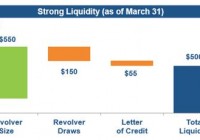
Summary Once again increased dividend guidance to $1.75 per share and $2.05 per share for 2016 and 2017. In a better position to support growth which is 24% CAGR currently. The recent acquisition of Vivint Solar will further strengthen TERP’s position in residential rooftop space. TerraForm Power Inc. (NASDAQ: TERP ), the yieldco formed by SunEdison (NYSE: SUNE ) should benefit from the leadership position of SunEdison in the industry today. SUNE is aggressively adding projects to its portfolio, which makes the investment case for TERP even stronger. TerraForm Power is in a good position to acquire projects from SunEdison. The recent acquisition of Vivint Solar (NYSE: VSLR ) will further strengthen the yieldco’s residential solar portfolio. TerraForm has been frequently increasing its dividend and CAFD guidance which is a good sign for the investors. I remain highly bullish on the stock, given the rate at which SunEdison is transferring quality projects to its yieldco. Why I like TerraForm Power 1) Strong Portfolio of projects – The inventory of project dropdowns have increased three times to 3.6 GW since the IPO, which is expected to grow by another 2.9 GW in 2016 and furthermore in the future. Not only there are transfers from its solar sponsor SunEdison, there have been acquisition from third parties as well amounting to ~1.4 GW since the IPO. The project conversions from SunEdison more than doubled from 6 GW to 14 GW in the last one year. TERP will leverage from the strong presence of SunEdison in the downstream project business. The portfolio of projects include utility projects in wind and solar energy and distributed generation projects. TerraForm currently has 17% of DG projects by installations, but they contribute to about 30% by cash flow. The recent announcement of Vivint Solar acquisition will further strengthen the yieldco’s residential portfolio, with TERP buying 523 MW of rooftop projects worth $922 million. The portfolio has expanded from 808 MW in the last year to almost 1.7 GW currently. The potential for growth in dividend per share also increases with increase in the dropdown inventory. 2) Diversifying into wind energy – As already mentioned, 30% of the assets in the total portfolio comprises of wind energy assets. This will help the yieldco benefit from the any slowdown in the solar markets. It acquired 521 MW of five wind farms from Atlantic Power, with an annual CAFD of ~$44 million. However, these assets are not dropped down in the vehicle immediately, but are stored in “warehouse”. 3) Q1 Performance was good – Revenue during the quarter was $75 million and adjusted EBITDA was $52 million. Cash available for distribution was $39 million as at the end of Q1 2015 as compared to $17 million as at the end of Q4 2014, which was in line with expectation. Drop downs from SunEdison were 167 MW in the first quarter, representing $17 million of CAFD opportunity in 2015. 4) Improved Credit & Liquidity – TerraForm Power increased the size of its revolver by $100 million to $650 million. There is sufficient liquidity in the form of cash and revolver credit to fund acquisitions. (click to enlarge) Source: TerraForm IR 5) Improved Dividend Guidance – TerraForm increased its dividend guidance to $1.35 per share from $0.90 per share at the time of its IPO and also provided a dividend growth target of 24% over the next five years. TerraForm achieved its full year DPS in the first quarter itself. The guidance has improved as a result of SunEdison accelerating the rate of dropdowns to TERP and effective conversion of the pipeline. The CAFD guidance has almost doubled since the time of the IPO. This is a very good sign of growth for TERP, since cash available for distribution is an important metric to measure the success of a yieldco. In addition, TERP has also increased its dividend per share guidance from $1.70 to $1.75 and from $2.00 to $2.05 for the years 2016 and 2017 respectively. (click to enlarge) Source: TerraForm IR Risks USA centric – Most of TERP projects are located in the USA which is increasingly moving towards solar energy. However, the recent rate of return in US projects are declining. Austin Energy in Texas got 1.2 GW of solar bids for just less than 4 cents . This might be a cause of concern for installers and developers. With improving technologies and declining cost, the prices are further expected to go down. Source: TerraForm IR Stock Performance & Valuation Currently the stock is trading at ~$31, which is very close to its 52 week low price. The market capitalization value is $3.8 billion . The P/B of 5.5x is lower than its peer 8point3 Energy Partners (NASDAQ: CAFD ) at 9.1x. TERP stock has come down due to the fall in oil prices. Most of the solar stock prices have come down due to this factor. However, falling oil prices are having absolutely no major fundamental effect on the growth of the solar energy markets worldwide. Note oil is mostly used for transportation and hardly anyone uses it for electricity power generation. Conclusion TerraForm is planning to expand into other geographies like Japan and Mexico and is also looking at new opportunities like the storage market. The company has a strong growth potential due to the aggressive expansion by its sponsor as well as from third-party M&A. The investors should like the translation of acquisitions into dividends and returns. TerraForm is also looking at expanding into the residential segment, where the dollar per megawatt is higher. I remain highly bullish on this stock and would recommend adding on dips. Disclosure: I/we have no positions in any stocks mentioned, and no plans to initiate any positions within the next 72 hours. (More…) I wrote this article myself, and it expresses my own opinions. I am not receiving compensation for it (other than from Seeking Alpha). I have no business relationship with any company whose stock is mentioned in this article.

DTE Energy’s (DTE) Management on Q2 2015 Results – Earnings Call Transcript

DTE Energy Company. (NYSE: DTE ) Q2 2015 Results Earnings Conference Call July 24, 2015, 06:30 PM ET Executives Anastasia Minor – Investor Relations Peter Oleksiak – Senior Vice President and CFO Jeff Jewell – VP and Controller Mark Rolling – VP and Treasurer Analysts Julien DuMoulin-Smith – UBS Dan Eggers – Credit Suisse Shahriar Pourreza – Guggenheim Partners Greg Gordon – Evercore ISI Matt Tucker – KeyBanc Andrew Weisel – Macquarie Capital Steve Fleishman – Wolfe Research Paul Patterson – Glenrock Associates Operator Good day everyone and welcome to the DTE Energy Second Quarter 2015 Earnings Release Conference Call. Today’s conference is being recorded. At this time, I would like to turn the conference over to Anastasia Minor. Please go ahead. Anastasia Minor Thank you Heather, and good morning, everyone. Welcome to our second quarter 2015 earnings call. Before we get started, I would like to remind you to read the Safe Harbor statement on page two, including the reference to forward-looking statements. Our presentation also includes reference to operating earnings, which is the non-GAAP financial measure. Please refer to the reconciliation of GAAP net income to operating earnings provided in the appendix of today’s presentation. With us this morning is Peter Oleksiak, our Senior Vice President and CFO; Jeff Jewell, our Vice President and Controller, and Mark Rolling, our Vice President and Treasurer. We also have members of our management team with us to call on during the Q&A session. I would like to turn it over to Peter to start our call this morning. Peter Oleksiak Thanks Anastasia, good morning everyone and thank you for joining us today. As usual I like to start the call by giving a quick update on Detroit Tigers. Good news, the Tigers have won 47 games. Bad news is that they have lost 48. Despite the first half July weather here in Detroit area has been colder than normal; the Tigers have cooled off as well this month. We are hoping that the summer heats up, so do the Tiger bats and I’m still holding out some hope for a play-off berth. Unlike the Tigers here at DTE, we certainly have had a successful first half of the year, and I believe we are well positioned to continue the success in the balance of 2015. As all of you saw in our earnings release we are raising our 2015 EPS guidance on strong year-to-date results. Jeff and Mark will be going through the second quarter results in more detail, but before we move onto that, I’d like to do a quick overview of our business strategy as well as some highlights what’s happening at DTE and Michigan. Slide five provides an overview of our business strategy, and investment thesis. Our growth plans for the next 10 years at both utilities are highly visible. Our electric utility growth is driven by environmental spend in the near-term and renewal of our generation fleet and upgrading the distribution system in the longer term. Our gas utility growth is driven by infrastructure investments and the main line pipe replacement. Our two utilities are deploying capital in very — in a constructive regulatory environment and we’re working hard to earn this constructive environment every day. I’ll be updating you on some of the regulatory proceedings our utilities are currently working through. Complementing our utility growth, our meaningful growth opportunities and our non-utility businesses which provides diversity in earnings and geography. Our highly engaged workforce continues to be the key to our success. Last quarter I told you about the third consecutive Gallup Great Workplace Award and just recently DTE Energy received the Development by Design Award from the Gallup organization. The award recognized DTEs focus on creating personnel team and organizational success through employee training programs. So we definitely continue to make strides in our employee engagement efforts. We have a strong focus on continuous improvement and feel we are distinctive in the industry on our approach and outcomes. The combination of these two employee engagement and continuous improvement enables us to deliver both sustainable cost, savings track record and to consistently earn authorised returns at both of our utilities. We are also very focussed on operational excellence and customer satisfaction that we believe also are distinctive in our industry. We have certainly seen positive results on this front, as currently DTE gas is ranked highest by J.D. Power among our peers for residential and business customer satisfaction. And earlier this month, we found out that DTE Electric was ranked second in overall customer satisfaction with electric utility residential customers in J.D. Power’s 2015 study. Our dividend continues to grow as we grow earnings and the goal is to maintain a strong BBB credit rating. This strategy provides about consistent 5% to 6% annual EPS growth. Slide six provides some highlights of progress in 2015. First in our list is the announcement they will be increasing our operating EPS guidance for this year. We are increasing from an EPS midpoint of 460 to a midpoint of 472; this is driven by a strong performance in our gas storage and pipeline business as well as their energy trading operations. I’ll provide a more detailed overview of guidance in a few minutes. Keeping in line with our commitment to grow our dividend with earnings we have recently increased our dividend. Our annual dividend per share was increased from $2.76 to $2.92 which is a 5.8% increase. Regarding Michigan’s Energy policy, I feel there is positive momentum for the constructive legislation by the end of the year. This continues to be a priority of the Governor when he called up publicly the need to get legislation done this year. Back in March, representative Aric Nesbitt introduced legislation and recently the Senate lead, Mike Nofs introduced legislation but the process is definitely moving along. I’ll touch more on the Energy Policy in a few minutes. I also want to give a quick update on the various rate proceedings for our two utilities. Our electric utilities self up [Indiscernible] rates on July 1 for the ongoing general rate proceeding. We expect to receive a final order by the end of the year. We also implemented our new cost of service rates which resulted in a rate reductions for many of our business customers. For DTE Gas, we expect to receive an order this year for our expanded infrastructure recovery mechanism that, if approved will allow us to double our annual miles of our main line replacement program. We continue to make significant progress in our non-utility businesses. In our gas stores and pipeline business, Millennium had a successful open season and we are working through final contracts now. We expect an expansion of greater than 0.2 BCF. In addition, we are constructing a new eight mile lateral off Millennium to serve a proposed 650 megawatts combined cycle plant with approximately a 0.1/b day of natural gas. These projects are expected to be in service in the fourth quarter of 2017. This is another major milestone that helps firm our future year growth. The next is pipeline project. It is always moving forward nicely towards its fourth quarter 2017 in service date. The first FERC scoping meetings are complete and were relatively routine. We recently signed a number of Tampa Interconnection agreements that could provide potential aggregate load across northern Ohio upto 1.3 BCF per day. This demonstrates strong market support for the project and also strengthens the longer term earnings potential for the play. We filed our resource reports in June with a focussed schedule, and our next major milestone will be to file the FERC application in the fourth quarter of this year. We are also now very focussed on optimizing our reduced emissions fuel business. Currently we have REF facilities operating at eight sites and are in a process of relocating underutilized facilities to a ninth site, which should be operational in the fourth quarter. In addition, in this quarter we are operating a third party REF facility. This operating agreement runs — will run through 2020. We continue to work towards further optimization of this business line as this has been a great return business for us which has generated significant cash flows to help fund our non utility growth projects. So you can see, we’ve had a successful first half of the year giving us confidence to reach our earnings goal in 2015. Let me now move to updates in the Michigan improvements and the economy. Turning to slide seven, we are highlighting the progress the Michigan and the City of Detroit are making. I know many of you are interested in how the local economy is doing and we continue to see economic momentum in the state. Michigan’s unemployment rate in June is 5.5% and this rate has been around 5.5% the last three months roughly in line with the national average. Michigan’s unemployment rate hasn’t been at this level since 2001. Michigan is identified by the Site Selection magazine that been the seventh most competitive state for job creation as well as the number one state for new manufacturing jobs since 2009. We continue to see and the other economic indicators including increases in residential customer and business customer accounts and our forecast shows this trend continuing. I do want to highlight the city of Detroit’s economic progress. One indicator that we show on this slide is the Detroit’s Metro area, its’ ranking number eight in the U.S. for a number of new or expansion projects. The City has come a long way since the bankruptcy and with a strong leadership we have in place I’m confident that the city will continue to move forward. DTE as well as other city partners are working with them to help continue this momentum. You will see on slide eight that the additional changes in state have taken place as the Michigan Public Service Commission has welcomed Norm Saari as the new commissioner replacing outgoing Commissioner Greg White whose term has ended. Commissioner Saari has a deep background in public policy and governmental and community affairs, both in state government and direct utility experience. This is Governor’s Synder third appointment and the Governor has been great at talent selection. The Commission has held Michigan regulatory environment Q1 the most constructive in the country. We believe, that Commissioner Saari will continue this supportive environment. Moving onto slide nine, I’m now going to turn to an update on the energy policy. We have mentioned earlier, Governor Snyder has made it clear that energy policy is an important legislative priority for him this year. He called off the need for legislation in his state address and provided more detailed goals in his energy message in March, highlighting this significant transformation and the generation sources that our state will undertake over the next 10 to 15 years. And over the last few months, both the House and the Senate and Energy leaderships had introduced proposed legislation to address needed changes in the state. Representative, Aric Nesbitt, who chairs the House Energy Policy Committee introduced legislation in March that’s consistent with the Governor’s goals of reliability and adaptability. He also recommended the elimination of the retail access program we have here in Michigan which we support. Senator, Mike Nofs, who chairs the Senate Energy and Technology Committee, introduced legislation in June which is also similar to the Governor’s goals. He is recommending to maintain a 10% gap on a retail open access, but with a onetime election to enter into long term capacity commitment with an alternative supplier or to return to the utility. A customer could choose the return of the utility with three year notice and as the one time permanent election to return to the utility. We expect legislation to be completed this year and we are confident that Michigan has strong leaders in place that understand energy and utility dynamics and will provide constructive legislation for Michigan’s future. All of the proposals on that legislative joint board represent a positive move forward. In a moment, I’ll turn the call over to Jeff to review the quarter’s results, but before that I want to highlight, provide some highlights of our outlook and guidance increase. On slide 10, this slide shows our EPS history with our target of 5% to 6% growth. As I mentioned before, we expect to grow our dividend with earnings evidenced by our recent increase. The chart shows a revised 2015 guidance midpoint of $4.72 as well as our EPS guidance midpoint of $4.66 for growth segments. The 5% to 6% future growth that I mentioned is of a new guidance growth segment — point of $4.66 per share. And our commitment is to grow both earnings and our dividends and we are just doing that. Let me get into a little more detail on page 11. We are increasing our 2015 EPS guidance range to $4.54 to $4.90 for DTE Energy. This is a $0.12 increase in the midpoint from our prior range of $4.48 to $4.72. Our EPS guidance range for growth segments is now $4.54 to $4.78. Our guidance increase is driven by strong start of the year in our gas stores and pipeline segment with increased pipeline and gathering earnings. 2015 operating earnings guidance for this segment has increased from a range of $80 million to $88 million to a range of $90 million to $98 million. The majority of this increase is due to strong underlying performance in the business and therefore we expect the majority of this favourability to flow into 2016. For Energy trading business, we’ve raised our guidance, earnings guidance to a range of 0 to $20 million for 2015. Energy Trading is now part of our growth segments and our original guidance is set at zero as we do not rely on this business to achieve our earnings target. As this year is progressing we are recognizing the strong economic performance and have adjusted our 2015 guidance accordingly. Trading does have seasonality tied to the physical part of its business and those contracts may mostly make money in the first and fourth quarter. And with that, I’d like to turn the call over to Jeff Jewell, our Vice President and Controller to provide more details on the second quarter earnings results. Jeff Jewell Thanks, Peter and good morning, everyone. I will be discussing quarter to quarter earnings results on page 13 and on page 14; I will review our electric sales in order to provide more insight into what we are experiencing. Now turning to page 13. For the quarter, DTE Energy’s operating earnings were $137 million or $0.76 per share and for reference our reported earnings were $0.61 per share. You can find a reconciliation of the second quarter reported operating earnings on slide 26. For the quarter-over-quarter results, our growth segments second quarter operating earnings in 2015 were lower by $4million or $0.03 per share. The electric segment was lower by $18 million. This was primarily due to increased costs associated with rate base growth cost and unfavourable weather partially offset by lower O&M. The gas segment was lower by $3 million, driven by unfavourable weather in the second quarter of 2015. Gas Storage & Pipelines earnings were $7 million above the prior year. This increase was primarily due the volume growth in the Bluestone Pipeline and Gathering Assets. Our power and industrial project segment was up $5 million versus 2014. Quarter-over-quarter favourability was primarily driven by strong performance across the business line. Our corporate and other segment came in favorable by $5 million versus last year. This variance is mainly due tax related timing differences. The overall growth segment results for the quarter were $134 million or $0.75 per share. At energy trading, operating results for the quarter came in at a positive $3 million with economic net income of $19 million, both the power and the gas business lines contributed to these results. Please refer to page 24 of the appendix to review the energy trading standard reconciliation page, which shows both economic and accounting performance. Now let’s turn to page 14 to discuss our electric sales results. For the first half of the year, temperature normalized electric sales were down 0.7%. We are very encouraged by the drivers of this change year-to-date and for the future. This net change reflects both the underlying economic growth in all sectors and that energy efficiency is making positive impacts to reduce customer average usage. The economic increases are being driven by population growth, occupancy rate strength, income growth and manufacturing at auto production levels that have surpassed pre recession levels. Energy efficiency which is producing positive results for our customers is a key component of our overall operational and financial plans and a key priority for the Governor. This efficiency translates into reductions in the average energy bill for our residential customers, which is one of the key components of our long term strategy to create affordability headroom as we embark on a very intensive capital investment program. Therefore we are changing our sales forecast as we anticipate our load growth over the next few years to be close to flat as underlying economic growth and energy efficiency play off. That concludes the update on our earnings and sales for the quarter. I’d like to now turn the discussion over to Mark, who will cover cash flow and balance sheet metrics. Mark Rolling Thanks, Jeff and good morning to everyone on the call. In addition to the solid earnings results that Jeff just described, we delivered solid cash flow and capital investments for the first half of the year as well. And all of that is underpinned by the strength of our balance sheet Slide 16 lays out our cash flows and CapEx through the first half of the year. Cash from operations is $1.2 billion which is up slightly over last year and in line with our plan. We saw a strong cash flow performance throughout all the business units and are reaffirming our full year cash from operations guidance of $1.7 billion. We invested $1.1 billion of CapEx in the first half of the year, and on the right side of the page you can see the breakout by business unit. DTE Electric is higher due primarily to the acquisition of the gas peaker back in the first quarter, partially offset by the timing of wind investments between years. And there are some year-over-year timing differences at our nine utility businesses as well. The total year-to-date CapEx is on check with our plan and consistent with our full year guidance of $2.5 billion to $2.6 billion. Finally, to fund this CapEx program and to pay down commercial paper balances, we issued $800 million in loan from debt financing in the first half of the year. Now I’ll move to slide 17 with a look at our balance sheet metrics. In short, our balance sheet remains strong and we project ending the year within our targeted range for both leverage and FFO to debt. We issued $200 million of equity back in the first quarter which fulfilled our equity needs for the year. And there is no change in our plans to issue $800 million to $900 million of new equity through 2017. We continue to take advantage of the low interest rates by issuing $300 million of 7-year debt to parent company which is where we fund most investments at our nine utilities. Earlier in the quarter, we met with the rating agencies and they all re-affirmed our current ratings and outlook which demonstrates our commitment to maintaining a strong BBB credit rating. And lastly, after renewing our credit facility back in April we ended the second quarter with a comfortable $2.2 billion of available liquidity. And now, I’ll hand the discussion back over to Peter to wrap up. Peter Oleksiak Thanks Mark. Let me finish the presentation with a quick summary on slide 19 and then we can open the line for questions. We had a very good quarter as well in the first half of the year and we are confident that this year’s performance will allow us to achieve a increased 2015 EPS guidance, increase our annual dividend 5.8% to $2.90 per share keeping our dividend growth in line with earnings. We anticipate successful outcomes this year for both our utility regulatory filings as well as Michigan Energy’s policy reform. Our balance sheet and cash flow metrics remain strong, and our investments in our utility and non-utility businesses support our target 5% to 6% EPS growth going forward. I’d like to thank you all for joining our call this morning. And I invite you to join us for our Investor meeting in Detroit on September 28. We have a great line up of speakers for our meeting, and plan to give you insight and to continue the evolution of the Michigan Detroit development and the economic growth that supports our long term plan. Formal invitations will be delivered in the coming weeks and our business update will be available at the webcast from our investor’s site. Now I’d like to open it up for any questions that you have, so Heather, you can open up the line for questions. Question-and-Answer Session Operator Certainly. [Operator Instructions] And we’ll take our first question from Michael Weinstein with UBS. Julien DuMoulin-Smith Hi, good morning it’s Julien. Peter Oleksiak Good morning, Julien. Julien DuMoulin-Smith So first, a quick question here on the sale side. Just curious what is the nature of the idling you have alluded to here on the Industrial side just perhaps if you could expand upon what your expectations are there? And then perhaps related to that on the — in terms of future rate case filings, how are your expectations for lower sales and efficiency driving expectations there as any changes? Peter Oleksiak So on the – for the idling that occurs mainly in our automotive related segments. There are model turnover, so they are creating brand new vehicles and new models and you’ll see that from time to time. That is really what that’s related — that is really one time in nature and some as if — that the level of new models that are — which is great news for our auto companies that are being produced here. For the energy efficiency, I guess, first I just want to talk about that a little bit. We’re really pleased with the level of energy efficiency in our service territory. And we’ve been really working hard at this over the last five years and I believe we are on the leading edge of some our some [Indiscernible] energy efficiency is special in delivering tools to our customers to save energy. You recall if you actually saw the March energy addresses the Governor gave, he actually held up his Smartphone and have the DTE inside app there. So we’ve actually kind of correct the code of our AMI technology and how do we deliver that real time to our customers to use yourself. Even though energy efficiency increases, maybe over time the electric rate overtime but it does lower customer bills, which provides headroom for rate increases needed to cover new capital investments. So, I know your question Julien was what does that do from our rate case strategy? Our rate case timing really tied to the capital investment we have over and above depreciation, so that’s really going to be tied. It really doesn’t impact the timing of that. And what we are seeing actually when — that it will provide headroom for us from a total customer ball perspective to give recovery of that new capital investment. Julien DuMoulin-Smith Excellent. And just turning to the midstream side quickly. Can you talk about an update on your existing partnerships, specifically on the exit side? And then separately just broadly speaking, strategy as it relates to gathering versus perhaps pipes, etcetera, you have other partnerships and there as well. I would be curious how that is evolving and the nature of the business? Peter Oleksiak Yes on the ownership side and I know the private question is around on the Enbridge and the ownership of pipe. So Enbridge is still considering ownership, but they have been very public and very supportive of the pipe. You know our current disclosure assumes the one third ownership, so they don’t participate in whatever larger ownership of a great project. So they are still in the process of considering ownership in the project. On the gathering side and is evidenced by this year-to-date results and our guidance increase and we’re seeing great results on our gathering business. This is a business that we started in 2012 with a partnership with Southwest energy, so as we’ve been going down our learning curve and cost curve it’s really helped us with that relationship and that’s a business that we liked as well because as we get into new projects like Nexus the idea there is to do a very similar blueprint of what we’re seeing in Millennium now that if you work with producers, get gathering and laterals, that will beat international. So we’ve continued to look at those opportunities and then I do believe in the future they will be there for us related to NEXUS. Julien DuMoulin-Smith Excellent. And sorry, just a clarification. In terms of Enbridge’s timeline for a decision, do you have any sense? Peter Oleksiak Yes. I really don’t – I know they’ve been public about it. They are mainly an oil based company, an oil pipe, but they are trying to grow their gas piece of the business and they’ve been public around that. But I would imagine they’re going through that process right now and they probably want to maybe making a decision at some point. Julien DuMoulin-Smith All right. Well, thank you very much. Congrats again. Peter Oleksiak Thank you. Operator We’ll take our next question from Dan Eggers with Credit Suisse. Dan Eggers Hey, good morning, guys. Peter Oleksiak Good morning, Dan. Dan Eggers On the guidance bump for the quarter and kind of resetting the baseline going forward, what structure are you seeing is giving you more confidence to lift the starting point for growth from here? Peter Oleksiak Yes. On the midstream we are seeing and mainly within the gathering segment and the drilling related to Southwestern. So what we saw in the first half is that there is some upside. Some of this was acceleration of drilling which is positive as well, because Southwestern is allocating our capital and drilling to this region even with the relatively low gas price environment, most of the increase is tied to the higher well performance. That oil performance in volumes will continue to flow. So that is a permanent increase for us. And the great thing about this and this is where we talk about our strategies of having these interconnect assets that it really amplifies income. So we’re seeing those volume increases then occur on Bluestone then occurs on the Millennium Pipeline as well. So we’re feeling really comfortable with those volume increases that are tied to the well performance there. Dan Eggers So that step-up is what is giving you confidence in the sustainability, it is not an assumption of sustained higher trading value? Peter Oleksiak No, no. That’s tied to our midstream segment. Dan Eggers Okay. Got it. And then how should we think about what you guys are going to do to be able to earn your ROEs at electric given this lower demand growth or the flat demand growth outlook between rate case periods? Peter Oleksiak We will be planning that, so some of that is that we have a forecast that test year here. So we are forecasting and we’ll continue forecast energy efficiency. One of the things we’re looking at right now from a load perspective is that we are anticipating a flat load at this point in time. At one point in time we were anticipating probably 0.5% type of increase, but once again we’re pleased with the results as we’ve been really focus on energy efficiency, so we have upped our energy efficiency. And if you look at the legislation, that is proposed in the governors — his areas of priority, energy efficiency is going to be a key component as we think to our generation planning and our integrated resource planning process. So we’ll continue to forecast, so we really is getting the right dominator. Dan Eggers Just one more, sorry Peter, go ahead. Peter Oleksiak I guess the supplement that we have proven track record around cost management as well, but something it will continue to [Indiscernible] between rate proceedings as well. Dan Eggers Okay. And then I guess just one more on the NEXUS side. Can you walk through what you are seeing, quantifying the gathering opportunities, how much capital can go into that? And what is the level of interest for incremental projects you are hearing from customers at this point? Peter Oleksiak Yes. It’s far too early to say what the capital plans will be, but we do see they are out there. There was a recent report that came out that the Utica region reserve forecast has gone up again. So every forecast that’s come out on the Utica Shale it goes higher and higher, so we know that there will be there. And as we’re proving out our gathering business plan in Southwestern that’s really helping us as we’re talking to producers in the region as well. But its too early to say, but I would say that there is a lot of opportunity there and will help as you think through the midstream segment not only in this five-year projection we provided there, but beyond that five-year period gathering will be a piece of that. Dan Eggers Got it. Thank you, guys. Operator We’ll take our next question from Shahriar Pourreza of Guggenheim Partners. Shahriar Pourreza Just on the Enbridge ownership stake in NEXUS, is there a point when DTE makes a strategic decision to take on the additional ownership? So like the Enbridge ownership has been open for some time, is there sort of a deadline that you have internally within the Company? Peter Oleksiak We don’t really have a firm deadline with them and as I mentioned we like them when they are in, if they are in the project and if they’re not. So, its something that we don’t — we’re not really pushing at this point in time from a – if they’re not in the project we have a larger percent ownership of a great pipe. If they are in the project, it does from a strategic perspective they have ownership interest in Vector and they have demand that’s off takes on the backend with their LDC, it helps from a long-term strategic perspective, but there is no firm deadline at this point in time for them. Shahriar Pourreza Got it. And then as you approach year end with the Open Access Policy, any idea how it’s going to shake out with obviously three different competing proposals? Peter Oleksiak Actually I would characterize the proposals as complementary and they are all focusing on the same thing. So, all the proposals on the table are really aimed at eliminating – there are two major flaws we have right now with the retail access program in Michigan, one of them is free option to move back and forth on utility to retail open access backed utilities, so all of the proposals address that. There is either one-time election to the utility if you’re going out on to the market you need some type of capacity. The range right now is 3 to 5 years in the proposals. The capacity does address the second flaw we have which is there is a heavy subsidization that’s happening right now with our bundled customers to retail open access. So really does have put in more level fair playing field around that as well. So the economics with the customers on retail access will change and because of they really get into more of the true cost are being on the program. And this permanent, more permanent type of election as well will impact the decision. So it’s really too early to know how much of the 900 megawatts will come back. And if there’s election too come back you know the timing of that return will be tied to individual contracts with those customers. Shahriar Pourreza Got it, got it. And just one last question on the guidance in Energy Trading, it looks like the top end of the guidance assumes an additional $5 million in earnings. Could we — is it fair to assume that is sort of a fourth quarter recognition just given the way the segment recognizes earnings historically? Peter Oleksiak Yes. I would say that, you actually — from time to time you may experience even a slight loss in the third quarter, because lot of contracts and earnings are tied not to physical fields with gas and power delivery in the first and fourth quartet. Shahriar Pourreza Excellent. Congrats. Thanks Operator We’ll take our next question from Greg Gordon of Evercore ISI. Greg Gordon Thanks. I have a question with regard to gas service area sales. If you look at the Q2, 2015 numbers versus Q2, 2014 numbers, you had a really big negative swing in residential, commercial, industrial, but then a very positive comp on end user transportation. Is the former just weather driven and what’s the latter being driven by? Peter Oleksiak Jeff, do you want to handle that one. Jeff Jewell Yes. That’s exactly what we’re seeing. It’s just a combination of — from the weather, obviously the weather is what driving the quarter over quarter, year-over-year and in the end trend [ph] forward to seeing more volume on that front just from additional load in those things. Greg Gordon Okay. That was my only question. Thank you. Peter Oleksiak Thanks, Greg. Operator We’ll take our next question from Matt Tucker with KeyBanc. Matt Tucker Hey, guys. Good morning. Just noticed with the revised guidance that you widened the range a little bit, can you just talk about the key sensitivities you had in the second half and what kind of gets you to the high or low end of the range? Peter Oleksiak Yes. The widening of range, a lot of that is tied with the energy trading segment, now that we do have a range for that, so that’s really what that you tie there. The key sensitivities, for us just continued strong performance. On the utilities, a lot of that will be tied to what’s happening on the weather fronts and then the weather would be load as well as storm related activities. The gas utility as well, there is fourth quarter heating load, some variability that will occur there as well, so the utilities, a lot of it at this point in time is tied to weather and weather-related type of income. In our non-utilities just continued strong performance. For our midstream segment we have upped guidance for that segment, so we’re comfortable now with that range for our Power and Industrial segment that you look at it from a year to-date perspective. They are roughly $50 million with the top end of guidance at 100, so they continue the performance. We’ve seen in the first half, they potentially could be near the upper end of guidance for that segment. Matt Tucker Got it, thanks. And just a follow up to that. I guess we’re about three weeks into July. How has the weather been I guess so far this quarter? And were you able to factor that into the guidance? Jeff Jewell Yes. We factor that into the guidance. And so far the first half like Peter mentioned in his opening comments, the first part of July was a little cooler, but then so far here in the last week or so its been above and so we’ll just see how that plays out, but yes, all that’s been contemplated in our guidance. Matt Tucker Thanks. And then just on the lower load growth expectations going forward, you’ve kind of addressed this, but just big picture, how does that affect your long-term expectations? And does it affect your earnings guidance for DTE Electric, the long-term earnings guidance you’ve provided and are there kind of offsets that we should be considering? Peter Oleksiak Now there’s no impact at all to the earnings guidance for the utility. The utility business at this point and where the money and earnings are tied to with the new capital investment. Power generation replacement strategy we talked about that was on the coal retirement, but also our distribution company. We’re going through a big replacement in upgrading plan. We’re going to sharing some that at our Analyst Day here in September as well. So the flat load for us and we are relatively modest even to begin with prior to this new change of 0.5% and one thing we’re looking at right now is, and the metric we’re really going to moving towards the total bill. What’s happening with your total bill? The way it works for customers is — this is power supply cost that is a past-through that goes away when the usage is down, right. We have a base rate increase tied to the distribution investment and charges. The customers are experience decreases in the total bills even when rates are increasing, if their usage is down. Matt Tucker And if I could just ask one more. How confident are you that there will be energy policy legislation this year? And are there any kind of key dates we should be thinking about? Peter Oleksiak That combination can be with a political process, but I know the governor has been pretty strong around signaling. He wanted to be done by the end of the year, even recently Senator Nofs has been out there publicly saying he wants it done by the end of the year. They are – so all the signals and momentum is for this to get done at this year. Matt Tucker Thanks a lot. That’s all from me. Peter Oleksiak Thanks, Matt. Operator We’ll take our next question from Andrew Weisel with Macquarie Capital. Andrew Weisel Hey, good morning everyone. Peter Oleksiak Good morning, Andrew. Andrew Weisel First question on retail open access. You touched on this, but I want to ask in a slightly different way. If we take the Nofs proposal at face value, I am sure things will change. But if it were exactly as written, how much of the load do you think would come back and how quickly? Peter Oleksiak It’s really too early to determine from the details of that. I would imagine for him, he did have – you need to – if you’re going to stay on the program, first of all there’s an election. If you take the election back to utility its one time, so that is this free option going away, we’ll probably have some of the retail open access customers take a pause and wanted to – whether they return or not. And if they do stay in the program, they’re going to have to get capacity and Nofs proposal I believe was that from a three-year perspective. So each customer has individual economics and the changes through economics. That and coupled with market prices and our sense is that market prices will be increasing as supply, demand and supply tightens as well. So that’s really I guess round about, Andrew, it’s really too early to say. I can say I would imagine some of the 500 [ph] megawatts, but probably would be coming back given the changes, the structural changes that will be occurring with all the proposals that are out there. And the timing of that, it could be relatively quick, but lot of that will be tied to the individual contracts with these retail open access customers. Andrew Weisel And how long do those contracts typically run? Peter Oleksiak We don’t really have insight into that. Andrew Weisel Okay. Fair enough. Next question is on energy efficiency. The new expectations you have for load growth, is that based on the — again the Nofs proposal, or is that some other DTE view of what energy efficiency programs will look like going forward? Peter Oleksiak It is the DTE Energy forecast. Some of that is — we’ve been working hard at this for five years as I mentioned. In many ways I think, in many cases I said, we’re leading edge. So it is realizing the adoption of these energy efficiency programs. They are occurring even faster which is great for us and our customers. So it really tied to what we’re seeing there and the projecting of that going forward. Now both, the Nofs and the Nesbitt [ph] proposals versus having a mandate kind of working that and integrating that part of the integrated resource planning process. And the governors that’s really public around energy efficiency. That’s going to be part of our generation planning, will be what level will be covered off and energy efficiency. And as you know even the clean power plan, the EPA requirements gives you credit for energy efficiency. Andrew Weisel Okay, great. Then lastly, I know decoupling is something — electric decoupling is something being floated in these proposal legislations. What are your views on that? And in light of what we just talked about with the load growth forecast, would your preference be for full decoupling or something only for energy efficiency? Peter Oleksiak We will work through those details, but I can say broadly that we are supportive of energy decoupling. Andrew Weisel Fully or partially? Peter Oleksiak We’re still working through that. I’d say that this first I think we’re having some it is as we’re thinking through there’s probably merits to both either one of those different proposals. Andrew Weisel Okay. Thank you very much. Operator [Operator Instructions] We’ll take our next question from Steve Fleishman with Wolfe Research. Steve Fleishman Yes. Hi, good morning. Just one other question on the Gas Storage and Pipelines upside. So, you guys typically give kind of like a five-year look on these businesses, and I know you mentioned you expect this to continue into 2016. All else equals, is this something that you see as kind of benefiting the five-year look? Peter Oleksiak Yes. It definitely helps. I would say firm up that five-year projection. Steve Fleishman Okay. When you say firm up, it was still that little bit of — I guess it was the white part or whatever in the bar chart. Is that what you mean by that? Peter Oleksiak We are still going – we’re in the midst right now where our longer term planning process, we’ll be providing an update at our Analyst Meeting. Steve Fleishman Okay. And then I know going to the P&I business, I think in some meetings we’ve had, you have talked about co-generation being maybe a potential growth area. Any updates on opportunities there? Peter Oleksiak No, it really is –we do see if you think through the opportunities set there — this cogeneration is one, so we continue to work through those opportunities. There are some projects we have in place right now and are getting into service. They’re probably not a lot of updates since the last meeting but we continue to be optimistic on this side and getting the projects for this segment to grow as we indicate in terms of this five-year growth prospects. Steve Fleishman Okay. Thank you. Peter Oleksiak Thanks, Steve. Operator We’ll take our next question from Paul Patterson with Glenrock Associates. Paul Patterson Good morning. Peter Oleksiak Good morning, Paul. Paul Patterson Just a few quick ones following up on the energy efficiency. With the flat growth, how much of this is based on sort of your efforts at energy efficiency? In other words, if we were to take out your efforts of energy efficiency, what would you guys estimate the impact of sales growth to be? Peter Oleksiak Yes. Without the energy efficiency, it is roughly about — Jeff, you’d said, about a 0.5% Jeff Jewell Yes. Peter Oleksiak We look through and what we’re doing right now. We are in the new era right now with this energy efficiency, because historically you look at your load growth tied directly to economic activity. So we still look at that, but now with the energy efficiency that’s after that. So our customer counts are increasing, so that’s one thing we look at and the overall level activities within the businesses is really the usage that defining [ph]. Paul Patterson Do you see any difference between an IRP versus the mandate in driving energy efficiency going forward? Those have been two differences in legislations. Peter Oleksiak I would say no, because the IRP really that’s going to be like one-stop shop for us. Right now, really the movement is potentially away from these mandates where we have a mandate for RPS or mandate for energy efficiency which is all tied to generation-related spend to have it in one place. So in that IRP process they will discussions and agreements on energy efficiency as well as renewable spend. So I would say it doesn’t, it’s really just change the location of where the discussions and the process for the discussions will be occurring. Paul Patterson Is there any — of all the proposals and the legislation that you guys outlined very nicely in the presentation, is there any one that we should think of as being a significant difference in terms of what your earnings outlook would be or would change the — where you would be in the range if you [Indiscernible]? Peter Oleksiak I think they are all are relatively close. Paul Patterson Okay. Peter Oleksiak Aric Nesbitt has the elimination of retail open access program. We support that the most. But all the proposals are addressing. And probably the one area that I think we’re focus on as you are as well as the retail open access but all the proposals address the unfairness of the current program. Paul Patterson Okay. And then with NEXUS there have been some suits associated with access for surveying purposes and what have you. Is there — are those significant events? Or I mean, they seem to be happening in local courts. Are these sort of run of the mill stuff or is there…? Peter Oleksiak It is. I think the FERC community meetings and that process is really going well, and so we feel pretty good — really good about that process and it was relatively routine. A lot of that is really determining the final path of the pipe, so those meetings are necessary and as we finalize that path, it definitely help us as we drive towards our fourth quarter application filing. Paul Patterson Okay. And then just on the Gas Storage and Pipelines, it sounds like you guys were having a very good 2015 but that it may be a little bit of a slowdown in 2016. I don’t know if I heard that correctly. Could you just elaborate that? That was in your prepared remarks. I just wanted to understand what the outlook is going forward with Gas Storage and Pipelines? Peter Oleksiak It is and what I have indicated is that we’re seeing the first half of the year increase in our gathering and pipeline business that a majority of that will flow through. Some of that is acceleration of drilling which is also positive to the Southwest and is really resourcing and allocating drilling resources here in the region. But we have our new growth segment, our EPS midpoint we are now saying we’re going to grow 5% to 6% off of that, so we… Paul Patterson Okay. Okay, so although — so in other words, generally speaking obviously you guys feel very confident in raising your guidance and also your growth rate. And we shouldn’t think about anything I guess materially sort of dragging — in other words it doesn’t seem like — you are not pulling anything from 2016 into 2015 that is going to affect your long-term growth rate, is that the way to think about it? Peter Oleksiak Yes. The growth rate is off our new growth segment guidance midpoint. So as we took a look at that 2016 and what we’re seeing here in the midstream segment as overall what was happening in the businesses and we were feeling comfortable and confident of not only raising the midpoint of guidance this year, but saying their 5% to 6% will be on that new growth segment. Paul Patterson Okay, great. I appreciate it. Thanks a lot. Operator And it appears there are no further questions at this time. I’ll turn it back over to our speakers for any additional for closing remarks. Peter Oleksiak Once again, I’d like to thank everybody for joining us on the call today. And if you all could say – and I’m trying to root on my Tigers a little bit, I would appreciate that. And also want to once again remind you on September 28 we have our event here in Detroit. So if you can kind of save that date, and look forward to seeing you there. Have a good day. Operator That does conclude today’s conference. Thank you for your participation.