Tag Archives: news

Forget China, Buy These Domestic-Focused ETFs Instead

China has been at the height of volatility throughout this year. While the economy has been reeling under pressure for long given the protracted slowdown in the domestic manufacturing sector, credit crunch and a property market slowdown, its stock market has been riding wild on overvaluation concerns. If this was not enough, the nation shook the global investing arena in mid-August by devaluating its currency by 2% so that it can support its waning exports. As per barrons.com , the Chinese government viewed yuan as an extremely strong currency. Given the looming Fed policy normalization and its depreciating impact on a basket of currencies, any shift in yuan ‘from market expectations’ seems unreasonable. However, such an epic move in the Chinese currency market hit almost every asset class. Though the Chinese government finally gave the currency a lift to soothe the jittery investors, the panic-stricken sentiment is yet to cool down. So, it’s better to look away from China and concentrate on the domestic economy as the U.S. made plenty of sound economic releases lately. Below we highlight three ETFs to benefit from a decently expanding U.S. SPDR S&P Retail (NYSEARCA: XRT ) U.S. retail sales gained ground in July having grown 0.6% on increased purchase of an array of products and services. The data marked considerable improvement from the June reading of flat sales (and in fact 0.3% decline gauged preliminarily). This gives cues of a solidifying U.S. economy since the start of the third quarter as both job gains and consumer spending remain impressive. The trend can be very well played by a host of retail ETFs. Investors can take a look at the largest retail ETF XRT. This fund consists of 104 stocks, the top holdings being Netflix (NASDAQ: NFLX ), Amazon (NASDAQ: AMZN ) and Advance Auto Parts (NYSE: AAP ). The fund’s gross expense ratio is 0.35%. The $1.11 billion-fund has a Zacks ETF Rank #1 (Strong Buy) with a Medium risk outlook. It was up 0.8% in the last five days and 1.6% in the year-to-date frame (as of August 14, 2015) RBA American Industrial Renaissance ETF (NASDAQ: AIRR ) After retail numbers, the U.S. economy gave a sweet surprise to investors by posting a solid industrial output data for July. Industrial production grew at its best clip in eight months in July as auto production jumped. Motor vehicle production skyrocketed 10.6% last month representing the steepest jump since September 2009. Barring autos, manufacturing ticked up 0.1% in July. Overall, July manufacturing growth of 0.6% breezed past the June reading of 0.1% and economists’ expectations (gauged by Reuters ) of 0.3%. In any case, the U.S. Industrial sector is due for a trend reversal in the coming days mainly to reflect the reduced wage differential between developed and emerging economies. Rising wages in emerging countries and sluggish rise in hourly wages in developed nations have gradually been filling the gap. This should benefit the industrial ETF AIRR. The 42 stock-fund is equal-weighted in nature. Comfort Systems USA (NYSE: FIX ), US Ecology (NASDAQ: ECOL ) and Douglas Dynamics (NYSE: PLOW ) are top three holdings of the fund each with over 3% weight. This $56.3 million-ETF charges 70 bps in fees. The fund has lost about 7% so far this year and but was up 1.4% in the last five trading sessions. iShares Russell 2000 Value ETF (NYSEARCA: IWN ) Apart from strong retail and manufacturing data, the producer price index, job and housing data were all upbeat. This makes the case for a domestically-focused equity play stronger. Investors should note that small-cap stocks better reflect the U.S. economic growth as these are less exposed to foreign economies. Moreover, a stronger greenback presently makes large-cap U.S. stocks a little vulnerable; while small-caps are best-suited for this type of scenario. Investors can benefit from this scenario by investing in small-cap value ETF IWN. Notably, a sudden lift in value quotient in the market thanks to the rout caused by the Chinese currency episode makes a value ETF a better choice than the growth one. The 1,316 stocks-fund has about $5.80 billion in AUM. No stock takes more than 0.5% weight in the fund, suggesting low concentration risk. Sector wise, this ETF is heavy on financials (42.7%) followed by industrials (12.2%) and consumer discretionary (10.8%). The fund charges 25 bps in fees and has a Zacks ETF Rank #3 (Hold). In the last five trading sessions (as of August 14, 2015), the fund added about 1%; while it is down over 3% so far this year. Original Post
Reasons Asia Should Be The Focus Of Investors

Asia is a continent with huge potential and a multitude of growth opportunities in various industries. The tech industry in the region is growing at a fast pace, though it is not the only opportunity that can be found. There are many other rising industries, and they remain untapped at this day. One of the many reasons why investors should look more into Asia is because of the continent’s fast-developing high-tech environment. While everyone knows about the innovation coming out of Silicon Valley, companies from tech hubs such as Singapore , Hong Kong and Tokyo are under the radar of many investors and there are many stocks in Asia that are on the cutting edge, yet have a very attractive valuation. Mobile is becoming very big, with some markets’ growth predicted to be hugely reliant on it in the near future. A report from Forrester expects online spending in China to reach US$1 trillion in 4 years through the growing use of mobile apps. An environment where people will use more mobile devices with improved networks, increased application usage, and more e-commerce entails emerging opportunities for every type of business. Another reason Asia should be on any investor’s radar is because of its huge market size. The continent’s population is very large, with an estimated 4.3 billion people living in the Asia-Pacific region in 2014, according to the United Nations Economic and Social Commission for Asia . This represents 60% of the world’s population, not only entailing a huge pool of potential customers, but also for untapped talent that has yet to be discovered. A growing population along with an easier access and an evolving tech industry will enable more talent to grow in the field of engineering and design, adding to the Asian market’s performance. Opportunities in Asia are limitless with this large base of potential customers and promising future talents. There is still a lot of room for creativity, innovation and unique opportunities as most of Asia is not already in the mature stage that the United States and Western Europe is. The startup environment is growing at an incredible speed, making it a very inspiring place to conduct business in. According to CB Insights, Beijing, Tokyo, Shanghai and Bangalore figured in the top 6 cities in the world to grow the fastest in venture-capital deals and dollars last year. Indeed, deals increased by 165% between 2013 and 2014 in Beijing. India is the fastest growing startup ecosystem in the world according to a study conducted by the National Association of Software and Service Companies. India is launching nearly 800 startups per year. Furthermore, the major Asian cities are equipped with advanced and developed infrastructure. This facilitates the process of business creation, and enables rapid growth. Asia has received a lot of investment both in economic and social infrastructure, and improvements are already clearly visible. These investments also help to reduce barriers for trade. Entry of foreign businesses in Asia is easier and more opportunities are rising. For example, Japan now has less demanding requirements for foreigners to start their businesses in the country as they no longer need a permanent residence. A growing trend of economic liberalization, an untapped pool of consumers and talent, great infrastructure and a rapidly growing startup scene all bode well for Asia in the 21st century.

VTSAX: An Excellent Mutual Fund For Passive Investing

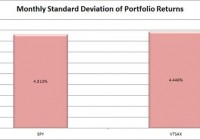
Summary VTSAX offers slightly more diversification than SPY, but it is also slightly more volatile. Because this is a total market fund, it has large weightings for the S&P 500 that create an extremely high correlation. VTSAX is one of the best mutual funds an investor can use for eligible employer-sponsored retirement accounts. Not all plans will offer this fund. VTSAX is the mutual fund version of VTI, which is one of the best total market ETFs available. Investors should be seeking to improve their risk-adjusted returns. Regardless of how they are handling the holdings, the goal is to maximize returns and minimize risks. When it comes to maximizing the returns while maintaining excellent diversification, Vanguard Total Stock Market Index Fund Admiral Shares (MUTF: VTSAX ) is an excellent option. My employer-sponsored retirement accounts are through different brokerages. Mine goes through Schwab, and my wife’s account is with Fidelity. Neither of us is eligible to use VTSAX, but I look for funds that replicate VTSAX, because it embodies most of the things I want in a fund. What does VTSAX do? VTSAX uses an indexing approach to track the performance of the CRSP U.S. Total Market Index. The first thing I’m looking for is diversification, so a total market index seems very attractive. Standard deviation of monthly returns (dividend adjusted, measured since January 2001) The standard deviation is not a problem. Because this is a total market index investors should expect it to be a little more volatile than the S&P 500, and that is exactly what we see. (click to enlarge) Basically, the increase in standard deviation is equivalent to having three percent leverage on a position in SPY. I love low-volatility investments, but when using a retirement account with dollar cost averaging automatically involved, a tiny bit of extra volatility is not problematic as long as the investment is very heavily diversified. Expense Ratio The Admiral shares have an expense ratio of .05%. This is excellent. Largest Holdings The diversification is very good in this mutual fund, and this is easily my favorite thing about the fund. The top 10 holdings appear to be somewhat concentrated, but when you consider that there are over 3800 different securities in the total portfolio, it doesn’t concern me. This is simply a great fund, in my opinion. (click to enlarge) Avoiding Fees There is one downside to Vanguard mutual funds. Vanguard charges a $20 annual account service fee for each mutual fund held in the account with a balance of less than $10,000. If you’re picking VTSAX for a new retirement account and want to save the $20, you can sign up on the Vanguard website for electronic delivery of statements. It appears to me that this fee is largely covering the cost of mailing the investments documents through the postal service. With its huge system in place, being able to send everything by one automated e-mail system saves the company money. I don’t see how it could hold its expense ratio down to .05% without having a way to compel investors to either take electronic delivery or pay for the physical copies. All around, this is a nicely designed system. Want VTSAX from Other Brokerages? You can also effectively invest in the fund using the Vanguard Total Stock Market ETF (NYSEARCA: VTI ), which holds the same assets and has the same expense ratio. Using VTI should automatically avoid the $20 fee and doesn’t require signing up the electronic delivery. The downside about using the ETF is that you would usually be stuck purchasing entire shares. While VTI, shares have been running $107-110; for dollar cost averaging, it is more convenient to be able to buy into a mutual fund with automatic deposits. Conclusion I like VTSAX enough that I’m holding a significant chunk of my portfolio in VTI, the ETF version. Lately, I had been adding to my cash positions rather than my equity positions, because I’m concerned about the market getting a little frothy. Over the last week, I dropped quite a bit of that into buying more broad market ETFs and mREITs when prices dipped. When it comes to long-term investing strategy for the employer-sponsored 401k accounts, my favorite technique is still to use dollar cost averaging on low-fee index funds and to max out (or come close) the contributions every year. If you really want to use VTSAX for your 401k, but are going through Fidelity, I would suggest looking into the Fidelity Spartan® Total Market Index Fund (MUTF: FSTVX ). That is the major mutual fund that I’m using for my wife’s 401k. It has slightly less holdings, with around 3,400 to 3,500 rather than 3,800, but is close enough for my purposes. The correlation between FSTVX and VTSAX is in excess of 99%. Disclosure: I am/we are long VTI, FSTVX. (More…) I wrote this article myself, and it expresses my own opinions. I am not receiving compensation for it (other than from Seeking Alpha). I have no business relationship with any company whose stock is mentioned in this article. Additional disclosure: Information in this article represents the opinion of the analyst. All statements are represented as opinions, rather than facts, and should not be construed as advice to buy or sell a security. Ratings of “outperform” and “underperform” reflect the analyst’s estimation of a divergence between the market value for a security and the price that would be appropriate given the potential for risks and returns relative to other securities. The analyst does not know your particular objectives for returns or constraints upon investing. All investors are encouraged to do their own research before making any investment decision. Information is regularly obtained from Yahoo Finance, Google Finance, and SEC Database. If Yahoo, Google, or the SEC database contained faulty or old information it could be incorporated into my analysis.