Tag Archives: management

SCHD Is A Great Diversification Option For Dividend Growth Investors In Utilities
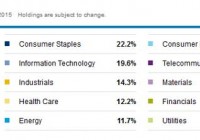
Summary SCHD is a great ETF with almost no utilities. Dividend growth investors are prone to liking utilities for reliable dividend growth. The holdings of SCHD offer great diversification across the other sectors at a very reasonable cost. The Schwab U.S. Dividend Equity ETF (NYSEARCA: SCHD ) offers investors a very interesting combination. As an ETF, it posts a fairly reasonable dividend yield of 2.88%; however, many dividend growth investors may turn their nose up at the weaker yield as their own portfolios are likely to produce a higher dividend yield. It is understandable that investors buying into a dividend ETF would have a strong focus on generating enough dividend yield to support their retirement. A Supplemental Holding While it is understandable that a 2.88% yield may be insufficient for investors that want to see their living expenses covered by dividends, it is still common for investors to need significant diversification in their holdings. When an investor builds a portfolio on the basis of high dividend yields, they may introduce a large amount of idiosyncratic risk because they will heavily overweight certain sectors. One common area for the dividend growth investors to focus on is the use of utility stocks. Using utility stocks as a major source of dividends is a fine strategy. Utilities can often benefit from having a regulated monopoly that protects their margins in tough times. If we look at risk factors from the perspective of the human in their entirety, we can say that higher utility prices are a natural risk for people. Owning the supplier of those utilities is a nice way to hedge against the risk of paying higher prices. When using SCHD to supplement a portfolio, the holdings of SCHD are a nice complement to what the investor might naturally pick. While the investor may focus on covering utility stocks, SCHD almost entirely excludes them. That means for the investor that is already holding utility stocks individually or holding a utility ETF, they will have significantly less duplication of holdings because SCHD is delivering the other dividend companies. The sector exposure is shown below: (click to enlarge) On The Other Hand While I love the way the portfolio is constructed and think it is a great complement to a portfolio that is heavy on utilities, investors should still be aware that if they are also picking stocks outside of the utility sector there could easily be some overlap. The top 10 individual holdings are demonstrated below: (click to enlarge) When you look at the top 10 companies, you’ll see many that may already be in your portfolio. That makes it a question of how much research you want to do into the individual large dividend payers. By focusing on the utilities an investor can effectively grab diversification through SCHD with an expense ratio of only .07%. For the cost, this is fairly solid diversification as long as the investor is not already holding several of the companies in their portfolio. A Third Option For investors that really want to make their portfolio entirely from scratch, SCHD has one last use. The holdings list creates a decent starting list for companies to research. One of the things that I like about the list is that they prominently feature gas companies in Exxon Mobil (NYSE: XOM ) and Chevron Corp. (NYSE: CVX ). While gas prices have become very low, they still remain a substantial risk factor for retirees. When gas prices are increasing, it means the investor will have to pay more to fill up their own car and the other companies that are transporting physical goods will be dealing with higher costs of transporting their inventory. Those factors make the oil companies natural holdings for an investor that wants to diversify against their own risk factors. Conclusion The Schwab U.S. Dividend Equity ETF is a great ETF for buying dividend yield. If an investor really wants to focus on dividend yield, they should be looking to use SCHD as a supplemental holding to diversify risk with a portfolio that holds more equity REITs and utilities. While I cover the mREITs frequently, I wouldn’t suggest investors buy into the sector until they know precisely what they are doing. Disclosure: I/we have no positions in any stocks mentioned, but may initiate a long position in SCHD over the next 72 hours. (More…) I wrote this article myself, and it expresses my own opinions. I am not receiving compensation for it (other than from Seeking Alpha). I have no business relationship with any company whose stock is mentioned in this article. Additional disclosure: Information in this article represents the opinion of the analyst. All statements are represented as opinions, rather than facts, and should not be construed as advice to buy or sell a security. Ratings of “outperform” and “underperform” reflect the analyst’s estimation of a divergence between the market value for a security and the price that would be appropriate given the potential for risks and returns relative to other securities. The analyst does not know your particular objectives for returns or constraints upon investing. All investors are encouraged to do their own research before making any investment decision. Information is regularly obtained from Yahoo Finance, Google Finance, and SEC Database. If Yahoo, Google, or the SEC database contained faulty or old information it could be incorporated into my analysis.

REIT CEFs: What Should You Be Looking At Now?

REIT stocks have taken a hit of late. That’s left REIT CEFs suffering, too. Is now the time to buy in and what kind of REIT CEF’s look best? I decided to look at two intertwined questions based on reader comments to an article I wrote about RMR Real Estate Income Fund (NYSEMKT: RIF ): First, is the REIT sell off over? And Second, what are the best priced REIT CEFs right now? No rush To start with, I don’t think REIT stocks are cheap right now. They are certainly cheaper than they were earlier in the year, but that doesn’t make them a good value. I outlined my concerns in a recent article, which you should read for more depth. But I’ll summarize: Demand for REITs, and other income oriented investments, has been driven by the historically low interest rate environment engineered by the Federal Reserve. That can’t last forever and with the Fed talking about a rate increase, the recent sell off is a sign that investors are getting spooked. And that’s what makes me believe there’s a good possibility for more downside from here. Investor sentiment is what drives market prices over the near term. But investor sentiment moves like a pendulum, going from extreme to extreme. Sure we’ve pulled away from REITs being overvalued and loved by all. But my guess is that we’re just passing through something that approximates fair value right now on our way to the other side, where REITs will be out of favor. That, however, is just my opinion. Brad Thomas, who writes the Intelligent REIT Investor for Forbes, for example, counters that, suggesting that now is a good time to be looking at REITs. That said, he isn’t calling for investors to back up the truck and load up. He suggests what he calls a “patient hand.” Or, more specifically, dollar cost averaging so you don’t put all your capital at risk. In the end, however, Brad and I both agree that REITs can be a great benefit to a portfolio, providing income and diversification. And, frankly, I’m the first to admit that if you need income now, sitting on the sidelines isn’t a workable investment strategy. So, you may, indeed, be in the market now for REITs right now. Clearly sticking with industry leaders is a good call. But outsourcing to a dedicated REIT manager is also an interesting option. And that’s where I’ve seen some readers asking about closed-end funds. What REIT CEFs are good? You could, of course, purchase an open-end fund to get your exposure to REITs. But that means you’ll be paying market price, since open-end funds have to trade at net asset value, or NAV, at all times. Exchange traded funds also tend to trade at or very close to NAV and are often just index offerings. Closed-end funds, on the other hand, are actively managed and frequently trade at a discount to their NAVs. And that’s driven by investor sentiment. When investors are pessimistic, discounts widen. And they are extra wide at a number of REIT CEFs right now. That will boost yields and potentially provides some downside protection (a margin of safety, if you will) if REIT prices fall further-After all, you paid a below market price. But all CEFs aren’t the same and you need to know what you are buying. For example, RIF, which I wrote about recently , is trading with a very large 20% discount to NAV. Its three-year average is around 14.5%. The CEF owns a portfolio of REITs and REIT preferred stocks, almost like a balanced fund, in a way, and sports a yield of around 6.9%. But, you’ll want to keep a few things in mind. First, RIF uses leverage. Leverage stood at about 30% of assets as recently as the end of March. Leverage is great in up markets because it enhances return, but can be damaging in down markets because it exacerbates losses. If you are looking at a REIT CEF, take leverage into consideration. Second, RMR is the fund’s manager. Although this company runs a few public REITs, you may or may not be comfortable with their managing history. That’s where a fund like Cohen & Steers REIT and Preferred Income Fund (NYSE: RNP ) might come in. Like RIF, RNP mixes REITs with REIT preferred stocks and uses leverage (around 25% of assets). Also like RIF, RNP is trading at a wider discount than usual: RNP’s discount is around 17% compared to its three-year average of nearly 11%. However, Cohen & Steers was one of the first asset managers to specialize in REITs and is highly respected in the industry. If you are concerned about RMR but like the idea of RIF, Cohen & Steer’s RNP would be a good alternative. RNP’s distribution yield of 8.3% also offers more income to investors. That said, there’s a reason why these two funds have among the widest discounts in the REIT CEF space: Preferred stocks are likely to take a hit if rates go higher because they are similar in many ways to a bond. Add in leverage and you can see that these CEFs might be riskier then they first appear. And why investors are asking for such notable discounts relative to other REIT CEFs. And that’s why you might prefer a fund like Cohen & Steers Total Return Realty Shares (NYSE: RFI ), which yields around 7.6%, in between the two above REIT CEFs. RFI invests only in REIT stocks and doesn’t use any leverage. That said, its discount is only about 9%. So you aren’t getting as good a deal on an absolute basis. But what about on a relative basis? Total Return Realty Shares’ average discount over the past three years is around 3%, so it’s actually trading much further below its historical range than either RIF or RNP. So, relatively speaking, RFI could be the better deal and it has a lower risk profile. Not the only options This trio of funds obviously aren’t the only RIET CEF options. But they show pretty clearly some of the things you’ll want to look at beyond a steep absolute discount, including management, portfolio structure, use of leverage, and relative discount. I personally like Cohen & Steers as a company and right now I’d suggest pulling back on risk for most investors. Thus, I think starting your research with an unleveraged pure play like RFI is a good idea if you are looking to outsource your REIT exposure. You might decide you are willing to take on more risk, and that’s fine. Just make sure you understand that risk, and the alternatives you have, before you take it. Disclosure: I/we have no positions in any stocks mentioned, and no plans to initiate any positions within the next 72 hours. (More…) I wrote this article myself, and it expresses my own opinions. I am not receiving compensation for it (other than from Seeking Alpha). I have no business relationship with any company whose stock is mentioned in this article.

SCHP: The Best TIPS Exposure Investors Can Get

Summary TIPS offer very weak yields, but SCHP is designed the right way for investors. The ETF offers a very low expense ratio, easily beating a much larger competitor. The difference in expense ratio alone should be enough to make SCHP an easy winner for an investor planning to keep part of their portfolio in TIPS. If I were retiring and really needed access to the inflation protection, I would be planning to convert part of my holdings to SCHO at the start of each year. Combining SCHP for inflation protection with SCHO to get some yield off a position that would otherwise be cash provides a nice interaction between the two bond ETFs. The Schwab U.S. TIPS ETF (NYSEARCA: SCHP ) has everything investors could hope for other than strong yields. The yield issue is not surprising; there are no good yields to be achieved on TIPS. When it comes to comparing SCHP to competitors, SCHP looks like the gold standard. As I’ve told investors, I’m avoiding TIPS because I want to see better yields. If I were a retiring investor and needed inflation protected bonds, SCHP would be the champion on the list of options. Portfolio Characteristics Investors should start with looking at things like the duration risk. Keep in mind that the since the portfolio is holding TIPS the risk of inflation over time is already built into the portfolio. Since there are many retirees that could use more stability in their portfolio, there should be very strong demand for TIPS. Honestly, I would love to have the inflation protection in my portfolio but I don’t want it bad enough to accept the yields on TIPS. Simply put, other investors want that inflation protection more than I do and they have demonstrated that desire by buying up the TIPS until the yields were incredibly low. The effective duration on the portfolio is 7.79 years which matches the average effective duration for the iShares TIPS Bond ETF (NYSEARCA: TIP ). Since the portfolio is 95.3% in TIPS with the rest in a mix of U.S. Treasury securities and a very small amount of cash, the question for each investor simply comes down: “Do you want inflation protection enough to accept the very weak yields after inflation?” There is not one correct answer. For some people it should be yes and for others it is no. This is not meant to be 100% of an investor’s portfolio but it would be a useful holding for stabilization of portfolio values. If you are buying an ETF filled with TIPS, you’re accepting having a yield that is just barely above inflation and even getting a positive yield after inflation requires taking some duration risk. The Next Question If an investor does not want to buy TIPS, there isn’t much reason to consider an ETF packed with them. For the investor that does want the TIPS in their portfolio, the next question is “Which ETF Should I Use?” In my opinion, the Schwab U.S. TIPS ETF is a clear winner in this category for many investors though some of them may not know it. The biggest competitor is the iShares TIPS Bond ETF. With the same effective duration, the actual allocation to individual security length is not identical. However, the holdings are similar enough that I am fairly confident that over the next 10 years the difference in returns between the two would come down to the expense ratio. For TIP the expense ratio is .20%. For SCHP it is only .07%. This is a case of a lower expense ratio outweighing virtually all other considerations because the portfolios being held are so similar. I don’t see any good argument for TIP to beat SCHP over the long haul when portfolios are similar and SCHP is willing to let investors keep an extra .13% of the portfolio value. Remember that these bond yields are not great; a difference of .13% on the expense ratio should make a meaningful difference over time. If SCHP is able to match TIP in gross returns, then SCHP is offering investors about another 1.3% to their portfolio value over a decade. The next factor is that investors holding Schwab portfolios are getting free trading on SCHP. If the investor wants to be able to frequently liquidate small positions and avoid holding a large amount in cash, then SCHP is offering another benefit by not charging a commission on the trade. For the retiree that wants to be able to withdraw one or two grand at a time to supplement their other income sources, saving a trading fee on the transaction will be an enormous factor. Investors paying trading fees would be saving around .45% to .9% of the value of the distribution. When we are talking about securities with a very small real yield, saving the trading costs can become material. Return Comparison SCHP has a fairly limited history, but it is playing out as I would expect so far. The distribution yields for TIP and SCHP have been almost identical (.85% for tip, .83% for SCHP). When we look at the NAV return over the last year SCHP was down 1.81% while TIP was down about 1.9% (rounded). The difference may be significantly tied to SCHP having a benefit from the lower expense ratio. The difference in price return over the period also favors SCHP by a small amount. These results are precisely what I would expect when the two ETFs hold extremely similar assets. If I Was Using SCHP If I was retiring, I would probably be holding part of my portfolio in SCHP. While the TIPS provide a return that automatically adjusts for inflation, there is still some volatility due to the duration risk on the portfolio. Therefore, I would consider pulling out money from SCHP at the start of the year. I would take the amount that I was pulling out of SCHP and reinvest it in the Schwab Short-Term U.S. Treasury ETF (NYSEARCA: SCHO ) to hold that cash until I needed to pull it out. I find SCHO to be a fairly acceptable substitute for cash in a portfolio. It does not provide inflation protection, but the very low duration works nicely. Keep in mind that this strategy would only work with free trading. Without free trading it would be better to just hold the cash rather than parking it in SCHO. My View I assume investors looking heavily at the Schwab funds probably opened a Schwab account to take advantage of those funds the same way I did. Schwab doesn’t give me anything for covering their ETFs, but I frequently choose Schwab ETFs to research because I want to know more about the ones I can trade without paying commissions. I’m adding to my portfolio several times per year and my investment mentality absolutely despises paying any unnecessary costs. Best Contender In my opinion, the best contender for the title of “Best TIPS ETF” would be the Vanguard Short-Term Inflation-Protected Securities ETF (NASDAQ: VTIP ). For investors seeking shorter duration, VTIP is a solid alternative. For investors willing to take on longer term TIPS as part of their retirement strategy, I think the SCHP portfolio’s longer duration is acceptable to seek stronger yields. If the investor had free trading on VTIP but not on SCHP, they would probably be better off with VTIP. If there were no free trades on either, I would favor SCHP for longer term allocations. Conclusion If investors want to put TIPS in their portfolio, SCHP looks like the way to do it. As long as investors are willing to accept the yield on TIPS, there is no weakness for SCHP. It easily beats other major ETFs on expense ratio while offering investors (through Schwab) the opportunity to avoid commissions on the trades. I’m not willing to accept the yield on TIPS since I expect to be working for a long time and can absorb any hits from inflation over my career. When I get to that point, hopefully yields will be stronger. Even if yields are weak, SCHP embodies all the other things I would be looking for. As for TIP, I don’t see any value in higher expense ratios. When it comes to SCHO, I’m planning to start using SCHO in my portfolio as a way to park cash while still generating a positive yield with very little risk. Disclosure: I/we have no positions in any stocks mentioned, and no plans to initiate any positions within the next 72 hours. (More…) I wrote this article myself, and it expresses my own opinions. I am not receiving compensation for it (other than from Seeking Alpha). I have no business relationship with any company whose stock is mentioned in this article. Additional disclosure: Information in this article represents the opinion of the analyst. All statements are represented as opinions, rather than facts, and should not be construed as advice to buy or sell a security. Ratings of “outperform” and “underperform” reflect the analyst’s estimation of a divergence between the market value for a security and the price that would be appropriate given the potential for risks and returns relative to other securities. The analyst does not know your particular objectives for returns or constraints upon investing. All investors are encouraged to do their own research before making any investment decision. Information is regularly obtained from Yahoo Finance, Google Finance, and SEC Database. If Yahoo, Google, or the SEC database contained faulty or old information it could be incorporated into my analysis.