Tag Archives: investment

Undervalued Power And Infrastructure Company Offers Significant Upside

Summary Quality power and infrastructure assets with reliable cash flows. Signficant upside to the valuation with most downside risk priced in. Pipeline of development opportunities run by management with a track record of solid execution. Capstone Infrastructure Corporation (OTCPK: MCQPF ) is a small-cap Canadian based firm that owns and operates a variety of clean power generation facilities, along with water and district heating utilities. These operations are located in Canada, the United Kingdom and Sweden. The company has a market capitalization of approximately CAD $285 million, currently pays a dividend of CAD $0.30 per year ($0.075 per quarter) and is traded primarily on the Toronto stock exchange under the ticker “CSE.” In the following sections, we’ll go into depth on each of Capstone’s operating segments and take a look at their contributions to the overall business and the sustainability of Capstone’s dividend. Natural Gas Co-generation: Cardinal Capstone owns a single 156 megawatt (MW) natural gas co-generation facility, named Cardinal. The facility has two primary revenue streams. The first stream is through its contracted arrangement with the Province of Ontario’s Independent Electricity System Operator (IESO). In this arrangement, Capstone is paid a fixed monthly fee that escalates over time in order to provide dispatchable power into the Ontario grid. When the facility is dispatched by the system operator, Capstone earns revenue on the sale of power through contracted rates. This contracted arrangement is in place until 2034. The second stream of revenue for the facility is through the co-generated steam and compressed air, which is sold at contracted rates to an Ingredion Canada Incorporated corn processing facility. With an impressive availability track record, this facility generated 49 percent of Capstone’s adjusted Funds from Operations (AFFO) in 2014. Unfortunately, this was under a much more attractive Power Purchase Agreement (PPA) than what is now in effect. In 2014, this facility generated approximately $41.5 million in adjusted EBITDA and AFFO, though is projected to come in about $30 million lower in 2015. The asset is located in Cardinal, Ontario. Wind Generation Capstone owns several wind power facilities in the Canadian provinces of Nova Scotia, Quebec and Ontario, with 228.5 MW of installed capacity today. Further, Canadian based projects in the provinces of Saskatchewan and Ontario will bring an additional 52.5 MW of capacity for the company. Its biggest wind facility is the 99MW Erie Shores Wind Farm, with 100 percent ownership and a PPA in place until 2026. Related to its development pipeline, Capstone announced on August 14, 2015, that two appeals against its wind farm development projects had been dismissed, and that it was moving ahead with the development of the Ganaraska and Grey Highlands projects. When it comes to performance, the wind segment generated $46.6 million in revenue for the firm in 2014, and added $37.7 million in adjusted EBITDA. Hydro Power Generation The corporation owns four hydro generation facilities, all on a relatively small scale between 3 and 16 MW. Two of the facilities totaling 19MW are contracted to BC Hydro and the other two facilities totaling 17 MW are contracted to OEFC (the Ontario Electricity Financial Corporation). All of the hydro facilities are 100% owned by Capstone. These facilities generated $14.1 million in revenue in 2014 and provided $10.5 million in adjusted EBITDA to the corporation. This was at a capacity factor of 50.7 percent (availability of 96.4 percent). Biomass Generation Capstone’s biomass facility, the 25 MW Whitecourt wood fired plant, is one of the largest biomass generators in Alberta. The facility runs off of waste wood, for which a 15-year supply has been contracted by the corporation. This supply agreement also has built in adjustments based on the price received in Alberta’s electricity market for the facilities’ generated power. This facility operates as a base load generator. With the change in Alberta government, additional incentives may be available in the future for green or carbon neutral generation such as biomass, which would offer an additional upside for this facility. Capstone also has a small indirect economic interest in the generation of the Chapais biomass facility, which contracts the sale of its generated power to Hydro Quebec. This interest is comprised of senior debt and preferred shares. Solar Generation Capstone currently owns a 20MW crystalline solar photovoltaic facility in Amherstburg, Ontario. This facility was designed, built and is currently operated by SunPower Corporation (NASDAQ: SPWR ). The power generated by this facility is sold at a highly attractive rate of $420 per MWh until 2031. The panels are warranted for this period and the operations are being provided under a 20-year contract, providing cost stability for the facility. Capstone is also proposing to develop, build and operate a new facility in Southwold, Ontario, with a proposed generation capacity of 38.4MW. This facility is being put forward under Ontario’s IESO Large Renewable Procurement program. Bristol Water Capstone owns a 50 percent interest in Bristol Water, a regulated water utility in the United Kingdom. The company provides water services to the city of Bristol, including treatment, storage and distribution. Bristol has substantial growth potential, with its regulated capital base expected to expand by over 25 percent in the coming five years. As Bristol earns a return on capital invested via rates, this should be accretive to its cash flow. Bristol Water has been faced with some regulatory uncertainty based upon a recent decision of its regulator, the Ofwat (UK Water Services Regulation Authority) and its asset management plan is currently under secondary review by the Competition and Markets Authority (CMA) in the UK. The impact of this is discussed further in the ‘recent developments’ section below. District Heating: Varmevarden The 33 percent equity interest in the Varmevarden district heating system in Sweden is a key cash flow generator for the corporation. The facility generates up to 639 MW of thermal heat, fueled by biomass, waste heat and oil, which is then used to heat local buildings and industrial processes. The Varmevarden facility contributed $7.4 million to Capstone’s EBITDA in 2014, an increase of 25 percent from 2013. Recent Developments The firm has struggled with some recent developments, which are indicated in a depressed share price. First, and perhaps most critically, the company is struggling with a negative regulatory decision in regards to its Bristol Water utility business. Its regulator, the Ofwat. These findings were subsequently appealed to the Competition Markets Authority or CMA. The CMA released primarily findings on July 10th. These findings were relatively positive for Bristol Water, with an additional operating expense allowance of £28 million. This closed the gap between the applied for operating expenses and what was approved by the Ofwat by about half. In addition, the CMA reduced the capital expenditure allowance by £8 million, and also reduced the number of projects expected to be undertaken under that budget by a value of nearly £25 million. The total uplift provided by these two decisions was approximately £45 million. The CMA also granted a higher allowed return via a higher weighted average cost of capital, but Bristol Water believes this could move higher yet in final determinations. The final piece in dispute is pay-as-you-go rates, which Bristol Water believes were still much too low in the preliminary findings, and indicated as much in their evidence and testimony submitted in response to these findings. A more generous decision here would move the company more in line with its peer utilities in the United Kingdom. The final decision from the CMA on the rate plan for Bristol is expected in early November 2015, after the CMA announced a delay in releasing its determinations. A positive outcome in this decision could have a substantial impact on Capstone’s share price. The second negative development is related to struggles with its power segment, posting some weaker than anticipated results in the first half of 2015. The decline due to the new Cardinal agreement was well known in advance, but some poor production performance, due to external factors such as hydrology and weather conditions impacted its renewable power portfolio, driving lower power revenues for the period. Adjusted Funds from Operation were also lower due to the deferral of dividends from the Bristol Water utility business and pending dividends in the third quarter from Capstone’s Saint-Philemon and Goulais projects. We believe the weather impacts are transitory and mean reverting over time based on the long run production of these facilities, and the dividends from Saint-Philemon and Goulais will be caught up in Q3, bringing AFFO for these assets in line with expectations for the year. Finally, Capstone has a case before the Ontario Court of Appeal, referred to as the OEFC lawsuit. Capstone was successful in winning this case against the Ontario Electricity Financial Corporation related to the price paid under power purchase agreements with Capstone and other Ontario power producers. The decision on the appeal is expected in mid-2016, and if the decision is upheld, it would result in a one-time gain of $25 million. Capstone is already recognizing and receiving in cash the additional $800,000 per year in annual revenues paid to it by the OEFC under this decision. Overall, these developments have resulted in the market pricing in a significant dividend cut, with the shares currently yielding 9.6%. When compared to its peer group (as defined in the valuation section below), it appears that the market is pricing in an approximate 50 percent reduction in the dividend. Management has maintained that the dividend is sustainable, and that its maintenance is the priority of the Board of Directors. Positives Solid Operational Performance of Generation Assets: Capstone’s generation assets all have strong availability and reliability, and appear to be expertly operated. The Cardinal plant just completed a major upgrade, and the other assets are relatively early in their lifecycles, some with long-term warranty and maintenance agreements. Management Execution of Capital Program: Capstone has been proficient in hitting recent capital expenditure and commissioning targets, as well as in arranging project financing for their power projects. This provides confidence that the existing wind development assets can be developed on time and on budget, and incremental cash flow related to projects will be realized as projected. Upside to Alberta Biomass Generation: The Province of Alberta recently elected a new government that has indicated it may place a higher priority on promoting green energy projects. Whether through a cap-and-trade type system, or through credits provided to green generators, the Whitecourt Biomass facility might see some upside in terms of available revenue sources. We wouldn’t expect this to be material to the share price. Unlevered Cardinal Asset: Currently, the Cardinal natural gas co-generation facility is not levered at the operating company level, giving Capstone the ability to project finance this asset over the life of the existing non-utility generator contract with the Ontario Independent Electricity System Operator. This contract expires in 2034. This is a potential source of liquidity for the corporation if needed to support the dividend until the pipeline of wind projects is developed, or in the event of refinancing needs at Bristol Water pending the regulatory review. The corporation estimates that this could raise $31 million in incremental liquidity. Risks Bristol Water Regulatory Review: There is substantial cash flow risk in the pending CMA review of Bristol Water’s rates. While we believe that much of the downside potential is realized in the share price today, there is the possibility the decision could be worse than the preliminary findings may have indicated. However, the other side of this is a potential upside if a positive decision more in alignment with Bristol Water’s application is rendered. Executing growth over the next two years: Capstone has a number of wind development projects underway or in the early development stages. There are numerous risks involved in developing greenfield power projects, and management will need to navigate these risks. We have confidence in the management team’s ability to deliver based on previous results, but unanticipated construction, financing or political delays can always weigh in on service dates and costs. Challenging Acquisition Market: Management has discussed their appetite for pursuing M&A opportunities, if the right deal presented itself. The overall market for power and infrastructure assets is quite inflated today, and it would be hard for a company of Capstone’s size to make an acquisition that would be accretive to cash flow metrics in the next few years. With the existing pipeline of greenfield opportunities, management would be best advised to focus on completing these initiatives rather than chasing what might be expensive acquisitions. Management has had good discipline in terms of responsible M&A in the past, and a focus on maintaining the dividend through growing AFFO will hopefully keep management on track. Alberta Power Market: The Alberta power market has experienced weaker pool prices in the last several months as the oil linked economy slows. This results in lower realized revenue for the Whitecourt plant. While not material to the sustainability of the dividend or the share price, this could weigh on this specific asset’s value over time. Currency Risk for US Investors: The Canadian dollar has devalued sharply over the past year and American investors are hesitant to sink their money into Canadian dollar denominated assets and cash flows. This shrinks the available pool of buyers for the stock, and likely gives American readers of this report pause when considering this investment. In our valuation, we do see significant upside that would outpace currency risk, but that doesn’t make currency risk any less real, especially for dividend investors. In terms of Capstone’s United Kingdom and Sweden operations, the company has hedged some cash flows, but does not hedge the balance sheet exposures in these countries. This does offer some currency risk diversification for US investors. Valuation In their investor presentations, Capstone has indicated it wishes to seek a stable dividend paying out approximately 70-80 percent of Adjusted Funds from Operations starting in 2017. This seems to be a reasonable approach to valuing the company, assessing what the potential 2017 dividend will be, and what the shares will trade at in a more stable environment for the firm. Here are the historical EBITDA and Adjusted FFO for Capstone for the past five years: Historical Results 2010 2011 2012 2013 2014 Adjusted EBITDA 55,818 55,673 120,343 128,421 160,359 Adjusted FFO 34,774 34,884 35,563 39,934 56,412 Next, we attempt to build up (or in the case of Cardinal and Bristol, reduce) these numbers over the following three years in order to derive a 2017 adjusted FFO number: (thousands) Low Case Mid Case High Case Comments Start: 2014 AFFO $56,412 $56,412 $56,412 Impact of Cardinal ($36,000) ($36,000) ($30,000) Low case is with project financing, high case is without. Impact of Bristol ($7,000) $0 $7,000 2015 Commissioned Wind $5,000 $6,000 $7,000 Skyway 8, Saint-Philemon, Goulais 2015 AFFO $18,412 $26,412 $40,412 2016 Commissioned Wind $2,500 $3,500 $4,000 2016 AFFO $20,912 $29,912 $44,412 2017 Commissioned Wind $0 $3,500 $4,000 Corporate Savings $2,000 $5,000 $10,000 Management projects $10 million in corporate SG&A, project cost, interest and tax savings 2017 AFFO $22,912 $38,412 $58,412 2017 Projected Share Count 96,408 96,408 96,408 Based on 93,573 outstanding at Dec 31, 2014, increased by 1% annually for DRIP 2017 AFFO per Share $0.24 0.3984 $0.61 Payout Ratio 80% 80% 80% Projected 2017 Dividend/share $0.19 0.32 $0.49 Projected Dividend Yield 6.5% 6.5% 6.5% Conservative dividend level based on peer group 2017 target share price (CAD$) $2.92 $4.92 $7.53 Based on the above AFFO cash flow analysis, driven by both the company’s cash flow projections and by our own analysis of upside and downside to each driver, we’ve developed a 2017 target price range of $2.92 to $7.53 per share. This indicates that much of the downside potential has already been priced into the shares, yet significant upside remains. Overall, we’ve reached target dividend in 2017 of $0.32 per share, which at a 6.5% yield, would result in a share price of $4.92 per share. If this price were to be realised, with the dividend only increased at the end of 2017 (not factored into the total return) and interim dividends reinvested, the annualized total return would be approximately 33% based on the August 14, 2015 closing price, for a total return of nearly 82 percent. The upside case would provide a total return of 163%, and the downside case would leave an investor with a 4 percent annual return through three years, assuming the dividend is reduced 50 percent in mid-2016. Of course, for American investors, foreign currency risk remains and a continued decline in the Canadian dollar could negatively impact your investment here. That said, the potential upside is much greater here than any reasonable expectation of further weakness in the loonie. With the amount of leverage built into the company, small swings in its AFFO create substantial differences in expected payouts. This is as much of a risk as it is a potential upside. Continued solid execution by management can deliver considerable returns to shareholders, but slip ups could have material risk to the projected returns illustrated here. Capstone Infrastructure Corporation Peer Group (price data August 12, 2015 close, CAD $): Company TSX Ticker OTCBB Ticker Dividend Yield Share Price Market Cap Boralex Inc. BLX OTC:BRLXF 3.78% $13.75 $660 Million Transalta Renewables Inc. RNW OTC:TRSWF 7.06% $11.90 $2.3 Billion Northland Power Inc. NPI OTCPK:NPIFF 6.95% $15.55 $2.6 Billion Innergex Renewable Energy Inc. INE OTC:INGXF 5.80% $10.69 $1.1 Billion Some critical assumptions go into these calculations. First, we don’t project the need to issue more shares with the current development pipeline. Second, we don’t believe that management will project finance Cardinal unless it is accretive to AFFO, or it is necessary to preserve the dividend. In other words, we don’t anticipate this to be project financed unless the additional capital freed up by this transaction could be deployed with a positive impact to AFFO through reducing higher cost debt elsewhere, funding new developments or in an acquisition transaction. The requirement of Cardinal to be project financed to maintain the dividend due to a liquidity crunch will be much clearer once a decision on the OEFC lawsuit is announced. Summary Overall, we view Capstone Infrastructure Corporation to be a well-managed company with a quality asset portfolio with a good pipeline of potential developments. There is a compelling valuation case to be made for this small-cap Canadian firm, with the vast majority of negative news and potential outcomes already priced into the stock. If management executes to plan, there is substantial upside for investors in Capstone over the next three years. In the shorter term, a positive regulatory decision regarding the Bristol Water utility due out at the beginning of November 2015 could be a catalyst for a short-term gain in the stock. But with the healthy dividend, investors may be wise to hold on for the ride towards 2017 where full value for the underlying assets may more readily be realized. Editor’s Note: This article discusses one or more securities that do not trade on a major U.S. exchange. Please be aware of the risks associated with these stocks. Disclosure: I am/we are long MCQPF. (More…) I wrote this article myself, and it expresses my own opinions. I am not receiving compensation for it (other than from Seeking Alpha). I have no business relationship with any company whose stock is mentioned in this article.
Capstone Infrastructure: Undervalued Power And Infrastructure Company Offers Significant Upside

Summary Quality power and infrastructure assets with reliable cash flows. Signficant upside to the valuation with most downside risk priced in. Pipeline of development opportunities run by management with a track record of solid execution. Capstone Infrastructure Corporation (OTCPK: MCQPF ) is a small-cap Canadian based firm that owns and operates a variety of clean power generation facilities, along with water and district heating utilities. These operations are located in Canada, the United Kingdom and Sweden. The company has a market capitalization of approximately CAD $285 million, currently pays a dividend of CAD $0.30 per year ($0.075 per quarter) and is traded primarily on the Toronto stock exchange under the ticker “CSE.” In the following sections, we’ll go into depth on each of Capstone’s operating segments and take a look at their contributions to the overall business and the sustainability of Capstone’s dividend. Natural Gas Co-generation: Cardinal Capstone owns a single 156 megawatt (MW) natural gas co-generation facility, named Cardinal. The facility has two primary revenue streams. The first stream is through its contracted arrangement with the Province of Ontario’s Independent Electricity System Operator (IESO). In this arrangement, Capstone is paid a fixed monthly fee that escalates over time in order to provide dispatchable power into the Ontario grid. When the facility is dispatched by the system operator, Capstone earns revenue on the sale of power through contracted rates. This contracted arrangement is in place until 2034. The second stream of revenue for the facility is through the co-generated steam and compressed air, which is sold at contracted rates to an Ingredion Canada Incorporated corn processing facility. With an impressive availability track record, this facility generated 49 percent of Capstone’s adjusted Funds from Operations (AFFO) in 2014. Unfortunately, this was under a much more attractive Power Purchase Agreement (PPA) than what is now in effect. In 2014, this facility generated approximately $41.5 million in adjusted EBITDA and AFFO, though is projected to come in about $30 million lower in 2015. The asset is located in Cardinal, Ontario. Wind Generation Capstone owns several wind power facilities in the Canadian provinces of Nova Scotia, Quebec and Ontario, with 228.5 MW of installed capacity today. Further, Canadian based projects in the provinces of Saskatchewan and Ontario will bring an additional 52.5 MW of capacity for the company. Its biggest wind facility is the 99MW Erie Shores Wind Farm, with 100 percent ownership and a PPA in place until 2026. Related to its development pipeline, Capstone announced on August 14, 2015, that two appeals against its wind farm development projects had been dismissed, and that it was moving ahead with the development of the Ganaraska and Grey Highlands projects. When it comes to performance, the wind segment generated $46.6 million in revenue for the firm in 2014, and added $37.7 million in adjusted EBITDA. Hydro Power Generation The corporation owns four hydro generation facilities, all on a relatively small scale between 3 and 16 MW. Two of the facilities totaling 19MW are contracted to BC Hydro and the other two facilities totaling 17 MW are contracted to OEFC (the Ontario Electricity Financial Corporation). All of the hydro facilities are 100% owned by Capstone. These facilities generated $14.1 million in revenue in 2014 and provided $10.5 million in adjusted EBITDA to the corporation. This was at a capacity factor of 50.7 percent (availability of 96.4 percent). Biomass Generation Capstone’s biomass facility, the 25 MW Whitecourt wood fired plant, is one of the largest biomass generators in Alberta. The facility runs off of waste wood, for which a 15-year supply has been contracted by the corporation. This supply agreement also has built in adjustments based on the price received in Alberta’s electricity market for the facilities’ generated power. This facility operates as a base load generator. With the change in Alberta government, additional incentives may be available in the future for green or carbon neutral generation such as biomass, which would offer an additional upside for this facility. Capstone also has a small indirect economic interest in the generation of the Chapais biomass facility, which contracts the sale of its generated power to Hydro Quebec. This interest is comprised of senior debt and preferred shares. Solar Generation Capstone currently owns a 20MW crystalline solar photovoltaic facility in Amherstburg, Ontario. This facility was designed, built and is currently operated by SunPower Corporation (NASDAQ: SPWR ). The power generated by this facility is sold at a highly attractive rate of $420 per MWh until 2031. The panels are warranted for this period and the operations are being provided under a 20-year contract, providing cost stability for the facility. Capstone is also proposing to develop, build and operate a new facility in Southwold, Ontario, with a proposed generation capacity of 38.4MW. This facility is being put forward under Ontario’s IESO Large Renewable Procurement program. Bristol Water Capstone owns a 50 percent interest in Bristol Water, a regulated water utility in the United Kingdom. The company provides water services to the city of Bristol, including treatment, storage and distribution. Bristol has substantial growth potential, with its regulated capital base expected to expand by over 25 percent in the coming five years. As Bristol earns a return on capital invested via rates, this should be accretive to its cash flow. Bristol Water has been faced with some regulatory uncertainty based upon a recent decision of its regulator, the Ofwat (UK Water Services Regulation Authority) and its asset management plan is currently under secondary review by the Competition and Markets Authority (CMA) in the UK. The impact of this is discussed further in the ‘recent developments’ section below. District Heating: Varmevarden The 33 percent equity interest in the Varmevarden district heating system in Sweden is a key cash flow generator for the corporation. The facility generates up to 639 MW of thermal heat, fueled by biomass, waste heat and oil, which is then used to heat local buildings and industrial processes. The Varmevarden facility contributed $7.4 million to Capstone’s EBITDA in 2014, an increase of 25 percent from 2013. Recent Developments The firm has struggled with some recent developments, which are indicated in a depressed share price. First, and perhaps most critically, the company is struggling with a negative regulatory decision in regards to its Bristol Water utility business. Its regulator, the Ofwat. These findings were subsequently appealed to the Competition Markets Authority or CMA. The CMA released primarily findings on July 10th. These findings were relatively positive for Bristol Water, with an additional operating expense allowance of £28 million. This closed the gap between the applied for operating expenses and what was approved by the Ofwat by about half. In addition, the CMA reduced the capital expenditure allowance by £8 million, and also reduced the number of projects expected to be undertaken under that budget by a value of nearly £25 million. The total uplift provided by these two decisions was approximately £45 million. The CMA also granted a higher allowed return via a higher weighted average cost of capital, but Bristol Water believes this could move higher yet in final determinations. The final piece in dispute is pay-as-you-go rates, which Bristol Water believes were still much too low in the preliminary findings, and indicated as much in their evidence and testimony submitted in response to these findings. A more generous decision here would move the company more in line with its peer utilities in the United Kingdom. The final decision from the CMA on the rate plan for Bristol is expected in early November 2015, after the CMA announced a delay in releasing its determinations. A positive outcome in this decision could have a substantial impact on Capstone’s share price. The second negative development is related to struggles with its power segment, posting some weaker than anticipated results in the first half of 2015. The decline due to the new Cardinal agreement was well known in advance, but some poor production performance, due to external factors such as hydrology and weather conditions impacted its renewable power portfolio, driving lower power revenues for the period. Adjusted Funds from Operation were also lower due to the deferral of dividends from the Bristol Water utility business and pending dividends in the third quarter from Capstone’s Saint-Philemon and Goulais projects. We believe the weather impacts are transitory and mean reverting over time based on the long run production of these facilities, and the dividends from Saint-Philemon and Goulais will be caught up in Q3, bringing AFFO for these assets in line with expectations for the year. Finally, Capstone has a case before the Ontario Court of Appeal, referred to as the OEFC lawsuit. Capstone was successful in winning this case against the Ontario Electricity Financial Corporation related to the price paid under power purchase agreements with Capstone and other Ontario power producers. The decision on the appeal is expected in mid-2016, and if the decision is upheld, it would result in a one-time gain of $25 million. Capstone is already recognizing and receiving in cash the additional $800,000 per year in annual revenues paid to it by the OEFC under this decision. Overall, these developments have resulted in the market pricing in a significant dividend cut, with the shares currently yielding 9.6%. When compared to its peer group (as defined in the valuation section below), it appears that the market is pricing in an approximate 50 percent reduction in the dividend. Management has maintained that the dividend is sustainable, and that its maintenance is the priority of the Board of Directors. Positives Solid Operational Performance of Generation Assets: Capstone’s generation assets all have strong availability and reliability, and appear to be expertly operated. The Cardinal plant just completed a major upgrade, and the other assets are relatively early in their lifecycles, some with long-term warranty and maintenance agreements. Management Execution of Capital Program: Capstone has been proficient in hitting recent capital expenditure and commissioning targets, as well as in arranging project financing for their power projects. This provides confidence that the existing wind development assets can be developed on time and on budget, and incremental cash flow related to projects will be realized as projected. Upside to Alberta Biomass Generation: The Province of Alberta recently elected a new government that has indicated it may place a higher priority on promoting green energy projects. Whether through a cap-and-trade type system, or through credits provided to green generators, the Whitecourt Biomass facility might see some upside in terms of available revenue sources. We wouldn’t expect this to be material to the share price. Unlevered Cardinal Asset: Currently, the Cardinal natural gas co-generation facility is not levered at the operating company level, giving Capstone the ability to project finance this asset over the life of the existing non-utility generator contract with the Ontario Independent Electricity System Operator. This contract expires in 2034. This is a potential source of liquidity for the corporation if needed to support the dividend until the pipeline of wind projects is developed, or in the event of refinancing needs at Bristol Water pending the regulatory review. The corporation estimates that this could raise $31 million in incremental liquidity. Risks Bristol Water Regulatory Review: There is substantial cash flow risk in the pending CMA review of Bristol Water’s rates. While we believe that much of the downside potential is realized in the share price today, there is the possibility the decision could be worse than the preliminary findings may have indicated. However, the other side of this is a potential upside if a positive decision more in alignment with Bristol Water’s application is rendered. Executing growth over the next two years: Capstone has a number of wind development projects underway or in the early development stages. There are numerous risks involved in developing greenfield power projects, and management will need to navigate these risks. We have confidence in the management team’s ability to deliver based on previous results, but unanticipated construction, financing or political delays can always weigh in on service dates and costs. Challenging Acquisition Market: Management has discussed their appetite for pursuing M&A opportunities, if the right deal presented itself. The overall market for power and infrastructure assets is quite inflated today, and it would be hard for a company of Capstone’s size to make an acquisition that would be accretive to cash flow metrics in the next few years. With the existing pipeline of greenfield opportunities, management would be best advised to focus on completing these initiatives rather than chasing what might be expensive acquisitions. Management has had good discipline in terms of responsible M&A in the past, and a focus on maintaining the dividend through growing AFFO will hopefully keep management on track. Alberta Power Market: The Alberta power market has experienced weaker pool prices in the last several months as the oil linked economy slows. This results in lower realized revenue for the Whitecourt plant. While not material to the sustainability of the dividend or the share price, this could weigh on this specific asset’s value over time. Currency Risk for US Investors: The Canadian dollar has devalued sharply over the past year and American investors are hesitant to sink their money into Canadian dollar denominated assets and cash flows. This shrinks the available pool of buyers for the stock, and likely gives American readers of this report pause when considering this investment. In our valuation, we do see significant upside that would outpace currency risk, but that doesn’t make currency risk any less real, especially for dividend investors. In terms of Capstone’s United Kingdom and Sweden operations, the company has hedged some cash flows, but does not hedge the balance sheet exposures in these countries. This does offer some currency risk diversification for US investors. Valuation In their investor presentations, Capstone has indicated it wishes to seek a stable dividend paying out approximately 70-80 percent of Adjusted Funds from Operations starting in 2017. This seems to be a reasonable approach to valuing the company, assessing what the potential 2017 dividend will be, and what the shares will trade at in a more stable environment for the firm. Here are the historical EBITDA and Adjusted FFO for Capstone for the past five years: Historical Results 2010 2011 2012 2013 2014 Adjusted EBITDA 55,818 55,673 120,343 128,421 160,359 Adjusted FFO 34,774 34,884 35,563 39,934 56,412 Next, we attempt to build up (or in the case of Cardinal and Bristol, reduce) these numbers over the following three years in order to derive a 2017 adjusted FFO number: (thousands) Low Case Mid Case High Case Comments Start: 2014 AFFO $56,412 $56,412 $56,412 Impact of Cardinal ($36,000) ($36,000) ($30,000) Low case is with project financing, high case is without. Impact of Bristol ($7,000) $0 $7,000 2015 Commissioned Wind $5,000 $6,000 $7,000 Skyway 8, Saint-Philemon, Goulais 2015 AFFO $18,412 $26,412 $40,412 2016 Commissioned Wind $2,500 $3,500 $4,000 2016 AFFO $20,912 $29,912 $44,412 2017 Commissioned Wind $0 $3,500 $4,000 Corporate Savings $2,000 $5,000 $10,000 Management projects $10 million in corporate SG&A, project cost, interest and tax savings 2017 AFFO $22,912 $38,412 $58,412 2017 Projected Share Count 96,408 96,408 96,408 Based on 93,573 outstanding at Dec 31, 2014, increased by 1% annually for DRIP 2017 AFFO per Share $0.24 0.3984 $0.61 Payout Ratio 80% 80% 80% Projected 2017 Dividend/share $0.19 0.32 $0.49 Projected Dividend Yield 6.5% 6.5% 6.5% Conservative dividend level based on peer group 2017 target share price (CAD$) $2.92 $4.92 $7.53 Based on the above AFFO cash flow analysis, driven by both the company’s cash flow projections and by our own analysis of upside and downside to each driver, we’ve developed a 2017 target price range of $2.92 to $7.53 per share. This indicates that much of the downside potential has already been priced into the shares, yet significant upside remains. Overall, we’ve reached target dividend in 2017 of $0.32 per share, which at a 6.5% yield, would result in a share price of $4.92 per share. If this price were to be realised, with the dividend only increased at the end of 2017 (not factored into the total return) and interim dividends reinvested, the annualized total return would be approximately 33% based on the August 14, 2015 closing price, for a total return of nearly 82 percent. The upside case would provide a total return of 163%, and the downside case would leave an investor with a 4 percent annual return through three years, assuming the dividend is reduced 50 percent in mid-2016. Of course, for American investors, foreign currency risk remains and a continued decline in the Canadian dollar could negatively impact your investment here. That said, the potential upside is much greater here than any reasonable expectation of further weakness in the loonie. With the amount of leverage built into the company, small swings in its AFFO create substantial differences in expected payouts. This is as much of a risk as it is a potential upside. Continued solid execution by management can deliver considerable returns to shareholders, but slip ups could have material risk to the projected returns illustrated here. Capstone Infrastructure Corporation Peer Group (price data August 12, 2015 close, CAD $): Company TSX Ticker OTCBB Ticker Dividend Yield Share Price Market Cap Boralex Inc. BLX OTC:BRLXF 3.78% $13.75 $660 Million Transalta Renewables Inc. RNW OTC:TRSWF 7.06% $11.90 $2.3 Billion Northland Power Inc. NPI OTCPK:NPIFF 6.95% $15.55 $2.6 Billion Innergex Renewable Energy Inc. INE OTC:INGXF 5.80% $10.69 $1.1 Billion Some critical assumptions go into these calculations. First, we don’t project the need to issue more shares with the current development pipeline. Second, we don’t believe that management will project finance Cardinal unless it is accretive to AFFO, or it is necessary to preserve the dividend. In other words, we don’t anticipate this to be project financed unless the additional capital freed up by this transaction could be deployed with a positive impact to AFFO through reducing higher cost debt elsewhere, funding new developments or in an acquisition transaction. The requirement of Cardinal to be project financed to maintain the dividend due to a liquidity crunch will be much clearer once a decision on the OEFC lawsuit is announced. Summary Overall, we view Capstone Infrastructure Corporation to be a well-managed company with a quality asset portfolio with a good pipeline of potential developments. There is a compelling valuation case to be made for this small-cap Canadian firm, with the vast majority of negative news and potential outcomes already priced into the stock. If management executes to plan, there is substantial upside for investors in Capstone over the next three years. In the shorter term, a positive regulatory decision regarding the Bristol Water utility due out at the beginning of November 2015 could be a catalyst for a short-term gain in the stock. But with the healthy dividend, investors may be wise to hold on for the ride towards 2017 where full value for the underlying assets may more readily be realized. Editor’s Note: This article discusses one or more securities that do not trade on a major U.S. exchange. Please be aware of the risks associated with these stocks. Disclosure: I am/we are long MCQPF. (More…) I wrote this article myself, and it expresses my own opinions. I am not receiving compensation for it (other than from Seeking Alpha). I have no business relationship with any company whose stock is mentioned in this article.

VTSAX: An Excellent Mutual Fund For Passive Investing

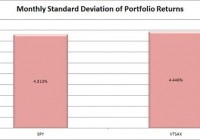
Summary VTSAX offers slightly more diversification than SPY, but it is also slightly more volatile. Because this is a total market fund, it has large weightings for the S&P 500 that create an extremely high correlation. VTSAX is one of the best mutual funds an investor can use for eligible employer-sponsored retirement accounts. Not all plans will offer this fund. VTSAX is the mutual fund version of VTI, which is one of the best total market ETFs available. Investors should be seeking to improve their risk-adjusted returns. Regardless of how they are handling the holdings, the goal is to maximize returns and minimize risks. When it comes to maximizing the returns while maintaining excellent diversification, Vanguard Total Stock Market Index Fund Admiral Shares (MUTF: VTSAX ) is an excellent option. My employer-sponsored retirement accounts are through different brokerages. Mine goes through Schwab, and my wife’s account is with Fidelity. Neither of us is eligible to use VTSAX, but I look for funds that replicate VTSAX, because it embodies most of the things I want in a fund. What does VTSAX do? VTSAX uses an indexing approach to track the performance of the CRSP U.S. Total Market Index. The first thing I’m looking for is diversification, so a total market index seems very attractive. Standard deviation of monthly returns (dividend adjusted, measured since January 2001) The standard deviation is not a problem. Because this is a total market index investors should expect it to be a little more volatile than the S&P 500, and that is exactly what we see. (click to enlarge) Basically, the increase in standard deviation is equivalent to having three percent leverage on a position in SPY. I love low-volatility investments, but when using a retirement account with dollar cost averaging automatically involved, a tiny bit of extra volatility is not problematic as long as the investment is very heavily diversified. Expense Ratio The Admiral shares have an expense ratio of .05%. This is excellent. Largest Holdings The diversification is very good in this mutual fund, and this is easily my favorite thing about the fund. The top 10 holdings appear to be somewhat concentrated, but when you consider that there are over 3800 different securities in the total portfolio, it doesn’t concern me. This is simply a great fund, in my opinion. (click to enlarge) Avoiding Fees There is one downside to Vanguard mutual funds. Vanguard charges a $20 annual account service fee for each mutual fund held in the account with a balance of less than $10,000. If you’re picking VTSAX for a new retirement account and want to save the $20, you can sign up on the Vanguard website for electronic delivery of statements. It appears to me that this fee is largely covering the cost of mailing the investments documents through the postal service. With its huge system in place, being able to send everything by one automated e-mail system saves the company money. I don’t see how it could hold its expense ratio down to .05% without having a way to compel investors to either take electronic delivery or pay for the physical copies. All around, this is a nicely designed system. Want VTSAX from Other Brokerages? You can also effectively invest in the fund using the Vanguard Total Stock Market ETF (NYSEARCA: VTI ), which holds the same assets and has the same expense ratio. Using VTI should automatically avoid the $20 fee and doesn’t require signing up the electronic delivery. The downside about using the ETF is that you would usually be stuck purchasing entire shares. While VTI, shares have been running $107-110; for dollar cost averaging, it is more convenient to be able to buy into a mutual fund with automatic deposits. Conclusion I like VTSAX enough that I’m holding a significant chunk of my portfolio in VTI, the ETF version. Lately, I had been adding to my cash positions rather than my equity positions, because I’m concerned about the market getting a little frothy. Over the last week, I dropped quite a bit of that into buying more broad market ETFs and mREITs when prices dipped. When it comes to long-term investing strategy for the employer-sponsored 401k accounts, my favorite technique is still to use dollar cost averaging on low-fee index funds and to max out (or come close) the contributions every year. If you really want to use VTSAX for your 401k, but are going through Fidelity, I would suggest looking into the Fidelity Spartan® Total Market Index Fund (MUTF: FSTVX ). That is the major mutual fund that I’m using for my wife’s 401k. It has slightly less holdings, with around 3,400 to 3,500 rather than 3,800, but is close enough for my purposes. The correlation between FSTVX and VTSAX is in excess of 99%. Disclosure: I am/we are long VTI, FSTVX. (More…) I wrote this article myself, and it expresses my own opinions. I am not receiving compensation for it (other than from Seeking Alpha). I have no business relationship with any company whose stock is mentioned in this article. Additional disclosure: Information in this article represents the opinion of the analyst. All statements are represented as opinions, rather than facts, and should not be construed as advice to buy or sell a security. Ratings of “outperform” and “underperform” reflect the analyst’s estimation of a divergence between the market value for a security and the price that would be appropriate given the potential for risks and returns relative to other securities. The analyst does not know your particular objectives for returns or constraints upon investing. All investors are encouraged to do their own research before making any investment decision. Information is regularly obtained from Yahoo Finance, Google Finance, and SEC Database. If Yahoo, Google, or the SEC database contained faulty or old information it could be incorporated into my analysis.