Tag Archives: ideas

5 Large-Cap Blend Funds For Growth And Value Investing

Blend funds are a type of equity mutual fund which holds in its portfolio a mix of value and growth stocks. Blend funds are also known as “hybrid funds”. Blend funds aim for value appreciation by capital gains. It owes its origin to a graphical representation of a fund’s equity style box. In addition to diversification, blend funds are great picks for investors looking for a mix of growth and value investment. Meanwhile, large-cap funds usually provide a safer option for risk-averse investors, when compared to small-cap and mid-cap funds. These funds have exposure to large-cap stocks, providing long-term performance history and assuring more stability than what mid-cap or small-caps offer. Below we will share with you 5 buy-ranked large-cap blend mutual funds. Each has earned a Zacks Mutual Fund Rank #2 (Buy) as we expect these mutual funds to outperform their peers in the future. Deutsche Core Equity S (MUTF: SCDGX ) seeks capital appreciation along with current income and income growth. A lion’s share of its assets is invested in equities or mostly in common stocks. SCDGX invests mostly in large US firms, but is not restricted by market capitalization limitations. The Deutsche Core Equity S fund has returned 13.6% over the past one year. SCDGX has an expense ratio of 0.59% as compared to category average of 1.04%. PNC Large Cap Core C (MUTF: PLECX ) invests in broad range of US equities of large-cap firms, including American Depositary Receipts, preferred stocks, warrants and rights. A lion’s share of PLECX’s assets is invested in firms with at least $3 billion worth of market cap. The PNC Large Cap Core C fund has returned 12.5% over the past one year. Douglas J. Roman is the fund manager and has managed PLECX since 2009. Northern Large Cap Equity (MUTF: NOGEX ) seeks to provide long-term capital appreciation. NOGEX invests a majority of its assets in large-cap firms. These companies will have a market capital, at the time of purchase, within the range of those listed in the S&P 500 Index. Northern Large Cap Equity fund has returned 10.3% over the past one year. As of June 2015, NOGEX held 57 issues, with 5.21% of its total assets invested in Apple Inc (NASDAQ: AAPL ). JPMorgan US Equity R5 (MUTF: JUSRX ) aims to provide high total return. JUSRX invests a lion’s share of its assets in domestic companies. JUSRX mostly invests in common stocks of mid-to-large-cap domestic firms. It may also invest a maximum of 20% of its assets in foreign companies. JPMorgan US Equity R5 fund has returned 10.2% over the past one year. JUSRX has an expense ratio of 0.59% as compared to category average of 1.04% Vanguard Growth & Income Investor (MUTF: VQNPX ) invests in a diversified group of stocks chosen with the help of sophisticated computer models. VQNPX seeks stocks that appear to be undervalued by the market and that, as a group, appear likely to provide higher returns than the unmanaged Standard & Poor’s 500 Composite Stock Price Index while having similar risk characteristics. Vanguard Growth & Income Investor has returned 9.9% over the past one year. Philip W. Kearns is the fund manager and has managed VQNPX since 2014. Original Post

New Normal Income

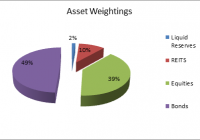
The State Street Fund is mainly comprised of the well-known SPDR ‘Sector Select’ funds. An Income Allocation fund provides better returns than a Government Bond fund. An Income Allocation fund is less risky than a high yield fund. Investors are living in interesting times. Before the 2008 credit crisis, the only mention of deflation might be heard or described in a television documentary. Deflation , as far as most people were concerned, was a thing of the past, the aftermath of an asset bubble combined with a naive economic policy. To be sure, deflation may have faded in living memory, but was still very much a reality of macroeconomics. Since 2008, many advanced global economies have been slipping in and out of deflation and their central banks have been walking a fine line on decisions to direct economic policy. The problem, it seems, is primarily due to a digitally connected, integrated global economy. Disinflation in one region will directly or indirectly affect interest rates and currency values in others. This ‘network effect’ has impacted individual investors who seek relatively safe income. However, to attain reasonable incomes, investors now must venture further out on the risk curve. This begs the question whether there’s some comfortable median, in particular, a way to reasonable returns without incurring high risk. State Street Global Advisors offers investors the opportunity to do just that; earn a steady stream of income with manageable risk through its actively managed SPDR Income Allocation ETF (NYSEARCA: INKM ) . According to State Street the fund’s objective seeks to: Provide total return by focusing on investment in income and yield-generating assets. The fund tracks primarily the MSCI World Index , and secondarily , Barclays U.S. Long Government/Credit Bond Index . According to the prospectus , the fund invests primarily in four different asset classes through exchange traded products (ETP): domestic and international equities; domestic and international investment grade and high yield debt securities; preferred and convertible securities and lastly, real estate investment trusts. Since the fund seeks to achieve its objectives through investments in Exchange Traded Products it is essentially a fund of funds. There are similar funds; however, SPDR’s Income Allocation ETF has the best short and long term returns when compared to the top three similar as summarized below: Fund and Inception 1 Month YTD 1 Year 3 Year Since Inception Types of Holdings SPDR (INKM) 4/25/2012 1.25% -0.35% 1.07% 5.10% 5.46 ETP; Reits convertibles, Equities PowerShares CEF Income Composite Portfolio ETF (NYSEARCA: PCEF ) 2/19/2010 -1.61 0.84 -3.04 5.52 6.41 ETP investment grade funds; high yield funds iShares Morningstar Multi-Asset High Income Index ETF (BATS: IYLD ) 4/3/2012 -0.55 -2.57 -2.65 4.15 5.21 ETPs, high yield fixed income funds (Data From State Street Global Advisor ) T he fund is compact, holding just 21 funds; 17 of those holdings are State Street Advisor’s SPDR funds . Of the top five holdings accounting for nearly half of the fund’s asset allocations, three are SPDR bond funds, one SPDR REIT and the WisdomTree Japan Hedged Equity ETF (NYSEARCA: DXJ ) . (Data from State Street) The fund’s heaviest allocation is in bonds, accounting for nearly half of the funds asset allocation. Of the 7 bond funds, 2 are U.S. Treasury bond funds, 10.83%; 2 are corporate bond funds, 14.32%; 1 high yield fund, 15.79%; 1 emerging market bond fund, 3.05%, and 1 convertible securities fund accounting for 5.08%, of total holdings. Hence, the fund is well diversified over the risk spectrum. The next heaviest allocation is in dividend generating equity funds. Of the 11 equity funds, 6 are international, 22.99%; three are SPDR ‘Select Sector’ funds, 6.09%; one SPDR preferred equity fund, 5.13% and one SPDR dividend fund accounting for 5.11% of the fund’s total holdings. Two SPDR REITs account for 10.27% of the fund’s holdings and lastly 1.34% is classified as ‘liquid reserves’. The question sure to arise is on the usefulness of allocating a fund of funds in a long term portfolio. The question may be answered when the long term investor makes a careful study of the global fixed income market. Most advanced economies are experiencing “disinflation’ or outright “deflation”. In order to prevent a deflationary spiral, central banks have gone to extraordinary lengths to depress deposit rates in order to direct liquidity into economies. These extreme efforts have met with some measure of success, but by far, have not returned fixed income markets to ‘normalcy’. Three recent notable examples of central bank actions in ‘secular stagnation’ economies are for instance, Japan’s unexpected expansion of its bond purchasing program in October of 2014 weakening the Yen to historic lows against major currencies; the ECB’s expansion of its bond purchasing program and depressing its deposit rate to -0.20%; most recently the People’s Bank of China reference rate reductions and an outright devaluation of the dollar pegged currency. The list is long and growing. Worsening the matter has been the commodity market collapse, particularly in crude oil and decelerating global demand. By all indication, the individual investor might, at the very best, expect a gradual return to normalcy, which might take several years. There’s a risk in being locked into historically low yielding high quality sovereign debt at the long end of the curve. Should sovereign rates return to normal after just a few years, the loss of principal on bonds purchased at the highs, would certainly result in a negative yield when held to maturity, particularly should inflation return to a 2% rate. On the other hand, should major global economies continue to struggle to “reflate”, even the most risky high yield bonds will experience declining yields. (click to enlarge) It has often been said that a ‘fund of funds’ results in over-diversification. In a new normal world, a fund of diversified fixed income funds, particularly if it’s actively managed such as the State Street Global Advisors Income Allocation Fund ETF is a far more holding tool for the individual investor, well diversified over many income producing sectors and, most importantly, diversifies risk as well. The fund has total net assets of $118.94 million distributed over the 21 holdings including the liquid reserves. The trailing dividend yield is currently 3.28% and the ETF shares currently are trading at its NAV price, hence neither at a premium nor discount to NAV; there are 3.80 million shares outstanding. The fund has a somewhat high management fee of 0.70% without any mention of waivers or cap. Disclosure: I/we have no positions in any stocks mentioned, and no plans to initiate any positions within the next 72 hours. (More…) I wrote this article myself, and it expresses my own opinions. I am not receiving compensation for it (other than from Seeking Alpha). I have no business relationship with any company whose stock is mentioned in this article. Additional disclosure: CFDs, spread betting and FX can result in losses exceeding your initial deposit. They are not suitable for everyone, so please ensure you understand the risks. Seek independent financial advice if necessary. Nothing in this article should be considered a personal recommendation. It does not account for your personal circumstances or appetite for risk.

5 Huge Advantages You Have Over Professional Investors

Summary 5 ways you are better than the Wall Street pros. Why you should ignore what the pros are doing. How to take advantage of your advantages. “Don’t bother. The professionals are better than you and they know something you don’t.” Really? There’s some truth to that, but there’s plenty of lies mixed in that short statement too. And it’s easy to dismiss yourself or come up with excuses for why you can’t do it. Here are five to get things started. 5 Common Excuses That Investors Believe The market definitely knows more than me. I’m not smart enough to invest on my own and build wealth. I always miss out on the best opportunities. I can’t beat the computer trading that the market uses. I don’t know where or how to start. Sure there’s some validity to each excuse above. But investing is unique because anyone can be a good investor. The Uniqueness of the Stock Market Outside of the stock market, it’s a good idea to find a professional to solve a problem instead of trying to do it yourself or asking the average Joe next door. Need a kidney transplant? Find a surgeon. Not Ms. Traci, your old biology teacher. But the investment industry is one of the very few where you don’t need any qualification, practice, skill or even knowledge to be involved in the markets. The entry criteria is zero, which is why so many people lose money, throw their hands in the air and forever condemn the stock market as a rigged gambling machine. But choose your direction wisely from the get-go (value investing for you and me), build a good framework based on good guidance, quality investment books and investing resources, and it’s easy to do well. Ignore all the talking heads using jargon or the people who talk about much money they are raking in. All they want to do is make you feel dumb and gloat about how smart they are. But what if you continue to disbelieve, or you know people who continue to doubt that investing successfully on your own is possible? You don’t need to be a rocket scientist. Investing is not a game where the guy with the 160 IQ beats the guy with 130 IQ. – Warren Buffett If you have more than 120 or 130 I.Q. points, you can afford to give the rest away. You don’t need extraordinary intelligence to succeed as an investor. – Warren Buffett Here are 5 advantages small investors hold over professionals that you must take advantage of. 1. As a Small Investor You Are Able to Choose Your Expertise When you are investing as an individual, you are free to choose whatever specialty you like. You can choose whatever stock to invest in. Large. Small. Biotech. Miners. Safety. Whatever. You can even choose to focus and become an expert in a few industries that excite you or take a broader approach. On the other hand, professionals are paid to focus on certain fields or investing strategies. If you get sick of an industry, just move onto your next interest. Professionals don’t have this luxury of choosing their strengths. As a small investor, you are agile and can go to different market caps, sectors, and even buy some odd lots for a quick turnover. 2. You Can Go Against the Grain Professional investors follow the herd. It’s better to be incorrect with the herd and maintain job security instead of sticking your neck out and getting fired if the investment doesn’t work out. You don’t have a boss obsessed with profits breathing down your neck with another younger guy waiting in line to take your job. You’re free to take a contrarian approach like the good ol’ net net strategy or concentrating on Buffett type stocks. The pros will start investing in an “uncertain” stock, sector or country once it starts to rebound – when the best time to invest has already passed. 3. You Are Not Judged Monthly, Quarterly or Yearly Not being obsessed with beating the market is one of the biggest advantages you have. Because the pros have clients and upper management demanding results, the only thing they can do is chase hot stocks, hot trends and buy and sell quickly so as not to “look” left out. Ignoring short term results and focusing on the big picture will put you in a position to succeed. The once bad Golden State Warriors didn’t win the NBA championship by flipping players every time something didn’t work out. They had a long term team building strategy that paid off in the end. Being able to sacrifice short term results to compound long term wealth is a huge advantage. 4. You Can Afford to Be Patient Can’t find a company to invest in? That’s ok because you can hold cash and wait for the right opportunity. Nobody is going to say anything because you hold 30% of your portfolio in cash. You also put yourself in the best position to succeed by buying depressed securities and playing the waiting game. Professionals on the other hand are risk-averse as they can’t afford to lose their client’s money. This leads to following the herd and mediocre returns. 5. It’s Cheaper You don’t need a room full of computers, computerized trading system software or instant access to information. You don’t have to pay people for insider “tips”. With all the high frequency trading going on, the long term value investing approach saves you money on commissions, taxes and other fees. Take Advantage of Your Advantages There’s no reason to play the same game as the professionals. In Malcolm Gladwell’s book David and Goliath , it covers how the “disadvantaged” overcome the expected winners. An important observation was that if David (the small investor) tries to take on Goliath (Wall Street professionals) within the same set of rules, the winner is always Goliath. However, by not playing by the same system and expectations, David is able to defeat Goliath. In other words, as a small investor, do what the big boys can’t to beat them at their own game. In 2008, Buffett bet that a low cost index fund will outperform a fund of hedge funds. Over a ten-year period commencing on January 1, 2008, and ending on December 31, 2017, the S&P 500 will outperform a portfolio of funds of hedge funds, when performance is measured on a basis net of fees, costs and expenses. The result at the start of 2015? The S&P500 up 63.5% and the hedge fund up around 19.6%. The takeaway? It’s only in the stock market where the average Joe can have such a strong advantage over the professionals. Make the most out of your advantages. Disclosure: I/we have no positions in any stocks mentioned, and no plans to initiate any positions within the next 72 hours. (More…) I wrote this article myself, and it expresses my own opinions. I am not receiving compensation for it. I have no business relationship with any company whose stock is mentioned in this article.