Tag Archives: ideas

Best And Worst Q3’15: Large Cap Growth ETFs, Mutual Funds And Key Holdings

Summary The Large Cap Growth Style ranks fourth in Q3’15. Based on an aggregation of ratings of 24 ETFs and 622 mutual funds. QUAL is our top-rated Large Cap Growth ETF and FLGEX is our top-rated Large Cap Growth mutual fund. The Large Cap Growth style ranks fourth out of the 12 fund styles as detailed in our Q3’15 Style Ratings for ETFs and Mutual Funds report. It gets our Neutral rating, which is based on an aggregation of ratings of 24 ETFs and 622 mutual funds in the Large Cap Growth style. See a recap of our Q2’15 Style Ratings here. Figures 1 and 2 show the five best and worst-rated ETFs and mutual funds in the style. Not all Large Cap Growth style ETFs and mutual funds are created the same. The number of holdings varies widely (from 21 to 683. This variation creates drastically different investment implications and, therefore, ratings. Investors seeking exposure to the Large Cap Growth style should buy one of the Attractive-or-better rated ETFs or mutual funds from Figures 1 and 2. Figure 1: ETFs with the Best & Worst Ratings – Top 5 (click to enlarge) * Best ETFs exclude ETFs with TNAs less than $100 million for inadequate liquidity. Sources: New Constructs, LLC and company filings The State Street Systematic Growth Equity ETF (NYSEARCA: SYG ) and the Direxion iBillionaire Index ETF (NYSEARCA: IBLN ) were excluded from Figure 1 because its total net assets are below $100 million and do not meet our liquidity minimums. Figure 2: Mutual Funds with the Best & Worst Ratings – Top 5 (click to enlarge) * Best mutual funds exclude funds with TNAs less than $100 million for inadequate liquidity. Sources: New Constructs, LLC and company filings The iShares MSCI USA Quality Factor ETF (NYSEARCA: QUAL ) is the top-rated Large Cap Growth ETF and the Fidelity Large Cap Growth Enhanced Index Fund (MUTF: FLGEX ) is the top-rated Large Cap Growth mutual fund. Both earn a Very Attractive rating. The Columbia Select Large Cap Growth ETF (NYSEARCA: RWG ) is the worst-rated Large Cap Growth ETF and the Quaker Strategic Growth Fund (MUTF: QUAGX ) is the worst-rated Large Cap Growth mutual fund. RWG earns a Neutral rating and QUAGX earns a Very Dangerous rating. Verizon Communications, Inc. (NYSE: VZ ) is one of our favorite stocks held by Large Cap Growth funds and earns our Attractive rating. Since 2006, Verizon has grown after-tax profit ( NOPAT ) by 6% compounded annually. When including Verizon’s quarterly results this year, NOPAT is up an additional 8% on a trailing-twelve month basis. Verizon currently earns a return on invested capital ( ROIC ) of 8% and has increased its NOPAT margin to 16% from 13% in 2006. The market is not giving Verizon the credit it deserves for its consistent business operations, and the stock is undervalued. At its current price of $47/share, Verizon has a price to economic book value ( PEBV ) ratio of 0.8. This ratio implies that the market expects Verizon’s profits to decline permanently by 20%. If Verizon can grow NOPAT by 4% compounded annually for the next five years , the stock is worth $73/share – a 55% upside. Adobe Systems, Inc. (NASDAQ: ADBE ) is one of our least favorite stocks held by Large Cap Growth funds and earns our Dangerous rating. The company’s NOPAT has fallen by 28% compounded annually since 2011 and coincides with NOPAT margin falling to 10% from 29% over the same time frame. Adobe currently earns a 6% ROIC which is just a third of the 18% earned in 2011. However, the stock remains overvalued and does not reflect the company’s recent profit struggles. To justify the current price of ~$85/share, Adobe must grow NOPAT by 22% compounded annually for the next 20 years . Adobe has definitely seen better days, owning the stock and betting on such high growth for another two decades seems unrealistic. Figures 3 and 4 show the rating landscape of all Large Cap Growth ETFs and mutual funds. Figure 3: Separating the Best ETFs From the Worst Funds (click to enlarge) Sources: New Constructs, LLC and company filings Figure 4: Separating the Best Mutual Funds From the Worst Funds (click to enlarge) Sources: New Constructs, LLC and company filings D isclosure: David Trainer and Max Lee receive no compensation to write about any specific stock, style, style or theme. Disclosure: I/we have no positions in any stocks mentioned, and no plans to initiate any positions within the next 72 hours. (More…) I wrote this article myself, and it expresses my own opinions. I am not receiving compensation for it. I have no business relationship with any company whose stock is mentioned in this article.
How I Dodged A -69.3% Bullet With A Checklist And 3 Important Lessons To Take Away

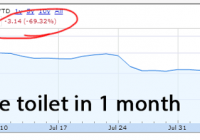
Summary SFX Entertainment has terminated their going private bid. The warnings signs that made me stay away. An updated checklist to avoid these types of situations. Phew. By learning from past mistakes, sticking with experience and following solid advice from books and gurus, it all helped me dodge a -69.3% bullet. Here’s what I mean. At the end of June, I wrote about a special situation involving SFX Entertainment (NASDAQ: SFXE ) where the founder was aiming to take his company private. And here’s what happened. (It was just announced that the deal has now been terminated dropping a further 20% making it -74.6% as of today.) The spread when I first looked at it was at 14%. A spread greater than 10% shows that the market doesn’t fully trust the deal. I know from a few painful experiences where I focused too much on the upside and bit off a big position, only to see the deal get canceled at the last moment. The deal for SFX Entertainment hasn’t been canceled. However, the go shop period has been extended, the buyout offer is to likely to be lowered and the company doesn’t provide enough information to investors. The special committee and its advisors will entertain offers for the entire Company as well as assets not central to the Company’s core business through at least October 2, 2015. Sillerman has agreed to cooperate with the special committee to obtain the best available offer for the Company’s shareholders. The October 2 date was chosen to allow potential bidders and their financing sources to have visibility into the Company’s performance during its peak festival season, thus providing a full and accurate picture of the Company’s results and prospects. To facilitate potential offers during this period, all “no-shop” restrictions and the related breakup fees provisions applicable to the Company under the merger agreement will no longer apply, enabling potential bidders to freely evaluate the Company in light of the recent substantial decline in its share price. Any new transaction will be evidenced by a new definitive agreement as the existing merger agreement is no longer effective. – Source No wonder it’s down so much in a little more than a month. They don’t all end up like this though. There have been plenty of going private acquisitions with a wide spread that went through successfully. Buffett has said that missing out on opportunities was been one of his biggest mistakes. If that’s the case, then dodging blowups like this is a huge success. But how? Simple. Using a checklist like this saved my bacon. Make sure both parties have done their due diligence – Pass Financing and regulator approval is complete – Pass (now a Fail) Get preliminary shareholder sentiment or controlling shareholder approval – Uncertain Obtain regulator (SEC, FCC, any and all) approval – N/A Get final shareholder approval at a meeting called for that purpose – TBD Check to see that insiders are continually vesting or buying shares – Pass On the surface, there are more passes than fails for SFXE, but because the importance increases as I move down the checklist. Number 6 was the big hold up. Without a clear green light by all shareholders, management and the special committee, it’s risky to put money down. Additional Criteria to be Added to the Checklist Based on the events that took place, I’m adding a couple of new checks to my checklist. Is management trustworthy? Is the upside and downside risk asymmetric? Is Management Trustworthy? There are plenty of managers that execute like a surgeon. But with SFXE, there are warning flags visible in the way the company is managed and how it communicates to investors. Plus, when a CEO publicly flips the bird and grabs his crotch , I tend to lose trust in their actions and judgment. Management should also have a history of doing what they say. There are a lot of managers who are showman types. After all, they are the face of the company and it is their job to sell, sell, sell. A method to check this is by comparing a few annual letters. Go through and highlight what they say they will do, and check the following letters to see whether it was accomplished, or whether it shows up in the numbers. The numbers won’t lie. Is the Upside Downside Risk Asymmetric? Special situations operate on a timeline, usually within a year. Due to a short time frame, the tradeoff is that your profit potential is small. So it makes it even more important to go after the high certainty opportunities and ignore the ones with bad odds. It’s a lot safer and easier to go after a very highly certain 1-2% return in a month using a large amount of money, compared to using a small amount of money for the 10% uncertain ones. When Google (NASDAQ: GOOG ) (NASDAQ: GOOGL ) announced in 2912 that it was buying Motorola Mobility, the spread was a little under 2% at the time. I put down a large amount of cash to maximize my returns over a very short period in order to make up for the small profit potential. Keep doing this with the good ones and you’ll build up your returns. Buffett didn’t achieve 30% annually during his prime by simply assigning a massive portion of this portfolio to Coca Cola (NYSE: KO ) and American Express (NYSE: AXP ) and then sitting on it. No. He spent a lot of his time on special situations and other active areas to increase his returns one brick at a time. The Updated Special Situations Checklist OK. Adding the two new checks, here’s the updated checklist I’ll be using for special situations going forward. Make sure both parties have done their due diligence Check management of both parties are trustworthy (NEW) Financing and regulator approval is complete Get preliminary shareholder sentiment or controlling shareholder approval Obtain regulator (SEC, FCC, any and all) approval Get final shareholder approval at a meeting called for that purpose Check to see that insiders are continually vesting or buying shares Verify upside and downside risk is asymmetric by assigning potential upside to downside returns (NEW) 3 Important Lessons to Take Away This year, it seems like I’m parroting the same thing, but the lessons I got from SFXE is clear. 1. It’s more important to focus on protecting the downside I didn’t like the 14% upside versus 24% downside. Seeing the stock price now, you can see how the downside turned out to be larger. 2. Don’t get greedy Even if you did go long SFXE, if you kept it to a small position, less than 1% of your portfolio, it didn’t damage your returns or portfolio compoundability. Losing money is bad because it makes it harder for your money to work because you’re chopping it off at its knees. I said earlier that I put a large amount into the Motorola merger, but that was because it was a highly certain transaction with very little possibility of failure. But I didn’t sell my other positions to free up cash to go all in. I used what was available and didn’t put in more than what made sense. 3. Manage risk The best investors and traders have one thing in common. They are obsessed with minimizing risk by going after asymmetric bets and taking advantage of inefficiencies. This may sound similar to points 1 and 2, but managing risk involves position sizing, seeing how things fit in your portfolio, being emotionless, not falling for obvious behavioral fallacies, being able to cut losses, admitting faults and more. But for the purpose of this article, adjust your sizing based on the odds and don’t overdo it. Disclosure: I/we have no positions in any stocks mentioned, and no plans to initiate any positions within the next 72 hours. (More…) I wrote this article myself, and it expresses my own opinions. I am not receiving compensation for it. I have no business relationship with any company whose stock is mentioned in this article.

Pampa Energía Is A Good Option For Normalization In Argentina

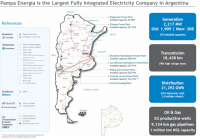
Summary Pampa Energía works in a highly distorted regulatory framework, where frozen tariffs have led to a critical situation for the utility companies. Even in this scenario Pampa Energía has managed to reach a price earning of 5 years. With a new government about to be elected, great improvements could be in the way. Pampa Energía S.A. (NYSE: PAM ) is the largest integrated electricity company in Argentina and through its subsidiaries participates in the generation, transmission and distribution of electricity, as well as natural gas transportation and production. (click to enlarge) Source: Pampa Energía. Pampa Energía owns indirectly: 84% of the generation assets. 26% of the transmission business (TRAN.BA). 52% of the distribution business with Edenor (EDN). 26% of the natural gas transportation business with Transportadora de Gas del Sur (NYSE: TGS )(pending government approval). 50% of the Oil and Gas exploration and production business with Petrolera Pampa (PETR.BA), associated with Yacimientos Petrolíferos Fiscales (YPF). As of August 17th, 2015 the market cap of the above mentioned: (click to enlarge) Source: Yahoo Finance Reminder: Transener and Petrolera Pampa stocks are only listed in the Merval Index, the market cap is expressed in Argentine Pesos -AR$-. Exchange rate as of August 17th: ARS/USD= 9.15. Updated quotes and market cap expressed in USD here . Scenario: Pampa Energía works in a highly distorted regulatory framework where frozen tariffs have led to a critical situation for the utility companies. From 2001 onwards the tariff was converted to AR$ and had practically no adjustments and no longer provides for a reasonable return on capital/assets. Full tariff reviews are pending. High inflation and regulated tariffs that took place since 2006 and 2001 respectively, have led to deep margin erosion for utility stocks. The Argentine utility stocks have underperformed their Latam and EM peers since 2001, these poor returns are explained by significant erosion in real electricity tariffs (frozen since 2001). Gross margin captured by utilities as a percentage of the GDP fall from 0.3% to 0.02%, setting the scope for a possible recovery in profits, if the upcoming political situation leads to a normalization of the current imbalances. For example, the comparison between the residential electricity cost in Argentina and regional peers shows clearly how distorted the public services tariffs are. (click to enlarge) Source: Pampa Energía. Subsidies for electricity and gas purchases cost the government around 4.5% of GDP, and the burden is growing. Some tariffs would need to triple or even be multiplied by seven times to reach market prices. With just a small correction, companies like PAM will perform better. A presidential election is coming in Argentina as of October 25, and the main contenders (Daniel Scioli, Mauricio Macri and Sergio Massa) have expressed its understanding about the need to lift some tariffs caps, in order to reduce the fiscal deficit, which is unsustainable at these levels. As the company’s aren’t capable of fulfilling the investment needs in electricity of the country, and several blackouts occur during the last quarters, the actual government is taking some measures to improve the situation. Two relevant facts take place during 2Q15 for Pampa Energía: 1) “SE Resolution No. 482/15: Increase in the Electricity Generation Remuneration Scheme On June 10, 2015, the Secretariat of Energy issued SE Resolution No. 482/15, in which it updates retroactively the remuneration for electricity generation as of February 2015 commercial transactions.” 2) “Gas Transportation Tariff Increase for Transportadora de Gas del Sur S.A. On June 8, 2015, the National Gas Regulatory Authority -ENARGAS- issued Resolution No. 3,347/15, which grants TGS a tariff increase for gas transportation and operation and maintenance fees of 44.3% and 73.1%, respectively, both retroactive to May 2015.” Source: Pampa Energía 2Q15. This and other measures have improved Pampa´s EBITDA and Profits. In the 2H15 : Consolidated sales revenues of AR$3,457.6 million ($378 million) for the six-month period ended on June 30, 2015, 18.4% higher than the AR$2,921.4 million ($319 million) for the same period of 2014. Adjusted consolidated EBITDA of AR$1,693.3 million ($185 million) for the six-month period ended on June 30, 2015, compared to AR$27.1 million ($9 million) for the same period of 2014. Consolidated profit of AR$1,365.1 million ($149 million) during the six-month period ended on June 30, 2015, of which a profit of AR$963.0 million ($105 million) is attributable to the owners of the company, compared to an AR$80.4 million loss (-$8.8 million) attributable to the owners of the company in the same period of 2014. With a market cap of $900 million, earnings per ADR in the 1H15 of $1.7, and foreseeable earnings of nearly $180 million a year, the forward P/E looks compelling. Just thinking about the replacement cost of its fixed assets, it´s easy to see how PAM is undervalued, and this is mostly caused by a regulatory environment which could improve soon. As a change in the government is approaching, it could be expected that some distortions will disappear, I´m not talking here about free market prices, as it´s “politically incorrect” to raise tariffs by 200% in a single move, but given the current situation, where PAM is trading at a forward P/E of 5, and making money under this difficult scenario, any improvement will boost earnings and improve the company´s situation. Risks: Currency risks are present since it’s widely expected that the new government will depreciate the local currency, but that depreciation will certainly include better tariffs for the utilities as the energy price is partly dollar linked as well as the importations of energy. Political risks are another factor to bear in mind, but as the current government deficit is unsustainable, some adjustments are needed. To conclude PAM is under the current conditions deeply undervalued, and that could increase if the pending integral tariff revision comes in place. If the Argentinean economy is going to improve, massive capex in the electricity sector would be needed, and PAM is in the better position to profit from that. Disclosure: I/we have no positions in any stocks mentioned, but may initiate a long position in PAM over the next 72 hours. (More…) I wrote this article myself, and it expresses my own opinions. I am not receiving compensation for it (other than from Seeking Alpha). I have no business relationship with any company whose stock is mentioned in this article.