Tag Archives: economy

Staying Ahead Of The Curve: A Look At The Consumer Discretionary Sector
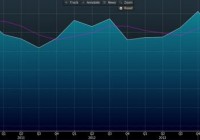
Summary By monitoring economic and price momentum changes, investors can stay ahead of the curve. The U.S. economy is growing at trend pace, the labor market continues to improve and the borrowing costs remain low. From a total return perspective the Consumer Discretionary emerged as a sector leader. As such investors should consider a tactical position in the sector through the ETF XLY. The first time I fell in love with mathematics was during an Additional Mathematics class. It was my first interaction with Calculus, and I had to determine the turning points of quadratic and other polynomial equations. These tasks could be found through the measuring of these equations’ or functions’ change as the inputs change, known to mathematicians as the 1st derivative. For weeks upon end the class would receive assignments from our teacher, Mr. Roop, perhaps the best mathematics teacher in the country. To this day I can still calculate the turning points of quadratic and polynomial equations, and many other topics under that curriculum. I owe it to him. Almost a decade after I was in Mr. Roop’s class, I came across the Efficient Frontier; this is the place that investors want to find. The optimal point where the risk ratio is at its maximum, the turning point of the curve – its first derivative. Chart 1 – Efficient Frontier Source: New Trading Systems and Methods Although it is not high school calculus, investors should be aware of the changing financial landscape and constantly searching for that optimal point. One strategy of doing this is fusing economic trends with price momentum. By observing economic trends in the U.S. as well as the sector performance in the S&P 500 Index, investors can stay ahead of the curve by monitoring the changes. One such change is in the performance of the Consumer Discretionary sector. With low borrowing costs, improving labor market data and positive economic growth, a tactical position in the Consumer Discretionary Sector for 2015 can place investors’ portfolios ahead of the respective benchmark’s curve. Investors seeking a tactical position in the Consumer Discretionary sector should consider the ETF (NYSEARCA: XLY ), the Consumer Discretionary Select Sector SPDR Fund. Economic Activity Revised figures show that U.S. GDP grew 2.4% year over year in the 4th quarter of 2014. This rate is equal to the 4-quarter moving average of 2.4% so the U.S. is still growing at pace. Consumer spending was strong as real PCE rose 4.3% versus 3.2% in the previous quarter. This was the strongest quarterly increase in the post-financial crisis era. Residential investment improved given the loosening of mortgage credit and this trend is likely to continue. Chart 2 – U.S. GDP Growth (Year-Over-Year %) as at December 2014 (click to enlarge) Source: Bloomberg U.S. CPI fell 0.1% year over year as at January 2015. This was as a result of energy costs which slumped 9.7% in January, the biggest drop since November 2008, led by an 18.7% decline in gasoline prices which was also the largest in 6 years. What was more striking was the U.S. core CPI. U.S. core CPI held at 1.6%, giving the Fed an impetus to raise rates as the slump in energy has not filtered to other goods and services. Thus, as energy prices rebound, both CPI and core CPI will increase, bringing the Fed closer to raising rates and indirectly strengthening the U.S. Dollar. Chart 3 – U.S. CPI (Year-Over-Year %) as at January 2015 (click to enlarge) Source: Bloomberg Chart 4 – U.S. Core CPI (Year-Over-Year %) as at January 2015 (click to enlarge) Source: Bloomberg The U.S. labor market is showing signs of slack-removal. Employers added 295,000 workers to payrolls in February. The U.S. unemployment rate dropped to 5.5%, the lowest in almost 7 years. Hourly earnings also increased. Fed officials will score this data as positive as they continue to deliberate raising rates. Chart 5 – U.S. Unemployment rate as at February 2015 (click to enlarge) Source: Bloomberg The tables and charts below show the Fed projections as at December 2014. If the trend continues to align with projections, the Fed may be inclined to raise rates by the 3rd quarter of 2015. Table 1- Economic Projections of Federal Reserve Board Members and Federal Reserve Bank Presidents, December 2014 (click to enlarge) Source: Federal Reserve Chart 6-8 – Central Tendencies Of Economic Projections, 2014-2017 And Over The Longer Run Source: Federal Reserve Consumer Discretionary Sector Overview New distribution networks for the movies and entertainment industry continue to emerge across digital platforms like online streaming, electronic sell-through (EST), video on demand (VOD), and mobile devices (smartphones, tablets, etc). The music industry will also benefit from digital music sales through iTunes, Amazon (NASDAQ: AMZN ), Pandora (NYSE: P ), etc. Furthermore there seems to be a merging of recorded music, concert promotion, artist management and ticketing. Content providers are seen taking advantage of convergence of content, technology and services, with Netflix (NASDAQ: NFLX ), Amazon ( AMZN ) and Hulu becoming popular streaming video destinations. The control for the living room continues with the likes of Apple ( OTC:APPL ) TV, Roku, Google’s (NASDAQ: GOOG ) (NASDAQ: GOOGL ) Chromecast and others, giving consumers a seamlessly integrated experience across video, data and voice services. Also online merchants provide consumers with a strong combination of convenience, selection, information and value compared to off-line competitors. Furthermore advancements in technology have made e-commerce transactions easier to complete and more reliable and secure, helping to drive sales. The U.S. housing market is expected to improve for 2015 as the economy and labor market grows. U.S. home ownership levels will drive market growth. Homeowners tend to spend more to maintain and improve homes than do renters. The U.S. Census Bureau reported that in the 4th quarter of 2014, home ownership stood at 64%. Currently the S&P 500 Consumer Discretionary Sector Index’s P/E is standing at 21.53 times, which is relatively above the 1-Year, 3-Year and 5-Year averages, which signals that the sector is historically overvalued. Similarly the S&P 500 Index is also trading above its historical average P/Es, with its current P/E being at 18.30 times, which is above the 1-Year, 3-Year and 5-Year averages. This is as a result of the overall interest rate environment. With U.S. yields near historical lows, investors are prepared to pay a premium for U.S. equities, elevating the current P/E of the Consumer Discretionary sector and the S&P 500 Index overall. Table 2- Current P/Es Vs Historical Averages as at 13 th March 2015 Source: Bloomberg Table 3- XLY Dividend Yield Vs S&P 500 as at 13 th March 2015 Source: Bloomberg Investors should look at XLY for growth in their respective portfolios given the underperformance in dividend yield relative to the S&P 500 Index Fund (NYSEARCA: SPY ). Table 4- Consumer Discretionary Sector Key Fundamental Metrics as at 13 th March 2015 (click to enlarge) Source: Bloomberg Price Momentum The theory behind this relative sector rotation model is to take advantage of the price momentum in the S&P 500. By taking overweight positions in sector leaders and underweight positions in the lagging sectors, the model should outperform the S&P 500 over time. Thus it is critical to note the changes in sector leadership. The table below shows the total returns of the different sectors over different time buckets. Sectors are identified as leaders when they outperform 3 or more times over the various time frames. Also sectors are identified as laggards when they underperform 3 or more times over the various time frames. The sectors colored in green are leaders, while the ones colored in red are laggards and those in blue are neutral. Table 5- Total Returns of the S&P 500 Sectors over Various Time Frames as at March 13 th 2014 Source: Bloomberg Here we see the Consumer Discretionary Sector is playing a leadership role as it is identified in green. Conclusion With the borrowing costs and inflation still low while economic growth and the labor market growing at a positive steady pace, the U.S. consumer is well positioned. The trends are compounded with shifts in the price momentum in the consumer discretionary sector. Disclosure: The author has no positions in any stocks mentioned, and no plans to initiate any positions within the next 72 hours. (More…) The author wrote this article themselves, and it expresses their own opinions. The author is not receiving compensation for it (other than from Seeking Alpha). The author has no business relationship with any company whose stock is mentioned in this article.
Don’t Feel Bad If You’re Not Making Money In This Market

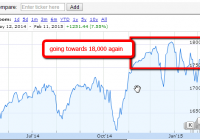
Summary The Dow is clawing back to its all-time high, and how it affects investors. Hedge fund performances suck, but are you getting suckered in to the hype? There is a need to reassess your attitude towards risk during market cycles. The Dow is just below its all-time high again. After all these years of a bull run, Mr. Market is still giddy with excitement and wants you to join the ride. But while Mr. Market puts on his charm during this upward market, I am reminded of Howard Marks’ memo titled “Ditto” which goes over market psychology and investor sentiment. But First… You are Missing Out Feel like everyone else is making money except you? Are you missing out on this market upside? Well, that’s a lie because in 2014, hedge funds performed miserably. The average hedge fund performance was under 3%. 2012 and 2011 weren’t impressive either. If at any point during the past few months or years you thought to yourself “I’m missing out”, then you are not alone. However, you shouldn’t be worried or concerned. If the best investors can’t get anywhere near the indexes, then you have no chance of doing any better, right? Wrong. You and I know that investing should be emotionless, but one of the easiest ways to get emotional is when you feel like you need to act to keep up, or when you start comparing yourself to other investors. The difficult part is ignoring the itch that makes you want to get trigger happy. In fact, we should be focusing on limiting our risk by understanding how market cycles affect us. Over the years, I’ve become convinced that fluctuation in investor attitudes toward risk contributes more to major market movements than anything else. I don’t expect this to ever change. – Howard Marks It’s bull markets like these where it just seems like everything is going up where many people crumble and get suckered in to buying stocks that they otherwise would not buy. Simply because they do not want to get left behind. Herd mentality isn’t just about buying whatever the next person is buying. Herd mentality exists primarily because of human behavior and getting caught up in emotions. So are you really missing out? Not at all. That’s what your emotions are telling you. Not what your logic is telling you. The Cycle in Attitudes towards Risk I’m sure you have seen the image below. And to complement this, here is Howard Marks’ version. 1. When economic growth is slow or negative and markets are weak, most people worry about losing money and disregard the risk of missing opportunities. Only a few stout-hearted contrarians are capable of imagining that improvement is possible. 2. Then the economy shows some signs of life, and corporate earnings begin to move up rather than down. 3. Sooner or later, economic growth takes hold visibly and earnings show surprising gains. 4. This excess of reality over expectations causes security prices to start moving up. 5. Because of those gains – along with the improving economic and corporate news – the average investor realizes that improvement is actually underway. Confidence rises. Investors feel richer and smarter, forget their prior bad experience, and extrapolate the recent progress. 6. Skepticism and caution abate; optimism and aggressiveness take their place. 7. Anyone who’s been sitting out the dance experiences the pain of watching from the sidelines as assets appreciate. The bystanders feel regret and are gradually suckered in. 8. The longer this process goes on, the more enthusiasm for investments rises and resistance subsides. People worry less about losing money and more about missing opportunities. 9. Risk aversion evaporates and investors behave more aggressively. People begin to have difficulty imagining how losses could ever occur. And so goes the path towards a mania or bubble. How to Keep Your Emotions In Check One of the easiest methods of controlling your emotions is to know the value of your companies. I just love how Prof. Damodaran puts it in this previous article I wrote because it’s exactly how I process it. Valuation slows the process down, gives your rational side a chance to mount an argument. Most investors don’t want to hear about valuation because it challenges their desire to hear what they want about their holdings. But valuation is the compass that keeps you on the right path. My valuations are not always correct, but it’s saved my bacon on so many occasions. It’s not just about finding undervalued stocks to buy, it also helps with selling stocks that have become expensive. You don’t know if it’s expensive unless you know what something is worth. That way, you can protect yourself from unnecessary losses. I love valuation and it’s the reason why I’m always using my stock analysis tool and checking my rationale with cold hard facts. Unless I find a legitimate reason for why I have to increase my valuation from $50 to $300 without solid evidence, it’s easy to recognize I’m fooling myself. This is NOT a Market Prediction Even with the Dow just over 18,000, I have no opinion on whether the market is undervalued or overvalued. It’s easier for individual companies, but more difficult for an index. All I know is that there are always pockets of opportunity available. The main idea I want to share is to not fall victim to feeling like you are missing out. Keep your risk assessment in check and let the market do what the market does. Invest independent of the market. In this interview with Mohnish Pabrai , Pabrai talks about how his fund was down 65% from the peak at one point, but his wife had no clue because his behavior pattern did not change. Even in a really bad year, he was sticking with his principles. You do not want to be in a place where you go from worrying about missing opportunities to worrying about losing money. Disclosure: The author has no positions in any stocks mentioned, and no plans to initiate any positions within the next 72 hours. (More…) The author wrote this article themselves, and it expresses their own opinions. The author is not receiving compensation for it. The author has no business relationship with any company whose stock is mentioned in this article.

GLD Drops 1.78% After FOMC Lockhart’s Confident Florida Speech

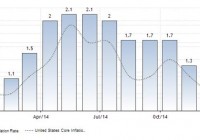
There are 2 main forces affecting gold price, Europe and FOMC. The drama in Europe has deflected the media attention which the FOMC deserves. Atlantic Fed President and FOMC Voter Lockhart deflected weak inflation arguments against liftoff in mid-2015. Lockhart argued that confidence in the progress towards maximum employment and stable prices is sufficient for policy tightening given the lag in monetary policy. Lockhart’s compelling argument forced GLD to drop 1.78% and reinforced the bearish trend on GLD. FOMC Neglected Amid Excessive European Drama Coverage In today’s context, there are 2 primary forces that are actively influencing the price of gold which we should always keep in mind when we evaluate our gold investment. On one hand, we have the headlines news about Europe and Greece on CNBC, CNN and all the major news outlet. These news station give us an overexposure to the latest flip-flops in the sovereign debt negotiations simply because it is good non-fiction drama that will keep their viewership high. In what comes as news, we have Greece taking on a seemingly compromising stance to offer a ‘menu of debt swap’. Germany rejected it and asked the Greek government to forgo its campaign promise of ending its austerity measures by repudiating its official debt and increase social spending. Greece then refuted that and take a hard stance in its debt negotiations which eventually lead the European Central Bank to cut off Greece of its cheapest debt financing using its sovereign bond as collateral. The Greek response was to demand for $11 billion euros of repatriation for World War II which Germany swiftly rejected. Greece responded with its latest initiative by involving OECD to provide credible 3rd party alternative to its reform imperative over that proposed by its official creditors, collectively known as Troika. In the background during this period of rapid change is the uncertainty of Greece membership within the European Union and the spillover effects in terms of geopolitical security such as the possibility of Greece leaving NATO to back Russia in the Ukraine conflict. Given the extensive media coverage on Europe, it is easy to forget the other side of the picture. In my earlier article, Hold GLD In The Tug Of War Over Financial Stability In 2015 , I have argued that it is the primary issue of financial stability that is driving the price of gold for now. As much as we care about the European drama, we have to keep in mind the powerful Federal Open Market Committee (FOMC) which is not receiving its fair share of attention from market participants due to inadequate media coverage. The FOMC is a dominant force of financial stability with its clear intention of policy normalization which will provide meaningful risk-free interest rates for conservative investors such as insurance companies and pension funds. These conservative investors hold significant amount of retirement funds which may not be willing to chase the riskier equity market and should not be there in the first place. Their absence will provide the forming of financial bubbles. Lockhart Neutralized Weak Inflation and Wage Growth Constraint Let us pay some due attention the Atlanta Fed President Dennis Lockhart who is a voting member of the FOMC this year. Lockhart gave his speech titled, Considerations on the Path to Policy Normalization at the Southwest Florida Business Leaders Luncheon on 06 February 2015. In my opinion, his speech is very supportive of the mid 2015 liftoff in the Federal Funds rates and this is putting pressure of gold as much as it is supportive of the strength of the USD. Lockhart gave a balanced assessment of the economy and discussed the possible constraint on the liftoff alongside with the factors supporting it. He came to the conclusion that based on current data, he is confident that the economy would have recovered to the point where it is conducive for a liftoff in mid 2015. I think the economic recovery of the United States is well established in the market right now and so before we go into the reasons supporting the liftoff, we shall look at how Lockhart address the issue of inflation. The obvious problem with inflation is that it is below 1% and far from the 2% inflation target no matter which measure of inflation you look at. For example, if you were to look at the latest Consumer Price Index (CPI) shows that prices increased by 0.8% in December 2014 when compared to December 2013. Annual core CPI might look better at 1.6% in December 2014 but it is part of a falling trend of 1.8% and 1.7% in October and November 2014 respectively. If we were to refer to the core Personal Consumption Expenditure (PCE) on a monthly basis, we will observe 2 conservative months of 0% growth for November and December 2014. (click to enlarge) Source: Tradingeconomics The chart above which compares U.S.inflation and core inflation rate according to CPI and this should anchor the point that inflation is still a distance from the 2% inflation target in the U.S. The other potential deterrent for a mid year liftoff is the low wage recovery. Given the tight labor market and the pace of jobs recovery, wages should be raising at 2%-4% based on the experience of previous recovery instead of the 0.5% increase as reported by the Department of Labor recently for January 2015. We have to keep in mind that the strong economy added 257,000 jobs in January 2015 after 329,000 jobs were added in December 2014. This has encouraged 155,000 discouraged workers to apply for jobs and re-enter to labor market. The expanded labor pool increased the unemployment rate from 5.6% to 5.7% resulting in a 0.2% increase in labor force participation of 62.9%. This quote from Lockhart sums up the challenges of weak inflation and wages increment that is facing the United States today. Just as current readings of inflation give some pause, broad wage trends seem to suggest we are not yet on the cusp of full employment. The quite modest growth of wages across the economy does not seem normal given the solid growth numbers we’ve seen in recent quarters. The Lockhart Defense Given all these headwinds against mid year liftoff, we shall look at how Lockhart defends his support for it in the next section of this article. Lockhart has 3 main points to decide his support which is scattered throughout his speech for the sake of a logical flow of ideas. I shall summarize it here as confidence in the projected economic recovery, improving market inflation compensation data and finally the requirement to ignore transient low energy prices given the lag in monetary policy. These 3 main points are actually linked towards the final destination of a mid 2015 rate hike. Lockhart expressed confidence in the sustained recovery of the economy. He foresaw growth of 3% for 2015 and 2016. This is supported by the strong economic data published recently. In addition, he has confidence that the dual mandate of maximum employment and stable prices would be achieved within 1-2 years. Lockhart shares the same view as the FOMC majority that inflation is transitory and would pass. The previous FOMC has mentioned before that market based inflation compensation remains weak while survey based inflation expectations remains well anchored. In his speech, Lockhart mentioned that market based inflation compensation has recovered and this gives him renewed confidence that inflation will catch up. This is Lockhart in his own words: Since mid-January, some inflation-compensation measures have shown signs of reversing. A firming in the inflation compensation data from their year-end lows is an example of the kind of encouraging development that will bolster my confidence in the medium-term outlook. If we look at the inflation data above, it started to show signs of weakening with July 2014 reading of 2.0% down from 2.1% in May and June. This coincides with the decline in oil prices which the FOMC attribute to the disinflation influence. Lockhart is a more dovish as he focus on the weak inflation numbers instead of the strong employment numbers indicating less capacity slack. Inflation is appropriately a focal point because its firming will reduce concerns that the economy is somehow stalling, that prophesies of long-term stagnation have any basis, and that chances of accomplishing the FOMC’s policy goals are receding. Lastly it is noteworthy that for this policy dove, there is no need for the 2% inflation target to materialize before he would move policy forward. Lockhart stressed in his speech that there is no such thing as 100% confidence and he would accept sufficient confidence. He would require the confidence that economy would move towards the Fed’s dual mandate would suffice due to the time lag between monetary policy implementation and the effects being seen on the economy. The distance between current conditions and our goals doesn’t have to be completely closed for the FOMC to start moving interest rates higher. Monetary policy is, of necessity, forward looking. If, as we look forward, it seems likely we will achieve our policy objectives, then we can consider beginning to adjust policy. Lockhart Impact on the SPDR Gold Trust ETF ( GLD) Lockhart has effectively swept away the reminding credible objection to the Fed’s interest rate hike in mid 2015. He devoted the bulk of his speech to that with a smaller part of his speech reinforcing the idea that the economy is on a strong growth trajectory to his audience. As his primary target audience are Florida businessmen, he made the point that the FOMC is expressing confidence in the economy when it raises rates and this will be self-reinforcing. From a Main Street perspective, the important point for business planning is that monetary policy is likely to shift sometime this year, and a higher interest-rate environment will ensue. The decision to begin normalization should be a signal that the FOMC is confident the economy is on track to achieve its objectives and that the economy should have sufficient strength and momentum to handle higher rates. The start of the process of normalization should itself instill confidence on Main Street. (click to enlarge) If we look at the chart daily above for GLD, we can see the extent of Lockhart’s influence on gold prices. It is noted that Lockhart speech came on the same day as the strong January 2015 labor data report so one might argue that it is the labor report which pushed down the price of gold. However we should remember that it is the FOMC members who interpret and give meaning to the labor numbers in the monetary policy decision making process. GLD opened at $119.15 on the day of his speech and closed at $117.07, marking a 1.78% decline over 4 trading days. This would be something that investors would have missed out on if they placed too much attention on Europe at the expense of the FOMC. It is clear that there is a shift in gravity from Europe back to the FOMC. The Greek drama is old news, expected and hence priced into the market. Unless there is a significant move such as a Grexit or large scale violence, further rhetoric from Europe no matter how much headlines they grab, will not move GLD up. This should be the case until the end of the month and I note that GLD is crossing in the $117 price neckline. Lockhart’s speech is persuasive and its makes a compelling case for a lift-off in mid 2015. Its serves to further reinforce the bearish sentiment in the gold market which would have otherwise rebounded on the $119 resistance level. Once again, Lockhart speech is a timely reminder of the market influence for the FOMC members. Disclosure: The author has no positions in any stocks mentioned, and no plans to initiate any positions within the next 72 hours. (More…) The author wrote this article themselves, and it expresses their own opinions. The author is not receiving compensation for it (other than from Seeking Alpha). The author has no business relationship with any company whose stock is mentioned in this article.