Tag Archives: china

CAF: Trading At 20%+ Discount To NAV Due To Supply/Demand Imbalance
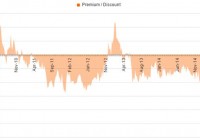
Summary Wave of investor outflows has created a significant dislocation. This provides an opportunity for those constructive on the Chinese market to obtain cheap exposure. For the rest of us, it also presents some potential to capture alpha through pair trades. Background on Closed-End Funds For those new to the space, a closed-end fund is a publicly traded investment company that raises a fixed amount of capital, and is then structured, listed and traded like a stock on a stock exchange. Whereas conventional mutual funds and ETFs frequently redeem/issue new shares to ensure that the price per share remains in line with the net asset value of the underlying holdings in the funds, this is not the case for CEFs. Rather the share price of CEFs is driven by the market forces of supply and demand, and can at times trade at either large discounts or premiums to NAV of the funds’ actual holdings. The Morgan Stanley China A Share Fund (NYSE: CAF ) is currently trading at one of the widest discounts in the CEF universe, due to a classic supply/demand imbalance. In particular, the Western media has inundated investors recently with headlines concerning the risks of a Chinese economic slowdown coupled with a potential bubble in the local equity market nearing its peak. The result is that the supply of CAF shares flooding the market from investors rushing to sell has overwhelmed demand, causing this CEF to now trade for a whopping ~20% below its NAV. In other words, for every $1 of net assets in the fund, investors now only need to pay ~80 cents to buy shares. (click to enlarge) Source: CEF Connect Morgan Stanley China A Share Fund Overview CAF is a reasonably large/liquid fund, with ~$936 million of total net asset value. The fund’s mandate is to invest at least 80% of its assets in A-shares of Chinese companies listed on the Shanghai and Shenzhen Stock Exchanges. Morgan Stanley is a longstanding/reputable CEF manager and the 3 executive/managing directors overseeing the fund each have more than a decade of experience in the Chinese market. The fund has a moderate annual expense ratio of 1.8%, and is currently relatively concentrated as shown in the table below. Also, the cash balance is now quite elevated (representing ~16% of NAV), which I view as a meaningful positive – after all, it’s hard to argue that cash in the hands of a reputable manager deserves a big discount. Plus, it gives the manager ammunition to take steps like share buybacks in the future to reduce the discount. Top 10 Holdings as of 5/31/15 % Of Portfolio Cash 16.1 Tsingtao Brewery Co., Ltd. Class A 10.0 China Resources Sanjiu Medical & Pharmaceutical Co., Ltd. Class 9.6 Industrial & Commercial Bank of China Ltd. Class A 8.7 Qingdao Haier Co., Ltd. Class A 5.2 China Pacific Insurance Group Co., Ltd. Class A 5.1 GoerTek, Inc. Class A 5.0 China Merchants Bank Co., Ltd. Class A 4.9 Kweichow Moutai Co., Ltd. Class A 4.4 Zhongbai Holdings Group Co., Ltd. Class A 3.7 Total 72.7 Source: Morgan Stanley CAF’s investor base is reasonably concentrated, with institutions holding approximately 37% of shares outstanding. Notably, Lazard holds ~$117mm or ~16% of total shares outstanding. This is also something I like to see when considering investing in a CEF that trades at a discount to NAV, as institutions holding major stakes are more likely than small individual/retail holders to pressure management to take steps to narrow the discount if this does not occur naturally over time. Source: NASDAQ So, What’s the Trade? For investors that want exposure to the local Chinese equity market, this CEF appears to be an attractive vehicle that is likely to deliver alpha from the discount reverting to more normalized levels over time. For others that have a more cautious view on the Chinese market (myself being one), there are also some potential opportunities to capture this alpha through pairing a long position in CAF with a short position in a Chinese equity ETF. There are several possible shorts to consider, but I present a couple below. CSOP FTSE China A50 ETF (NYSEARCA: AFTY ): This is a relatively small ETF with approximately $135mm of net assets. However, trading volume is reasonable, with ~$2.6mm/day in shares trading on average over the past 3 months. It is also currently relatively easy to borrow, with a cost under 2% through some retail brokers. The fund typically invests at least 80% of its total assets in the securities included in the FTSE China A50 index. This index is comprised of A-shares issued by the 50 largest companies in the China A-shares market. Direxion Daily FTSE China Bull 3X Shares ETF (NYSEARCA: YINN ): This alternative has more basis risk, but could also have the potential to produce more alpha. The fund has ~$181mm of net assets, with average daily trading volume of ~$20mm. YINN is not overly difficult to borrow, with a cost under 5.5% through some retail brokers currently. YINN seeks daily investment results, before fees and expenses, of 300% of the performance of the FTSE China 50 Index. This index consists of 50 of the largest and most liquid Chinese stocks (H Shares, Red Chips and P Chips) listed and trading on the Stock Exchange of Hong Kong, and is therefore a less tight match with CAF’s A share holdings. However, a potential benefit of shorting YINN is that one may benefit from the general tendency of levered ETFs to underperform over longer periods of time. There are several reasons for their underperformance including what is often referred to as a “leverage trap” (i.e., their tendency to decay in mean reverting markets from being forced to buy high/sell low), as well as elevated expenses that result from the higher trading activity needed to maintain these vehicles. The phenomenon is discussed in much more depth in academic literature (such as in this article ), as well as elsewhere on Seeking Alpha (such as here ). Risks/Considerations The main risk of this trade is that the timing of discount convergence is unclear, and if investors’ macro fears over China grow, there is a possibility that the discount could increase even further over the near term. The main mitigants are the facts that, as discussed above, the investor base is relatively concentrated with institutional investors, and the fund manager is reputable with dry powder in the form of excess cash to reduce the discount if it persists over time. Short selling of course also comes with added risks (e.g., possibility of force buy-ins, increasing borrow costs, etc.) and likely should not be attempted by those new to the market. Disclosure: I/we have no positions in any stocks mentioned, but may initiate a long position in CAF over the next 72 hours. (More…) I wrote this article myself, and it expresses my own opinions. I am not receiving compensation for it (other than from Seeking Alpha). I have no business relationship with any company whose stock is mentioned in this article.
Bearish GLD Trend After Greece Won Its Gamble

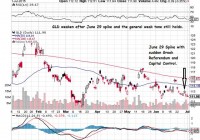
Summary The sudden Greek referendum and capital control gave the impression that events would spiral out of control and GLD spike up. U.S. and China intervened to keep the status quo and even the IMF which was defaulted on by Greece considered debt relief. Even the EU backed away from its demands and prepared to spend $35 billion euros to keep Greece within the EU. Still Greek PM wants a ‘No’ vote to increase negotiation leverage for greater concession. In short, Greece called the EU’s bluff and won the gamble. Financial stability concern had subsided but the world would still flock to USD. Bearish trend for GLD is now in place. The value of gold in our current fiat monetary system would be to serve as a hedge against inflation and financial instability. Inflation remains subtle today and major Centrals Banks only expect inflation to return to the 2% target in the next 2-5 years. Hence there is no reason to purchase gold from an inflation perspective. The financial stability argument is now in vogue with the whole Grexit saga that is playing out in real time. This has been expected after the Syriza government seized power back in January 2015 with the conflicting mandate of overthrowing austerity imposed by its European partners and to stay in the Eurozone at the same time. This is doomed for failure because the internal devaluation (cutting of wages and pensions, etc) would still go against the constraint of the strong euro in Greece’s competitiveness. Hence the Greek economy had shrunk year after year which would increase the debt to GDP ratio and make its debt untenable. Greek Referendum Card Therefore the only way forward would be for the Syriza government to play with the only card they have to force debt relief. That is the card of brinkmanship. It is only when Syriza threaten to burn the Eurozone apart with its default and the threat of leaving the European Union, then would the creditor nations be willing to grant them the much needed debt relief. It is important to understand this whole dynamics because it would in Greece’s interest to keep pushing Europe to the brink of collapse but at the same time maintain its membership in the Eurozone as long as the mandate of the Greek sways towards staying in the Eurozone. The Syriza government had to keep pushing the envelope to scare its creditors and it did a big scare on June 27. Greek Prime Minister Alexis Tsipras called for a sudden referendum on July 5 when the deadline for the EU bailout package on June 30. This worked wonders and was broadcasted worldwide for its sudden and irrational nature. At that point in time, shocked EU finance ministers expressed their angry clearly and closed the negotiations with Greece. On the next working day of June 29, Greece installed capital controls and limited the withdrawals of ATM cash to $60 euros per day. Banks were closed as the ECB refused to increase its emergency lending to deal with the bank run. Ratings agency such as Fitch and Standard and Poor downgraded Greeks banks and sovereign debt respectively. For a while, it would appear that things are rapidly spiraling out of control. I was shocked too and I wrote an article about the irrational nature of the Greek government as seen here . As the SPDR Gold Trust ETF (NYSEARCA: GLD ) chart below would show, gold prices actually spiked up that day as the threat of unconstrained disaster of Grexit appears imminent. The risk was that it would move out of Europe to the wider global economy. USD weakened as it was exchanged for gold. However this extreme extrapolation was a result of shock rather than a comprehensive assessment of the global economy. Foreign Intervention It turned out that the global will to keep the status quo was underestimated. Global leaders such as U.S. President Barack Obama, China’s Premier Li Keqiang and even IMF Christine Lagarde were not willing to rock the boat too hard. On June 30, the New York Times reported that President Obama intervened in the talks to urge creditors to soften their stance and come to a resolution. Obama was concerned over the financial stability concerns as the situation unfolded as described above. The U.S. President had grounds to believe that the unraveling of Europe could easily cause the contagion to spread not only in weaker European countries like Spain and Italy but also to the global economy including the U.S. In addition to the economic damage, there would also be geopolitical damage as Greece is part of NATO which is used to actively counteract the influence of Russia in Europe. This is especially after Russia annexed part of Ukraine in 2014 and this is still an existing concern. Obama was concerned enough for him to dispatch a senior Treasury officer to Europe to follow the status of the talks. For China , they had substantial investments in Greece and want Greece to stay within the EU framework for the safety of their investment. When the new government came into power, they tried to tear apart signed infrastructure contracts which unnerved Beijing. Things would only worsen if Greece were to leave the EU under desperate circumstances. Lastly we have the IMF which was at the losing end of Greece’s struggle with the EU. Greece failed to pay the $1.6 billion euros due on June 30 as the bailout negotiations failed. However the IMF had not taken action against Greece. Instead IMF Managing Director Christine Lagarde is entertaining the option of debt relief in exchange for reforms. Calling The EU Bluff Meanwhile the EU President Jean-Claude Juncker urged the Greeks to vote yes on the July 5 referendum and to stay within the Eurozone. This indicated that the EU would bend over backwards to accommodate the Greeks. In fact, the EU had already backed away from its proposal to rise the Value Added Tax from 13% to 23% and was prepared to give away another $35 billion in bailout. This is despite their doubts over the ability of the current Greek government to implement any reforms as demanded for the creditors. In fact even with these concessions on the table, the Greek PM is still urging his people to vote ‘no’ so that they can have more leverage on the EU for even more concession. The creditors are losing ground step by step with the negotiations with the current Greek government. The recent referendum, flawed as it is, is not used to primarily as a means for the Greek people to express their opinion. It is used as negotiation tool. In short, Tsipras had called the EU’s bluff. Even if the EU was willing to let go of Greece and go against its strong political will to unite the European nations on the frustrations of the creditor nations, international pressure would not allow it to happen so soon after a major recession and with the ongoing Russian aggression. In short, Tsipras took a gamble politically and he won. We can now expect to see more debt relief for Greece even if its record for implementation of reforms are doubted. Tsipras had won and Greece can stay within the Eurozone and not pay its debt. Conclusion The GLD chart below shows the recent impact of the Grexit drama. It spiked on June 29 as pointed out in the chart but it softened shortly after. It is clear that the financial stability concerns had faded and what is left is the rush to safety which would benefit the USD. (click to enlarge) Hence we should continue to sell GLD on any spikes in prices but we should not push it too far as there will be residual demand for gold in case events escalate beyond control suddenly. In other words, there will be a gradual weakening of GLD with periodic strength which should be sold. Disclosure: I/we have no positions in any stocks mentioned, and no plans to initiate any positions within the next 72 hours. (More…) I wrote this article myself, and it expresses my own opinions. I am not receiving compensation for it (other than from Seeking Alpha). I have no business relationship with any company whose stock is mentioned in this article.

China’s A Shares: My Biggest Bet In 67 Years Of Investing

I’m divesting myself of 50% of my U.S. holdings (stocks and bonds) and gently investing it all in China A shares (ASHR) in anticipation of an October 2015 upsurge. I anticipate billions of dollars flowing into China A shares in response to the IMF’s expected decision to make the Reminbi (Yuan) an official reserve currency in October. The operative words are “anticipate” and “expect”. This is NOT a slam-dunk; it’s a high-risk guesstimate. A year ago the IMF came within a whisker of approving the Reminbi to join the basket of official settlement currencies for worldwide debt settlement, bank retention, bond issuance, and credibility. In October of this year, I expect the organization to approve. Already major banks are issuing bonds and settling debts in Reminbi in anticipation. Major indexes and investment funds will pore billions into the China A shares market once the Yuan becomes internationally and easily and credibly convertible. This will occur for two reasons: first, because investors want exposure to the Reminbi in the foreign exchange market; and second, because China is liberalizing its rules to permit foreign investors to own these A shares, i.e. shares denominated in Reminibi. Asia, China, small-cap and development funds have been waiting years for this opportunity to buy the shares of Chinese companies in the currency of the country. And the funds that will be used to make all these new Reminbi investments in China will in large part come out of U.S. dollar investments, just as mine are. Meanwhile, the A share market itself has become particularly enticing of late. The off-putting “bubble” so bemoaned by the talking heads and the financial press has burst, with China’s indexes falling more than 10% since the start of June. That’s officially a correction. Last Friday the Shanghai Composite ended down 6.4% for a single week, with the Shenzhen close behind with a drop of 6%. This week there appears to be a stop to the falling knife: it appears to me the point to gently begin to buy A shares. As a consequence, I expect the China A share market to stabilize between now and October, at which point I anticipate the Reminbi (the Yuan) to rise significantly against the U.S. Dollar, and the A shares market to make real headway. But, as I pointed out, all of this is predicated upon “anticipate”, “expect”….and, I would add, “hope”. Follow my line of thinking at your own risk! But I must say I’ve never bet half the farm before on a single position in my 67 years of investing. I plan to hold this position until January, when I will begin transitioning back into the U.S. market, retaking the same positions I now hold (hopefully in larger measure) as I expect a strong 2016 for the U.S and U.S. stocks. I shall avoid U.S. bonds altogether, as a slough of despond. I doubt that I will hold any of my A shares beyond the October of 2016. Divesting myself of 50% of my U.S. liquid assets is a rash move, clearly not for the faint of heart. At the age of 75 I’m bored with the micromanagement of incrementalist investing. To me, this move looks like a one-time shot at an interesting risk with a limited downside. I simply do not foresee the implosion of the Chinese economy coming about in the next 18 months. After all, we trained their economists! But to say that this trade is not for the faint of heart is inadequate. Don’t put a dime into it that you are not willing — and comfortable — to lose. It’s just that straight forward. And just that much fun. Disclosure: I am/we are long ASHR. (More…) I wrote this article myself, and it expresses my own opinions. I am not receiving compensation for it (other than from Seeking Alpha). I have no business relationship with any company whose stock is mentioned in this article. Additional disclosure: I am unable to activate the SEEKING ALPHA template to accept ASHR as a ticker.