Tag Archives: cash

VTSAX: An Excellent Mutual Fund For Passive Investing
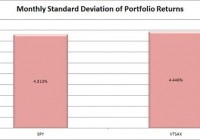
Summary VTSAX offers slightly more diversification than SPY, but it is also slightly more volatile. Because this is a total market fund, it has large weightings for the S&P 500 that create an extremely high correlation. VTSAX is one of the best mutual funds an investor can use for eligible employer-sponsored retirement accounts. Not all plans will offer this fund. VTSAX is the mutual fund version of VTI, which is one of the best total market ETFs available. Investors should be seeking to improve their risk-adjusted returns. Regardless of how they are handling the holdings, the goal is to maximize returns and minimize risks. When it comes to maximizing the returns while maintaining excellent diversification, Vanguard Total Stock Market Index Fund Admiral Shares (MUTF: VTSAX ) is an excellent option. My employer-sponsored retirement accounts are through different brokerages. Mine goes through Schwab, and my wife’s account is with Fidelity. Neither of us is eligible to use VTSAX, but I look for funds that replicate VTSAX, because it embodies most of the things I want in a fund. What does VTSAX do? VTSAX uses an indexing approach to track the performance of the CRSP U.S. Total Market Index. The first thing I’m looking for is diversification, so a total market index seems very attractive. Standard deviation of monthly returns (dividend adjusted, measured since January 2001) The standard deviation is not a problem. Because this is a total market index investors should expect it to be a little more volatile than the S&P 500, and that is exactly what we see. (click to enlarge) Basically, the increase in standard deviation is equivalent to having three percent leverage on a position in SPY. I love low-volatility investments, but when using a retirement account with dollar cost averaging automatically involved, a tiny bit of extra volatility is not problematic as long as the investment is very heavily diversified. Expense Ratio The Admiral shares have an expense ratio of .05%. This is excellent. Largest Holdings The diversification is very good in this mutual fund, and this is easily my favorite thing about the fund. The top 10 holdings appear to be somewhat concentrated, but when you consider that there are over 3800 different securities in the total portfolio, it doesn’t concern me. This is simply a great fund, in my opinion. (click to enlarge) Avoiding Fees There is one downside to Vanguard mutual funds. Vanguard charges a $20 annual account service fee for each mutual fund held in the account with a balance of less than $10,000. If you’re picking VTSAX for a new retirement account and want to save the $20, you can sign up on the Vanguard website for electronic delivery of statements. It appears to me that this fee is largely covering the cost of mailing the investments documents through the postal service. With its huge system in place, being able to send everything by one automated e-mail system saves the company money. I don’t see how it could hold its expense ratio down to .05% without having a way to compel investors to either take electronic delivery or pay for the physical copies. All around, this is a nicely designed system. Want VTSAX from Other Brokerages? You can also effectively invest in the fund using the Vanguard Total Stock Market ETF (NYSEARCA: VTI ), which holds the same assets and has the same expense ratio. Using VTI should automatically avoid the $20 fee and doesn’t require signing up the electronic delivery. The downside about using the ETF is that you would usually be stuck purchasing entire shares. While VTI, shares have been running $107-110; for dollar cost averaging, it is more convenient to be able to buy into a mutual fund with automatic deposits. Conclusion I like VTSAX enough that I’m holding a significant chunk of my portfolio in VTI, the ETF version. Lately, I had been adding to my cash positions rather than my equity positions, because I’m concerned about the market getting a little frothy. Over the last week, I dropped quite a bit of that into buying more broad market ETFs and mREITs when prices dipped. When it comes to long-term investing strategy for the employer-sponsored 401k accounts, my favorite technique is still to use dollar cost averaging on low-fee index funds and to max out (or come close) the contributions every year. If you really want to use VTSAX for your 401k, but are going through Fidelity, I would suggest looking into the Fidelity Spartan® Total Market Index Fund (MUTF: FSTVX ). That is the major mutual fund that I’m using for my wife’s 401k. It has slightly less holdings, with around 3,400 to 3,500 rather than 3,800, but is close enough for my purposes. The correlation between FSTVX and VTSAX is in excess of 99%. Disclosure: I am/we are long VTI, FSTVX. (More…) I wrote this article myself, and it expresses my own opinions. I am not receiving compensation for it (other than from Seeking Alpha). I have no business relationship with any company whose stock is mentioned in this article. Additional disclosure: Information in this article represents the opinion of the analyst. All statements are represented as opinions, rather than facts, and should not be construed as advice to buy or sell a security. Ratings of “outperform” and “underperform” reflect the analyst’s estimation of a divergence between the market value for a security and the price that would be appropriate given the potential for risks and returns relative to other securities. The analyst does not know your particular objectives for returns or constraints upon investing. All investors are encouraged to do their own research before making any investment decision. Information is regularly obtained from Yahoo Finance, Google Finance, and SEC Database. If Yahoo, Google, or the SEC database contained faulty or old information it could be incorporated into my analysis.
My Latest Additions To The Portfolio

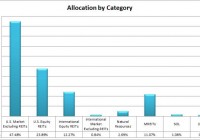
Summary I’ll take readers through a look at my personal portfolio. My biggest individual company weights are still Freeport-McMoRan and Dynex Capital. The allocation to Freeport-McMoRan continues to shrink as shares drop in value most days. In the first half of August, I used up most of the cash I had piled up. I bought shares of SCHH, SCHB, SCHF, and DX. I have a bias to see a drop in indexes, assume it is a dip (temporary) and buy into it. It’s useful for readers to have a solid disclosure about the investing choices of the analysts they follow. Seeing the choices the analysts have personally made and what plans the analysts have for their future investing choices provide other investors the opportunity to better understand the mindset of the analysts and determine how they feel about the quality of the analysts’ research. The first thing investors are likely to notice is that my holdings include a few tickers with large amounts of overlap. The reason for that is because I focus on allocation by category rather than allocation by ticker. Therefore, I will use the cheapest ticker that adds the desired allocation, which results in buying different tickers at different points and in different accounts. My brokerage accounts are spread out among a few brokerages; therefore, some accounts have free trading on different tickers. For this reason, you will see VTI, FSTVX, and SCHB all in my portfolio even though they are practically identical. Holdings My holdings are: Vanguard Total Stock Market ETF (NYSEARCA: VTI ), Fidelity Spartan® Total Market Index Fund – Fidelity Advantage Class (MUTF: FSTVX ) Schwab U.S. Broad Market ETF (NYSEARCA: SCHB ) Fidelity Spartan® Real Estate Index Fund – Fidelity Advantage® Class (MUTF: FSRVX ) Schwab U.S. REIT ETF (NYSEARCA: SCHH ) Vanguard REIT Index ETF (NYSEARCA: VNQ ) Vanguard Global ex-U.S. Real Estate ETF (NASDAQ: VNQI ) Schwab International Equity ETF (NYSEARCA: SCHF ) Freeport-McMoRan (NYSE: FCX ) Dynex Capital (NYSE: DX ) ReneSola (NYSE: SOL ) My Strategy By observing my own behavior in hindsight, I find that I display a bias towards buying things that are dipping. When it comes to companies, that strategy can lead me to attempting to catch a “falling knife.” To combat that issue, I try to keep most of my portfolio invested in highly diversified indexes where I feel buying on dips is safer. When I do venture into buying individual companies, I want to keep the purchases to my area of greatest expertise, the mREIT sector. What I Bought During the month, I heavily displayed my bias to buy on sudden drops in price. I purchased SCHH, DX, SCHB, and SCHF. During July, I was working to increase the amount I held in cash so I could look for compelling opportunities. During the first half of August, I spent most of the cash. Let’s go over what I purchased and why. I’ll provide the date of the transaction and the average price. On August 6th, I bought some SCHH on a dip when my limit order activated. The average price was $37.85, and the current price is $39.07. On August 7th, I saw shares of Dynex Capital falling hard. I had just published on DX explaining that the sell-off on the earnings release was overdone and a second day of shares falling hard pushed me to act. I put in a limit order at $6.41, and backed it up with almost all the cash in my portfolio. I only got partial execution on the order and acted as a floor on the price for the day. Current price is $6.95. On August 12th, the markets opened substantially lower. By my calculations, I had a large enough percentage allocation to domestic whole stock market indexes, but seeing SCHB trading under $50.00 was enough for me to buy. I tossed on a limit order for $49.85. It hit in early trading. Shares are currently $50.82. Right after putting in the trade for SCHB, I added another trade for SCHF. My international equity allocation is about where it should be but the major exposure is through VNQI. I have decided I prefer SCHF over VNQI because it offers a lower exposure and the international exposure is to more developed markets. I originally picked up VNQI because I wanted to use international REITs to gain more diversification and was going to pair it with SCHF. As it stands, I may sell off part or all of my position in VNQI and allocate part or all of the funds to SCHF. I did the same thing with SCHF and put in a limit buy order a little under the current price and acquired my shares at $30.03. Current price for SCHF is $30.38. Lessons Learned Sometimes, it is better to be lucky than good. I have a tendency to buy index funds on dips and some day that will bite me when I buy in right at the start of a hard crash. When the market is not crashing, I may be more likely to see small positive returns. When it came to providing a floor on DX, there was much more thorough analysis than simply saying: “Hey that index fund looks cheaper than normal.” With Dynex Capital, I put in some serious time during the day testing my assumptions and looking for any solid justification for the mREIT to fall so hard. After a thorough analysis, I determined that the drop in price was the result of scared investors selling their shares in a panic. To me, that situation reflects the strategy: “Buy when there is blood in the streets.” I had enough cash in my portfolio to double down on my position in Dynex Capital but the share price bounced slightly before closing, and I wasn’t able to buy as many shares as I was trying to acquire. Below are two charts showing my allocation by asset category and my allocation by ticker. The charts lump together several accounts across several brokerages to represent all of the investment accounts owned by either myself or my wife. I have POA (Power of Attorney) on her account and handle all of her investment decisions. (click to enlarge) (click to enlarge) Conclusion In early August, there were a couple dips in the equity indexes, and I decided to unload my cash. My largest purchase by a substantial margin was adding to my position in Dynex Capital. Since I couldn’t get full execution there, I ended up using the cash the following week to buy some SCHB and SCHF when the prices dropped. For the rest of August, I’m not expecting any trades; however, I do plan to deposit more money into the accounts and if I see another big dip in the equity market, I may toss a limit buy order in. All REIT investments are held in tax-advantaged accounts. I consider the current allocation fairly reasonable, but I would like to raise my cash holdings and shift some international equity REITs into international markets (non-REITs). Since I feel very comfortable holding a large allocation to U.S. equity REITs, I may look to push that percentage higher as well. I’m fairly comfortable with that going up to around 30% of total value, so long as it can be done through tax-advantaged accounts. Disclosure: I am/we are long DX, FCX, FSRVX, FSTVX, SCHB, SCHF, SCHH, SOL, VNQ, VNQI, VTI. (More…) I wrote this article myself, and it expresses my own opinions. I am not receiving compensation for it (other than from Seeking Alpha). I have no business relationship with any company whose stock is mentioned in this article. Additional disclosure: Information in this article represents the opinion of the analyst. All statements are represented as opinions, rather than facts, and should not be construed as advice to buy or sell a security. Ratings of “outperform” and “underperform” reflect the analyst’s estimation of a divergence between the market value for a security and the price that would be appropriate given the potential for risks and returns relative to other securities. The analyst does not know your particular objectives for returns or constraints upon investing. All investors are encouraged to do their own research before making any investment decision. Information is regularly obtained from Yahoo Finance, Google Finance, and SEC Database. If Yahoo, Google, or the SEC database contained faulty or old information it could be incorporated into my analysis.

Active Power: At An Inflection Point?

ACPW is a name that has long been a disappointment. But it appears that new management is showing to have an effect on shaping operations at the company – ACPW just reported its sixth quarter of greater than 1:1 book/bill. ACPW is also growing sales while managing higher gross margins – this had the effect of reducing overall cash burn, always a concern for microcaps. If ACPW can sustain its operating momentum it should scale up market cap with each quarter reported as the niche has a well-established EV/revenue multiple. Active Power (NASDAQ: ACPW ) is an interesting name that I came across recently. The company’s headquarters is coincidentally located just a few blocks away from my home. After passing by its offices time and time again, and this is a name that I’ve seen trend in the social arenas a few times over the last year, I decided to take a look into the filings. What I found looks like a company that might be at an inflection point that has long been in the making. First, ACPW is “engaged in designing, manufacturing and selling of flywheel-based uninterruptible power supply (“UPS”) products and modular infrastructure solutions (SOURCE: ACPW 10-K)”. Put simply, the company helps regulate power to facilities and entities that can ill afford to not have a steady power flow; and provides essential infrastructure to facilities and entities that want greater control over microgrids. The latter functionality taps into the burgeoning market for off-grid power production from a single or multiple sources of alternative energy production (e.g. solar power installations, wind power farms, etc.). Both UPS power regulation and microgrid applications are growing more evident value-props in 1) an increasingly stressed electrical infrastructure (international electrical infrastructures are already stressed) and 2) an infrastructure in which microgrids (read: hospitals, university campuses, massive server host facilities, etc.) are becoming more valuable. While these are long term, secular trends to be sure – there is no denying that the visibility of the necessity for equipment and services provided by ACPW is increasing. In that the value prop and visibility of value prop are set up in this instance to be longer term, I’m viewing ACPW as strictly a long-term buy and hold opportunity. Shares of ACPW likely will not trade sharply higher overnight, but I believe they will trade higher steadily over extended durations. (click to enlarge) In saying that, through 1H/15 reporting ACPW is showing to have steadily improving operations and a more consistently stable overall model. Trading at less than one times EV/revenue (TTM) and trading 30 bps below a peer group EV/revenue multiple average of 1X (consisting of Capstone Turbine (NASDAQ: CPST ), FuelCell Energy (NASDAQ: FCEL ), Maxwell Technologies (NASDAQ: MXWL ) and PowerSecure International (NYSE: POWR )), now might be a good time to consider initiating a position in ACPW. ACPW has generated ~$58 million in TTM revenues, showing a healthy revenue base for a microcap – certainly having such revenues allows the company certain flexibilities not inherent in pre/low revenue microcap models, and is on pace to achieve approximately the same figure in full year 2015 (annualizing 1H/15 performance – it should be noted that ACPW does report lumpy revenues from time to time). The company also recently posted its first quarter of positive Adjusted EBITDA in quite some time and greatly closed its long-standing net loss and negative EPS: (click to enlarge) When coupling this income statement performance with the fact that the company has ~$10.6 million in C&CE on its balance sheet, $37.4 million in assets, $19.8 million in liabilities, and $5.5 million in debt, I consider the company to not be at any near-term structural risk. ACPW’s cash, which is always important to monitor in this market cap space, should last at least the next 12 months. I anticipate the cash balance will likely last much longer, basing this assumption on ACPW’s 10-K filing and cash burn generally associated with total net loss. I could realistically see full year 2015, which through 1H/15 ACPW has shown roughly half the total cash burn as 1H/14, being the lowest cash burn print in 4 years . If ACPW can prove out 2015 to be at or near cash flow breakeven, management has not given guidance to this, this would materially move forward the bull case. Typically with microcaps, dilution and/or a reliance on debt as a result of high rates of cash burn is at or near the top of the risk list. ACPW, depending on sales ramp, might be close to negating this risk. In regards to sales at ACPW, upon reviewing the company’s 10-K filing for the year ended 12/31/14 this was a red flag to me in considering ACPW for a bullish recommendation. I noticed that the company had, as of its now 6-month-old 10-K filing, a history of falling sales on flat operating expenses – which was particularly concerning. I also knew that ACPW had changed management teams less than two years ago and the lack of progress visible on the topline was adding to my initial concerns. However, when viewing the current year’s Q1 and Q2 10-Q filings, of course, I saw the data illustrated in the image above which speaks quite to the contrary of the performance in the 10-K. ACPW appears to have turned a corner in selling as of the first two quarters of 2015. Still, even knowing this, it was encouraging to see that ACPW broke out its sales in its August Investor Deck into book to bill ratios. ACPW, as of Q2/15, reported its sixth consecutive quarter of a greater than 1.0 book to bill ratio – this has led to a much healthier trend line: (click to enlarge) Again, this increased consistency and overall scale has led to a return to positive Adjusted EBITDA for ACPW as well as increasing gross margins – another sign of increasing operating health: (click to enlarge) Finally, it should be noted that ACPW has fragmented and diversified both its geographical revenue dependence as well as its dependence on any singular revenue channel – yet more reasons to believe that the increased book to bill ratio is sustainable under the new regime: (click to enlarge) All told I believe ACPW is deserving of a hard look at this point in its development by those interested in securing an ownership in electrical grid and microgrid management. I don’t believe there is any denying that there are secular growth trends supporting both a need and desire for these types of services. ACPW, while being largely a disappointment since its IPO many years ago, appears to be changing course under new management. The story at ACPW has been slowly progressing – to management’s credit this does have quite a bit to do with the fact that ACPW is a capital equipment company – but it is now having a positive effect on the company’s health. If ACPW is at an inflection point, which I’m leaning heavily into the fact that it is, it should be able to grow its market cap. Despite improved financial performance in the first half of the year, the stock has not moved. The realization of a continuation of greater than 1:1 book to bill ratios bodes well for the company and its shares. Good luck everybody. Editor’s Note: This article covers one or more stocks trading at less than $1 per share and/or with less than a $100 million market cap. Please be aware of the risks associated with these stocks. Disclosure: I/we have no positions in any stocks mentioned, and no plans to initiate any positions within the next 72 hours. (More…) I wrote this article myself, and it expresses my own opinions. I am not receiving compensation for it (other than from Seeking Alpha). I have no business relationship with any company whose stock is mentioned in this article.