Tag Archives: baba

Vipshop Forecast Soft, Raising Concerns About Slowing China Economy

China e-commerce company Vipshop Holdings ( VIPS ) reported strong fourth-quarter earnings but shares fell as first-quarter guidance fell short. The Q1 shortfall reflects economic uncertainties in China and elsewhere as well as competitive pressures from Alibaba ( BABA ) and JD.com ( JD ),  China e-commerce companies. Late Wednesday, Vipshop reported revenue of $2.15 billion, up 65% in local currency year over year. Vipshop posted a 58% increase in the number of active users to 19.8 million and a 67% increase in total orders of 65 million. Earnings per share minus items of 18 cents rose 66% in local currency, beating the consensus estimate of 16 cents. Vipshop stock was down nearly 12%, near 11, in early afternoon trading in the stock market today . JD stock was down 3.5%, near 24.75. Alibaba was down 1.6%, near 66.17. Vipshop expects Q1 revenue to rise 37% to 43%, but analysts expected 44% growth. Last year’s Q1 revenue doubled from the year-earlier quarter. It did not provide an earnings forecast. “Longer term, we remain optimistic on the discount retailing market and continue to believe in Vipshop’s strategic value in the space, which is mainly driven by the company’s merchandising capability and large scale,” wrote Summit Research analyst Henry Guo in a research note. China online gaming company NetEase ( NTES ) reported Q4 earnings late Wednesday that topped forecasts, but its profit margin disappointed and NetEase stock was down 16%, near 134. China Economy An Issue For Vipshop, Others The decline in China Internet stocks come as worries grow about a slowing economy and concerns of Chinese government restrictions on trading. The Shanghai composite, China’s benchmark index, fell 6.4% Thursday. The Shenzen composite, roughly equivalent to the Nasdaq, fell 7.3%. China search leader Baidu ( BIDU ) is set to report earnings after the close Thursday, with analysts looking for guidance on China’s ad market amid an economic slowdown. Baidu stock was down nearly 4%, near 157, Thursday afternoon. Baidu this month announced that it had received a nonbinding proposal from two Baidu executives to acquire the company’s fast-growing Qiyi video unit for $2.8 billion. JD is slated to report Q4 earnings before the market open on Tuesday. The focus is expected to be on JD’s push into online-to-offline (O2O) retailing and other new businesses. JD is banking on its O2O business to help it compete in China’s burgeoning e-commerce arena vs. China e-commerce leader Alibaba and others. Tencent Holdings ( TCEHY ), China’s leader in messaging and gaming, is set to report earnings before the market open March 17. It’s traded in the U.S. over the counter. Tencent, Alibaba, JD and Baidu are the four largest Internet companies in China. On Jan. 28, Alibaba reported earnings for its fiscal third quarter ended Dec. 31 that topped Wall Street expectations. Vipshop is an online discount retailer that sells branded apparel, accessories, home goods and other lifestyle products. It specializes in so-called flash sales, in which a set number of goods are sold over a limited time. “As we diversify our product offering and further enhance the customer experience, we are confident in our ability to drive further growth and value for investors,” Vipshop CEO Eric Shen said in the company’s Q4 earnings release . Vipshop spotlighted its strength in mobile, which accounted for 82% of the total value of goods sold on its website, up from 66% in Q4 2014. It said orders for Vipshop’s core flash sales business jumped 126%. Strong growth in customers and orders in the quarter “implies strong brand awareness among consumers, despite increasing competition in flash sales category from Alibaba and JD.com,” wrote Guo.
NetEase Dragged Under By Sinking Profit Margin For Online Games

NetEase ( NTES ) stock plunged by double digits Thursday after the China-based gaming and Internet company saw its gross margin shrink in Q4, even as its revenue and earnings beat analyst expectations. After falling after hours Wednesday following the company’s earnings release, NetEase stock was down 16% in midday trading in the stock market today , near 134. Still, NetEase stock is up 31% over the past 12 months and is ranked No. 3 in Wednesday’s midweek update of the IBD 50 list of top-performing stocks. This is despite a tough time for many Asian stocks. Amid ongoing worries about slowing growth in China, the Shanghai composite fell more than 6% Thursday, its biggest drop in more than a month. NetEase posted a gross profit margin for its online games business of 67.2% in Q4, down from 67.9% in Q3 and 76% in Q4 2014, with the declines mainly due to increased revenue contributions from lower-margin mobile games. The company said revenue from online games, its biggest segment, more than doubled, thanks to growth in its original mobile games. The company’s “Westward Journey Online” and “Fantasy Westward Journey” came in as the top two games in the Apple ( AAPL ) iOS China app store in the fourth quarter, NetEase said. NetEase Now Has 80-Plus Mobile Games NetEase has been keeping up “a very good momentum of rolling out the games, especially the mobile games, to the market. And if you look back in the past quarter, which is the fourth quarter of 2015, we have come up to 80-plus mobile games in the market. That’s compared to about 50-plus in the third quarter of 2015,” NetEase acting CFO Onward Choi told analysts during an earnings call late Wednesday. “We saw year-over-year net revenue increases in the fourth quarter of 103.2% from online games, 68.1% from advertising services and 355.5% from email, e-commerce and others,” NetEase CEO William Ding said in a statement. Fourth-quarter revenue jumped 128% in local currency to RMB 7.90 billion ($1.22 billion), above the RMB 7.69 billion analysts polled by Thomson Reuters had forecast. The company said earnings per American Depositary Receipt were RMB 16.34 ($2.52), up 69% in local currency. Analysts had expected RMB 14.79. NetEase did not provide Q1 guidance. Analysts polled by Thomson Reuters expect net revenue to rise 126% in local currency to RMB 8.27 billion ($1.26 billion). Analysts expect adjusted earnings per share to rise 45% to RMB 13.97 ($2.14). NetEase is best known for its desktop PC games and has had a lucrative exclusive license for Activision Blizzard ’s ( ATVI ) “World of Warcraft” in mainland China since 2009. The company also develops its own games, mostly the multiplayer variety played on desktop PCs and mobile devices. NetEase is a home-field favorite on China’s gaming scene, ranking a close second to Internet titan Tencent Holdings ( TCEHY ). Looking to bring its most popular titles to more English speakers, Beijing-based NetEase opened its first U.S. office, in the San Francisco suburb of Redwood Shores, Calif., early last year. Among other Chinese names, online-discount retailer Vipshop Holdings ( VIPS ) was down 12% in midday trading Thursday after reporting better-than-expected fourth-quarter earnings but weaker first-quarter revenue guidance. Vipshop is facing more competition in the flash discount sales category from Alibaba Group ( BABA ) and JD.com ( JD ). Alibaba’s U.S. stock was down 1.5% midday Thursday, while JD.com was down 3.5%.

Criteo On Being Facebook ‘Frenemy’ And Why Ad-Blocking Didn’t Stick

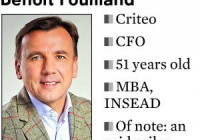
Ad tech firm Criteo saw its stock slip last year on fears that it would lose sales after consumer electronics giant Apple opened the door to ad blocking on its iOS devices. After all, Criteo ( CRTO ) embeds browser cookies — tiny text files that let websites recognize users and their preferences when they return to a site — for 52% of the 100 largest retail and travel websites in the U.S. Criteo gets paid for serving ads only if a user clicks on them, and it collects a bigger cut if the user goes on to buy a product from or otherwise engage with that advertiser. But Criteo bucked those concerns after the Apple ( AAPL ) ad-block threat didn’t play out. In mid-February, the Paris-based company posted healthy Q4 earnings that showed rising numbers of clients, a continuing advertising partnership with social media leader Facebook ( FB ), efforts to invent “disruptive products” and plans to beef up its business in China, one of the world’s largest e-shopping markets. On other levels, Criteo still competes with Facebook and is also a rival of ad networks run by major Internet companies, including Alphabet ( GOOGL )-owned Google and Amazon.com ( AMZN ). IBD recently spoke with Criteo CFO Benoit Fouilland about what it’s like being a Facebook “frenemy” and where the company will direct its efforts and resources this year. IBD: Wall Street worried that ad blocking might hurt your company’s revenue, which depends on people seeing ads and then taking action. But impact has been minimal so far. Why is that? Fouilland: There has been considerable talk about ad blocking over the last two months, and there has been some overreaction about that topic. But ad blocking has been here for quite a long time. It’s not a new phenomenon, although Apple made the announcement that iOS 9 would enable the use of ad blockers. But in reality, a maximum of 10% of the users worldwide are using ad blocking, primarily within desktop, although there is some use in mobile. Why do people use ad blocking? It’s a very simple reason — because they can’t stand the very intrusive ads that some industry players are using, in particular the pop-ups or pre-roll video type of ads that are very annoying. But we are not using any of those intrusive formats for one simple reason — our business model is to create engagement. We get paid only if there is engagement with our ads. So we don’t want to annoy anybody with our ads. We want to create an incentive for people by showing them very relevant ads, non-intrusive ads, to give them an incentive to click on the ads. IBD: What is your company’s ad partnership with Facebook? Fouilland: Facebook has been our partner for more than three years. They have a lot of advertising inventories that they wish to monetize. We were an early partner with Facebook when they launched their first initiative, which was the Facebook Exchange, which they created to monetize their ad inventory on desktop. More recently, Facebook has been developing a new solution to monetize its ad inventory within the mobile application, as Facebook is more and more used through mobile. We have been the first partner in that effort, as they publicly disclosed in Q4 2014. IBD: Could Facebook eventually start offering that service themselves and then not need Criteo? Fouilland: They don’t have the predictive capability, which is the core of what we do at Criteo — to predict the behavior of the user based on all the integrations that we have with advertisers. They don’t have all of the breadth of relationships with advertisers, with integration into the shopping data of the advertiser. All of that is what we bring to Facebook. But we are in an industry where very often your friends are sometimes also your enemies. But in this particular case, I think we have a very mutually beneficial partnership, where we bring to them unique capabilities with respect to performance-driven advertising demand. IBD: Can you talk about your company’s innovation efforts? Fouilland: Out of 1,800 people in the company, we’ve got 400 people in research and development. That R&D team is divided between Paris and Palo Alto. In the U.S., we have about 100 people on the West Coast. The core of our technology is machine-learning technology, and those are mathematical algorithms that predict the behavior of users. So the core is research and constant improvement on those algorithms. We have a team of 50 people working on a proof of concept on search marketing. We have a small team working on another concept of what we call offline — how can we make the link between what is happening within your store to what is happening online. That’s a very interesting field. You see more and more people going online and then searching for items in stores and vice versa — people who look at products in the store and then go online to buy them. If you are able to link information about purchase intent in-store or online, it could offer new opportunities. We also have a proof of concept going on in the U.S. and Europe where we capture shopping intent data within stores, thanks to using beacon technology. IBD: In your industry, there are so many companies right now. Do you see consolidation ahead? Fouilland: If you look at performance advertising — and particularly display advertising — it’s an industry where scale matters a lot. Today, if you look at the competitive landscape, most of our direct competitors that have emerged after us have been somehow acquired over the last 18 months. They were not acquired as a consolidation movement in the industry, but more because it became very clear for those direct competitors that they were sub-scale, and they joined broader groups. For example, TellApart has been acquired by Twitter ( TWTR ), and you’ve seen that Tesco-Dunnhumby in the U.K. acquired Big Data tech firm Sociomantic, which was another competitor in Europe. I would not call that a real consolidation, though, because it’s not that the market has consolidated and there are only a few players left now. It’s more that with some players ahead of the game, like ourselves, it was difficult for the new entrants who were sub-scale in this very much “winner-take-all” type of dynamic in our industry. Most of the smallest competitors have been acquired by larger players — not that those smaller competitors are out of the market, but they are now under the umbrella of larger players. IBD: Will Criteo be looking to make any acquisitions this year? Fouilland: We’ve made four acquisitions in the history of the company, so we are active at (surveying) the market for good companies that could bring us complementary technologies. We are considering making acquisitions only if there is a strong rationale from a tech standpoint to ensure that it would help us accelerate our development. IBD: What is your company’s strategy in China? Is Alibaba Group ( BABA ) one of your customers there? Fouilland: We opened an office in Beijing two years ago, and we are in the process of opening another office in Shanghai. We have roughly 25 people on the ground in China. We made a significant investment last year in setting up a data center in Shanghai, the reason being that we ultimately manage a lot of data in order to target users. We are one of the very few international companies with data-center capabilities within mainland China. We now have the foundation for developing domestic demand in China. That’s certainly an area of focus for us in 2016. I can’t make any comment specifically about Alibaba. We have partnerships with multiple large players in China.