Category Archives: etf

Gold Is Rocking In 2016 So Far; How Far Will Miners Rebound?
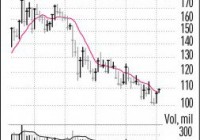
With gold prices exploding higher since January, will major gold mining stocks take on a similar shine for the rest of the year? After dwelling in the market’s cellar for years, the action among some of the largest companies in the world seems to be saying yes for now. Those who bought the SPDR Gold Trust ( GLD ) ETF, a widely used benchmark to trade the direction of gold futures prices, on Dec. 31 are now sitting on a 9% gain. Not bad, considering that the S&P 500 is down 6.3% since Jan. 1, and the Nasdaq composite is off 10%. On Thursday, spot gold prices finished at $1,156.03 per troy ounce, up nearly 9% since Jan. 1. Some gold mining stocks have even outstripped SPDR Gold Trust. Newmont Mining ( NEM ) is one of nine stocks in IBD’s Mining-Gold/Silver/Gems industry group that boasts a 90 RS Rating or higher and at least a $1 billion market cap. The Greenwood Village, Colo., firm has soared as much as 34% since its 17.99 close. Randgold ( GOLD ), which primarily mines in Mali and Cote d’Ivoire, is up 24% year to date. Through Wednesday, both stocks notch a superior 93 RS Rating out of a maximum 99. Even the beginning investor knows that higher gold prices boost the profits of mining plays. In reality, it’s not that simple. For starters, predicting the path of gold prices is a treacherous one. Gold bulls have been exclaiming for years that amid a growing U.S. debt mountain, ultra-low interest rates and economic uncertainties around the world, gold serves as a safe haven asset. Yet gold has been in a bear market since September 2011. As the monthly chart of GLD shows, the rally since January has not broken gold’s long-term downtrend. Keep in mind that even as gold prices and mining revenues go up, so too can costs. Floods, war and labor strikes can render mines useless for months, if not years. Also, a mining company’s profits can swing sharply based on how much they use pricing hedges for future deliveries. The mining industry’s profit margins have been poor in recent years. Looking at the nine stocks with an RS of 90 or higher, just four had a pretax margin of 10% or higher in 2014. Randgold is tops with 30.2%, followed by Agnico Eagle Mines ( AEM ) (13.7%) Barrick Gold ( ABX ) (11%) and Sibanye Gold ( SBGL ) (10.3%). Newmont scored a pretax margin of 8.2%, down sharply from its 2010 peak of 41.2%. Full-year sales dipped 5%, 15% and 13% in the past three years through 2014, respectively. In 2015, the Street sees sales up 6% to $7.75 billion. Image provided by Shutterstock .

Our Growing World

Photo Credit: Ejaz Asi In general, I tend not to go in for macro themes. Why? I tend to get them wrong, and I think most investors also get them wrong, or at least, don’t get them right consistently. I do have one macro theme, and it has served me well for a long time, though not over the past two years. I was using the theme as early as 2000, but finally articulated it in 2006. At that time, I was running my equity strategy for my employer, as well as in my personal account. They used it for their profit sharing plan and endowment. They liked it because it was different from what the firm did to make money, which was mostly off of financial companies, both public and private. They didn’t want employees to worry that their accrued profit sharing bonuses would be in jeopardy if the firm’s ordinary businesses got into trouble. In general, a good idea. At the end of the year, I needed to give a presentation to all of the employees on how I had been managing their money. Because my strategies had been working well, it would be an easy presentation to make… but as I looked at the prior year presentation, I felt that I needed to say more. It was at that moment that the macro theme that I had been working with became clear to me, and I called it: Our Growing World. The idea is this: in a post-Cold War world where most economies have accepted the basic idea of Capitalism to varying degrees, there should be growth, and that growth should create a growing middle class globally. This middle class would be less well-off than what we presently see in America and Western Europe, at least initially, but would manifest itself in a lot of demand for food, energy, and a variety of commodities and machinery as the middle class grew. Now, I never committed everything to this theme, ever. Maybe one-third of the portfolio was influenced by it, on average. Most of what I do was and still is more influenced by my industry models, and by bottom-up stock-picking. That said, the theme has a cyclical bias, and cyclicals have been kicked lately. I still think the theme is valid, but will have to wait for overinvestment and overproduction in certain industries to get rationalized globally. Were this only a US problem, it might be easier to deal with because we’re far more willing to let things fail, and let the bankruptcy process sort these matters out. Governments in the rest of the world tend to interfere more, particularly if it is to protect a company that is a “national champion.” But the rationalization will take place, and so until then in cyclical industries I try to own financially strong companies that are cheap. They will survive until the cycle turns, and make good money after that. That said, the billion dollar question remains – when will the cycle turn? More next time, when I write about my industry model. Disclosure: None

Moby-Markets

“Thar she blows!” “Where away?” “Three points off the lee bow, sir.” “Raise up your wheel. Steady!” Illustration: I.W. Taber. Source: Wikipedia It’s easy to become obsessed. Melville’s famous novel Moby-Dick describes Captain Ahab’s obsession with a giant albino sperm whale. On a previous voyage, the white whale had bitten off Ahab’s leg, leaving him with a prosthesis. Ahab goes on a mission of revenge, casting his spell over the rest of the crew. His fanaticism robs him of all caution. In the end, Moby-Dick destroys the ship and drags Ahab to the bottom. When you’ve suffered a loss in the market, the best thing to do is to put it behind you. Sometimes it’s because the nature of the economy has changed. Sometimes there was an unexpected development – new management, or some external factor. Sometimes you simply miscalculated. Whatever the reason, it’s important to understand that markets are forward-looking. They take current circumstances and future expectations and try to discount all the expected cash-flows to a present value. That’s what market prices represent. Click to enlarge S&P 500 for the last 2 years. Source: Bloomberg So when they move significantly, it’s because the outlook is different. A stock doesn’t know that you own it, and it certainly doesn’t care what the price was when you bought it. Investors can get obsessed with “getting out even.” But that’s a mistake. The only reason to worry about where you bought a stock is to manage your tax-liability. In the midst of the conflict, Ahab was given a final chance to give up his fanatical quest, but he rejects this – to his doom. Investors need to be sure they’re thinking and planning rationally – and not obsessively.