Author Archives: Scalper1

Senior Loan Funds: Buy Inexpensive Defense Against Rising Interest Rates
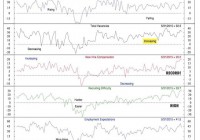
Instability in Greece and China further emphasizes the ‘asynchronous recovery’ where the US might decouple from the reset of the world. In this scenario, investors would want to prepare for mild to moderate increase in US interest rates, and diversify towards rising interest rate assets. Blackstone Strategic Credit (BGB) is one such opportunistic play with a total yield value proposition worth considering. Investing is a confusing thing these days. There’s a pundit for every theory. There’s Jeff Gundlach and Bill Gross talking about the Bond ‘freight train’ and how interest rates are going to rise. There are pundits talking about how Greece and China are going to fall off the cliff (so interest rates fall further), or how secular stagnation is going to be a long-term malaise on the world economy. You can prepare for the two extremes by investing in bonds and commodities, but what about the muddle in the middle? How do you deal with the Asynchronous Global Recovery where the US trends gently higher while the rest of the world grapples with issues that are behind us? This muddle – slow(er) growth than past recoveries but higher interest rates than we have today, is something your portfolio should have an allocation to. This is where Bank Loan (or Senior Loan) funds come in. Bank Loans do better as the economy does better, but in ways that are unique to their asset class. Since they are an out-of-favor asset, buying a closed end fund or CEF gives you the additional pop of a NAV discount that will turn into a NAV premium at a future point. The right CEF thus gives you asset exposure at a discount, and therefore protection on the downside and returns on the upside. US is in (Gentle) Recovery Mode. We could argue endlessly for any of many sides (deflation, recession to be, recovery) based on the indicators we pick, but the hiring and compensation market (see Figure) suggests a gentle recovery to be the most likely possibility. Indirect data suggest that end market conditions that are interpreted as recessionary (e.g. housing starts) are a sign of labor shortage, not low demand. Asset Class Div ersification. The adjoining figure from Credit Suisse shows you the correlations between Bank Loan funds and a number of other common asset classes over the last 20 years. While Bank Loans have had a moderate correlations to High Yield over that period, they provide Asset Class diversification against most of the other traditional asset classes. High Yield has some unique near-term concerns including withdrawal risk (a matter Carl Icahn took a megaphone to in the recent past) and duration exposure, so I believe the current correlation to be notably below the 20 year correlation. Many Choices, Some Better than Others. The adjoining figure provides you a list of options within the Senior Loan CEF category. If you eyeball their charts – you will notice their performance to be highly correlated, and uniformly uninspiring over the last 2 years. But the future isn’t the past. The future is a Wall Street expectation of at least a gentle recovery, global unrest notwithstanding. You would probably do reasonably picking any one of these earning a 6-7% interest while you wait. A number of these funds are trading at a NAV discount of 10-12%, having traded at premiums to NAV in times past. So there is another shared element of the upside. But I favor Blackstone Global Credit (NYSE: BGB ) within the category for a couple of reasons. First, Senior Loans are at the ‘spicy’ end of fixed income, with a risk (and return) that is greater than stodgier asset categories such as Treasuries. I prefer to go with fund managers who have a Private Equity background and do ‘spicy’ as a matter of routine. If there are liquidity issues as Mr. Icahn raises as an issue, Blackstone has successfully navigated rockier waters than most. Second, hedge fund manager SABA Capital (which has a long history of outperforming the indices) took a 5% stake in BGB . BGB is the only Senior Loan Fund on SABA’s portfolio, and is perhaps their testament to the veteran management team in a specialized space. It is worth mentioning that Senior Loan funds are tied to what’s called the LIBOR floor . With rates below the LIBOR floor, interest might not trend upward until interest rates go up 50 to 75 basis points. But with a 6-7% interest and 10% NAV discount, there is a total return thesis that gives you income, NAV return and inflation protection. Disclosure: I am/we are long BGB. (More…) I wrote this article myself, and it expresses my own opinions. I am not receiving compensation for it (other than from Seeking Alpha). I have no business relationship with any company whose stock is mentioned in this article.
The Season For Merger Arbitrage

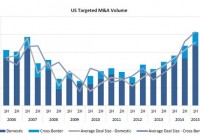
Summary The ongoing boom in M&A activity is creating a more robust opportunity set in merger arbitrage. Importantly, this is occurring at the same time that most other strategies (and general equity market exposure) are becoming increasing overvalued/unattractive. From a risk standpoint, merger arbitrage also appears to be becoming more compelling given its relatively low beta, and the plethora of risks building for general equity market exposure. A Little Background For those new to the strategy, generally when a merger is announced, the stock price of the target immediately jumps toward (but not fully to) the offer price. The remaining gap exists for two primary reasons: 1) there is a possibility (typically small) that the deal could fail to be consummated, and 2) legacy holders of the target’s stock that have typically just experienced a large windfall gain are sometimes willing to forgo the relatively smaller amount of remaining alpha due to their lack of experience in merger arb (and consequent limited ability to underwrite the risks). Merger arbitrage specialists attempt to capture this alpha by buying the target’s stock (and shorting the acquirer’s in cases where part of the consideration offered is stock). They then seek to profit as the spread compresses, with the deal moving to completion. Merger arb is most commonly pursued by hedge funds. However, in recent years ETFs have also emerged to pursue the strategy passively (the largest of which being the IQ Merger Arbitrage ETF (NYSEARCA: MNA )), and there are a handful of Seeking Alpha contributors focusing on it as well. Increasingly Attractive when Other Strategies are Least Attractive Like most strategies, the general attractiveness of merger arb varies over time based on fluctuations in supply (in this case of M&A deal volume) and demand. As mentioned, demand comes mostly from hedge funds and tends to be reasonably sticky, as it takes time for the funds to raise capital from their underlying investors (or for investors to take back capital) based on changes in the attractiveness of the opportunity set. The result is that when there are big changes in deal volume, this supply can temporarily overwhelm (or underwhelm) demand, leading to higher (or lower) risk-adjusted returns. From 2010 through 2013, deal-flow was limited as corporate managements were reluctant to make bold moves toward expansion with fresh memories of the 2008-2009 disaster in mind. As a result, merger arb players struggled to perform, and the HFR merger arb index posted very modest single-digit returns annually. However, since 2014 there has been a substantial pick-up in M&A activity as the financial crisis has fallen farther from mind, many corporate balance sheets have become increasingly bloated with cash, and tightened credit spreads have enabled companies to raise capital very cheaply. (click to enlarge) Source: Dealogic Though many hedge funds have been seeking to deploy additional capital in the space, demand has still been slow to catch up with supply. The result is that merger arb has been becoming more interesting at the same time that most other strategies and equity beta have become less attractive. One illustrative data point is that the number of $100m+ deals with annualized spreads over 15% ballooned from late 2014 to now, as shown below. Source: SINLetter Less Beta when Beta is Most Overvalued In the current environment with high equity valuations and abundant macro dangers, another potential attraction of merger arb is its risk profile, as noted above. For each deal, the main sources of risk are idiosyncratic/company-specific (e.g., antitrust investigations, unwieldy regulatory reviews, loss of financing). It is true that merger arb still retains some exposure to general risk premiums, or the tendency of market participants to require higher returns to hold any investments during times of fear. Further, the probability of deals breaking does increase somewhat when market is stressed, particularly for deals with financing contingencies (e.g., LBOs). However, the recent M&A boom has predominately represented strategic deals with relatively few LBOs. Also, the level of exposure to general risk premiums is lessened due to the short duration, self-realizing nature of the strategy. Accordingly, the strategy has tended to produce much lower drawdowns than the overall equity market during past market shocks. For instance, in 2008-2009, the CSFB risk arbitrage index posted a maximum drawdown of roughly 20% vs. roughly 50% for the S&P 500. In 2000-2001, the risk arb index posted a max drawdown under 10% vs. ~40% for the S&P 500. Conclusion For those with interest/experience in event-driven investing, this is a good time in the cycle to explore opportunities in merger arb. For those with less experience or time to underwrite the risks of individual deals, a diversified approach may be worthy of consideration, for instance through one of the ETFs that exist today. Disclosure: I am/we are long DTV, MEA, OVTI, OWW, DARA, PNK, ODP. (More…) I wrote this article myself, and it expresses my own opinions. I am not receiving compensation for it (other than from Seeking Alpha). I have no business relationship with any company whose stock is mentioned in this article.