Author Archives: Scalper1

A Look At The Breakdown In Alternative Income ETFs
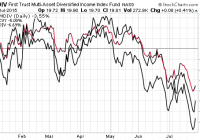
Summary Income investors are often obsessed with the search for yield despite the typical conservative nature of their demographic. Once considered taboo, asset classes such as junk bonds, MLPs, mortgage REITs, and other high yield investments are now common place in many of the portfolios. Now we are starting to see slow signs of decay in junk bond prices as spreads widen and risk appetites in credit securities pull back. Income investors are often obsessed with the search for yield despite the typical conservative nature of their demographic. The half decade of zero returns in safe assets such as CDs and savings accounts has created a reach for yield that has stretched the boundaries of sound portfolio discipline. Once considered taboo, asset classes such as junk bonds, MLPs, mortgage REITs, and other high yield investments are now common place in many of the portfolios that I review. The seemingly one-sided demand has helped generate relatively solid returns and uncommonly low volatility over the last several years as well. Now we are starting to see slow signs of decay in junk bond prices as spreads widen and risk appetites in credit securities pull back. This same pattern has been exacerbated in alternative income funds with overweight positions in non-traditional income fields with juicy yields. As an example, the First Trust Multi-Asset Diversified Income Index ETF (NASDAQ: MDIV ) carries 80% of its portfolio in preferred stocks, junk bonds, real estate, and MLPs. The remaining 20% is in traditional dividend paying stocks. This ETF has a current 30-day SEC yield of 6.36%, which any income investor would tell you is phenomenal when 10-Year Treasury bonds are paying just 2.25%. Yet like most things in life, there is no free lunch in the income world. A reach for yield carries with it higher concomitant risk of capital loss through credit contraction, deleveraging, interest rate cycles, and other exogenous factors. Before today’s bounce, fund’s like MDIV were trading near their lows of the year despite the relatively sideways price action of traditional broad-based equity benchmarks. This decoupling of high yield and alternative assets from the major stock market indices should be viewed through a cautionary lens. I’m not trying to pick on MDIV by any means. A look at other similar funds in this class include the Guggenheim Multi-Asset Income ETF (NYSEARCA: CVY ) and the Global X Super Dividend U.S. ETF (NYSEARCA: DIV ). These ETFs contain many of the same fundamental holdings and are showing similar trends of sliding prices. A look inside specific sector funds such as the ALPS Alerian MLP ETF (NYSEARCA: AMLP ) and the iShares Mortgage Real Estate Capped ETF (NYSEARCA: REM ) confirms the weakness as well. So how does a retiree or income investor maintain their purchasing power while still maintaining a solid grasp on dividends? The first step is evaluating your exposure to these riskier income assets by determining how much of your portfolio they represent. If its less than 10%, then you are likely not as concerned about the recent volatility. Yet, if they represent 25% of your portfolio or more, you may want to consider taking action to create a more balanced asset allocation. Those with an overweight position in high yield investments that find themselves uncomfortable during this drawdown may want to consider cutting back their exposure. This could include temporarily adding back to cash or moving to more traditional assets such as dividend paying stocks or higher quality bonds. The trade off of course is that you may not receive the same monthly or quarterly income that you are accustomed to. Nevertheless, the ability to sleep well at night knowing that your capital is not susceptible to wild swings may assuage that temporary concern. Picking which asset class to move the funds to will likely depend on the makeup of the other positions in your portfolio. You may end up pairing multiple asset classes together to smooth out volatility and further diversify portfolio. Remember that it’s ok to step away from strict income investments in order to focus on capital preservation or total return. If you do move to cash, make sure that it is a temporary transition that is not going to leave you with a significant chunk of money on the sidelines for an extended period of time. One of the biggest mistakes I see investors make is having too much cash on hand for years and years without a sound game plan to put it back to work. Putting Thoughts Into Action I recently took at step away from high yield investments for my Strategic Income clients and added to a high quality mix of stocks in the iShares MSCI USA Minimum Volatility ETF (NYSEARCA: USMV ). This transition expanded the modest equity sleeve of my portfolio into an index that is continuing to maintain a steady uptrend. While the move actually lowered the overall yield of the portfolio, it positioned us for a bounce higher in the broader stock market and reduced the credit volatility that was acting as a drag on returns over the last two months. Despite this move, I haven’t completely abandoned the alternative income theme altogether. My income portfolio is still holding the iShares U.S. Preferred Stock ETF (NYSEARCA: PFF ), which has maintained a steady price trend despite the volatility in interest rates. Moving forward, I will be closely evaluating how these investments comingle together and making additional adjustments as necessary. Changes of this nature are not always easy when an investment is falling in price. You never know if you are picking the right spot or going to get whipsawed in the wrong direction. That is why I strive to change the portfolio incrementally in order to avoid falling into the trap of over commitment to a single outcome. Disclosure: I am/we are long USMV, PFF. (More…) I wrote this article myself, and it expresses my own opinions. I am not receiving compensation for it. I have no business relationship with any company whose stock is mentioned in this article. Additional disclosure: David Fabian, FMD Capital Management, and/or clients may hold positions in the ETFs and mutual funds mentioned above. The commentary does not constitute individualized investment advice. The opinions offered herein are not personalized recommendations to buy, sell, or hold securities.
Southwest Energy – Strong Dividend Payer For The Long Term

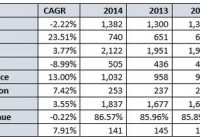
Summary Arizona/Nevada are currently weak markets but will marginally outperform long-term. The Non-Utility business is incredibly strong and provides some geographically-diversified earnings. Expect the dividend to be increased aggressively in the coming years, growing into a more healthy yield. Southwest Energy (NYSE: SWX ) is engaged in the business of purchasing, distributing, and transporting natural gas for customers in portions of Arizona, Nevada, and California. Arizona and Nevada are the primary markets for Southwest Energy, where the company operates as the largest supplier of natural gas to residential consumers and businesses. While the business model may seem simple (buying gas and transporting to the end customer) the reality is the company must operate an intricate network of transmission mains, peak shaving/storage stations, and a web of pipelines to get natural gas from point A to point B efficiently. As you may expect, businesses like Southwest Energy are regulated by state authorities much in the same way power-generating utilities are. Like other utilities, Southwest Energy offers a safe, predictable stream of cash flow and a healthy dividend. But is the company best-of-breed? Historical Operating Results (click to enlarge) What should jump out at investors first is the growth in non-utility revenue. Long-term investors likely first entered the company for the stable income stream from the Utility business but the company has increasingly diversified its revenue base. The Non-Utility Revenue segment derives its income from a handful of operating subsidiary companies (NPL Construction, Link-Line Contractors, W.S. Nicholls Construction, and Brigadier Pipelines) that are broadly referred to as the Centuri segment. Through these subsidiaries, Southwest Energy primarily serves the hook-up needs of other energy service companies (for instance, planning and installing the natural gas lines for a new residential community). This part of the business is geographically-diversified, serving customers across the United States and parts of Canada. Unlike some utilities that run such businesses, parent company Southwest Energy is not responsible for a large portion of these revenues, making up only 12% of Centuri revenue in fiscal 2014. Given the relatively weak economic outlook for Nevada and Arizona (unemployment and net population growth remain stubbornly weak compared to national averages), it is likely that future revenue growth will likely come from this segment outside of years that see exceptional weather-related demand for natural gas. So while this operating segment is still a small contributor to profits (13% of net income in 2014), investors would be wise to keep an eye out for continued growth here. Due to recent acquisitions and solid organic growth, revenue in 2015 from this segment is set to touch $1B, a year/year revenue increase of 35%. Also of note is that Southwest Energy has been significantly increasing its investments in its business in relations to maintenance. There have been stronger scrutiny lately at a both a state and federal level relating to pipeline safety and system reliability which has led the company to significantly increase investment from 2010 levels. Contributing to this ramp-up in spending is the pending filing for a rate increase in Arizona in 2016. Accelerated capital expenditures leading into a rate increase filing is fairly commonplace within the utility industry so that the company can note the increased capital expenditure costs prior to filing. Thus, this trend isn’t changing anytime soon so don’t expect significant improvement on this line item in 2015 or 2016. The Dividend The company currently yields approximately 3% on a 50% payout ratio. This gives the company plenty of room to raise the dividend more in-line with the peer average (60-70%), which is management’s target. With a three-year dividend growth rate of over 10% currently and no slowdown expected, I think it is likely we will see the dividend growth stick to that level at a bare minimum, with annual increases averaging 12% over the next three years more likely. As with all dividend investments, I urge long-term dividend investors to look forward ten years from now or further in their planning. So while shares might not be sporting the yield of utility stalwarts like Duke Energy (NYSE: DUK ) currently, Duke has only increased the dividend 2% a year on average for the past three/five years and that is unlikely to change. Investing in a smaller company with growth ahead of it like Southwest may allow you to see your yield on cost pass Duke Energy’s in the long run. Compounding returns and accelerated dividend increases can close that gap much quicker than you may think. Conclusion At the moment, this is a long-term play. I wouldn’t buy the company for the yield today, but I certainly would consider buying it for the returns I would likely receive on my investment ten years from now. While the American Southwest is not my preferred investment region in North America, it is my second favorite. The company’s primary markets have had a tough time of it coming out of the recession, and while that story is unlikely to change short-term, I do think there will be outsized improvement here in the coming years. The Southwest remains a long-term favorite of Americans seeking lower cost-of-living and the job market has begun to show some green shoots of improvements. Broadly, my investment decisions assume continued population loss from the Northeast and Western regions and a move to the Southwest and Southeast, a trend that is solidly anchored in recent and projected data. As such, I think this is a solid play for dividend investors and the current price of about $72/share, like many utilities, represents a significant discount to what investors were paying mere months before. Disclosure: I/we have no positions in any stocks mentioned, and no plans to initiate any positions within the next 72 hours. (More…) I wrote this article myself, and it expresses my own opinions. I am not receiving compensation for it (other than from Seeking Alpha). I have no business relationship with any company whose stock is mentioned in this article.

Southwest Gas Corporation: Strong Dividend Payer For The Long Term

Summary Arizona/Nevada are currently weak markets but will marginally outperform long-term. The Non-Utility business is incredibly strong and provides some geographically-diversified earnings. Expect the dividend to be increased aggressively in the coming years, growing into a more healthy yield. Southwest Gas (NYSE: SWX ) is engaged in the business of purchasing, distributing, and transporting natural gas for customers in portions of Arizona, Nevada, and California. Arizona and Nevada are the primary markets for Southwest Gas, where the company operates as the largest supplier of natural gas to residential consumers and businesses. While the business model may seem simple (buying gas and transporting to the end customer) the reality is the company must operate an intricate network of transmission mains, peak shaving/storage stations, and a web of pipelines to get natural gas from point A to point B efficiently. As you may expect, businesses like Southwest are regulated by state authorities much in the same way power-generating utilities are. Like other utilities, the company offers a safe, predictable stream of cash flow and a healthy dividend. But is the company best-of-breed? Historical Operating Results (click to enlarge) What should jump out at investors first is the growth in non-utility revenue. Long-term investors likely first entered the company for the stable income stream from the Utility business but the company has increasingly diversified its revenue base. The Non-Utility Revenue segment derives its income from a handful of operating subsidiary companies (NPL Construction, Link-Line Contractors, W.S. Nicholls Construction, and Brigadier Pipelines) that are broadly referred to as the Centuri segment. Through these subsidiaries, Southwest Energy primarily serves the hook-up needs of other energy service companies (for instance, planning and installing the natural gas lines for a new residential community). This part of the business is geographically-diversified, serving customers across the United States and parts of Canada. Unlike some utilities that run such businesses, parent company Southwest Energy is not responsible for a large portion of these revenues, making up only 12% of Centuri revenue in fiscal 2014. Given the relatively weak economic outlook for Nevada and Arizona (unemployment and net population growth remain stubbornly weak compared to national averages), it is likely that future revenue growth will likely come from this segment outside of years that see exceptional weather-related demand for natural gas. So while this operating segment is still a small contributor to profits (13% of net income in 2014), investors would be wise to keep an eye out for continued growth here. Due to recent acquisitions and solid organic growth, revenue in 2015 from this segment is set to touch $1B, a year/year revenue increase of 35%. Also of note is that Southwest Gas has been significantly increasing its investments in its business in relations to maintenance. There have been stronger scrutiny lately at a both a state and federal level relating to pipeline safety and system reliability which has led the company to significantly increase investment from 2010 levels. Contributing to this ramp-up in spending is the pending filing for a rate increase in Arizona in 2016. Accelerated capital expenditures leading into a rate increase filing is fairly commonplace within the utility industry so that the company can note the increased capital expenditure costs prior to filing. Thus, this trend isn’t changing anytime soon so don’t expect significant improvement on this line item in 2015 or 2016. The Dividend The company currently yields approximately 3% on a 50% payout ratio. This gives the company plenty of room to raise the dividend more in-line with the peer average (60-70%), which is management’s target. With a three-year dividend growth rate of over 10% currently and no slowdown expected, I think it is likely we will see the dividend growth stick to that level at a bare minimum, with annual increases averaging 12% over the next three years more likely. As with all dividend investments, I urge long-term dividend investors to look forward ten years from now or further in their planning. So while shares might not be sporting the yield of utility stalwarts like Duke Energy (NYSE: DUK ) currently, Duke has only increased the dividend 2% a year on average for the past three/five years and that is unlikely to change. Investing in a smaller company with growth ahead of it like Southwest may allow you to see your yield on cost pass Duke Energy’s in the long run. Compounding returns and accelerated dividend increases can close that gap much quicker than you may think. Conclusion At the moment, this is a long-term play. I wouldn’t buy the company for the yield today, but I certainly would consider buying it for the returns I would likely receive on my investment ten years from now. While the American Southwest is not my preferred investment region in North America, it is my second favorite. The company’s primary markets have had a tough time of it coming out of the recession, and while that story is unlikely to change short-term, I do think there will be outsized improvement here in the coming years. The Southwest remains a long-term favorite of Americans seeking lower cost-of-living and the job market has begun to show some green shoots of improvements. Broadly, my investment decisions assume continued population loss from the Northeast and Western regions and a move to the Southwest and Southeast, a trend that is solidly anchored in recent and projected data. As such, I think this is a solid play for dividend investors and the current price of about $72/share, like many utilities, represents a significant discount to what investors were paying mere months before. Disclosure: I/we have no positions in any stocks mentioned, and no plans to initiate any positions within the next 72 hours. (More…) I wrote this article myself, and it expresses my own opinions. I am not receiving compensation for it (other than from Seeking Alpha). I have no business relationship with any company whose stock is mentioned in this article.